Talk about a power lunch. Leaders across GA gathered in Columbus. Here’s a recap
Around 1,000 people gathered in the Columbus Convention & Trade Center last week, as politicians and business leaders across the state convened for the Georgia Chamber of Commerce 2025 Congressional Luncheon.
U.S. Sen. Jon Ossoff (D-GA) headlined the Aug. 20 event along with U.S. Reps. Sanford Bishop (GA-02), Earl “Buddy” Carter (GA-01), Mike Collins (GA-10) and Austin Scott (GA-08).
State Rep. Teddy Reese and Columbus Councilor Joanne Cogle were among local elected officials who attended the luncheon.
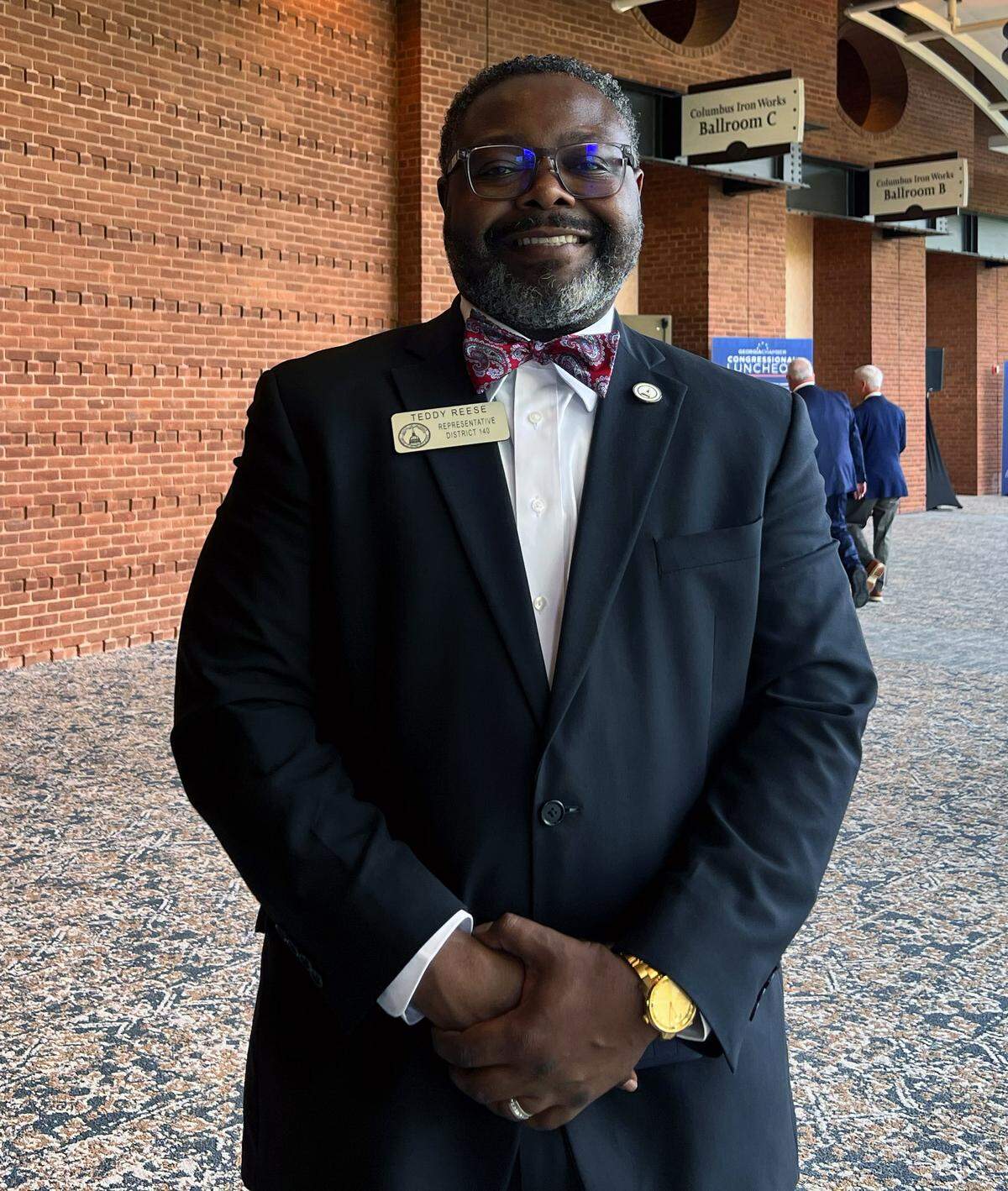
“As a representative in Atlanta, I see firsthand the work that the chamber does to bring businesses to our state,” Reese told the Ledger-Enquirer. “So, when you’re hosting them in your town, of course, you have to show up and show support and show them the best Columbus has to offer.”
Ahead of the panel discussions, Reese looked forward to hearing what Ossoff had to say on national security. Reese had concerns about high-altitude balloons along with cybersecurity and technology.
“Georgia plays a very big part on the national security scale that people don’t think about,” he said. “And then you have Fort Benning right here in our neck of the woods.”
After Bishop offered a local welcome to the attendees, Chris Clark, president and CEO of the chamber, presented the inaugural Georgia Chamber Corporate Citizen Award to W.C. Bradley.
Clark praised the Columbus-based company for being a “driving force for good” in Muscogee County.
Shan Cooper, founder and CEO of Journey Forward Strategies, won the 2025 Blanchard Servant Leadership Award for exemplifying servant leadership, civic engagement and a commitment to the greater good. The award is named in honor of retired Synovus chairman and CEO Jim Blanchard.
The chamber also announced that the Lockheed Martin C-130J Super Herculese, a tactical airlifter now used by 28 operators in 23 nations, is the inaugural winner of the Coolest Thing Made in Georgia award.
After all the awards were presented, Ossoff and other elected officials engaged in a series of panel discussions on national security issues, legislative processes and energy.
Here are some of the key takeaways from each panel.
National Security and Intelligence
Ossoff joined chamber chairman Ed Elkins in a discussion that touched on issues with the Veterans Affairs, bolstering military installations and the quality of life for servicemembers and their families and the cybersecurity threat China poses.
Wait times to get appointments and clinical care for veterans is a problem in metro Atlanta and across the state, Ossoff said. Rural veterans face significant transportation challenges, he said, which is something he is working across the aisle to address.
He also is working to help veterans who contracted HIV and hepatitis because of medical malpractice at the VA in Dublin, Georgia, along with pushing to ensure this type of incident does not happen again.
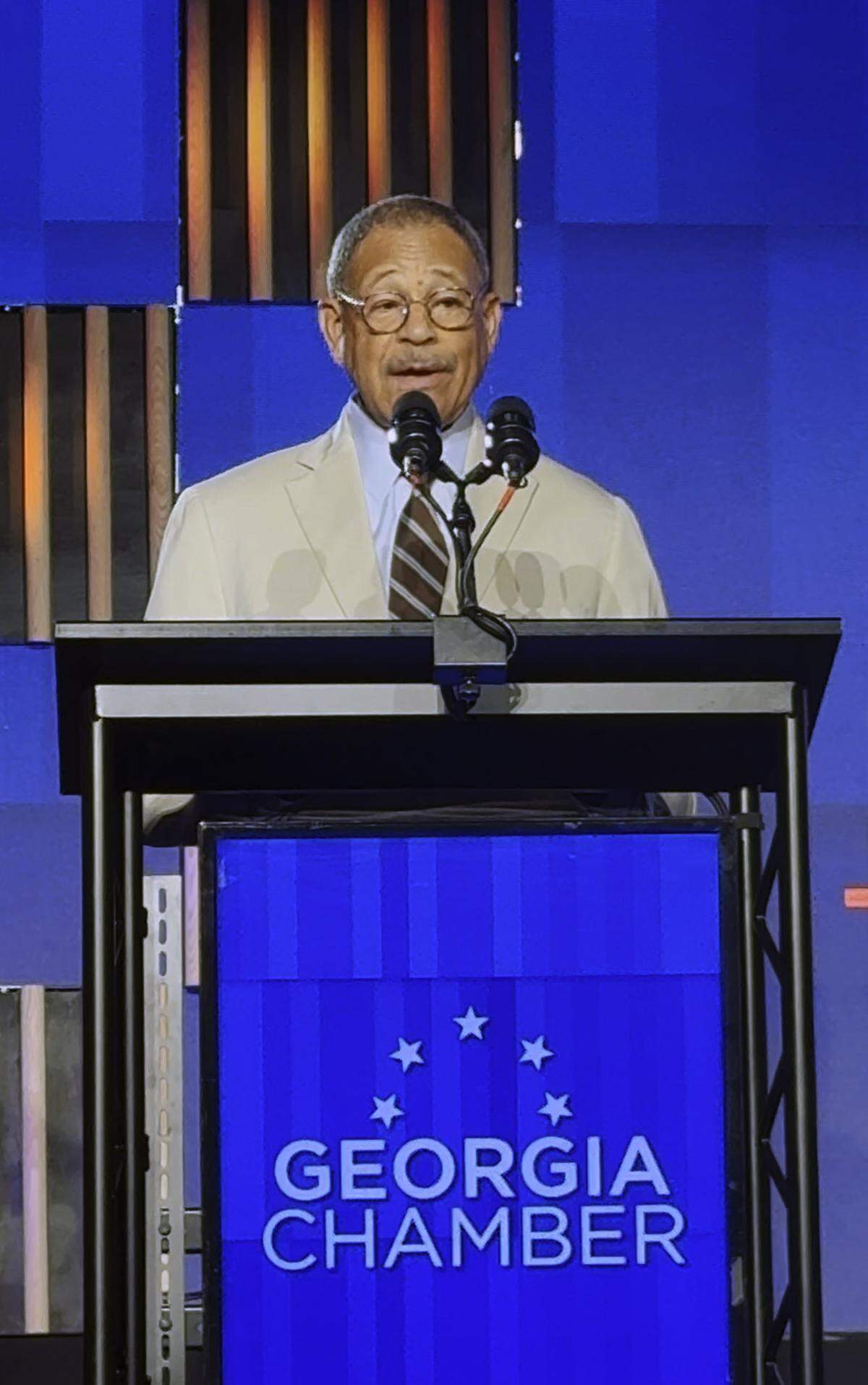
Ossoff also expressed concern about workforce shortages in the VA, which is driving the long wait times.
“It’s why I think Secretary Collins has backed off of his initial plan to terminate 80,000 personnel across the VA in recognition of that, in fact, the VA likely needs more staff in key roles,” Ossoff said.
As part of the Senate Appropriations Committee, Ossoff pushed for $1.7 billion for the procurement of 10 new C-130J’s in the next fiscal year.
“Those are made in Georgia,” he said. “They’ll go out to active duty Air Force, guard and reserve components across the country.”
Since the U.S. Department of Defense has a direct and indirect impact on Georgia of more than $20 billion annually, he said, Georgia’s military installations are vital to national security and the state’s economy.
Congress allocated $556 million for military construction across Georgia, Ossoff said, which is the most of any year since 2010.
Along with construction, servicemembers’ quality of life also is a priority, he said. Ossoff added funding for a new elementary school at Fort Benning and new barracks at Fort Stewart.
There also is funding to improve oversight for privatized military housing on defense installations.
At the end of Ossoff’s discussion with Clark, they discussed the geopolitical rivalry between the United States and China.
The U.S. needs to focus a lot of attention on the technological competition with China, warned Ossoff, who sits on the Senate Intelligence Committee. He also expressed concern about the country’s foreign policy because of the lack of funding to USAID, the trade war and a “brain drain” caused by cuts and layoffs in the federal government.
“We are engaged in tremendous self-harm right now in this competition with China,” Ossoff said.
China is filling the gap to help countries affected by natural disasters, he said. Previously, USAID would offer assistance, Ossoff said, but now other countries see aid from China rather than the U.S.
When it comes to cuts in the federal government, Ossoff told the story of an astrophysicist trained at a top U.S. university who got caught up in a mass firing because he was new to the federal agency for which he was working.
This astrophysicist now works in Beijing, Ossoff said.
Electric vehicle manufacturing, battery production, advanced energy technology and semiconductor manufacturing are some of the important industries the country should be focused on growing, he said.
In Columbus, the CHIPS4CHIPS coalition of more than 200 Georgian and Alabama public and private members aims to grow semiconductor manufacturing in the region.
It was nice to see this is something Ossoff is supporting, Cogle told the Ledger-Enquirer after hearing Ossoff’s panel.
“That has a lot of promise for Columbus, GA,” said Cogle, who is running for mayor in Columbus. “But I think that a lot of his other points, concerns and initiatives will also help support Columbus in the future.”
Legislative processes
Collins and Scott took the opportunity on their panel about legislative processes to speak about the roles of committees in Congress, whipping votes and the challenges of getting legislation passed in Congress.
Scott began the conversation by explaining how the Rules Committee determines what bills make it to the House floor, historically, along partisan lines.
“This is the procedural stuff in the sausage-making process,” he said. “If it’s not boring to you, I apologize. You should do something else besides watch the Rules Committee.”
This era of politics is unique, Scott said, because some members of the committee are breaking away from the typical partisanship with some Republicans on the Rules Committee procedurally voting with Democrats.
“It has slowed us down and kept us from being able to get some things done,” Scott said.
One example of this occurring, he said, is when some Republicans threatened to tank the One Big Beautiful Bill Act.
This led to a discussion on Collins’ role in whipping votes. A generic description of the job is “counting votes,” Collins said.
“But when you get down to the ground level, it’s actually getting involved with the members that may have a problem, especially on our side of the aisle, and finding out exactly what it is,” he said.
His role sometimes involves convincing members that their position “may not be the hill you want to die on.”
This doesn’t mean just focusing on Republicans, he said, but he also has gone door-to-door speaking with House Democrats as well on certain bills.
Getting bills through the House can be difficult because Republicans have a small majority in the House, Scott said, so a small group of people can be empowered to hold out in an attempt to change bills.
This, coupled with making sure legislation also can pass in the Senate, can be challenging, he said.
Energy and frozen rates
Closing out the panels, Georgia Public Service Commissioner Fitz Johnson (District 3) joined Carter for a conversation that touched on how Georgia’s energy policy intersects with federal legislation, a freeze on Georgia Power rates and how the growing population is increasing demand on the state’s infrastructure.
The One Big Beautiful Bill Act will have a significant impact on energy across the country, Carter said.
It mandated an increase in oil and gas leasing on federal lands and waters, with quarterly sales, and sped up the permitting process for major water infrastructure projects, he said.
These policy changes are aimed at ensuring the country remains dominant in energy, Carter said.
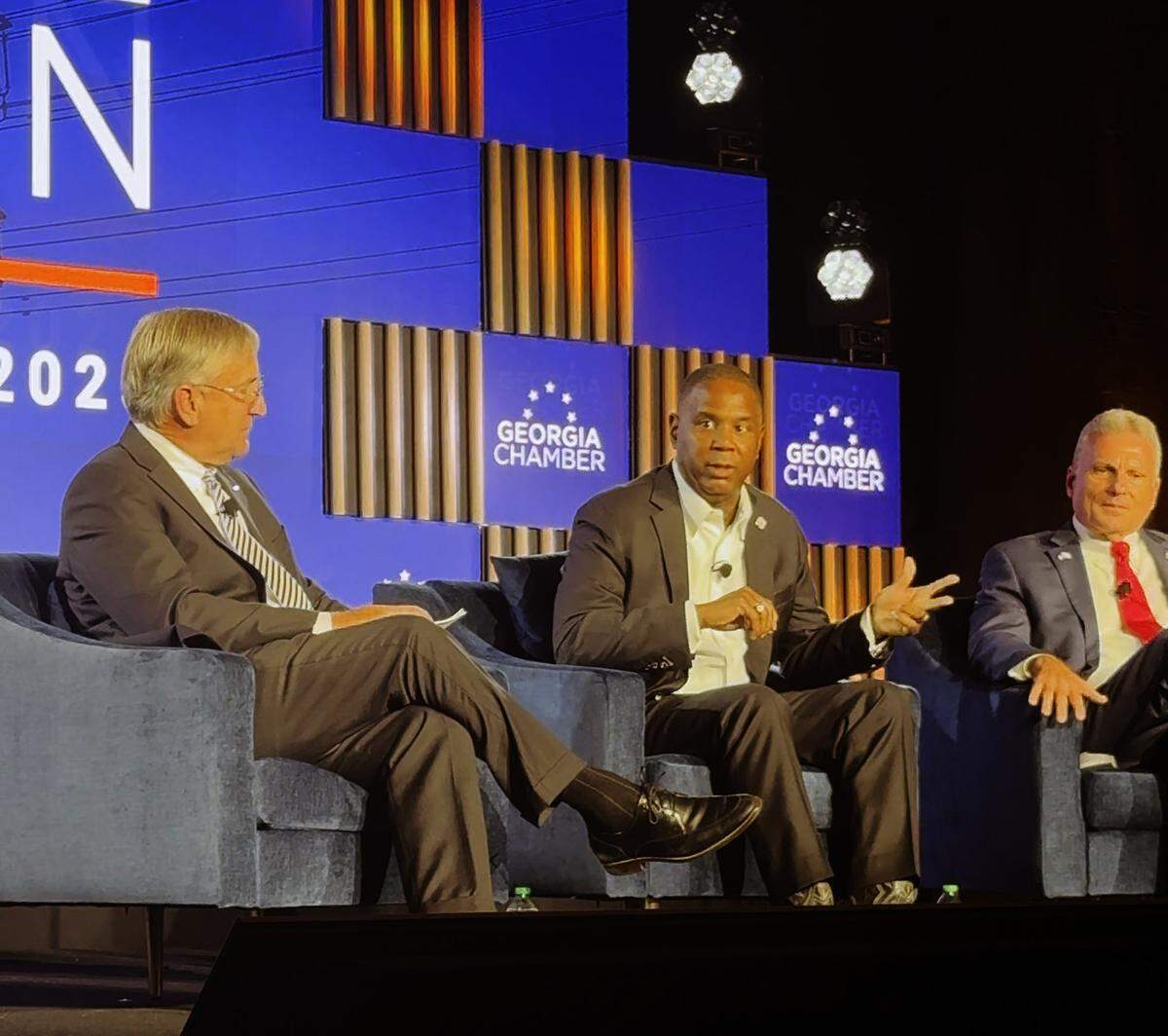
“We are going to need every electron we can get in the future,” he said. “It’s predicted over the next 10 years…that we’re going to need probably about 9,500 more megawatts.”
The Alvin W. Vogtle Electric Generating Plant, known as Plant Vogtle, is the largest clean energy plant in America, Carter said, and it provides about 4,500 megawatts.
“You need two more Plant Vogtles just to meet the need in the next decade,” he said. “That’s a heavy lift. That’s a lot that we’ve got to get done here and to continue with the progress that we’ve made in the state of Georgia.”
The bill did remove some clean energy tax credits, Carter acknowledged, but he added that it kept tax credits for nuclear energy.
Johnson spoke about the Public Service Commission’s vote to freeze Georgia Power base rates, noting that utility rates are increasing across the country. This decision will help individuals with their power bills at home and also small businesses, he said.
“I’m a small-business owner,” Johnson said. “If I can rely on that rate, that’s another piece of the puzzle. And that’s another reason why folks, businesses, are flocking here to Georgia, and why we remain the number one state to do business.”