From symbolic to tangible. Columbus strengthens political ties with Muscogee Nation
The City of Columbus is strengthening ties with the Muscogee Nation by providing the Native American tribe a permanent office in the new city hall complex.
A delegation led by Muscogee Principal Chief David Hill visited Columbus on Monday to tour the office and celebrate its opening. The celebration was hosted in the Springer Opera House.
This move comes after the Columbus Council passed a resolution in February acknowledging the city’s land originally belonged to the Muscogee people. Paul Pierce, senior adviser at the Springer Opera House, requested the resolution as the theater planned to debut a new play in April focusing on a Muscogee family titled “The Mvskoke Project”.
The Muscogee Nation’s office in city hall will be a base of operations when the tribe is doing work in the Columbus area, Pierce said.
There has always been a discussion about coming home, Hill said during the Monday event at the Springer, and he has prioritized protecting sacred sites since becoming the chief.
Over 20,000 members of the Muscogee Nation were forcibly relocated to new lands in what is now Oklahoma in the 1830s.
“We consider Georgia, and also Alabama, the home of the Muscogee people,” Hill said. “It means a lot to us whenever we have that working relationship, as we do with Macon and now Columbus, which is great.”
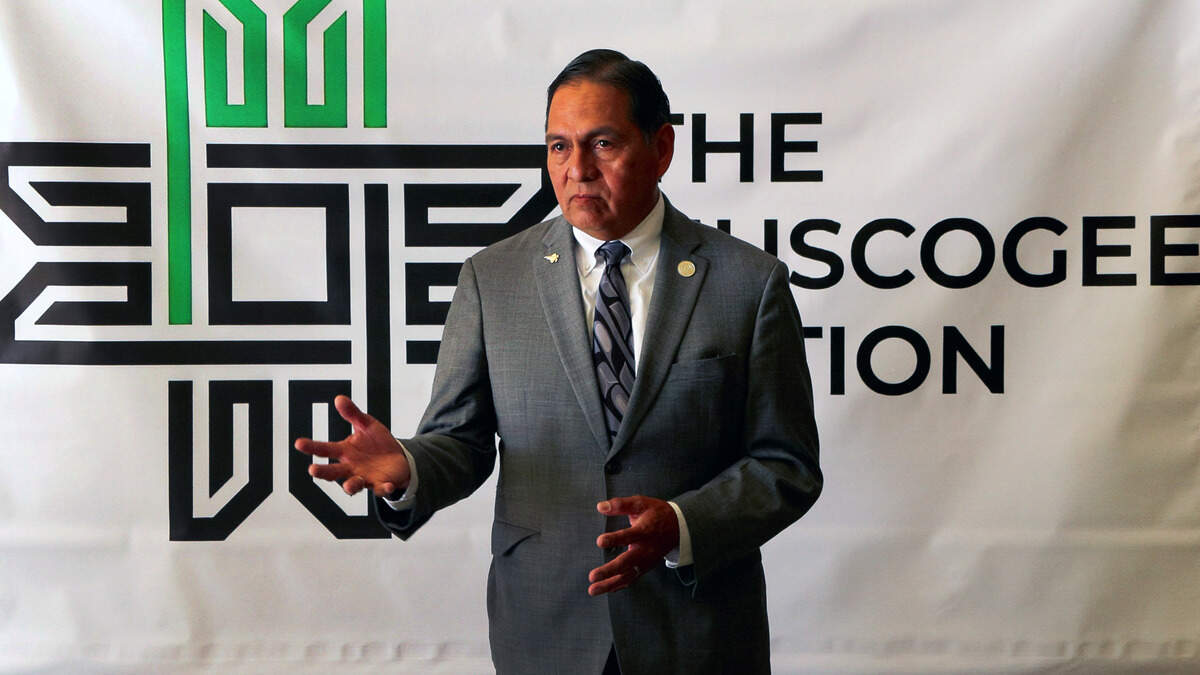
Members of the Muscogee Nation who attended Monday’s event with Hill included Muscogee Nation National Council speaker Randall Hicks, chief of staff Jeff Fife, deputy secretary of culture and humanities Anthony Beaver and director of advocacy Tracie Revis. Second Chief Del Beaver also was present.
“This was certainly a historic gathering of the tribe’s most senior leadership here in the Muscogee homeland,” Pierce told the Ledger-Enquirer in an email.
Kimberly Tharp, executive assistant in the mayor’s office, attended the event at the Springer representing Mayor Skip Henderson. He was unavailable to join the event because he was attending a funeral, Tharp said.
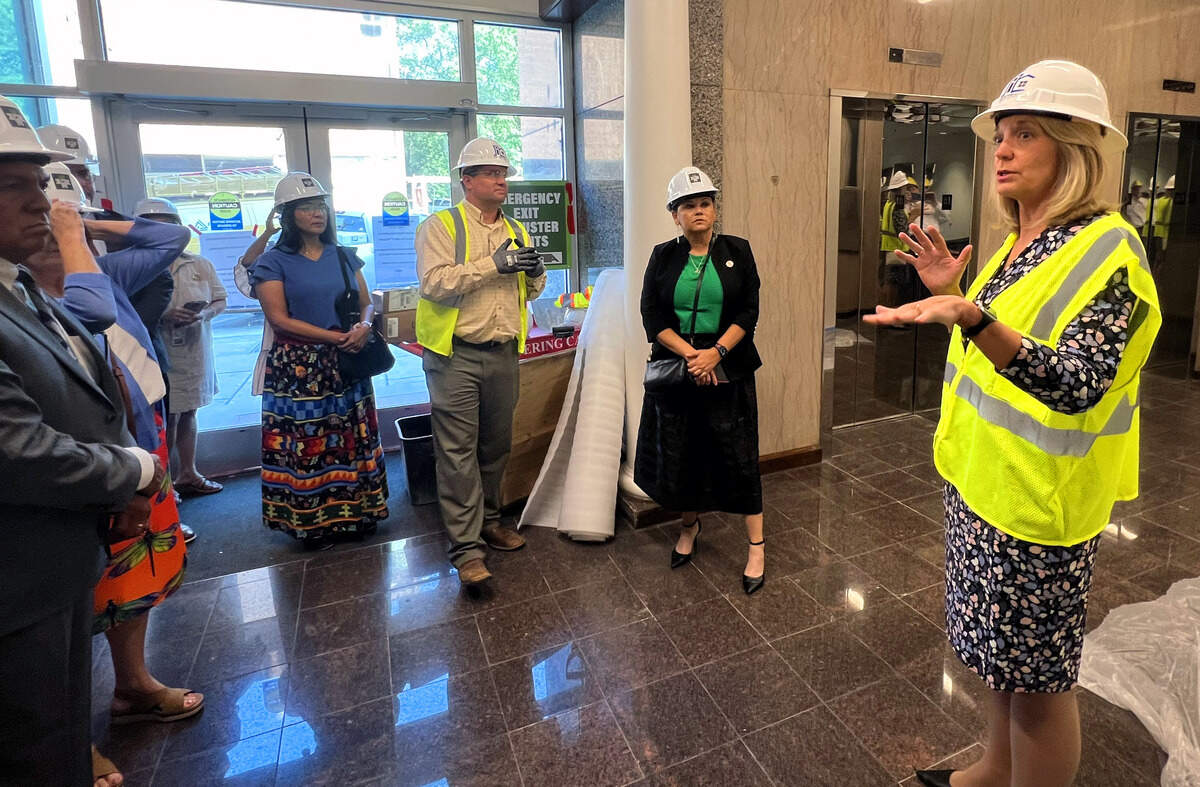
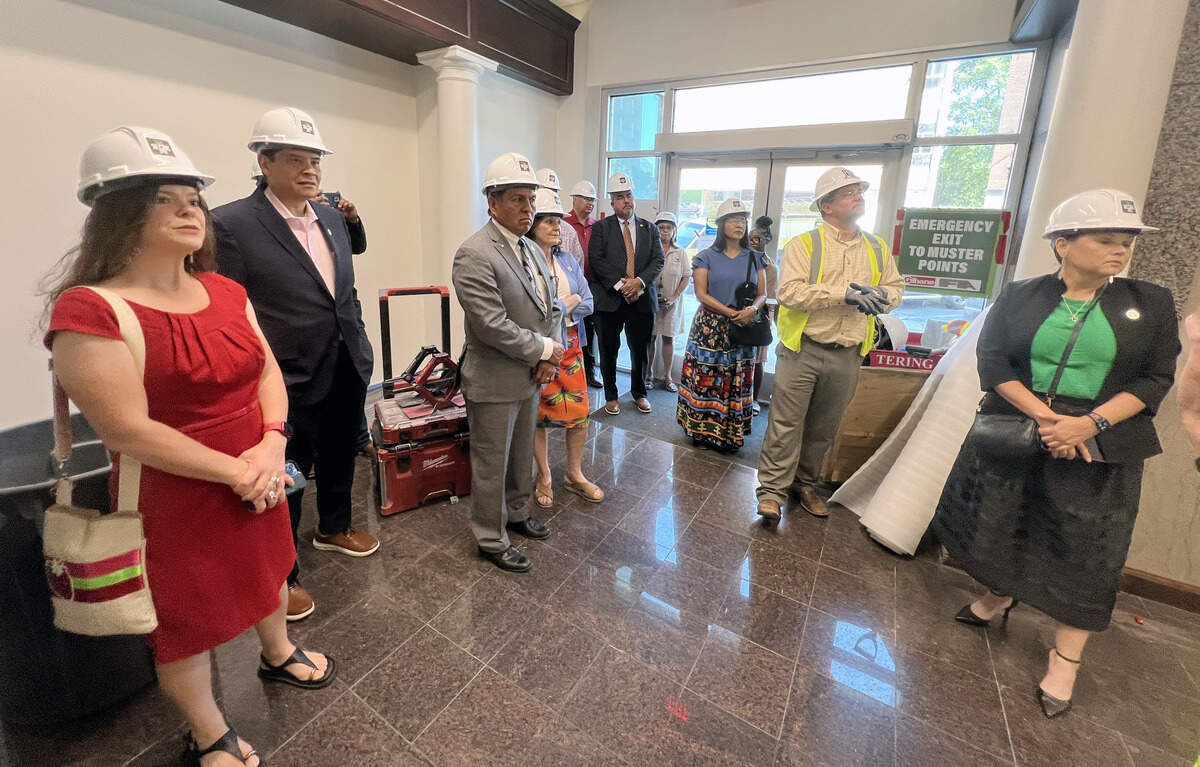
However, Henderson met the delegation during their tour of the city hall complex.
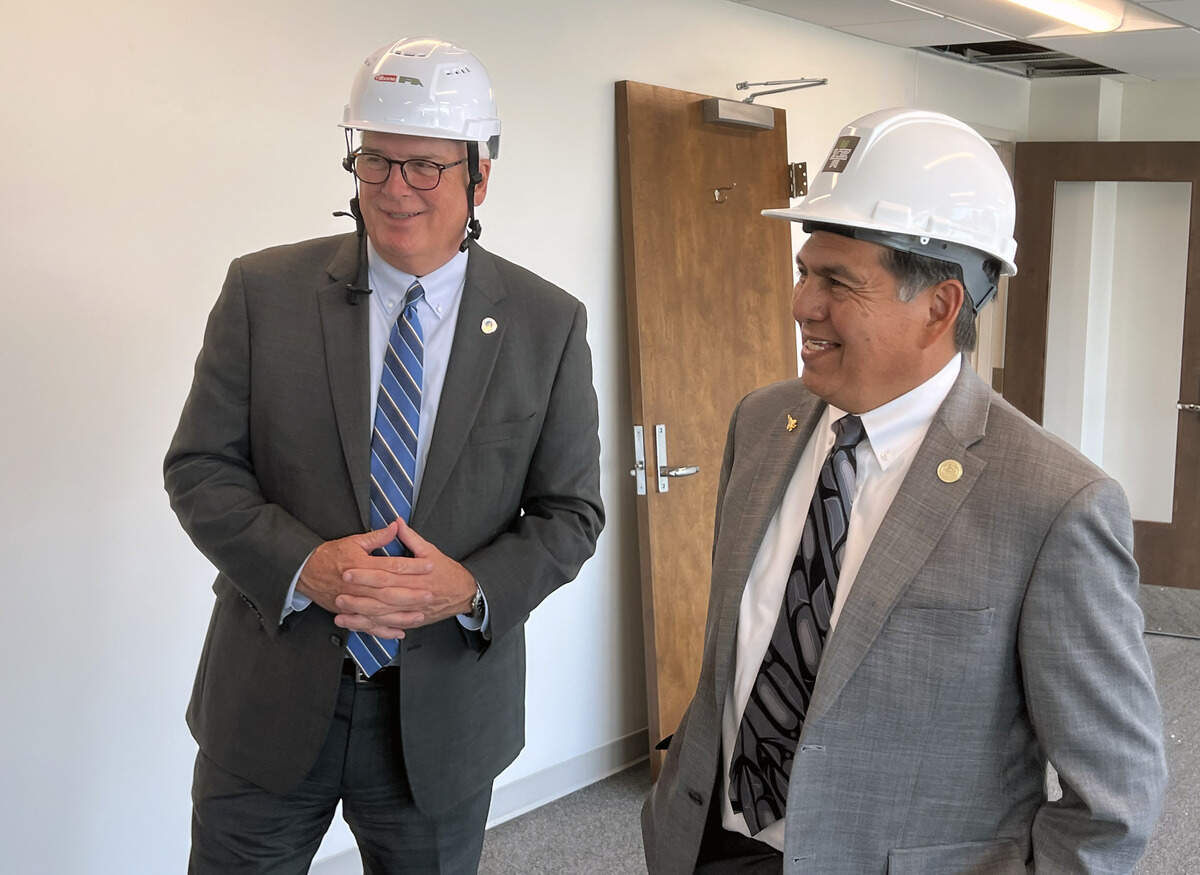
“I think as you see some of the larger of the tier 2 cities — Macon, Columbus — start to take serious note of our shared history, I think you’re going to see some of the smaller towns and counties do the same,” Henderson told the delegation during the hard hat tour in City Hall.
There is no additional cost for the Muscogee Nation to use the city-owned office, Tharp said in a text message Tuesday to the Ledger-Enquirer. It is under construction and should be ready for occupancy by November or December, Pierce said.
Reflecting on history
During the event at the Springer, multiple speakers from the Muscogee Nation said a few words in the Mvskoke language. This was intentional, Fife said during his speech.
“I think it’s important that our history be shared,” he said. “That we be open to learning from one another in this world, this community, that we all share today.”
For 17,000 years, his people occupied this land, Fife said, and it’s moving that there now are political commitments between the governments to face the challenges ahead.
“It’s important to all of our people in what’s now our reservation to know that at some point they may be able to return not under any … hostilities or things like that,” he said.
At one point in history, the Muscogee people were on the verge of being “wiped out”, Hicks said during his speech at the Springer. But they stayed strong and persevered.
Now, the Muscogee Nation is the fourth-largest tribe with about 106,000 members, Revis said.
She hopes the office will help as the tribe works to re-educate Muscogee County residents on the region’s history, particularly in learning the pronunciation of words that come from their language.
“Take a moment and reflect on the places where you walk,” Revis said. “Those many, many roads that were here before these paved streets that are here today were our homes. We need to be intentional with where we walk and how we say the words here.”
The Muscogee Nation always has wanted to have a satellite office in the Southeast, Hill told the Ledger-Enquirer.
He hopes that by having representatives on the ground in Georgia and Alabama, it will be the first step in creating a partnership and having a presence when issues come up. One example is the Muscogee Nation’s lawsuit against Auburn University to recover cultural items and human remains that were excavated from Hickory Ground, a sacred site in Alabama.
“We do have land,” he said. “We purchased land in Alabama, so we’re looking to have an office there.”
This story was originally published September 17, 2025 at 5:00 AM.