Why Columbus Water Works wants a rate increase — and what it means for your bill
Federal regulations requiring the removal of toxic chemicals from the nation’s water supply will mean a new regulatory compliance fee and a 4.95% rate increase for Columbus Water Works customers if the recommendation is approved.
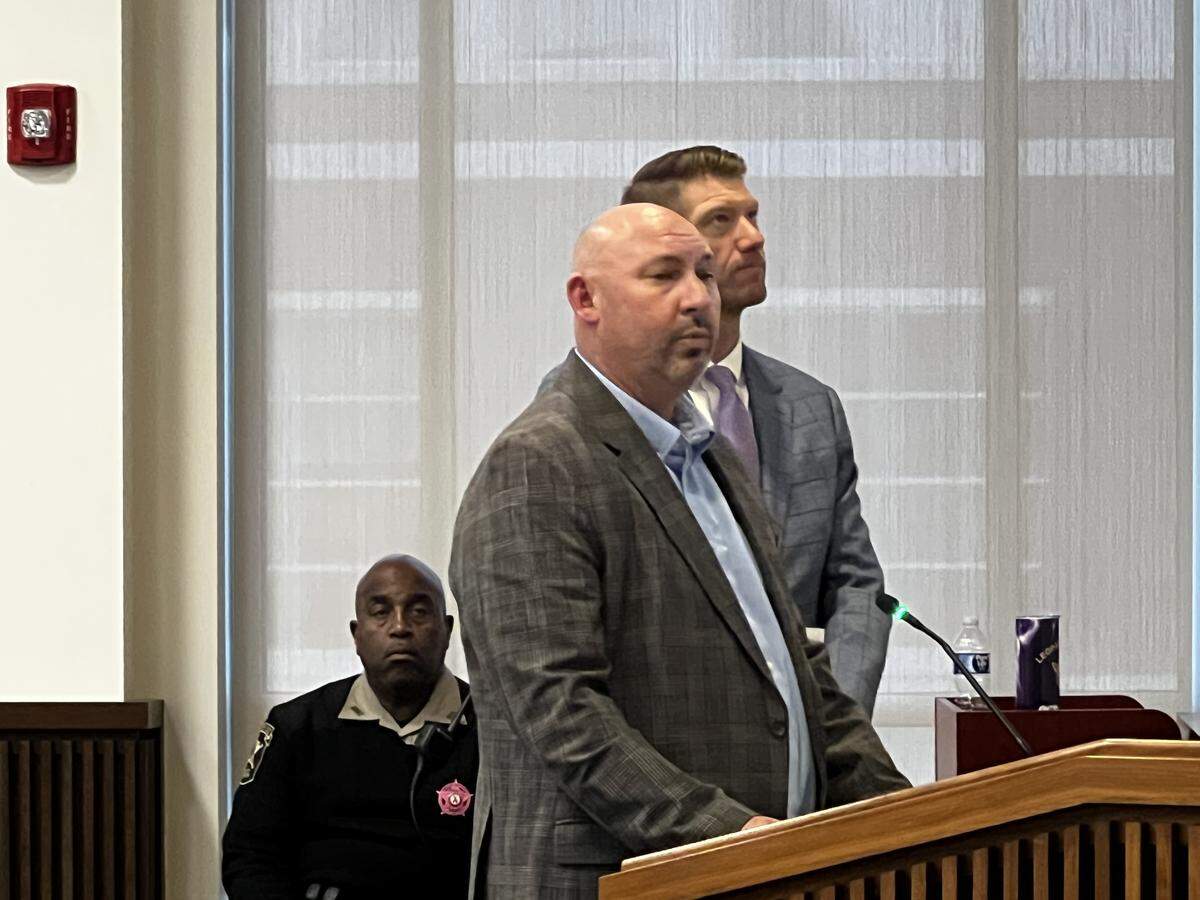
Columbus Water Works president and CEO Jeremy Cummings presented the company’s 2026 rate update to the Columbus Council during Tuesday’s meeting. This was the second public meeting about the rates, Cummings said, after the first was held at Columbus Technical College on Oct. 16.
Questions and comments about the rates from both of these meetings will be presented to the Columbus Board of Water Commissioners meeting Nov. 10, Cummings told the Ledger-Enquirer. The board, which includes Mayor Skip Henderson, then will vote on whether to approve the rate increase.
If approved, the proposed rate increase will start Jan. 1.
Factors affecting Columbus Water Works rates
In his presentation to the council, Cummings listed four priorities that are considered when rates are set:
- Deliver clean and safe water to customers and return clean water to the Chattahoochee River
- Infrastructure maintenance and improvements are needed because the system is aging
- Regulatory compliance
- Rising operational costs because of inflation.
Capital spending to address the aging infrastructure and regulatory compliance is the biggest driver of future rate increases, he said.
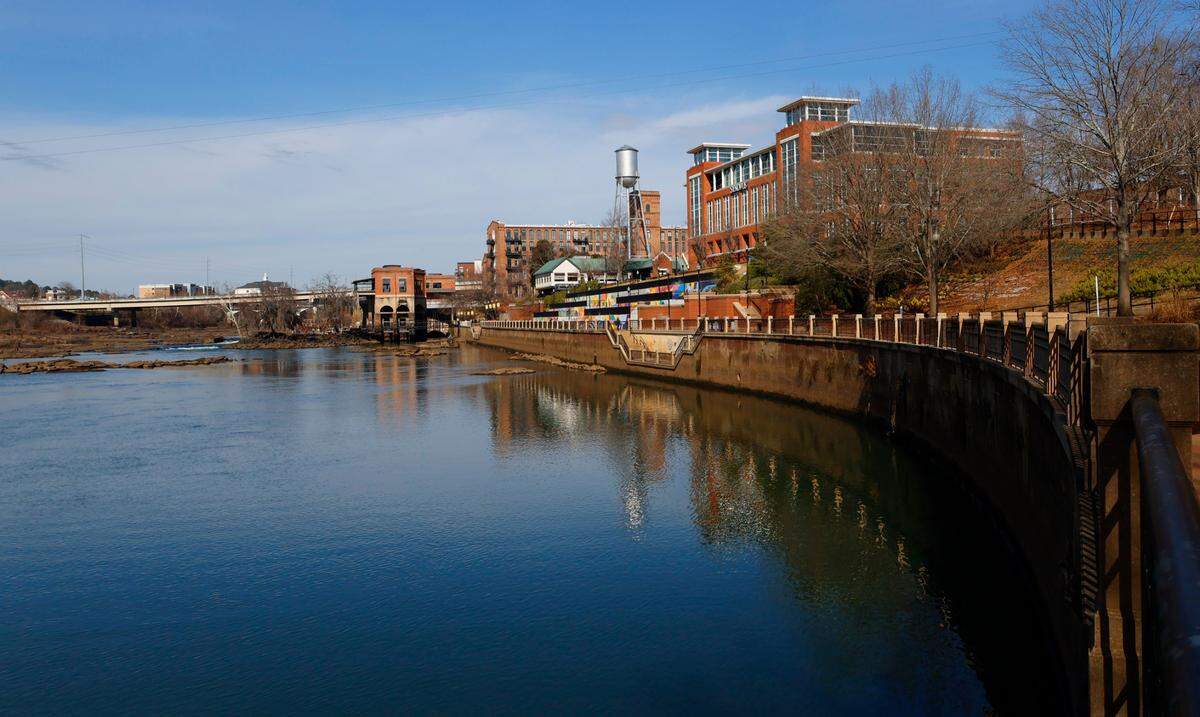
The South Columbus Water Resource Facility, the city’s wastewater treatment facility, was built in the early 1960s, Cummings said.
“It is coming to the end of its useful life,” he said.
Over the past 10 to 20 years, hundreds of millions of dollars have been invested in the wastewater treatment facility, Cummings said, but the issue with the facility is the environment.
“Anytime you’re dealing with sanitary sewer, you have hydrogen sulfide gas,” he said. “And hydrogen sulfide gas corrodes pipe and concrete. We’ve got a lot of our cement structures that are cracking.”
Previous work has put a Band-Aid on the problem, he said, but it’s to the point that it can’t be fixed.
Along with the problems with the structure, Cummings said, the wastewater flows in Columbus have increased to near capacity.
“We got about an average of 35 to 40 million gallons a day,” he said. “And it’s permitted at 40 million gallons a day. So, if we want to work with Choose Columbus and the Chamber (of Commerce) and continue to bring economic development to our community, a bottleneck right now is our wastewater treatment plant being able to take that additional capacity in our system.”
Columbus Water Works must start planning to replace the facility, Cummings said.
Many compliance regulations are coming down from the state and federal government, he said.
The Georgia Department of Natural Resources Environmental Protection Division was going to place nutrient limits on Columbus Water Works this year, Cummings said, which would have cost $250 million to meet the limit.
Cummings worked out a deal with the state to defer this nutrient permit for eight years, as long as Columbus Water Works begins the design and construction of a new plant, he said.
Federal regulations on chemical compounds, commonly referred to as “forever chemicals,” require that the toxic chemicals be removed from the water supply by 2031, Cummings said.
Per- and polyfluoroalkyl substances, or PFAS, are called forever chemicals because they persist in the environment. Prolonged exposure can increase health risks, including cancer or heart disease, because they accumulate in the body.
“The PFAS issue that we’re dealing with, we didn’t create that issue,” Cummings said. “Those are issues that were created by (the manufacturing) industry that now we’re being asked, as a water utility, to clean up their mistakes.”
Treating the drinking water for these chemicals is not an option, he said; it is a requirement.
“We sample the water,” he said. “We do have PFAS in our river, and we’ve got to be prepared when that time comes. It’s a nationwide project.”
The Trump Administration extended the Environmental Protection Agency’s deadline for water utilities to remove these chemicals from the water from 2029 to 2031.
“This is a nationwide regulation,” Cummings said. “When that time comes, by 2031, we’re going to be competing to meet that deadline with every other water utility in the country. And if we don’t get ahead of the game here, then we may not be able to get the contractors, technology and equipment that we need to meet that deadline.”
Columbus Water Works has begun working ahead, he said, having completed a $2 million pilot study to determine what technology works best to treat PFAS.
Over $1 billion in capital investment by 2032 will be needed to maintain safe and reliable services, Cummings told the Ledger-Enquirer in an email. This entails $650 million for the South Columbus Water Resource Facility rebuild and $270 million for a master plan system renewal and improvement projects.
Those projects include $100 million for PFAS treatment at the North Columbus Water Resource Facility and $100 million for the Fort Benning Water Treatment Plant, which will be paid for by Fort Benning.
Expect more water rate increases in Columbus
In addition to the 4.95% rate increase, Cummings said, the Columbus Water Works plans to implement a new regulatory compliance fee that will be $5 for residential customers, $10 for nonresidential customers with 1-inch meters or smaller and $25 for nonresidential customers with meter sizes over 1 inch.
Columbus Water Works has a low-income credit program of $10.50 for qualifying customers, Cummings told the L-E, and enrolled customers will not be charged the regulatory compliance fee.
He estimated the monthly increase will range from about $7 to $9 for most residential customers.
In 2025, the rate increased by 7.95%, and customers should prepare for future increases to their water bills.
Right now, Columbus Water Works is in a good financial position, Cummings said, but they have to prepare for future spending.
“When you forecast that future debt, over the next eight years, our debt continues to increase,” he said. “We’ve got to have a plan to meet that debt requirement when we get there.”
Columbus Water Works projects a rate increase of 4.95% every year until 2031, Cummings said, which accounts primarily for inflation each year.
The utility also plans to gradually increase the regulatory compliance fee to as high as $20 for residential customers.
These rate increases and fees are the “worst-case scenario”, Cummings told the council. Columbus Water Works plans to go to the state and federal governments to ask for financial assistance to meet the compliance requirements.
“I am trying,” he told the L-E. “I will say that if we don’t get any assistance, it won’t be because we didn’t try.”
Customers may request to be put on a payment plan to spread out payments over a longer period of time because of financial difficulties, Cummings said. Columbus Water Works also provides information on other local community support programs for people who need assistance.
Residents who are concerned about the costs of these infrastructure and treatment plans should contact their elected officials, Cummings said.
“The Trump Administration pushed the deadline from 2029 to 2031,” he said. “Maybe there could be an extension.”
This story was originally published October 30, 2025 at 12:03 PM.