
Analysis: Funding snub part of political game
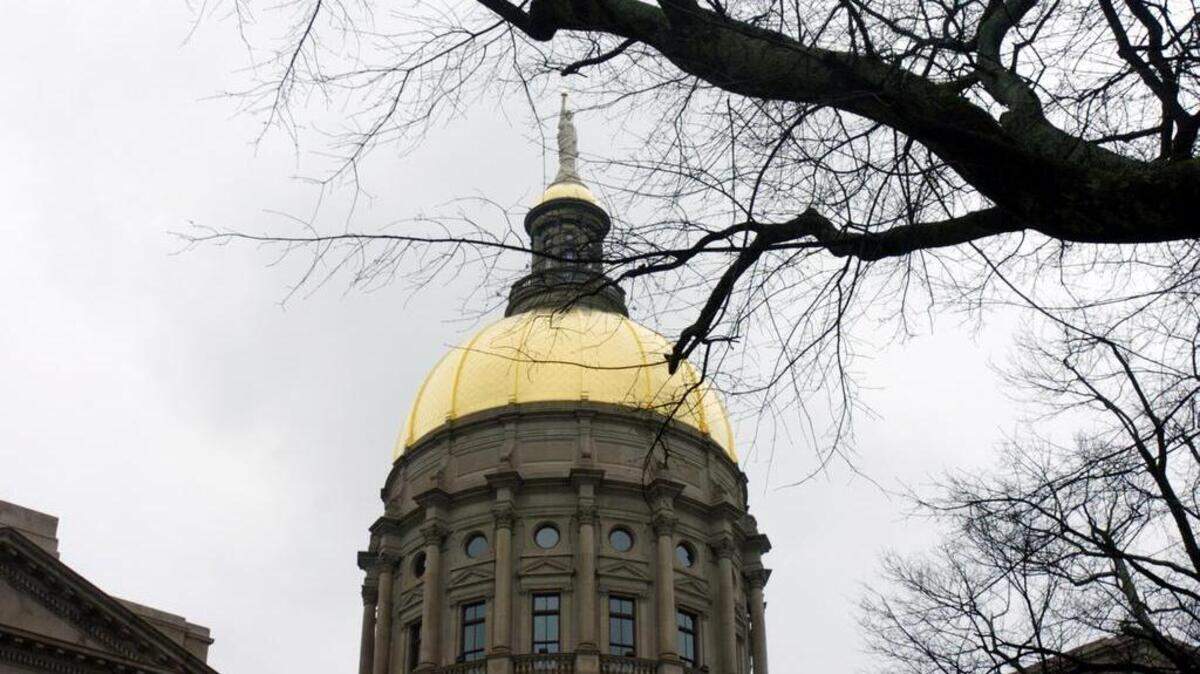
Retired Columbus Technical College President Bob Jones spent 15 years playing the political funding game under the Gold Dome in Atlanta.
He knows it well. He can point to successes such as the nearly $26 million health sciences building that opened in 2010, and he can point to failures.
When he saw Tuesday’s top headline in the Columbus Ledger-Enquirer — “Legislator: Sen. Josh McKoon cost CSU, Infantry Museum state budget funding” — he had an immediate thought.
“Somebody was mad at somebody,” Jones said. “It is common knowledge up there if you get on the wrong side of the right person you are going to pay a price. ”
That is exactly what state Rep. Richard Smith, like McKoon a Columbus Republican, said happened when Columbus State University lost $8 million in funding in the final phase of the state budgeting process and the National Infantry Museum failed to receive almost $2 million in additional funding.
Smith said he was told by Gov. Nathan Deal that the Infantry Museum money would not be available because of the actions of McKoon, who has been at odds with Deal and Republican Speaker of House David Ralston. He said the speaker’s top aide told him McKoon was the reason the Columbus State funding was being pulled, despite the fact that it had been approved in the first versions of the House and Senate budgets.
McKoon said he has not been told by the speaker or the governor that was the reason, and his Senate colleagues on the conference committee that pulled the Columbus State construction funding told him it was being done because it was not all needed in the next fiscal year. Smith was shifting the blame for the lost funding because it was Smith’s role in the Columbus delegation to protect those funds, McKoon said.
Jones calls what happened “Politics 101,” and said it can be a tricky course.
“Everything up there operates in a political system and you have egos and personalities involved,” Jones said. “No matter what you do, you can’t take the politics out of politics. You can’t take people out of the equation. It is politics and every single action has a reaction. You have to anticipate what that reaction will be.”
‘A wake-up call’
Retired Columbus bank executive Jimmy Yancey, too, understands the Georgia political process. He spent six years on the Board of Regents, which governs the University System of Georgia. Yancey has been one of the strongest advocates for Columbus State University, his alma mater. He led a $100 million private fund-raising campaign for the college 15 years ago and is heavily involved in an ongoing $100 million campaign that had raised north of $70 million.
“It has been my experience up until now that politics has always been there, but there has never been a case or an instance where members of our delegation got so out of step with other members of the delegation that it caused us not to get our fair share of the state money going into the University System,” Yancey said. “I do think that this should serve as a wake-up call for the entire business community. We need to get more engaged in the political process in Atlanta. The members of our delegation need to know and understand what our needs are. We have fallen down as a business community.”
Columbus State ended up squarely in the middle of the fray. The Board of Regents budget request included two items for Columbus State — $2 million to provide furnishing, equipment and fixtures for the lab sciences building approved the previous year and $5.9 million in construction funds for renovation and additions to the Schwob Library.
Traditionally, furnishing and equipment funding is allocated in the year after the construction funding. The LeNoir Hall science lab funding was one of six such Board of Regents’ furnishing and equipment requests and the only one not funded.
“We will still be able to continue designing and planning for construction of this project,” Columbus State spokesman John Lester said. “We will remain on schedule if we can get the equipment and furnishings budgeted next year.”
The library project is on hold until funding can be secured, Lester said.
The budget issue for Columbus State started a year ago. The Board of Regents requested $17.4 million for the local projects. Last year’s final budget included $11.87 million, enough to begin the planning for the new lab sciences project, but did not enough for the library additions and renovations.
‘Side issues’
Retired TSYS Chairman Phil Tomlinson is leading the current capital fund-raising efforts of which the centerpiece is a new $25 million privately funded downtown College of Education and Health Professions. Tomlinson said he was disappointed by the loss of state funding.
“I really don’t think it hurts anybody but the students,” Tomlinson said. “Columbus State is the cornerstone of the West Georgia region. With the efforts that are being made, we don’t have time for things like this. We are working to make it a school of choice, and that is happening.”
Tomlinson sees the job of state lawmaker in very simple terms.
“Their No. 1 job is to represent their district and the region and do the best job they can,” Tomlinson said. “Their job is to work together for the overall good of the community. In 41 years at TSYS, I can tell you that more than half of the workforce has degrees from Columbus State. That university is that important to the region. And it is not just TSYS — look at Aflac. What is good for Columbus State is good for the region.”
Former Columbus State University President Frank Brown knows how the game is played, and he says the local legislative delegation is essential to that game.
“When something like this happens, it is generally caused by some side issue that Columbus State University has very little control over,” Brown said. “It just gets in the way of politics in the big leagues.”
By the time you start to see it, it is probably too late because it has probably already happened, Brown said.
“The sad part of this to me is Columbus State University and this community has put so much on the line and the state was not willing to reward that,” Brown said.
Sending a message
Brian Robinson spent more than five years working for Deal in his initial campaign, then as communications director before leaving in August to start his own communications firm. Robinson said he does not speak for the governor or his office anymore, but he was surprised when Smith went public with the complaints of McKoon in the wake of the budget issue.
“Legislators typically don’t call out other legislators, especially when they are in the same delegation and the same party,” Robinson said. “But I know Richard has had to exercise tremendous patience and restraint for years before this happened. He has been working with a speaker that Sen. McKoon called a criminal on the floor of the Senate. Richard is one of the most respected members of the General Assembly but there are only so many burdens he can carry. Speaking out informs voters.”
Retired Columbus attorney Milton Jones has a unique perspective on the funding process. He spent eight years as a state representative in the 1960s; he worked briefly in then Gov. Jimmy Carter’s office handling the legislative agenda and spent six years on the Board of Regents, leaving in 1981. Jones said he was not surprised by what happened to the Columbus State funding.
“It might not be the way it ought to be, but it is the way it is,” he said. “When people do things that displease you, you have to find a way to send a message. And this is one of many tools available.”
After the Ledger-Enquirer reported Smith’s allegations, McKoon said that Smith should go to the U.S. Attorney, if they are true, to see if the governor or speaker have broken any laws.
“It is not a crime, though it might ought to be,” Jones said, laughing. “What it is is digging the hole deeper. If anybody thinks they have a problem now, you got real problems when you start talking about putting people in jail.”
Show of power
Former Sen. Seth Harp, whom McKoon replaced six years ago in the General Assembly, said a lot of real political power rests in the governor’s office, and it can be flexed in many ways.
“Georgia has an extremely powerful governor — far more powerful than many other states,” Harp said. “I served on a number of national commissions and committees, and by doing that I came to realize how powerful our governor is. He has control of the budget. I know they say the budget starts in the House, but all of us that have ever touched it knows it starts with the governor. And, then at the end, if he doesn’t like it, he can pull it out.”
Harp is referring to the line-item veto, where the governor can remove individual items that passed the General Assembly. Smith said that when he met with Ralston’s Chief of Staff, Spiro Amburn, about two weeks before the session ended, he was told Columbus State funding was coming out of the budget and if the General Assembly kept it in the budget that the governor would veto it.
The first sign there was trouble came in January when Smith and the leadership team of the National Infantry Museum met with Deal to ask the state to put up $2 million toward the construction of a memorial for the Global War on Terror.
“The governor and his chief of staff made it clear they were not giving any money and the reason was Sen. McKoon,” Smith said.
The Infantry Museum did get $100,000 in the final budget, but Smith said he has been told the governor would veto that.
Harp said the split in the delegation concerns him most.
“It saddens me to see the infighting, especially in the local Republican delegation,” Harp said. “Richard should have given him a heads up. Richard is a tremendously polite person. My observation is sometimes he just wouldn’t say things because of that. But I am an old Marine and if I thinks it stinks, I will say it stinks.”
As soon as Smith knew there was a sign of trouble, he should have called McKoon, Harp said.
“He should have gone to Josh right then and told him he was in trouble with the governor,” Harp said. “Then he should have gone to him again and told him he was in trouble with the speaker. I don’t know what Josh would have done, but if he didn’t do the right thing, then it would have been ‘Shame on Josh.’”
The entire issue is alarming, Yancey said. He pointed to past Columbus legislative delegations that were able to allocate state funding for projects such as the RiverCenter for the Performing Arts, the Columbus Convention & Trade Center, Columbus Tech and Columbus State University. At one point in the 1990s, the House/Senate budget conference committee — the place where Columbus State got gigged this year — had three of the six legislative members from Columbus. They were then Rep. Tom Buck, Rep. Calvin Smyre and then Sen. Pete Robinson.
“Back then we had an agenda and our legislators knew exactly what that agenda was, and that served us well,” Yancey said. “I wouldn’t say that we had a single all-star, but we had a lot of mighty good players who played as a team for the benefit of the community. When they handed out money, we may not have been at the front of the line, but we sure were close to it.”
“I feel like a lot of really good people got punished here just to punish Josh,” Yancey said. “The governor and the speaker got a lot of support here. I feel like a lot of folks other than Josh got punished.”
Chuck Williams: 706-571-8510, @chuckwilliams
This story was originally published April 2, 2016 at 10:15 PM with the headline "Analysis: Funding snub part of political game."