
Private money helped save GA elections during COVID. What would a ban do to counties?
State lawmakers and Georgia’s chief election officer praised Columbus for its election performances in the middle of a pandemic that made voting more costly and complex. A big factor was the more than $935,000 in private funds that helped double Muscogee County’s typical election operations budget.
But a recently proposed Georgia house bill could prohibit those future gifts and donations.
HB 62 would prevent local election boards and officials from accepting or spending any private funds from organizations, political parties and private individuals.
The Republican lawmaker who authored the bill says it’s the government’s role to fund elections, and his proposal would prevent potential “outside influence” on the voting process in Georgia.
Election officials and organizations said those nonpartisan funds helped supplement tight budgets — an issue that existed before the COVID-19 pandemic. In places like Columbus, the grants helped fill short-term needs brought on by the pandemic and allowed the county to open several additional early in-person voting locations.
“The funding basically helped fill gaps in election administration that will exist if philanthropic funding is not allowed,” said Christian Grose, the Academic Director of the University of Southern California’s Schwarzenegger Institute for State and Global Policy. “Even before COVID, election administration is often the last budget items a lot of counties think of.”
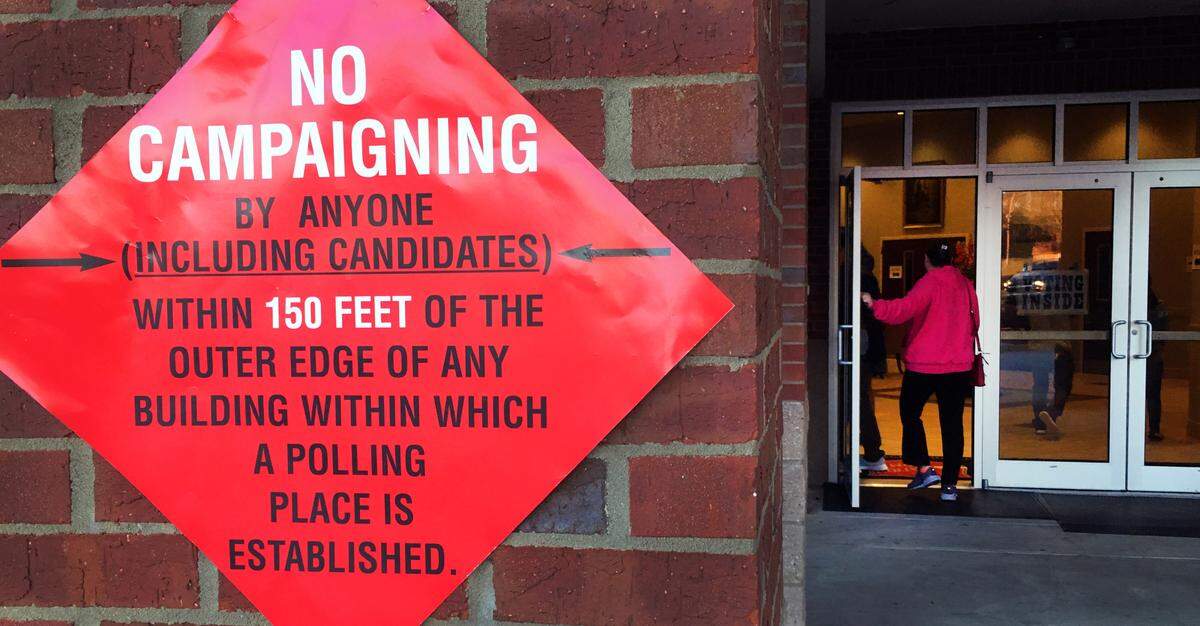
Why do some lawmakers want to ban election boards from accepting private funds?
Under the proposed bill, county election offices could only accept public funds from federal, state and local governments to support their voting operations.
Counties are responsible for funding their own elections, but 2020 featured new budget challenges as COVID-19 created additional needs. In March 2020, Congress allocated $400 million for election services in response to the pandemic. But some voting rights and public policy groups said the funds weren’t going to be enough. The Brennan Center for Justice at New York University Law School in April estimated it would take $4 billion to ensure elections from then until November were “free, fair, safe, and secure.”
Private groups then began stepping up, providing grants to help with hiring additional staff, opening polling locations and purchasing personal protective equipment and other needed supplies.
State Rep. Joseph Gullett, a Republican from the northwest city of Dallas, introduced HB 62 after learning about the private grants during a government affairs committee meeting. Five other Republican lawmakers have signed on to the bill, and it has been assigned to the Special Committee on Election Integrity.
In an interview with the Ledger-Enquirer, Gullet mentioned two organizations by name that gave private grants in Georgia during the 2020 elections — nonpartisan groups The Center for Tech and Civic Life and the USC Schwarzenegger Institute.
The Center for Tech and Civic Life is a Chicago-based public nonprofit that issued grants to election offices around the country after receiving roughly $350 million in donations from Facebook CEO Mark Zuckerberg and his wife, Priscilla Chan. The Schwarzenegger Institute likewise issued grants nationwide meant to help counties with polling site and COVID-19-related costs. The organization takes its name from its chairman, the actor and former Republican California Gov. Arnold Schwarzenegger.
The bill was not filed in response to the outcome of the elections. The organizations, Gullett said, were a big help during the pandemic. But it’s the responsibility of local governments to fund these elections. The Republican lawmakers said he isn’t worried about how his bill might affect future voter turnout. Making sure elections are properly funded, he said, is part of proposed election reforms.
”I think everyone should be appreciative of what (the organizations) did,” he said. “But what happens when the pandemic is not there? We need to get governments to fund it. Counties are the responsible body for the elections. Not the state. We need to make sure counties step up and fund elections and don’t have any kind of outside influence. The one thing I don’t want is … a presidential election presented by Coca-Cola.”
“It’s not a goal to unfund elections,” he added. “That’s not the goal at all.”
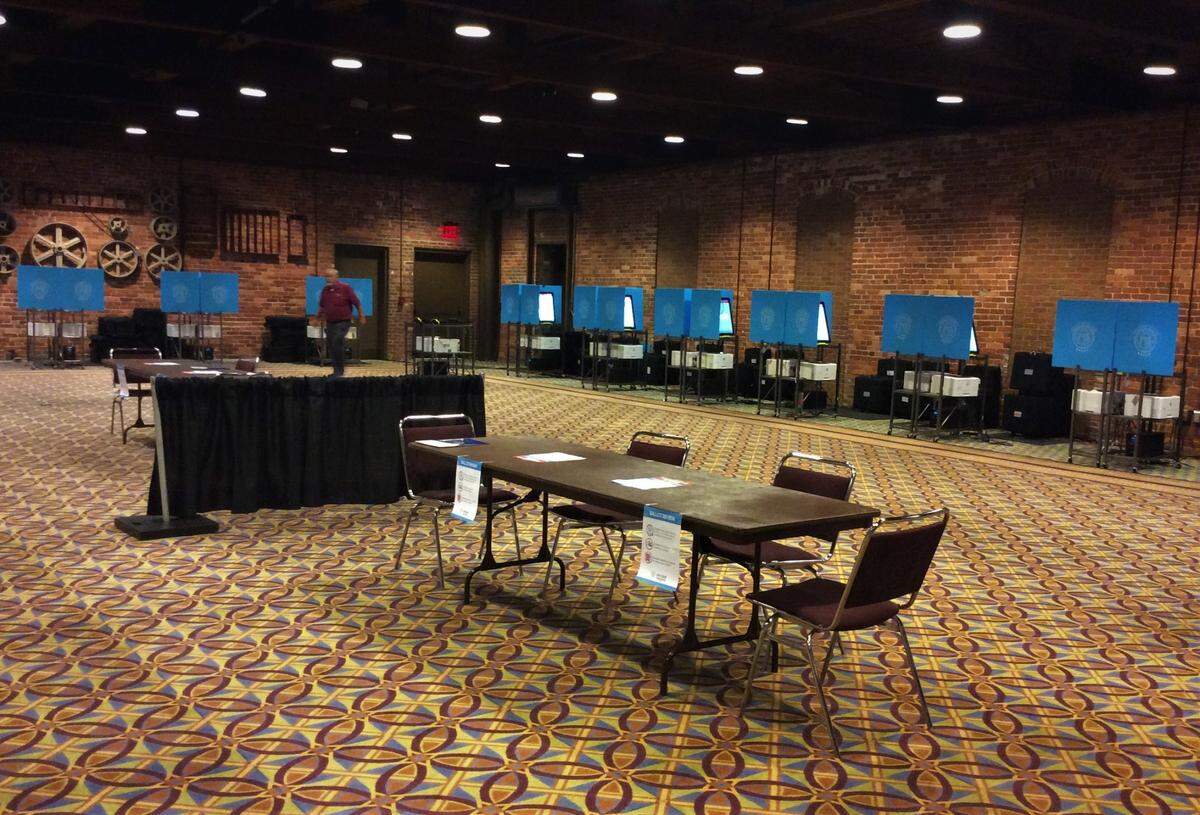
How many Georgia counties received private funding for elections in 2020?
Election officials across the state received funding from private and federal sources to offset increased costs associated with COVID-19. Georgia received roughly $10.9 million in federal coronavirus relief funds for election operations, according to data from the U.S. Election Assistance Commission.
Private grants boosted county budgets. The Center for Tech and Civic Life gave COVID-19 response grants to local counties that applied to receive funding. Of Georgia’s 159 counties, 43 were awarded grants.
The group gave to both red and blue-leaning counties. President Donald Trump won 27 of the counties that received grants from the nonprofit, according to data from The Center for Tech and Civic Life and Georgia’s secretary of state office.
Columbus received two grants from the organization totaling nearly $725,000, said Nancy Boren, Muscogee County’s election director. The organization also gave $9.4 million to DeKalb County, $6 million to Fulton County, $4.2 million to Gwinnett County, nearly $1.7 million to Douglas County, $765,000 to Cherokee County and $360,000 to Paulding County, according to the Atlanta Journal-Constitution.
Muscogee County also received a $210,675 grant from the Schwarzenegger Institute. Other Georgia counties that received funding from the organization include Clayton, Chatham, Douglas, Early, Gwinnett, Lee, Randolph and Taliaferro, said Grose with the Schwarzenegger Institute.
Boren and her office used the funds to open four additional early-voting sites in November and five before the January runoffs. The county election board also acquired personal protective equipment for poll workers and staff.
More than 500 poll workers and 100 advanced voting workers were trained, and hazard pay was provided to poll workers. Workers processed 32,000 absentee ballot applications for the general election and more than 30,000 for the runoff, Boren said.
“Elections directors, we discussed amongst ourselves, and we thought, you know, we’re not just providing opportunities for Democrats or opportunities for Republicans,” she said. “We (were) providing opportunities for the citizens of our counties.”
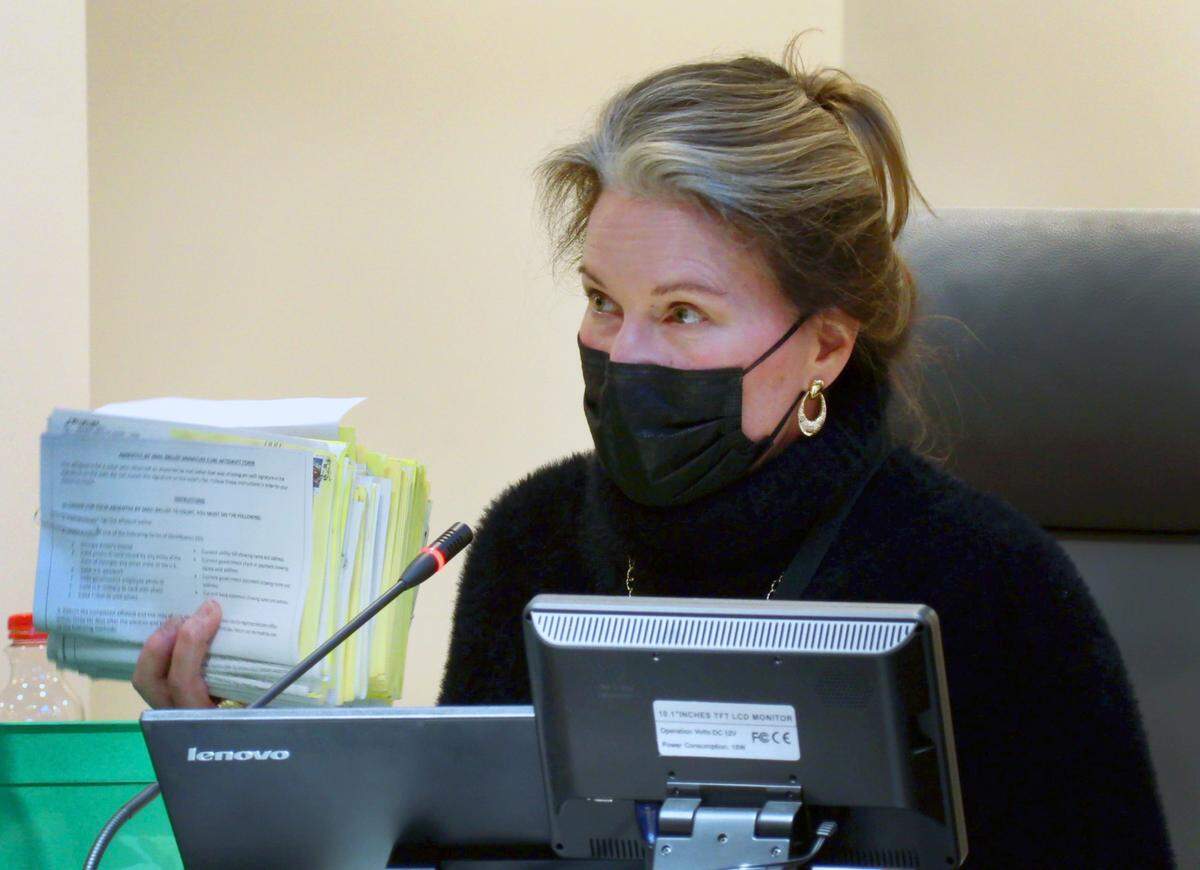
What effect would the bill have?
For Grose, it’s a straightforward equation — more funding, whether it comes from government or private sources, translates to more voting locations and more early voting sites. Philanthropic donors aren’t the long-term solution for election funding, but Georgia counties will need more money to run elections if this bill passes, he said.
“If a bill goes forward to ban philanthropic, nonpartisan funding without additional funding from the state, it is really going to create a budget pinch for local election officials and counties,” he said.
The private election grants were a “new thing” to Muscogee County in 2020, Boren said. The county election board would have to approve future grants. But based on experiences in 2020, it’s likely the county would seek out grant funding in the future if it’s still allowed. Two hotly contested races will be on the ballot in 2022 —the governor’s race and Sen. Raphael Warnock’s seat.
“This allowed us to look and reach. ...I could foresee in the future, you know, maybe having to wait a little bit longer in the line to early vote or perhaps a little bit longer to vote on election day,” Boren said. “I think we all compete for scarce resources in government, and it’s not often that elections rise to the top of the pile.”
This story was originally published February 15, 2021 at 6:00 AM.