
Black women in 3 of GA’s poorest counties will get more than $20k in cash. Here’s why
A new program will give more than 200 women in three of Georgia’s most impoverished counties cash payments with no strings attached as part of the largest guaranteed income experiment in the South.
In Her Hands, an initiative led by The Georgia Resilience and Opportunity (GRO) Fund and GiveDirectly will give a group of roughly 210 women from Clay, Randolph and Terrell counties $20,400 each over two years.
Recipients must have been impacted by COVID-19 and make less than or equal to 200% of the federal poverty line to be eligible. For a family of two, that’s $36,620 a year, according to the organization. The initiative is donor-funded.
The program was designed by and for Black women, though women of all races are welcome to apply, GRO Executive Director Hope Wollensack told the Ledger-Enquirer. Transgender women and non-binary people are eligible to receive the funds.
The In Her Hands program is focused on Black women because they face more economic inequality and insecurity than nearly every other demographic, Wollensack said.
According to data from The Georgia Budget and Policy Institute, Black women are twice as likely to be living in poverty than white women. Black women, on average, make $.63 cents for every dollar that white men make in Georgia.
“We wanted to go somewhere where we would have an impact,” Wollensack said. “Something isn’t adding up here. Not only are [Black women] the most likely to be working but we’re also the most likely to be stuck in poverty. What we’re grappling with is this idea that hard work alone or just having a single job is enough to make it.”
How will the guaranteed income program work?
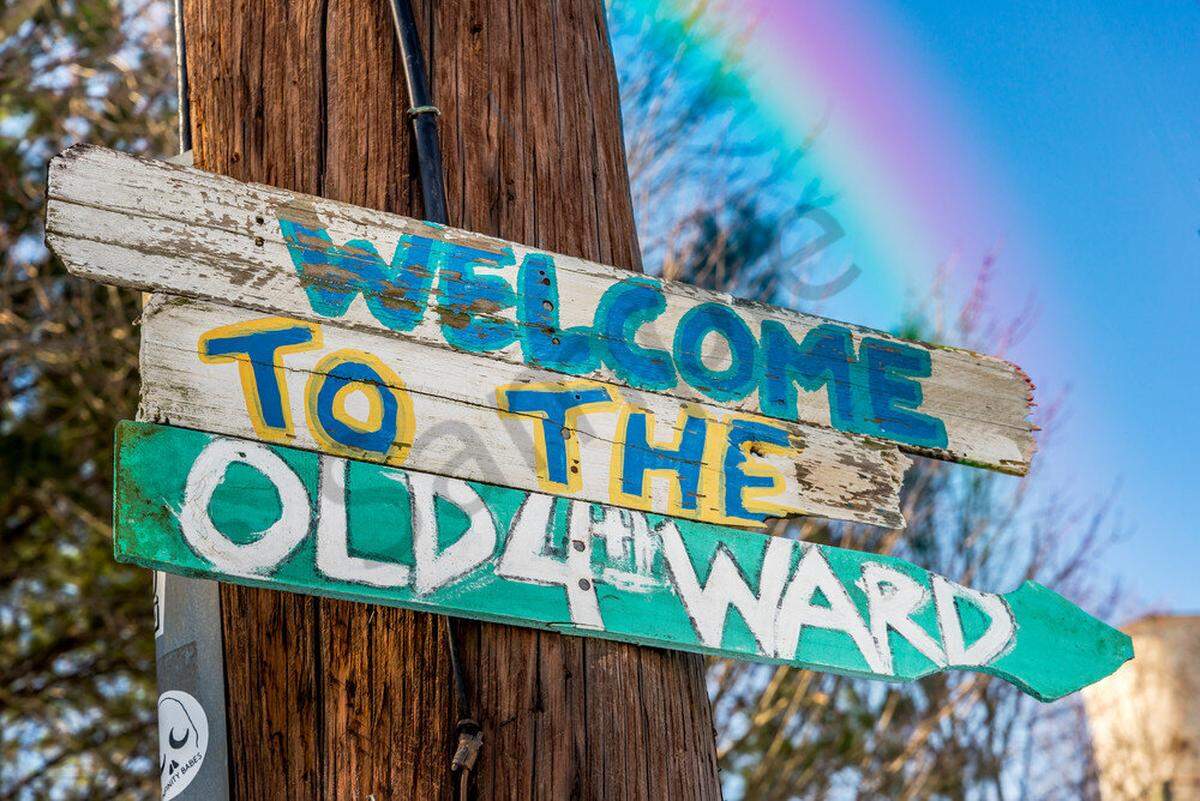
The Clay, Randolph and Terrell program is In Her Hands’ second project site in Georgia. The first is in Atlanta’s Old Fourth Ward and includes the neighborhood where Dr. Martin Luther King Jr. grew up and later preached about guaranteed income.
In the final years of his life, the Civil Rights leader fought for the program. During Senate testimony in 1966, King said in order to abolish poverty he was “convinced that the simplest approach will prove to be the most revolutionary — the guaranteed annual income.”
A third project site that will be located in a suburban part of the state has yet to be announced. Roughly 650 Georgia women will participate in the program between the three sites.
The approximately 210 women from the three southwest counties will be randomly selected via a lottery. Half of the recipients will receive $850 a month for 24 months. The other half will receive a first, lump sum payment for $4,300 followed by 23 months of $700 payments.
The money can be used for any purpose, from paying for medical care to starting a business. Organizers say the program is in stark contrast to many existing safety net initiatives in the South that include conditions like strict work requirements.
The differing amounts will provide the group with research about what frequency and mixture of cash payments are most useful. Residents can participate but are not required to take part in surveys and interviews offering information regarding their purchases.
The lump-sum idea came from conversations in the old Fourth Ward. Many residents there told the group they needed a jump in their income to offset a potential loss in state and local benefits, Wollensack said.
“Some participants may see a decline in their benefits,” she said. “Our amount is really designed that if they do experience a decline in their public benefits that they are better off still.”
The organizers hope this program gives some insight into how additional economic security promotes a person’s agency and choices. The group has hunches about how the money will be used, Wollensack said.
Smaller and more regular payments will more likely be used on bills and household expenses. The lump-sum payment is typically used on larger goods or investments like paying for a semester of school.
“Existing research on cash transfers indicates that usually when people receive lump sum amounts they tend to spend it on medium-sized purchases and more durable goods — think of your washer, dryer, refrigerator or car,” Wollensack said. “Like five or 10 year goods that you hold on to for a long period of time.”
The three southwest Georgia counties were selected after program officials spoke with a coalition of organizations that have worked in the region.
Several factors made southwest Georgia a good site for the program. The median Black household income in the three counties is around $24,000 a year, and poverty rates are relatively high, Wollensack said.
Of Georgia’s 159 counties, both Terrell (27.8%) and Randolph (27.4%) are among the top 15 for the highest estimated percentage of residents in poverty. Clay (24.1%) ranks in the top 30, according to 2020 data from the U.S. Census Bureau’s Small Area Income and Poverty Estimates program.
Like Atlanta’s Fourth Ward, these counties also have a connection to King and the larger Civil Rights Movement. Terrell County is where activist Prathia Hall uttered the words ‘I have a dream.’ She said the words as she prayed aloud during a service commemorating Mount Olive Baptist Church in 1962 after members of the Ku Klux Klan burned it down. Her prayer inspired King’s iconic speech of the same name.
“A lot of guaranteed income conversations have been focused in pretty major cities. We know that economic insecurity and poverty extends well beyond city limits,” she said. “There’s this incredible sort of history here and community insight and assets that are not often uplifted that we hope our program could help to uplift.”
How can I apply?
The application for Clay, Terrell and Randolph counties opened June 6. The deadline to apply is June 26 at 11:59 p.m. Further details can be found at www.InHerHands.us.
If the program is successful, it could be a model for economic and social safety net policies that work for everyone, Wollensack said.
“We want to promote greater financial stability for the women who will be enrolled in this program,” she said. “If (the women) in Georgia are better off at the end of this program in two years, that is a huge success for us.
“We’re hoping to learn how we can create more just and inclusive policies that ensure that every person can live a decent and dignified life regardless of the background that they come from,” she added. “Our backgrounds don’t have to determine so much about how we experience the economy and live our lives day to day.”
This story was originally published June 13, 2022 at 12:29 PM.