
GA has one of biggest targets in Southeast if there’s nuclear war, data shows. Are you at risk?
Although nuclear war is still unlikely, global tensions are spiking, and Georgia is home to a key military infrastructure that has been tapped as strategically important.
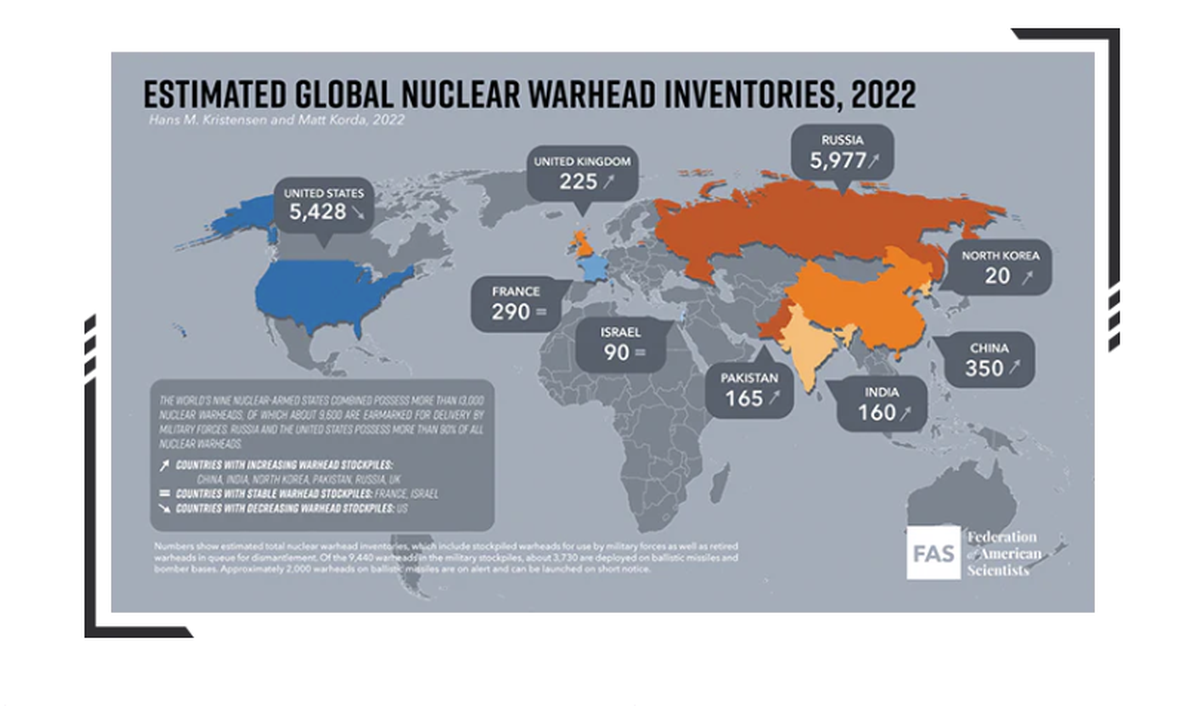
With U.S. and Israeli military operations targeting Iran and the Doomsday Clock sitting 85 seconds to midnight, it’s worth knowing where Georgia stands on the nuclear risk map.
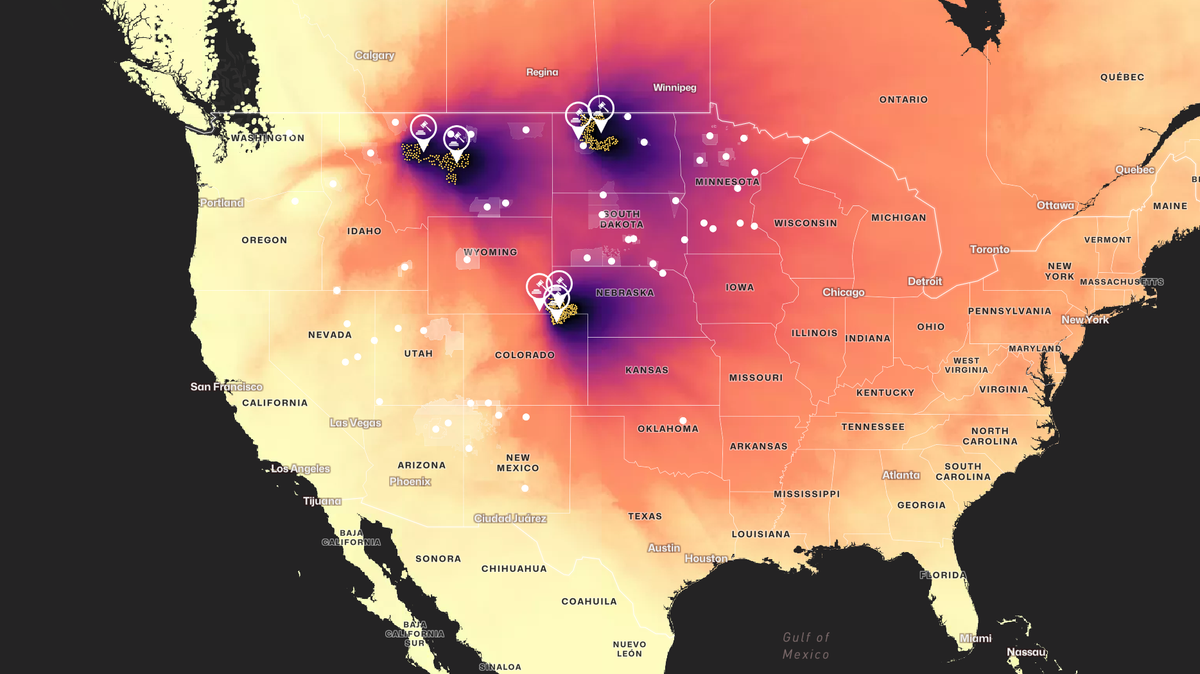
The website Under the Nuclear Cloud is supported by the Brown Institute for Media Innovation and the Princeton Program on Science and Global Security and offers predictions about the risk from nuclear fallout in the US.
Should Georgia be worried?
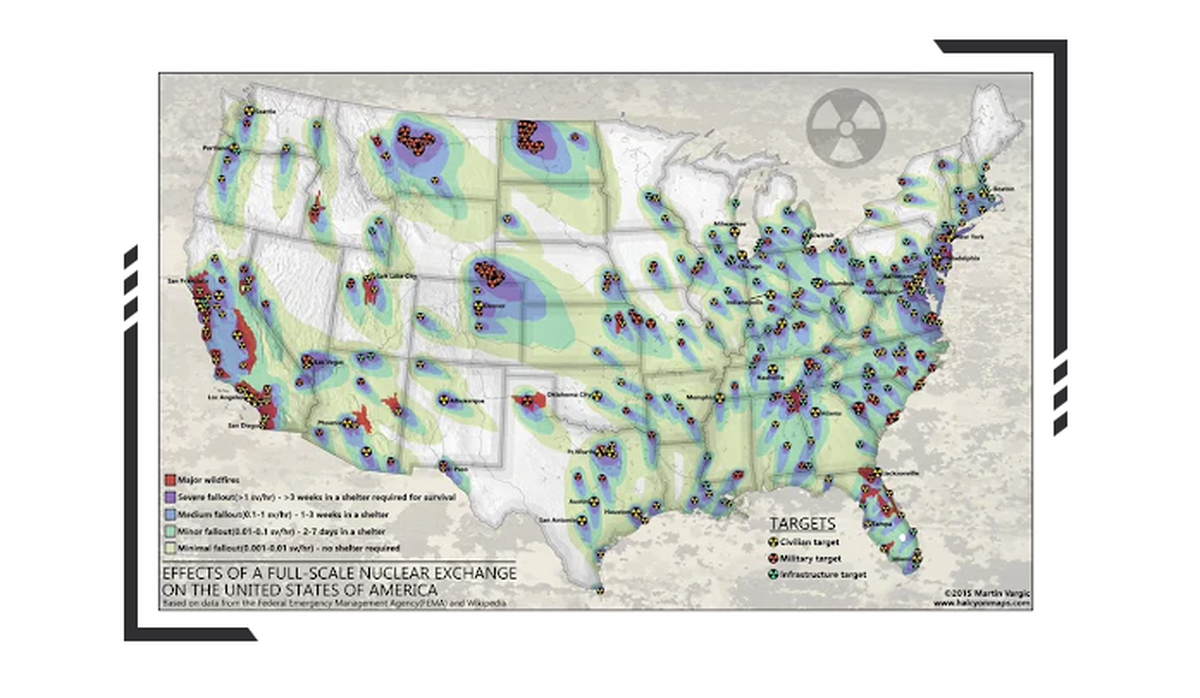
Experts say that in the event of a large-scale nuclear conflict, opposing forces would likely target key military infrastructure connected to nuclear deterrence systems, one of which is in Georgia.
Highest risk
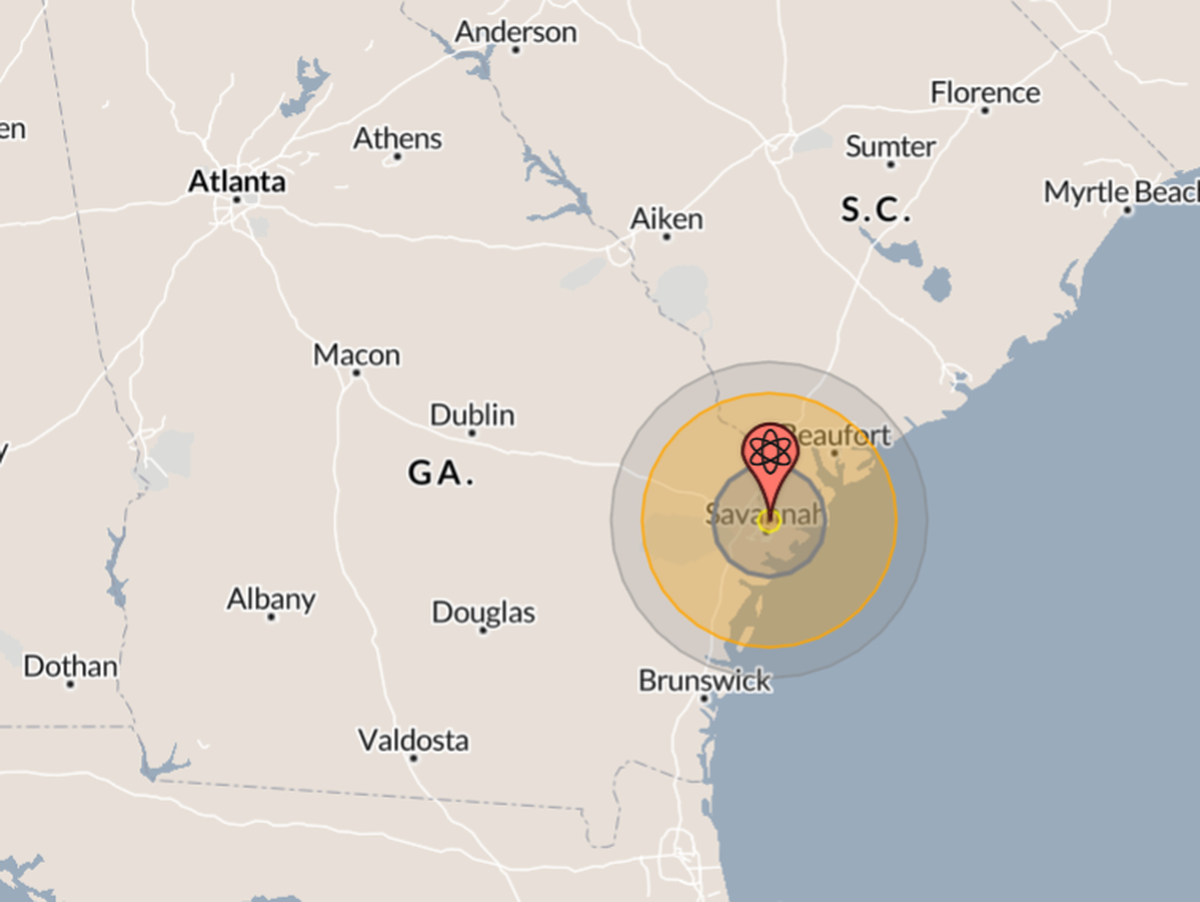
According to World Population Review, the Kings Bay Naval Submarine base in Savannah has been identified as among the highest‑priority nuclear targets in the Southeast.
Because it hosts the Navy’s Atlantic‑based ballistic‑missile submarines, which carry part of the U.S. nuclear arsenal, it is of extreme strategic importance.
Lowest risk
Smaller towns without critical infrastructure are at in the lowest danger.
- Low-population areas
- Inland regions far from high-risk areas
- Communities without major military installations, ports or refineries
- Towns without airports
Is Fort Moore at risk?
Experts say that nuclear targeting is driven by military value, not population size or geography alone.
Fort Moore/Columbus is not considered a top‑tier, first‑strike nuclear target and Columbus, Georgia doesn’t meet the criteria that would put it at high risk.
- Far enough inland
- Not a nuclear sub base
- Not a national command center
What makes a site a strategic target?
Areas are considered strategically high-value if they serve critical national defense functions or house assets vital to a country’s ability to respond after an attack.
Key factors include:
- Military command and control centers: facilities that coordinate national defense and nuclear responses
- Missile launch and storage sites: locations housing intercontinental ballistic missiles (ICBMs), submarine bases, or bomber airfields
- Defense industry and research hubs: areas that produce or maintain nuclear-capable weapons systems, radar networks, or satellite communications equipment
- Transportation and energy infrastructure: ports, rail hubs, and power grids that move essential military or industrial material
- Proximity to adversary or allied Forces: locations near key international borders, coastlines, or allied bases
“Safest” places in the US
John Erath, Senior Policy Director for the Center for Arms Control and Non-Proliferation, said “Nowhere is truly ‘safe’ from fallout and other consequences, like contamination of food and water supplies and prolonged radiation exposure.”
However, there are four areas of the US that would be mostly in the clear, according to a NUKEMAP/Mira Safety analysis.
- West Texas
- Most of Nevada
- Michigan
- Wisconsin
However, Michigan and Wisconsin would likely become uninhabitable in the coming nuclear winter, so realistically, western Texas and Nevada are the two states that hold up best.
What to do in an emergency
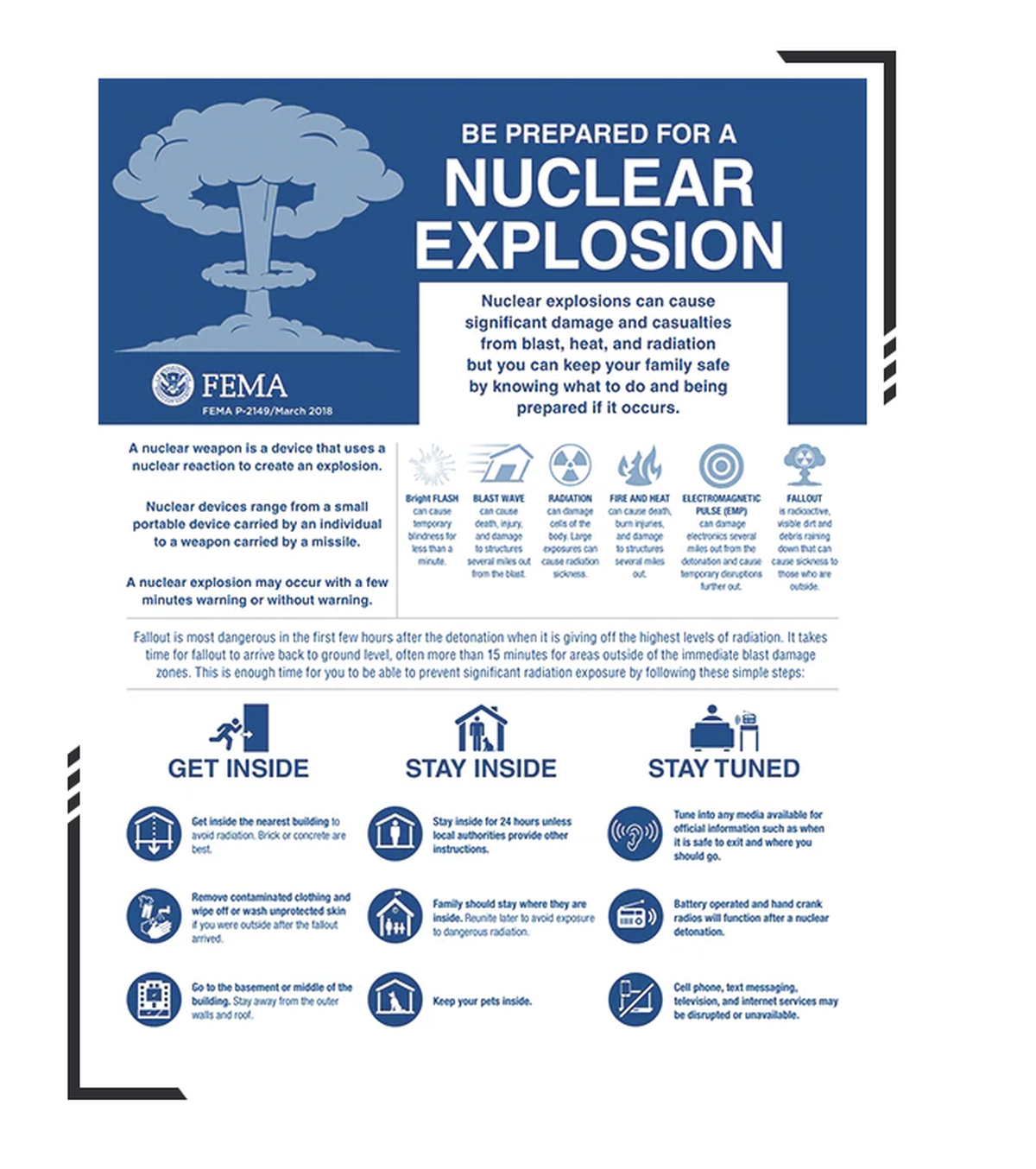
IF there is a credible nuclear threat or detonation warning, the International Commission on Radiological Protection (ICRP) has recommendations.
Where to go
- Find shelter, fast. You likely have about 10 minutes before dangerous fallout starts to arrive
- Go to the center of a large building or a basement like brick or concrete structures, underground parking garages, or subways. You can text SHELTER and your zip code to 43362 to find an open emergency shelter
- Stay in the most protective spot for 12-24 hours
What to have
- Bottled water and portable water filters. Plan for one gallon per person per day.
- Non-perishable food and energy bars
- Flashlights and backup batteries
- Fire-starting tools
- Cash
- First-aid kit
- Warm clothing and shelter equipment
- Multi-tool or knife
- Battery-powered or hand-crank radio
- Important ID documents
- Compass and physical maps
Organizations to trust
- Georgia Emergency Management and Homeland Security Agency (GEMA/HS): 1-800-TRY-GEMA
- National Weather Service Peachtree City (NWS): (770) 486-1133
- Under the Nuclear Cloud map for fallout risk