
5 airports in GA have collision hotspots, the FAA says. Here’s where
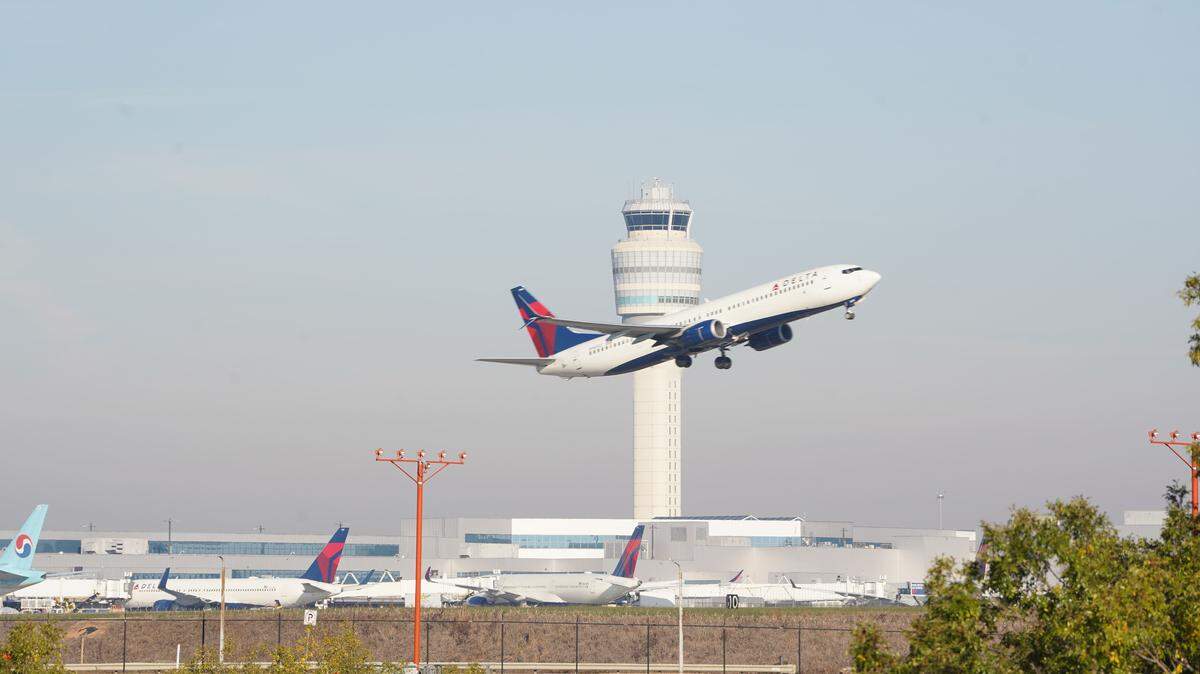
Hartsfield-Jackson Atlanta International Airport handled 106.3 million passengers in 2025, and more Georgia travelers will likely find themselves boarding a plane in the near future. However, travelers should be aware that five Georgia airports have been designated as danger “hotspots” by the federal government.
What is a hotspot?
The Federal Aviation Administration keeps a running list of the most collision-prone “hotspots” on airport grounds in the country. The FAA defines a surface hotspot as a stretch of pavement where something has gone wrong or where the layout is confusing enough that something easily could.
Causes:
- Complex or confusing intersections where taxiways meet runways at unusual angles
- Poor sight lines in areas the control tower can’t see
- Marking, signage or lighting that doesn’t meet standard expectations
- Traffic volume and airport layout that increase the chance of a wrong turn onto an active runway
Georgia’s flagged airports
Hartsfield-Jackson Atlanta International Airport (ATL)
The Atlanta airport has two active hotspots, and both are close to the FBO ramp, which is the area where private and charter aircraft are handled.
- The intersection of Taxiways C and D at Runway 08L-26R. The hold short line, where planes must stop before crossing an active runway, is only 250 feet from the ramp exit. The runway hold bar is also angled in an unusual way that can catch pilots off guard.
- The same taxiways at a parallel runway (08R-26L), where the hold short line is just 380 feet from the runway crossing and 70 feet from another taxiway centerline. Transitioning between the parallel runways here requires extra caution.
Peachtree DeKalb Airport (PDK)
PDK, the busiest general aviation airport in the Atlanta metro, carries three hotspots, the most of any Georgia airport on the list.
- Southbound traffic on Taxiway B frequently misses the required turn onto Taxiway A when headed to Runways 03L or 03R.
- Pilots expecting Runway 03R often fail to hold at 03L — a critical error when both runways are active.
- Aircraft exiting Runway 03R/21L at Taxiway G and told to hold short of the adjacent runway (03L/21R) have entered that runway without authorization.
Augusta Regional Airport at Bush Field (AGS)
Augusta’s commercial airport carries one documented hotspot.
- At the intersection of Taxiway E and Runway 17-35, the concern is the geometry of that intersection is specific enough to be flagged, but the FAA record is spare on details.
Columbus Airport (CSG)
Columbus’ regional airport has two hotspots, both centered on geometry and signage.
Savannah/Hilton Head International Airport (SAV)
Savannah’s airport has two hotspots, both related to a common and underappreciated problem: areas the control tower simply cannot see.
- A section of Taxiway E from approximately 310 feet west of Aerodrome 28 is not visible from the airport traffic control tower.
- A stretch of Taxiway A, from the approach end of Runway 01 running about 900 feet north, also falls outside the tower’s sightline.
When a tower can’t see a section of taxiway, it relies entirely on pilots following instructions and reporting their position accurately, which is a workable system until it isn’t.
Hotspot data is drawn from the FAA’s Airport/Facility Directory, effective Nov. 27, 2025. Listings remain active until the FAA determines the risk has been reduced or eliminated.
This story was originally published April 9, 2026 at 6:00 AM.