
GA is in a level 1 drought. Here’s what that means — what comes next
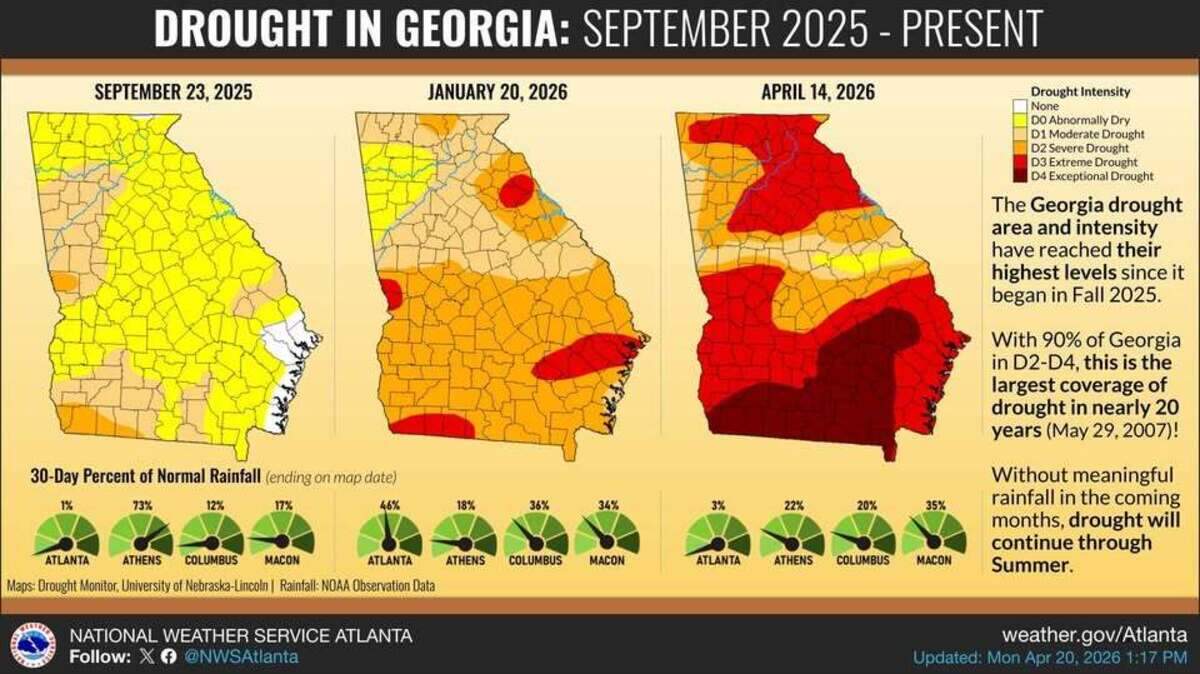
Even though April showers are expected, Georgia has been much drier this year. In response, The Georgia Environmental Protection Division declared a statewide a level 1 Drought Response Level 1.
This is the first step in a three-level escalation ladder that could eventually put restrictions on residents’ water use.
Why now?
Georgia has been dry and unusually hot for months, and is enduring its most intense drought since 2007, according to the National Weather Service.
Contributing conditions
- Precipitation shortages.
- Low stream flows.
- Low groundwater levels.
- Low reservoir levels.
- Below-normal soil moisture.
- Short-term climate forecasts pointing to continued dry conditions.
What triggers a drought declaration?
The Environmental Protection Division tracks circumstantial factors and uses the U.S. Drought Monitor, published weekly by NOAA, as one key tool.
The factors
- Precipitation
- Stream flows
- Groundwater levels
- Reservoir levels,
- Short-term climate predictions
- Soil moisture.
Drought levels, explained
There are three levels, with level one being the least emergent. Georgia is currently in level 1 status.
Level 1:
- Public awareness campaigns required.
- Outdoor watering between 4 p.m. and 10 a.m. allowed and unaffected.
- No mandatory restrictions yet.
Level 2:
- Landscape watering limited to two days a week.
- Certain outdoor uses like ornamental fountains, noncommercial pressure washing, car washing prohibited.
Level 3:
- Highest level
- Temporarily bans all landscape watering.
Georgia has never reached Level 3 under the current rules, adopted in 2015.
What to do now
Georgia is currently under a level 1 warning. It doesn’t require any real action, but it should be considered a warning.
- Stick to the state’s non-drought outdoor watering schedule
- Watch for notices from your water system. They’re required to reach you
- Fix leaky faucets, run dishwashers and washing machines full, and hold off on filling pools or pressure washing
Tips for water conservation
The American Red Cross offers some advice for drought preparedness and water conservation.
For indoors:
- Take shorter showers.
- Turn off the tap while brushing your teeth or shaving.
- Run only full loads of laundry and dishes.
- Keep drinking water in the refrigerator instead of running the tap until it gets cold.
- Water plants only when needed, and do it early in the morning to reduce evaporation.
- Use a broom instead of a hose for driveways and sidewalks.
- Avoid washing cars unless necessary, and use a shut-off nozzle if you do.
For outdoors:
- Use mulch around trees, shrubs, and garden beds to hold moisture.
- Water early in the morning or later in the evening to reduce evaporation.
- Water deeply but less often so roots grow stronger and you avoid wasteful runoff.
- Check irrigation systems for leaks, broken lines, and puddling.
- Use drip irrigation, soaker hoses, or other low-volume systems that deliver water directly to rots.
- Aim sprinklers only at plants, not sidewalks, driveways, or patios.
- Adjust sprinkler timing based on weather and local watering needs.
- Plant drought-tolerant or native plants that need less watering once established.
- Reduce or replace thirsty lawn areas with xeriscape, ground cover, or other low-water landscaping.
- Avoid watering on windy days
Stay informed
- Sign up for National Integrated Drought Information System (NIDIS) emails
- Visit the NDIS drought portal
- Check the US Drought Monitor
- Use the National Weather Service (NWS) drought monitoring
If you have anything you would like to know or read more about, email me at srose@ledger-enquirer.com or find me on social media.