
Hantavirus patients were being monitored in a GA hospital. Are you at risk?
Following the initial news of the hantavirus outbreak on the cruise ship MV Hondius, two Georgia residents were being monitored at an Atlanta hospital.
Dr. David Fitter, incident manager for the Centers for Disease Control and Prevention’s hantavirus response, told reporters last week there were 41 people being monitored, two of which were being cared for in Emory University Hospital’s specialized biocontainment setting.
He added that the risk to the public is low. However, their top priority is “the health and safety of both the passengers who were on the ship and American communities,” he said.
WRDW reported Monday the two Emory patients were discharged Friday and were transported to a quarantine facility in Nebraska.
There were no confirmed hantavirus cases in the United States, Fitter said last week. The Hill, however, reported Monday an adult in Colorado died from a hantavirus case but was not linked to the outbreak on the cruise ship, according to a news release from the Colorado Department of Public Health and Environment
How did hantavirus threat get to Georgia?
The outbreak originated in April aboard the Dutch ship sailing from Argentina. Most of the exposed passengers have been repatriated, including two Georgia residents, according to The Hill.
Here’s what we know:
- 9 confirmed cases.
- 3 people died.
- Spread likely caused human-to-human transmission.
- American and international passengers were on the ship.
- The MV Hondius carried American and international passengers.
- A symptomatic passenger left the ship and flew to Johannesburg.
- 18 Americans were on the ship and were repatriated to the United States.
What happened at Emory?
The same biocontainment unit that treated Ebola patients monitored two Georgia residents at Emory’s Serious Communicable Diseases Unit.
The couple returned to Georgia and were moved to Emory for specialized monitoring, with one passenger initially showing mild symptoms. The individual has since tested negative.
The Georgia Department of Health reports doctors at Emory said one individual received treatment while the other was monitored.
What is hantavirus and how do you get it?
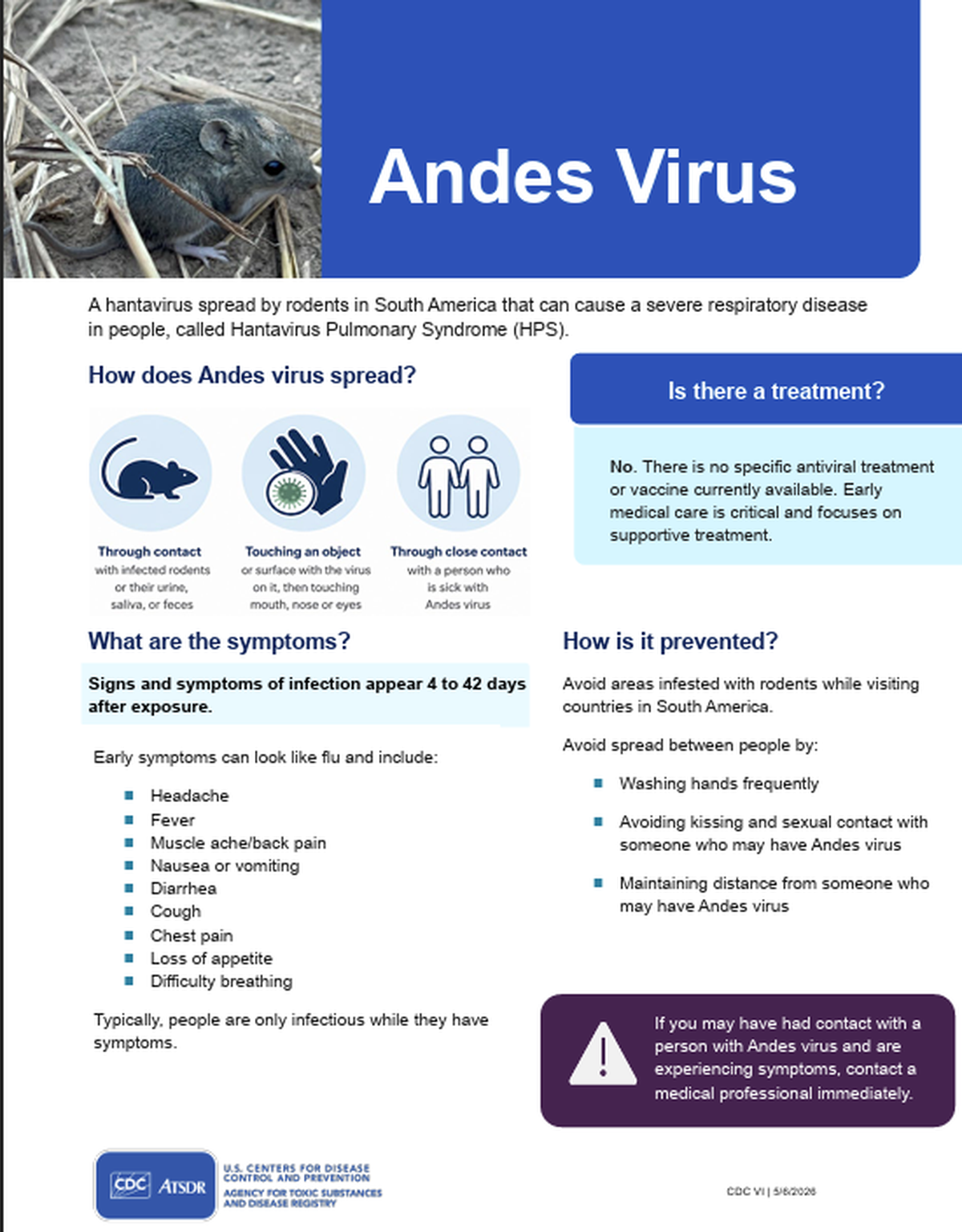
The CDC defines the hantavirus as a family of viruses typically spread by rodents, but the Andes strain involved in this outbreak is unusual. It can pass from person to person.
How to get it:
You can contract HPS through contact with infected rodent urine, droppings, saliva or nesting materials, or through close contact with an infected person’s bodily fluids or respiratory secretions.
There is no vaccine for hantavirus, and the treatment is supportive care, typically received in an ICU.
You cannot get it from casual contact, touching surfaces or being in the same room as someone who is infected, but HPS has a mortality rate of roughly 38%, so the timing of a diagnosis is critical.
Symptoms:
Day 1 to 8
- Fatigue
- Fever
- Muscle aches in thighs, hips, and back
- Headaches
- Dizziness
- Chills
- Nausea
- Vomiting
Late stage
- Rapidly progressing coughing
- Severe shortness of breath
- Very low-blood pressure
- Bleeding
Do not wait to see a doctor if you have potential exposure history and develop fever or breathing difficulty.
This is not a community-spread situation, and the risk to the public is low. The GDPH is coordinating with the CDC on monitoring protocols, and most Georgia residents are not in direct danger.
Georgians who were on the ship or on flights with a symptomatic passenger should have been contacted by public health officials. If not, call GDPH at 404-657-2588
This story was originally published May 16, 2026 at 6:00 AM.