
How common are earthquakes in GA and how much of them can we withstand? Here’s how to prepare
Even though Georgia doesn’t sit on a major fault line, that doesn’t mean earthquakes can’t happen.
According to the safety site, Think Hazard, the overall earthquake hazard is classified as “low,” but about 15% of the world’s earthquakes occur in places that lack clearly defined active faults. However, low risk isn’t no risk, and there’s a 2% chance of potentially damaging shaking in any given 50-year window.
Why does Georgia have earthquakes?
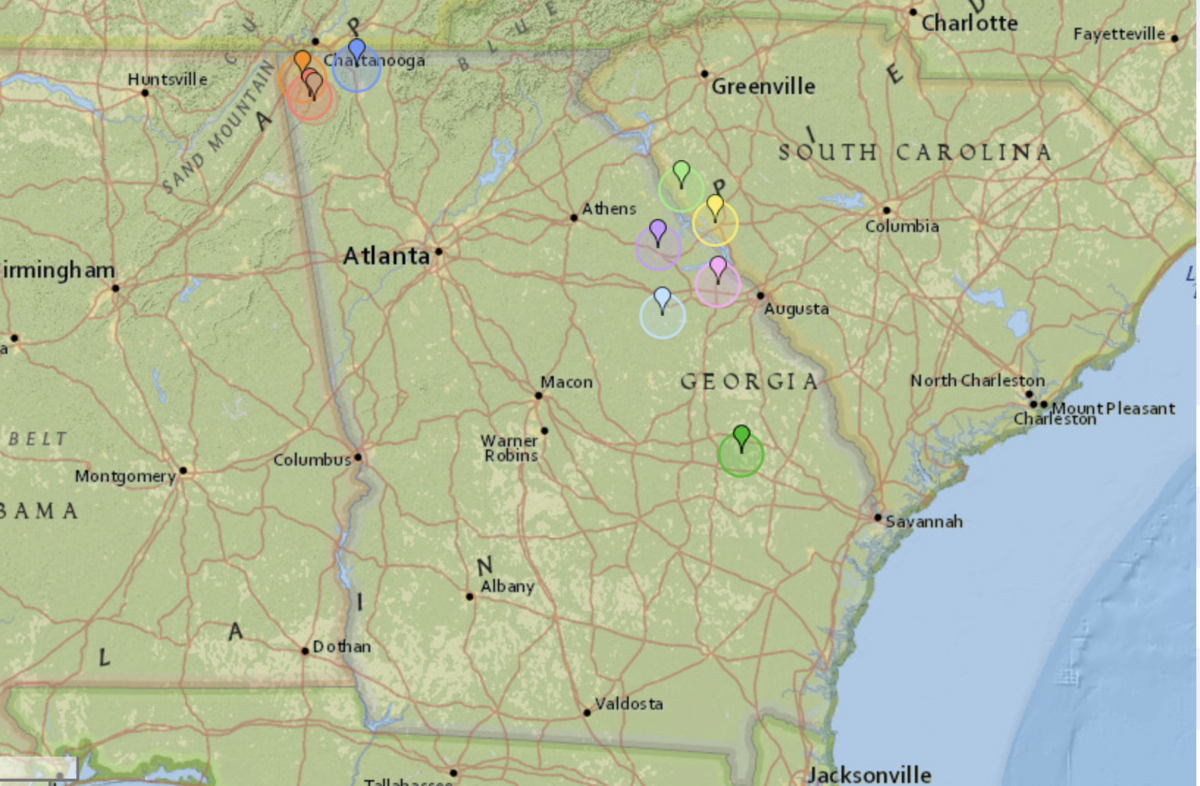
Earthquakes can occur hundreds of kilometers from a tectonic plate boundary in areas with low levels of crustal strain, and Georgia has experienced at least 27 low magnitude earthquakes in the past 365 days.
The Southeast sits on ancient geological structures that can still produce seismic activity, and centuries may pass between major earthquakes. Because measuring instruments and records only go back to around 1900, there is an incomplete history of actual hazards.
Some areas are at a higher risk
The Georgia Tech’s School of Earth and Atmospheric Sciences actively study earthquake physics, faulting mechanisms, and seismic swarms in the Southeast. Seismic hazard here is real, and driven by three distinct geological forces that operate largely out of sight.
Northwest Georgia
Earthquakes in northwestern Georgia are part of the Southeastern Tennessee Seismic Zone, which extends northeast through Knoxville.
Affected counties:
- Bartow
- Catoosa
- Chattooga
- Dade
- Fannin
- Floyd
- Gilmer
- Gordon
- Murray
- Pickens
- Rabun
- Towns
- Union
- Walker
- Whitfield
Eastern Georgia
Seismic activity in the at-risk counties along Georgia’s South Carolina border result from the reactivation of ancient geologic structures associated with much older tectonic events.
Affected counties:
- Burke
- Chatham
- Columbia
- Effingham
- Elbert
- Lincoln
- Richmond
- Screven
Central and west central Georgia
Intraplate earthquakes in this region, including Muscogee County and Bibb County, may result from stresses transmitted inward from the boundaries of the North American plate.
Affected counties:
- Twiggs
- Bibb
- Jones
- Baldwin
- Hancock
- Greene
- Putnam
- Butts
- Jasper
- Newton
- Morgan
- Walton
- Harris
- Muscogee
Prepare for an earthquake
Georgia homeowners should take basic precautions, especially given that houses in the Southeast may not withstand significant shaking.
Georgia Emergency Management and Homeland Security says loss of contact with the foundation is a major source of damage in large earthquakes.
Before an earthquake:
- Secure cabinets, bookcases and mirrors to wall studs and avoid placing bookcases near beds
- Strap gas or electric water heaters to wall studs. A broken gas line can cause fire, while a ruptured tank can cause scalding
- Bolt your house to its foundation if possible
- Have chimneys, roofs and walls checked for stability
- Keep insurance policies current and determine whether earthquake insurance is right for you
During and after:
- When shaking starts, drop to the ground, take cover under a sturdy table or desk, and hold on until shaking stops
- Do not run outside or use stairs or elevators during shaking. Building entrances are especially dangerous due to falling debris
- Once it’s over, leave the building immediately
- Check for fire hazards and structural damage
- Photograph everything before cleaning up
- Use licensed professionals for inspections and repairs
Have you ever experienced an earthquake in Georgia or do you remember the last time it happened? Email me at srose@ledger-enquirer.com or find me on social media.