
Feeling effects of bad air quality in Columbus? Here’s why, how to avoid it
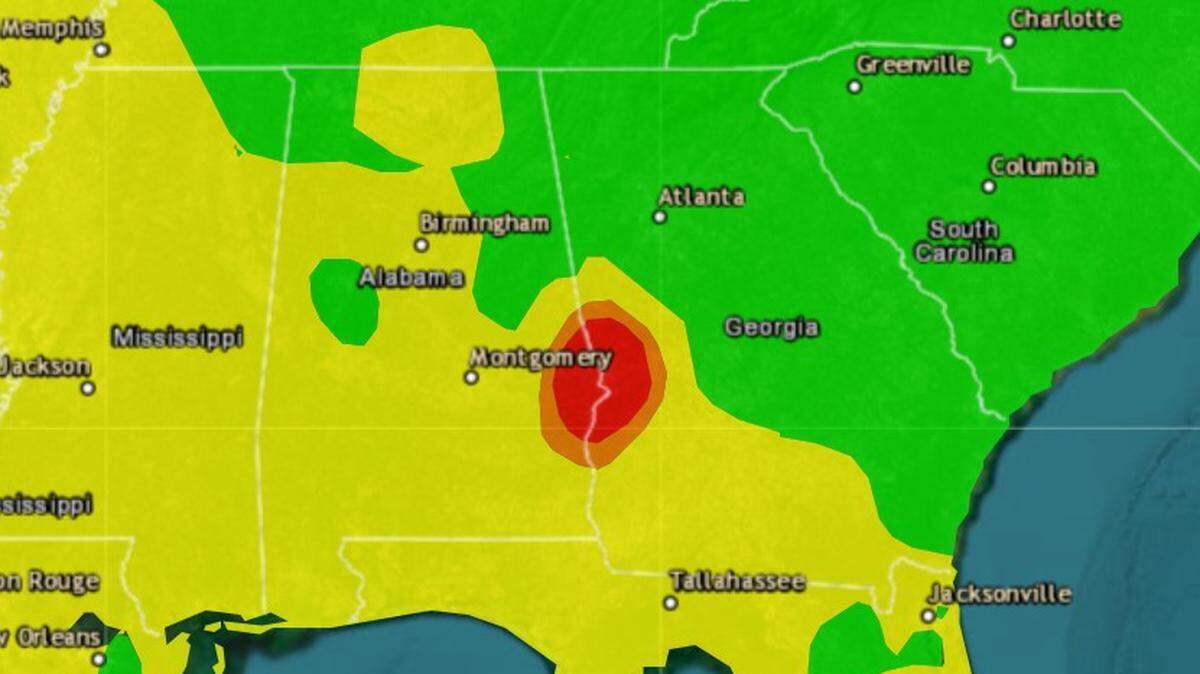
The air quality in Columbus was at an unhealthy level Thursday morning into the afternoon, according to airnow.gov, which likely left some populations feeling the effects.
Columbus had an abnormally high rate of particulate matter in the air —the Particulate Matter 2.5 rating for the area was 156 as of 12 p.m. Thursday, according to airnow.gov. The rating dropped down to a moderate level of 99 at about 12:40 p.m.
PM is a term for the mixture of solid and liquid droplets found in the air, according to the Environmental Protection Agency.
PM 2.5 are fine inhalable particles, with diameters generally 2.5 micrometers and smaller, according to the EPA.
The EPA says some particles less that 10 micrometers in diameter can get deep into your lungs and some can get into your bloodstream. Particles smaller than 2.5 micrometers pose the greatest risk to health, according to the EPA.
When the air quality was unhealthy, Airnow suggested people with heart or lung disease, older adults, children and teens can reduce their exposure by avoiding strenuous outdoor activities, keeping outdoor activities short and considering moving physical activities indoors or rescheduling them.
Airnow said everyone else can reduce their exposure by choosing less strenuous activities to avoid breathing as hard, shorten the amount of time they spend active outdoors and being active outdoors when air quality is better.
What’s in particulate matter?
The EPA says these particles can be made up of hundreds of different chemicals. The EPA says these particles can come from sources like construction sites, unpaved roads, fields, smokestacks or fires.
“Most particles form in the atmosphere as a result of complex reactions of chemicals such as sulfur dioxide and nitrogen oxides, which are pollutants emitted from power plants, industries and automobiles,” the EPA website reads.