Warmer Gulf is causing more tornadoes than normal. Georgia is part of the trend
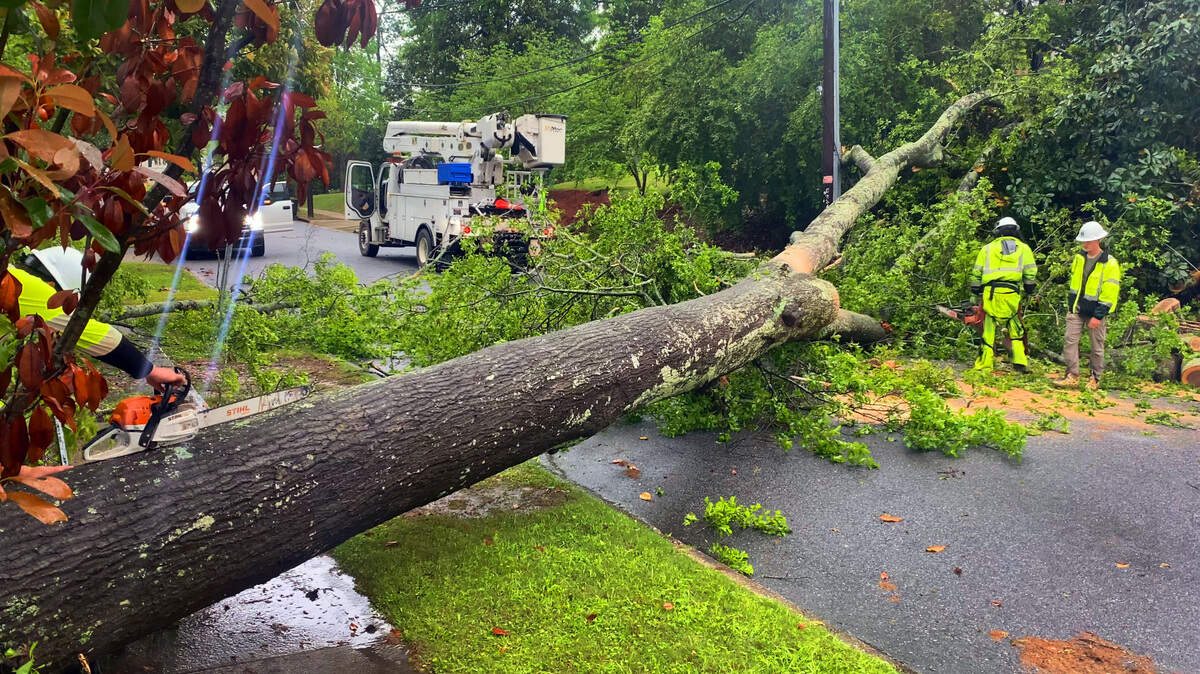
Three major tornado outbreaks have occurred throughout the country this year across the central and southern U.S., months earlier than historic norms, with nearly double the amount of tornadoes touching down compared to this time last year.
“It has been an extremely dangerous and destructive stretch of spring severe weather,” said AccuWeather Senior Director of Forecasting Operations Dan DePodwin.
In all of 2024, 264 tornadoes touched down across the country. As of April 10, 473 preliminary tornadoes have been reported, according to the National Oceanic and Atmospheric Administration Storm Prediction Center.
Tornado season typically ramps up in May. Streaks of storms occurring for days are common. AccuWeather reported that Penn State’s Weather World said the last outbreak from March 26 to April 7 was the earliest 10-day streak recorded.
While Georgia didn’t top the list, Mississippi did at 92 reported tornadoes so far this spring. The Peach State reported 21 tornadoes, one of which touched down in Midland on Sunday as part of a storm that killed two residents.
Is climate change the cause for early tornadoes?
There isn’t a direct link between tornadoes and climate change, according to AccuWeather Senior Meteorologist Brett Anderson. It’s also supported by Jana Houser, associate professor of meteorology at Ohio State University
“I haven’t seen any conclusive results about the relationship between climate change and tornadoes,” Anderson said. But several ingredients that come together or “add fuel to the fire,” as Anderson put it, are connected to a warming ocean which is a consequence of a warming planet.
“The Gulf of Mexico (Gulf of America) has been near record warmth for quite a while,” he said. “Water temperatures are 1 to 2 degrees Fahrenheit above normal.”
The warm sea surface temperatures and higher humidity in the Gulf of America brings what the extreme weather systems need to create a tornado.
“A warmer Gulf means there’s more available energy, more heat, energy to produce stronger thunderstorms, also tornadoes,” Anderson said. “You need different speed and heat and you need moisture.”
A second ingredient that caused an outbreak in the Central Plains is the high amount of wind, spiking the number of storms.
“It’s been a very windy and very dry spring across central and eastern U.S. from an unusually strong jetstream,” Anderson said. “The jet stream’s behavior is linked more to La Niña than it is climate change.”
In 2023 and 2017, when the second and third highest tornado outbreaks were recorded, Anderson said those years were neither a El Niño or La Niña, but a “neutral” year. This year is a “weak La Niña,” bordering on neutral.
“Neutral can tick up strong tornadic storms,” Anderson said.
But Anderson said the shifting of tornado alley, from Oklahoma and Kansas into the Mississippi Valley, is a “footprint of climate change.”
Earlier tornadoes are happening.
“In the southeast cold season Tornado events are increasing,” Houser said in an email. “January, February, March are seeing more tornadoes in Southeast US, which is what is fueling the increase in numbers there. In fact, tornadoes are not increasing nationally in terms of frequency or severity.”
Mississippi had 92 tornadoes, the highest amount from all three outbreaks throughout March and April.
Alabama and Georgia’s tornado activity
The 21 tornadoes reports occurred during the March 30-31 outbreak, as well as the April 4-7 outbreak.
Burke County, North Georgia, Waycross and Muscogee County were all victim to EF-0 or EF-1 tornadoes.
Alabama has had more than double the number of tornadoes Georgia has had, with 48. The Yellow Hammer state had at least two EF-3 tornadoes during the first, March 14-16 outbreak.
The two states do not have “conducive tornado activity” for the next two weeks, according to Anderson. But, the last 10 days of April, starting Easter weekend, the potential is there, he warned.
AccuWeather experts predict 1,300 to 1,450 tornadoes across the country this year, which is slightly higher than the historical average of 1,225 tornadoes, according to their latest reporting.
This story was originally published April 11, 2025 at 7:00 AM.