South Georgia wildfires could burn for weeks more despite weekend rain
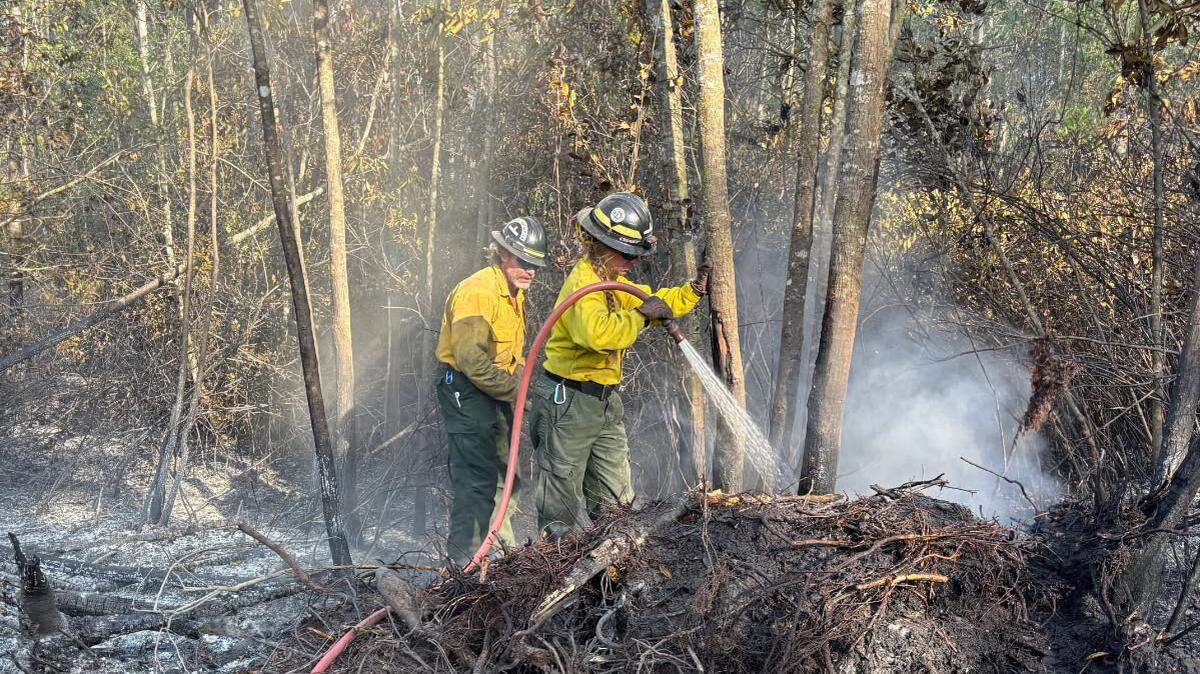
Last weekend’s rainfall slowed two major South Georgia wildfires, but officials say the fires are far from over as drought conditions remain fixed across the region.
Crews are expected to remain on the ground in South Georgia for at least two to three more weeks, according to Thomas Barrett, Georgia Forestry Commission fire chief.
“Even though that little bit of rain we’ve gotten and more predicted, we’re definitely still not out of the woods yet,” he told The Telegraph.
State environmental officials said the rain hasn’t been enough to make a dent in the underlying drought.
Drought is “the cumulative effect of the lack of normal precipitation” — meaning a handful of rain events rarely show up as improvements in formal drought classifications, Sara Lips, spokesperson for the Georgia Environmental Protection Division, said in an email.
More rain is forecasted as early as Thursday; however, long-range forecasts call for continued above-normal heat and elevated fire risk across southeast Georgia through at least July, according to Barrett.
Status of the fires
As of Wednesday morning, the Pineland Road fire in Clinch and Pickens County had burned 32,575 acres and was 65% contained. The Highway 82 fire in Brantley County stood at 22,471 acres and 85% contained.
The progress on containment has allowed some burn restrictions to ease. The State Forester’s emergency burn ban — the first mandatory burn ban in Georgia Forestry Commission history — has been reduced from 91 counties to 17, according to a post on X from Gov. Brian Kemp.
The Highway 82 fire destroyed 110 homes and damaged 27 others. The Pineland Road fire destroyed 35 smaller structures like campers and small sheds, but not homes, according to Barrett.
No lives were lost, and no serious injuries were reported among civilians or firefighters for either fire.
The Highway 82 fire was caused by a Mylar balloon coming in contact with a power line, creating an “electrical arc” that set nearby vegetation on fire, according to a Facebook post from the Georgia Forestry Commission.
“While this may sound unusual, it is a well documented type of ignition that has occurred in other areas of the country and conditions,” the post read.
A combined force of roughly 745 personnel is currently working both fires — 247 on the Pineland Road fire and 498 on the Highway 82 fire, according to Barrett.
Five to 10 new fire starts a day are still occurring across the region, Barrett said, though none have grown to significant size.
For Bibb County residents, the emergency burn ban has been lifted, but the Environmental Protection Division’s annual summer burn ban, which runs May 1 through September 30, remains in effect.
The summer ban covers 54 counties in northern and central Georgia, including Bibb and neighboring counties, and prohibits burning yard debris and land-clearing material through October 1, according to the Environmental Protection Division’s website.
Rain helped, but only so much
The rainfall that began before last weekend was “really what has made the difference,” Barrett said, in slowing fire activity and allowing crews to push toward containment.
Crews are now in the “mop-up” phase, sending engine trucks carrying 450 to 500 gallons of water and foam into the fire area along bulldozed roads to extinguish hot spots.
“That’s the least fun part of the job, the dirtiest part of the job, but many times the most important and most necessary part of the job to make sure that we don’t let this thing heat back up,” Barrett said.
The main remaining risk is “re-burn.” Scorched pine needles that didn’t fully burn during the initial fire will keep falling, and if they land on a lingering hot spot, they can reignite and creep back toward the fire line.
Crews also are keeping a close eye on the incoming weather system. While more rain would help, frontal systems often bring strong winds ahead of the precipitation. Dry, windy conditions behind a front can quickly undo modest rainfall gains, according to Barrett. Lightning is a concern as well, with the potential to ignite new fires in areas that see little rain.
Tracking the drought
The Environmental Protection Division tracks stream flows, groundwater levels and reservoir storage as the clearest signs of whether a drought is easing, since they reflect how much water is actually available, according to Lips.
“Improvements typically take place after a considerable period of normal precipitation,” Lips said. “A return to normal precipitation that would result in much better stream flow conditions, substantial recovery of groundwater levels, and replenishment of large federal reservoirs would be a clear indication of improvements.”
The agency has urged water users to continue conserving, and said no changes to drought-related restrictions or advisories are expected in the near term.
Last weekend’s rain brought some relief to Georgia, but the state’s drought conditions held mostly steady, according to the latest U.S. Drought Monitor update Thursday. Much of southern Georgia saw more than 2 inches of rain over the past week, but the rainfall mainly helped keep conditions from getting worse, with soil moisture and streamflows across much of the state still running very low.
Current drought classifications are updated weekly every Thursday at droughtmonitor.unl.edu.
This story was originally published May 7, 2026 at 10:44 AM with the headline "South Georgia wildfires could burn for weeks more despite weekend rain."