
Regional fitness report a blemish on the South's proud and distinguished military history and tradition
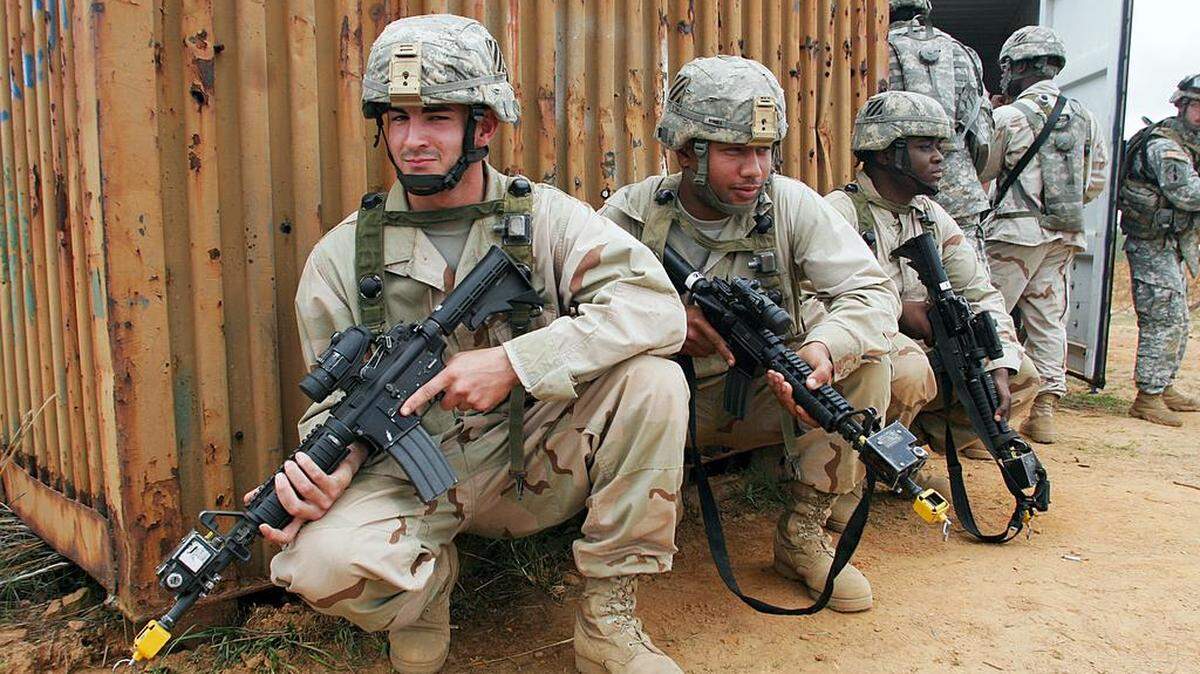
It’s not necessary to talk about the great American calamity of the Civil War to document the South’s long and distinguished tradition of military service. Long before and ever since the nation divided and then reunited, Southerners have provided an especially large quotient of America’s armed forces.
According to the Department of Defense’s 2016 Population Representation in the Military Services report, 44 percent of all recruits were from the 16 states (and the District of Columbia) that make up the U.S. Census Bureau’s South Region, despite that region accounting for just 36 percent of the nation’s “military-relevant” population. Many of America’s best-known and most important military installations in all branches of service are in the South, prominent among them, of course, Fort Benning.
Recent statistics, specifically in the Army, might not show any change in the degree of Southern commitment to serving the United States in uniform; but they don’t reflect well on the South in terms of recruits’ fitness to discharge that service.
As reported by the Ledger-Enquirer’s Scott Berson, a recent study indicates that Army recruits from the South tend to be physically unfit and overweight in greater proportion than soldiers from other parts of the U.S., and are more susceptible to injury.
It’s hard to suspect regional bias in the study, published in the Journal of Public Health Management; among its authors and participants were researchers from The Citadel, the University of South Carolina and the Atlanta-based Centers for Disease Control and Prevention.
A study of basic training rosters from 2010-2013 showed that recruits from 11 Southern states, including Alabama and Georgia, where public health and fitness levels in general are low, were especially likely to be injured in training. (More than one-third of adult Alabamians are considered obese, according to CDC figures, with Georgia showing a comparable 30-35 percent.)
These figures show, as should come as a surprise to nobody, that the demographics of public health are reflected in the demographics of the armed forces.
What is far more important, and alarming, is that when it comes to the armed forces, this is not just a public health issue but a defense readiness issue — “the disproportionate burden,” as the study’s authors described it, “that certain states are having on national security.”
That a region with such a justifiably proud military image should be described as a national security “burden” can’t and shouldn’t sit well.
Be that as it may, Army recruiters and trainers say low fitness levels and high injury rates are a chronic and worsening reality: “We have 18- and 19-year-old kids coming into basic training that can’t skip or perform a forward roll,” said Frank Palkoska of the US Army’s Physical Fitness Training School in a 2015 issue of Foreign Policy magazine. “... The injury rate is developing into a taxpayer concern in terms of medical care and lost training expenses. And the lack of qualified recruits it is becoming a national security issue.”
How much of a taxpayer concern? The Pentagon’s cost, the study reports, for each recruit disabled by injury is roughly $31,000. And unless something changes in civilian lifestyles, especially among children and youth, it’s not likely to get better, because the study estimates that more than a quarter of Americans in their late teens and early 20s would not qualify physically for military service.
Lifestyle-related public health problems, even in a population that smokes and drinks less than it used to, are hardly news. But a steadily increasing effect of those health problems on American military readiness takes the issue to a whole different realm.
This story was originally published January 19, 2018 at 4:57 PM with the headline "Regional fitness report a blemish on the South's proud and distinguished military history and tradition."