
Editorial: Officials' support of 'Sunny' Shah hits wrong note
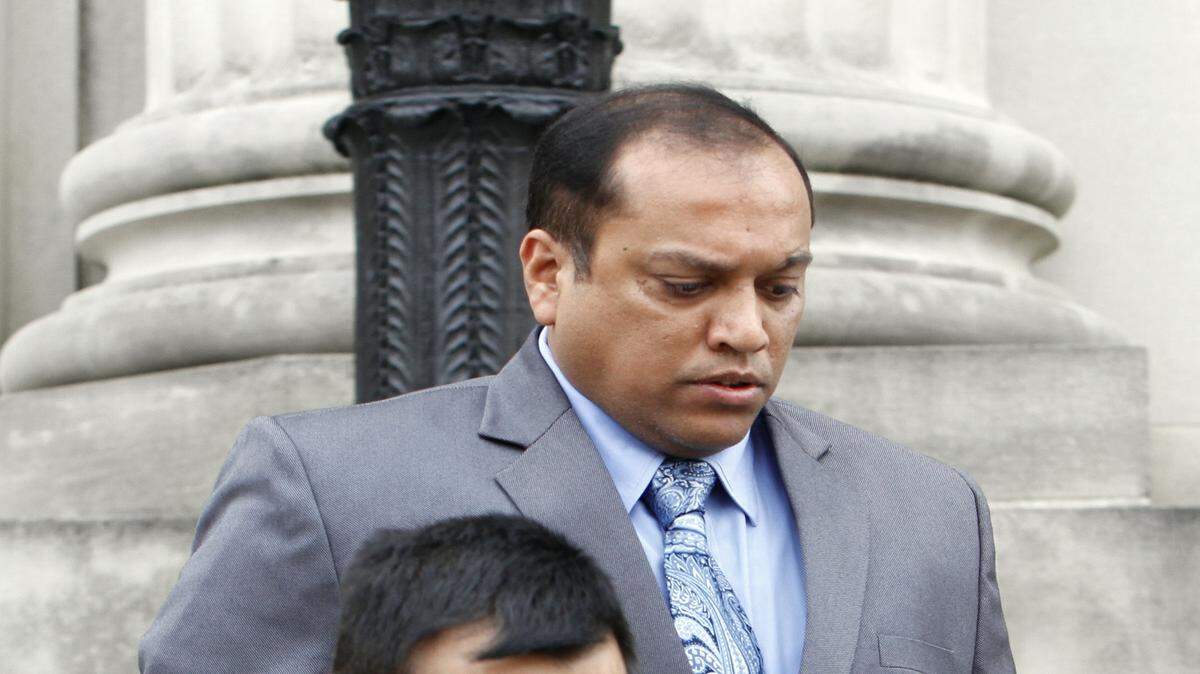
It would be interesting to know just how many local inmates will serve substantially longer sentences for substantially lesser crimes than those of businessman Sawan "Sunny" Shah.
More to the point, how many benefited from the personal intervention of two local law enforcement officials, an officer of the court and a member of the United States House of Representatives?
The most credible estimate would be a round number.
Shah's crimes are way beyond the proverbial nickel-and-dime stuff -- literally. He pleaded guilty last October to defrauding the Internal Revenue Service of more than $1.3 million, and was sentenced to 21 months in prison and the equivalent of the above sum in fines and restitution. U.S. District Court Judge Clay Land gave Shah a sentencing break in exchange for cooperating with federal authorities.
The input of character witnesses is commonplace in criminal proceedings, and the Shah case was no exception. What is conspicuous in this instance -- and not in a way citizens of Columbus are likely to view with approval -- is the fact that four of the letters vouching for Shah's character and contributions to the community came from U.S. Rep. Sanford Bishop, his wife, Municipal Court Clerk Vivian Creighton Bishop, Muscogee County Sheriff John Darr and Muscogee County Marshal Greg Countryman.
All four are elected officials; the first three have been recipients of direct campaign contributions from Shah, who hosted a fundraiser for Darr in 2012. Countryman has not received direct contributions from Shah, but records show he has received donations from Shah affiliates.
These officials' four letters were made public only after an official request from the Ledger-Enquirer, and Land's ruling underscores an important distinction. Private citizens submitting such input to the court have a reasonable expectation of privacy, in part because public disclosure and the possible resulting abuse or ridicule could have the proverbial "chilling effect" on citizens sharing information useful to the court.
Public officials, Land wrote, have a "lesser expectation of privacy." Public disclosure, he added in an appendix, "does not imply that these public officials did anything wrong by submitting letters regarding their personal knowledge of the Defendant's character. But the public does have the right to know that they did so."
A note which might or might not be tangential: There are those who argue, with firm conviction, that not only should political campaign contributions be unlimited as to amount, but also that they should not require identification of their sources. Does anybody truly believe the identity of a campaign contributor to be an irrelevant consideration in this case?
It is likely all four of these officials will seek reelection. If so, they will need to answer questions about this matter. In any case, the questions will be asked. Count on it.
This story was originally published February 22, 2016 at 4:39 PM with the headline "Editorial: Officials' support of 'Sunny' Shah hits wrong note."