
Kirby Smart sees benefit, overanalysis in college football’s new redshirt rule
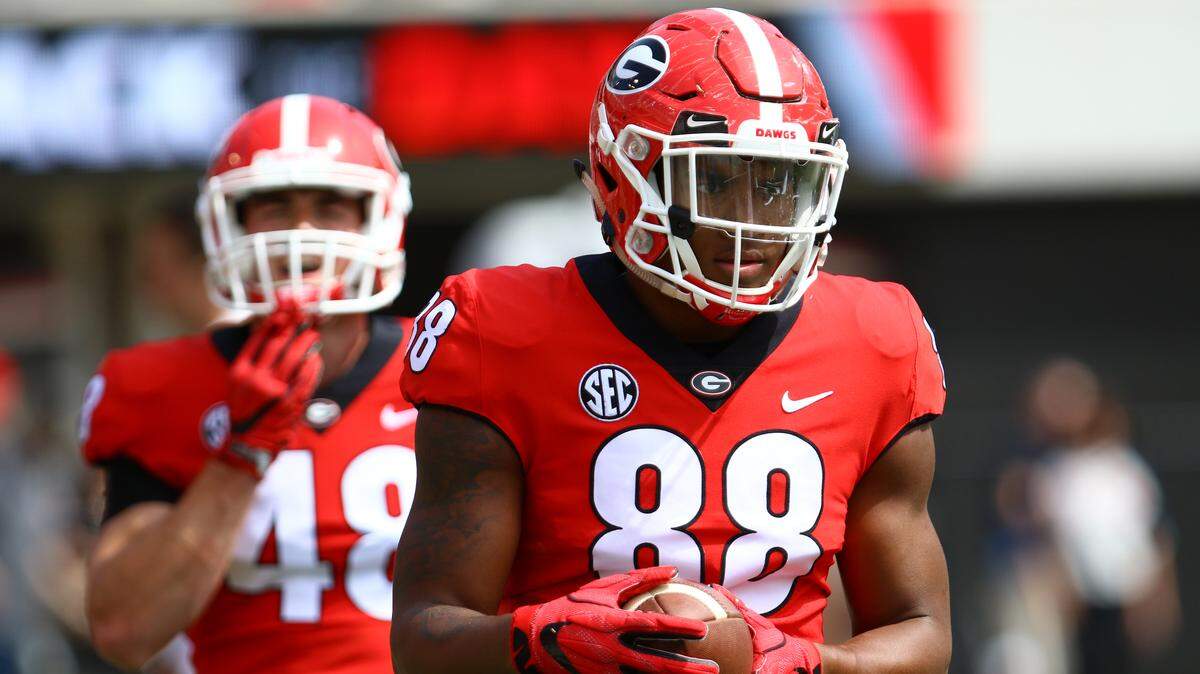
If the newly-adopted redshirt rule were in place during Georgia’s run to the national title game last season, Kirby Smart would’ve had more flexibility.
He had players who were forced to miss some games due to injury or suspension and tough decisions had to be made. Was he to burn a player’s redshirt or not?
A change was approved on June 13 to allow athletes to play in four games (33 percent of the regular season) without exhausting a season of eligibility. Now, it allows Smart and other head coaches across the country to have another option.
“It gives everybody a little more depth,” Smart told local media prior to taking the podium at SEC Media Days. “You have more guys developed and ready to play. We had a couple of guys out and injured. You now have the luxury, for guys who you had to make the tough decision on whether to burn his redshirt, you now have games to play him.”
A number of SEC coaches were asked about the change, and all of them were in favor. Of Georgia’s 25 signees in the 2017 recruiting class, five of them ended up redshirting. Under the new rule, linebacker Jaden Hunter would’ve had the opportunity for a fifth season of eligibility. But Hunter played in the Bulldogs’ season opener against Appalachian State and did not record any statistics.
Smart likened the change to that of expanding preseason rosters from 105 players to 110. Each of the changes give teams an extra element of freedom. Smart also regarded the transition to collegiate football as “one of the hardest” adjustments in a player’s lifetime, after experiencing it in 1995.
With players now able to receive a taste of on-field action while maintaining redshirt status, the favor is seemingly unanimous.
“I truly believe it gives us an opportunity to get a young man acclimated to school, acclimated to the game of football, acclimated to the speed of the game,” LSU head coach Ed Orgeron said. “And then when he’s ready to play, you can get him ready to play toward the end of the season, get him valuable experience to take him into year two.”
After Smart’s first response about the redshirt rule, in which he revealed it is “not in the plans” for freshman quarterback Justin Fields to do so with only two scholarship quarterbacks on the team, the questions kept coming. When a reporter asked a follow-up question, Smart flashed a small grin.
Smart explained there are no coaches’ meetings in which they debate whether it would be advantageous to hold a player out for a fifth season. Instead, his thoughts on the new rule are simple.
“I think (the media is) making way too much out of this redshirt rule,” Smart said, without the implication of calling out the media. “I don’t have a philosophy – either they can play or they can’t.”
Smart indicated there aren’t many redshirt seniors who are significant contributors in their fifth seasons, and that players should see action in their first year if capable. While the numbers aren’t drastic, it was to the Bulldogs advantage last season as outside linebacker Davin Bellamy and defensive tackle John Atkins were fifth-year players.
Smart used an example of former Georgia running back Knowshon Moreno. He redshirted in 2006, then went on to be a first-round draft pick after collecting over 1,300 yards in the 2007 and 2008 seasons. Smart argues that Georgia “should’ve played him,” due to the growing trend of early departures.
“These kids nowadays, by their fourth year, they’re either ready to leave, graduating or possibly transferring,” Smart said. “If they can help your team now, then you play him now. You don’t sit back and say, ‘Well, he’s going to be better in his fifth year.’”
This story was originally published July 23, 2018 at 4:29 PM.