
Pat Dye’s COVID-19 diagnosis brings up memories of 1990s for Columbus columnist
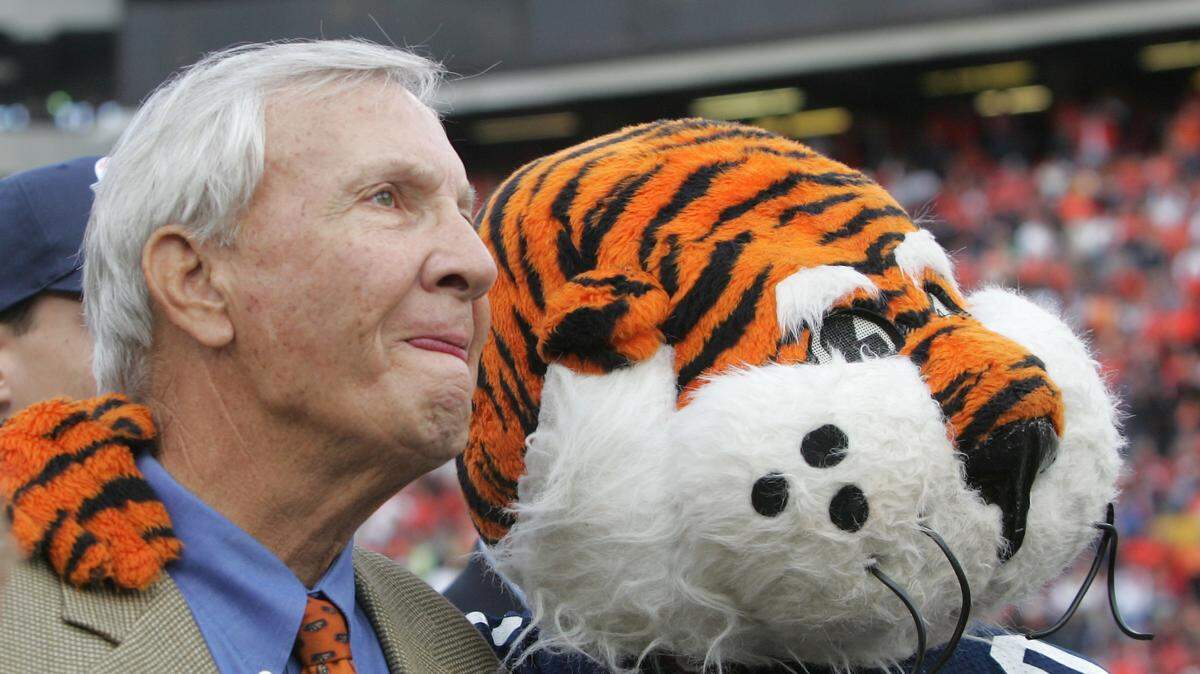
The wait outside Pat Dye’s office was unusually long. Head coaches of major college football programs run tight schedules and demand promptness. But Dye was running late. Finally, he came out of his office, told his secretary that he was leaving for the day, and apologized to me for being late.
What he said next took me aback.
“Come on with me. I gotta go to the doctor.”
So off we went. It was the only interview of a big-time coach that I’ve done riding shotgun. He asked me not to write about the doctor’s visit, but insisted it was just a routine follow up to the surgery he’d had. A distal splenorenal shunt. He parked in the back, and we entered through the doctor’s personal door for privacy. He told the doctor he could speak openly in front of me.
“I trust him,” Dye said.
Sure, that was flattering. But it said much more about Dye than it did me. This was during the 1991 season. It was shortly after the Eric Ramsey scandal, when the former Auburn defensive back produced secretly-recorded cassette tapes of assistant coaches agreeing to give Ramsey and his wife money to help with their baby.
About a year earlier, I stood in the Sewell Hall athletic cafeteria as Dye chewed me out for writing a couple of quotes in my SEC notebook that he said were said off the record. It didn’t help his mood that Auburn was coming off a 48-7 loss to Florida when the Tigers were ranked No. 2 in the country with a chance to take over the top spot after Nebraska lost to Colorado.
“You can shear a sheep a hunnerd times, but you can only skim him once,” Dye said. “You skinned me, but that’ll be the last time. I ain’t ever talking to you again. I don’t trust ya.”
That incident even made his book, “In The Arena,” a ghost-written auto-biography. For the rest of the season, Dye pretty much kept his word. But gradually, he relented. Eventually, he trusted me again.
Fast-forward some 15 months or so after that doctor’s visit. Dye stood in the packed Auburn interview room of Legion Field, where the Tigers had just lost to Alabama 17-0. Dye tearfully confirmed the rumors, that he was resigning as head coach over the Ramsey scandal.
I felt genuine remorse for Dye. Coaching was his life. It had just been taken from him for a minor indiscretion.
When my editors assigned me to cover Auburn in the summer of 1990, my preconceived impression of Dye was that he was a bit of a jerk who would do anything to win and that he won because he had better players than the teams he faced. What I learned in three seasons of covering him was that he had genuine compassion and love for his players, and that he won because his players gave him everything they had, and because he was an exceptional evaluator of talent.
Yeah, he’s unpolished in a lot of ways. But players loved his genuineness. That’s why they played hard for him. That’s why he was so deeply hurt when Ramsey turned on him. Clearly, there’s no gray area about paying college athletes. They broke the rules. But this was not buying some kid a car to sway him to sign. This was helping a young couple with diapers and food for their baby. Then that player stuffed a tape recorder in his sweatpants and betrayed him.
The field at Jordan-Hare Stadium bears Dye’s name, and rightfully so. He resurrected Auburn football. Maybe somebody else would have done it if Dye hadn’t come along. Then again, maybe the Tigers would have continued to waddle in mediocrity as their rivals continued to grow stronger. They could be Michigan.
The news that Dye was hospitalized with Covid-19, which was discovered when he underwent testing for a kidney problem, was troubling. His son, Pat Dye Jr., said his dad is asymptomatic and doing well. That’s good to hear. He’s a good man.