
Guerry Clegg: Herbert Greene big part of Peach Belt history
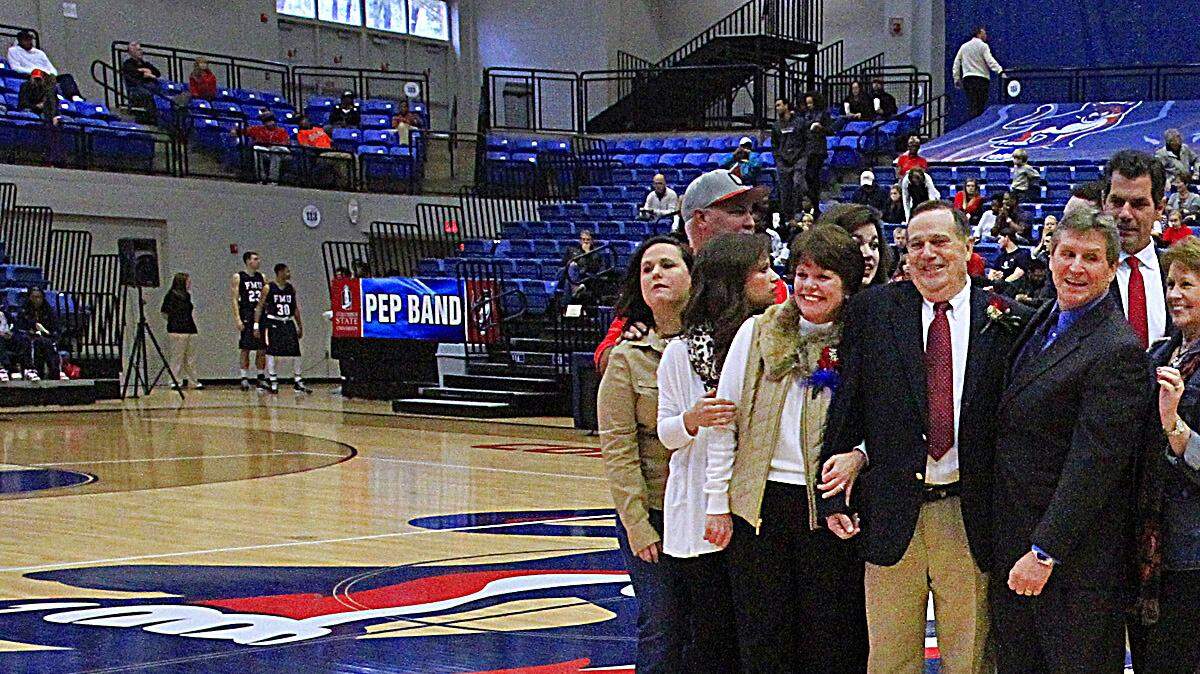
When the Peach Belt Conference Hall of Fame inducts its inaugural class of 25 members Tuesday night, Herbert Greene will go in under the heading of coaches and administrators. He could have made it as either one, as one of the most successful men’s basketball coaches in the league’s 25-year history, or as the athletic director presiding over one of the league’s most successful programs.
Greene, whose death from a heart attack last July stunned the conference, could have been inducted under another category — as a founding father.
Officially, the origination of the Peach Belt Athletic Conference, as it was originally called, can be traced back to November 1988 when members of 11 schools gathered. In reality, the beginnings go further back than that. As soon as Greene took over as head basketball coach from Sonny Clements, he understood the importance of joining a conference. The Cougars earned a bid to the NCAA Division II regional tournament in 1984 and at one time were ranked in the top 10 nationally. They lost by three points in the first round to Central Missouri, the eventual national champion.
The early success should have helped the program become nationally prominent. Instead, it just made it harder to schedule credible opponents. Greene knew the Cougars needed to join a conference.
“It was something that was highly important to him,” said Scott Miller, CSU’s radio broadcaster for 40 years and one of Greene’s closest friends. “Life as an independent had become very difficult, even in Division II. It meant traveling to places to play that you couldn’t afford to go to and playing teams that were less than attractive to play.”
“It gave us an identity,” said Jay Sparks, CSU’s first women’s basketball coach. “Being an independent in Division II was like being a nobody. You weren’t playing for a conference championship. You never had a chance to go to the national tournament.”
Here’s a forgotten fact. Columbus College joined the newly formed Big South Conference, which would mean transitioning to Division I. But then Greene and school administrators realized the Cougars could not compete financially, so they left the Big South after one year.
It was the right move, but one that left Greene searching again for a conference home. That decision led to Greene having conversations with Marvin Vanover of Augusta College, who was trying to form a conference. Augusta also had joined the Big South, but Vanover knew the Jaguars needed to be in D-II. South Carolina-Aiken’s Randy Warrick was another one. Exactly who else was involved in those initial talks is not clear. Even if Greene were alive to talk about it, he wouldn’t want to take credit.
“Herbert was Mr. Basketball in the Peach Belt, as far as I’m concerned,” Vanover said. “He was The Man. That’s all there is to it.”
To say there wouldn’t be a Peach Belt Conference today if not for Greene might be a stretch, and it’s something that no one will ever know.
“I know he was a driving force behind it,” Miller said. “There’s no question about his vision and drive. He was like a dog after a bone.”
His accomplishments as a basketball coach are impressive enough: 481-240 record at CSU, 510-270 as a college coach overall counting his time at Auburn-Montgomery, four Peach Belt regular season championships, eight NCAA tournament appearances. His teams especially excelled in the Peach Belt tournament with six championships and three runner-up finishes. It was enough that the conference named the tournament in his memory.
But Greene was equally accomplished as an athletic director. Virtually every year, CSU was winning conference championships or in the thick of the race in just about every sport. That was despite having the lowest budget and some of the least attractive facilities. This was before the Lumpkin Center and Charles Morrow baseball and softball clubhouses were built, certainly long before the development that is now Burger King Stadium.
The entire athletic department was crammed into a space smaller than a two-car garage, with Greene’s shoebox office set off from the partitioned room. Coaches shared desks, phones, work supplies and their lives. They often ate lunch as a group out on a table in the lobby.
Everyone at CSU referred to the athletic department as a family, and Greene was the patriarch. He did everything he could to make sure all of the coaches had the resources they needed to win. Sometimes that was even to the detriment of his own team.
“What made him so good as an athletic director was he was a coach,” Sparks said. “He knew what those coaches needed to be successful, whether it was assistants or travel money. He made sure you had what you needed. He let you be who you were as a coach.”
During baseball season, Greene could be found outside the concession stand grilling hamburgers.
“He was amazing,” said CSU tennis coach Evan Isaacs. “All my success has been because of coach Greene. I was 27 when he hired me. I was the youngest head coach in college at the time. He allowed us to make mistakes, but he would correct us when we made those mistakes. He was tremendous.”
Guerry Clegg: sports@ledger-enquirer.com, @guerryclegg
This story was originally published May 28, 2016 at 6:30 PM with the headline "Guerry Clegg: Herbert Greene big part of Peach Belt history."