
Georgia’s election technology ‘problem’ is now a suspicious trash fire
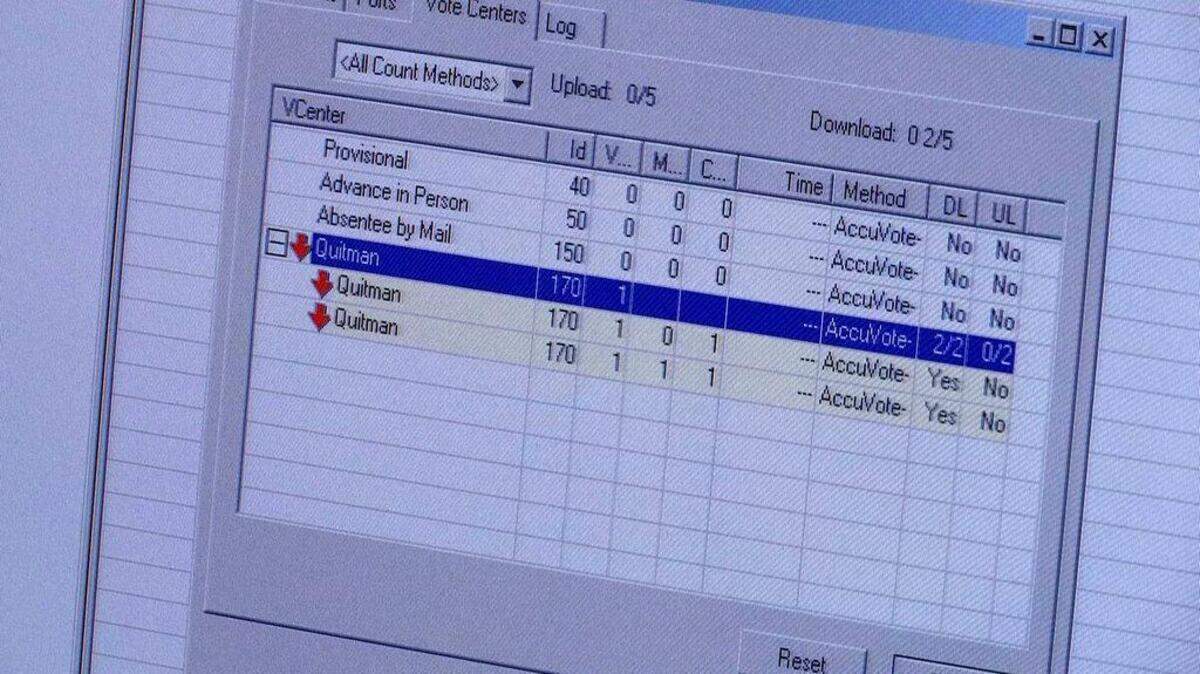
On July 3, a coalition of voting reform organizations filed a lawsuit against Georgia calling on the state to reform — or scrap — an obsolete elections system that had proven its inadequacy almost a year before.
In August 2016, an online security researcher named Logan Lamb discovered a huge security breach in the system’s main server at Kennesaw State University, which exposed personal data on 6.7 million Georgia voters to possible hacking, data theft and/or manipulation.
Lamb reported the problem to election authorities, who still had not fixed the problem seven months later.
The fairly important month of November, when some fairly important votes were cast in Georgia, fell during that interval. The June 2017 special election to fill the then-vacant congressional seat of since-disgraced and deposed Health and Human Services Secretary Tom Price followed soon after it.
On July 7 — four days after the suit was filed — technicians at the Center for Elections Systems at KSU wiped out all data on the server in question.
The deletions, disclosure of which was obtained in public records requests by Associated Press, were revealed in emails sent from an assistant state attorney general to plaintiffs in the suit.
Are backup records available? After all, as every home computer user knows, backing up data ought to be second nature. But apparently not in this case, because emails from the same assistant AG, Cristina Correia, revealed that two backup servers were also data-wiped in August, when the lawsuit was moving to federal court.
What about old-fashioned paper records? Also not in this case, or at least not in many cases, because thousands of the state’s voting machines (unlike the ones used in Muscogee County) don’t print hard-copy records of vote tallies — which, perhaps not coincidentally, is one of the inadequacies of the system that motivated the lawsuit in the first place.
There is nothing about any of this — the massive data breach last year, the erasure of voting records, and especially the timing of those data deletions — that doesn’t reek to high heaven.
Marilyn Marks of the Coalition for Good Governance, one of the plaintiff groups, told AP, “I don’t think you could find a voting systems expert who would think the deletion of the server data was anything less than insidious and highly suspicious.”
Georgia Tech computer scientist Richard DeMillo said clearing the server “forestalls any forensic investigation at all … People who have nothing to hide don’t behave this way.”
The office of Georgia Secretary of State Brian Kemp, which oversees state elections, said it had nothing to do with the decision to clear the servers, nor did it have any advance notice of that decision, and Kemp has ordered an investigation.
The explanation from KSU is that the system’s technology had become outdated and the data was erased so the server could be “repurposed,” according to the Atlanta Journal-Constitution. (The system reportedly will be used again in the 2018 elections.)
“Despite the undeniable ineptitude at KSU’s Center for Elections Systems,” Kemp told the AJC, “Georgia’s elections are safe and our systems remain secure.” After the last year and a half, such a statement goes beyond absurd and into the realm of intelligence-insulting.
One hope for answers might be the FBI, which reportedly made an “exact data image” of the Kennesaw State server during its investigation of the security breach in March. An FBI spokesman in Atlanta would not answer AP questions about whether it still has such an image in its files or, if so, such an image provides any information about the integrity of the server’s voter records. Kemp’s office said Wednesday it will subpoena the FBI for access to that image.
That a computer server at the center of a massive and controversial data breach, which lasted through one critical election and preceded another, should be discreetly erased as a matter of sheer “ineptitude” stretches the limits of even the most credulous civic trust.
The question of deliberate shenanigans aside, those claiming Georgia’s election system is disastrously untrustworthy would certainly seem to have made that case.
This story was originally published October 27, 2017 at 1:29 PM with the headline "Georgia’s election technology ‘problem’ is now a suspicious trash fire."