
This Georgia delicacy charms presidents and princes. Do you know the scrambled dog history?
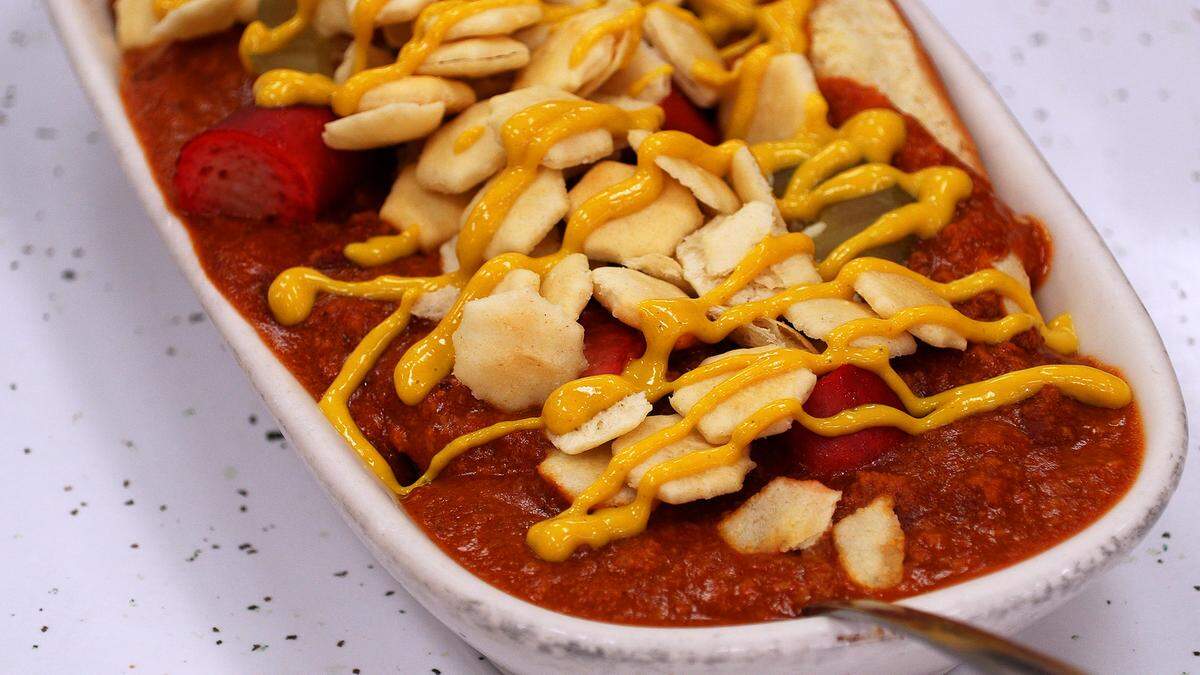
It’s simple. It’s just a wiener (or two) on a bun topped with chili, onions, mustard, pickle slices, oyster crackers and whatever else you might think is fitting.
Yet in some parts of Georgia, it’s a generational treat enjoyed by the masses. It knows no socioeconomic bounds.
This dish is the scrambled dog, and Columbus claims that it is the weenie’s ancestral home. Arguably the city’s strongest claim to food fame, princes and presidents have wolfed down a Dinglewood Pharmacy scrambled dog over the decades.
Maybe it’s something in the chili? Maybe it was the aura and charisma of Dinglewood’s famed cook, the late Lieutenant Charles Stevens. Regardless, many folks first and last stops in Columbus is the counter at the pharmacy’s soda fountain.
But their scrambled dog wasn’t the only one with a loyal following.
From the pool halls of Macon and Americus to places in between, you could once find some version of this messy open-faced hot dog. But how it spread beyond the banks of the Chattahoochee is as muddy and unclear as the river’s waters. A working theory says gambling over horses or politics might be involved.
The scrambled dog and its history is an interesting chapter of America’s storied hot dog culture where Georgia — and its pharmacy lunch counters and pool halls — take center stage.
Where it all started
As far as anyone can tell, the scrambled dog originated in Columbus sometime after 1908. Its creator is a man named Firm Roberts.
Born in Tennessee in 1882, Roberts moved from Warm Springs, Georgia, to Columbus in 1908 and opened a “cigar-news stand” on Broadway in downtown that was once advertised as the smallest in the state.
The business was converted into a cafe, and Roberts began selling hot dogs, chili dogs and his own invention — the scrambled dog —to hungry Columbus residents.
Barbara Smith Brandt, 78 of Tallahassee, Florida, called Roberts “Papa Firm.” Her father, Frank Smith, worked for Roberts.
From Brandt’s memory, Roberts’ scrambled dogs are made a little bit differently than the modern Dinglewood version.
“He’d put one wiener into a hot dog bun, turn it over and chop it into one-inch increments and then put it into (a celery dish,)” she said. “Then, two ladles of chili with beans and then it was up to the customer … everybody had their own little specialties they liked.”
He’d move to 12th Street, and by 1926, Roberts’ restaurant was on Cusseta Road near Fort Benning. Roberts would go on to build a 14-room “castle” home around a silo next to the cafe.
His hot dogs, Roberts told the Columbus Enquirer-Sun in 1943, were there to greet Benning’s first Army men. By 1947, Roberts estimated that he’d sold more than 100,000 scrambled dogs. Word of Roberts and his dogs spread as military men came and went. Gen. George S. Patton, Dwight Eisenhower and movie star Charlton Heston dined at Roberts’ place, Brandt said.
Over the years, Roberts established himself as more than just a restaurateur. He was a prime force in the establishment of the Warm Springs Foundation facility. One of Warm Springs’ most famous champions and visitors, President Franklin D. Roosevelt, ate one of Roberts’ dogs, too.
The scrambled dog didn’t make it on the menu at Dinglewood until after Roberts had gained some fame and community prestige.
Terry Hurley, 78, the current owner and pharmacist in charge at Dinglewood Pharmacy, said the pharmacy added the dogs in the early 1930s when Henry “Sport” Brown took a job at Dinglewood. The pharmacist’s wife cooked the chili, and it was brought into the store every day.
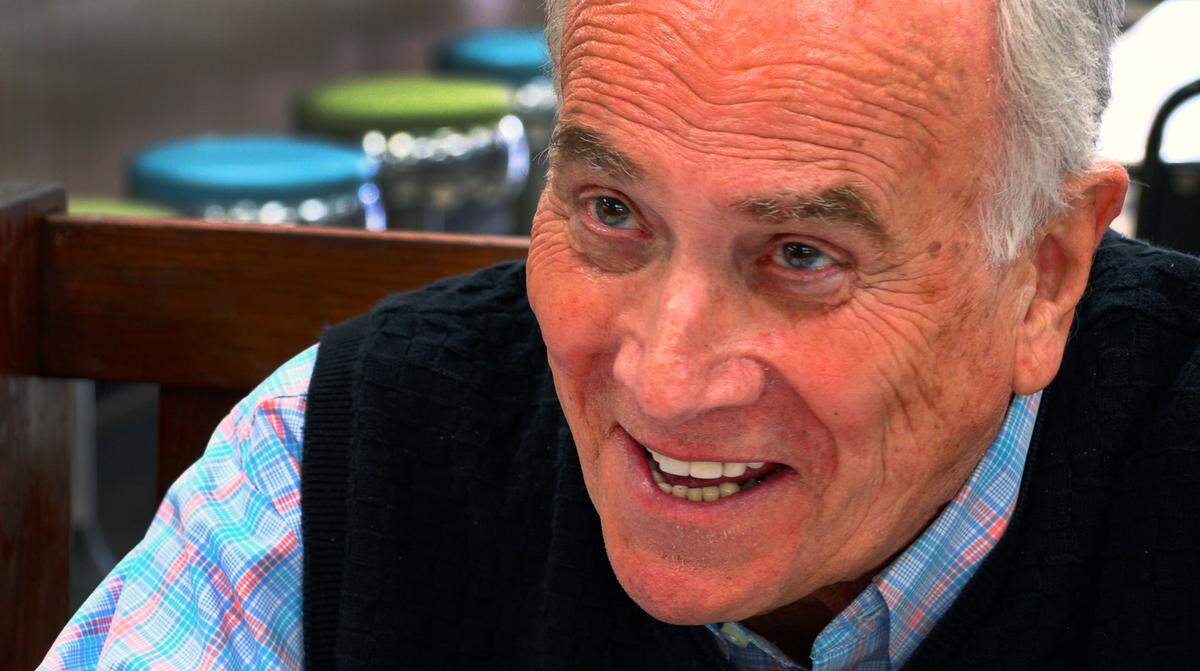
As business grew, they bought a stove so they could cook the chili at the pharmacy. The famed Lieutenant Charles Stevens took a job at Dinglewood at age 13, delivering packages and helping Sport in the kitchen, Hurley said.
While Dinglewood expanded, Firm Roberts’ Cafe changed. Roberts handed over the restaurant to Frank Smith, Brandt’s father, in the early 1950s before Roberts’ death in 1956, Brandt said.
Stevens took over Dinglewood’s chili pot from Brown following his death in 1956. It’s Dinglewood’s chili that gets a lot of attention, but the recipe remained almost exactly the same. The only difference was Stevens used a little less salt, Hurley said.
Stevens, with his sparkling personality, endeared himself to customers throughout the 50s and 60s and created a following.
One story that sticks out in Hurley’s mind: Columbus High students would often leave campus for lunch to enjoy a scrambled dog. The Columbus High principal would show up to eat one of those dogs, too. So, Stevens would herd the students out the back door so they wouldn’t get busted.
Hurley didn’t learn of the scrambled dog until he was a pharmacy intern at Jacob’s Pharmacy in Columbus in 1967. Ted Wilson, Hurley’s cousin and roommate, asked Hurley to join him at Dinglewood for a scrambled dog. Hurley didn’t go.
“I just had a vision of the scrambled dog being a hot dog with scrambled eggs being involved somehow,” he recalled. “I never had one until I bought the store.”
Stevens served Hurley his first scrambled dog after the pharmacist bought the store in 1974. Hurley and his friends were finished setting up the store the way he liked it. Stevens insisted that Hurley have his first dog that night.
“I don’t care for spicy food,” he said. “He toasted the bun. He had two weenies that he chopped up about bite-sized. He put a ladle of chili on it. And then onions and mustard, ketchup, oyster crackers and things like that.”
Shortly after Hurley bought Dinglewood, the doors to Firm Roberts’ Cafe shut down for good in 1976. Dinglewood and their dog’s legacy continued to grow as decades passed.
George Busbee, Georgia’s 77th Governor who served from 1975 to 1983, used to send members of the Georgia Highway Patrol down to Columbus almost every Friday to pick up a gallon of Dinglewood’s chili. Prince Charles was served one of Dinglewood’s scrambled dogs from a sterling silver platter in the mid-1970s.
President Jimmy Carter had the chili sent to the White House. Flash-frozen scrambled dog ingredients have been shipped to weddings in Saudi Arabia and Florence, Italy.
While Firm Roberts and Dinglewood were cranking out scrambled dogs to critical acclaim, the dish would find its way outside of Columbus to nearby cities and other Georgia towns.
The repayment of a gambling debt might have played a role in the dish’s initial spread.
How the scrambled dog (might) have spread outside of Columbus
It’s hard to tell where the scrambled dog was first introduced outside of Columbus, but Macon might be it.
At least that’s what famed Southern food writer and Jones County, Georgia-born John T. Edge wrote in his 2007 book “Southern Belly: A Food Lover’s Companion.”
Blanford Gandy, the brother-in-law of Macon pool hall owner Roy Gandy, told Edge that Roy went to Columbus to collect a debt and came back to Macon with a recipe for the scrambled dog in the early 1940s.
“Roy went over to collect a debt from a man in Columbus back in ‘42 — they were betting on politics or horses, I don’t know what all. They say he brought back the recipe for scrambled dogs with him,” according to the book. It’s not clear if the recipe was used as debt payment or if Roy acquired it another way.
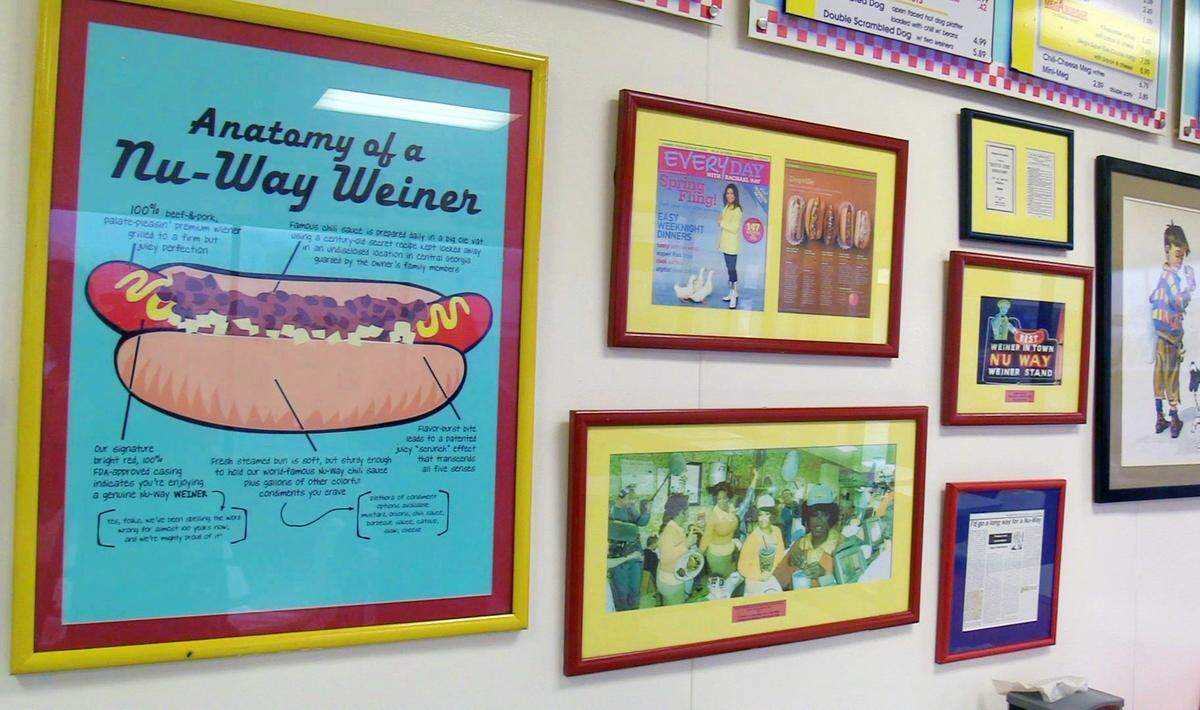
You can order a scrambled dog in a few places in Macon today, and the most well-known of them is Nu-Way Weiners.
And while Nu-Way was established in 1916 — two years before Dinglewood — the Middle Georgia institution didn’t have a scrambled dog on its menu until more modern times, said Nu-Way co-owner Spyros Dermatas.
Dermatas, a keen student of the hot dog history, said by the 1950s, a bunch of pool halls across the state of Georgia were selling scrambled dogs. You could find them in Americus and in other cities, including Cordele, Dublin, Griffin, Macon, Milledgeville and Thomaston.
You could also find them outside the Peach State in places like Alabama, Tennessee and the Carolinas, among other spots, Dermatas said.
Nu-Way didn’t add the scrambled dog to its menu until the 1970s. Customer demand was the reason. Customers said Nu-Way had “the best chili dogs in the world,” Dermatas said, so why wouldn’t Nu-Way just put one on the menu?
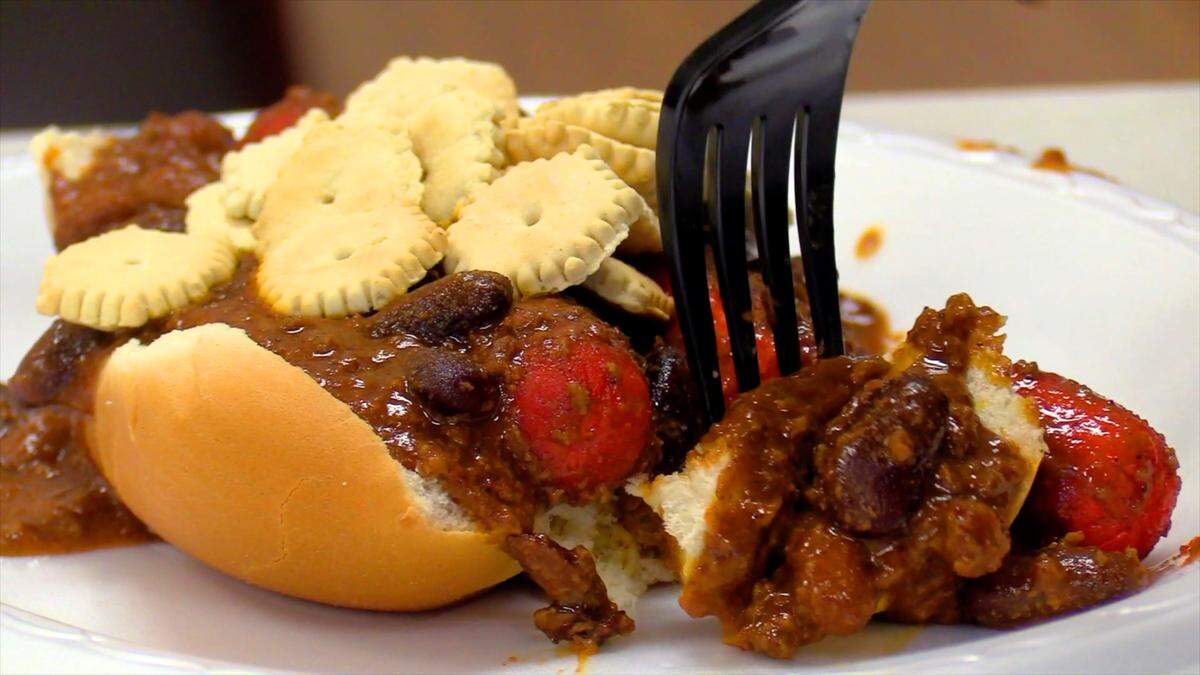
It was easy to do. Instead of using their famed hot dog chili sauce, Nu-Way poured a more traditional chili they’d serve in a chili bowl over an open-faced hot dog. Customers can top it with oyster crackers, onions, mustard and whatever else.
The wieners aren’t sliced up like they are at Dinglewood, and based on a recent ordering, there are no pickles on top.
While the dish seems to have been taken out of Columbus, Dinglewood made a concerted effort in the late 20th Century to capitalize on their scrambled dog’s fame.
In the 1990s, Dinglewood worked to establish Lieutenant’s diner locations based on their famed dogs. The restaurants appeared in a few Carmike Cinemas’ Hollywood Connection complexes in Indiana, Utah and here in Columbus. But the venture failed.
Hurley also attempted to open scramble dog diners in Auburn, Athens and Chattanooga. But again, he had no success. As a result of those attempted or failed ventures, Dinglewood possesses several copyrights, including on the term scrambled dog.
Older versions of the dish have been grandfathered in. The main purpose, Hurley said, is to prevent someone else from going international with the scrambled dog.
The legacy in Columbus lives on
In Columbus, Roberts’ and Stevens’ contributions to the scrambled dog will soon be recognized by the Historic Columbus Foundation. A plaque will be placed outside of Dinglewood Pharmacy. Brandt began the campaign in early 2019, which unintentionally coincided with the death of Stevens, Brandt said.
Brandt raised half of the $2,200 necessary for the plaque. Brandt put some of the money in herself, but she also got donations from those with fond memories of Firm Roberts, including members of his family who are still living today. Hurley personally contributed the other half.
Neither Hurley nor Brandt know when the plaque will be installed.
“The scrambled dog is a favorite food if you grew up or lived in Columbus at any time,” Brandt said. “They still have those good memories.”
This story was originally published January 17, 2020 at 10:08 AM.