
‘Show up. Ask the questions.’ Columbus residents react to data center project
With recent economic development news in the Chattahoochee Valley, Choose Columbus is hosting public meetings to hear residents’ concerns and questions.
The event series, called Percolate and Elevate, invites Columbus residents to speak with Missy Kendrick, president and CEO of Choose Columbus, and other local officials about economic development projects.
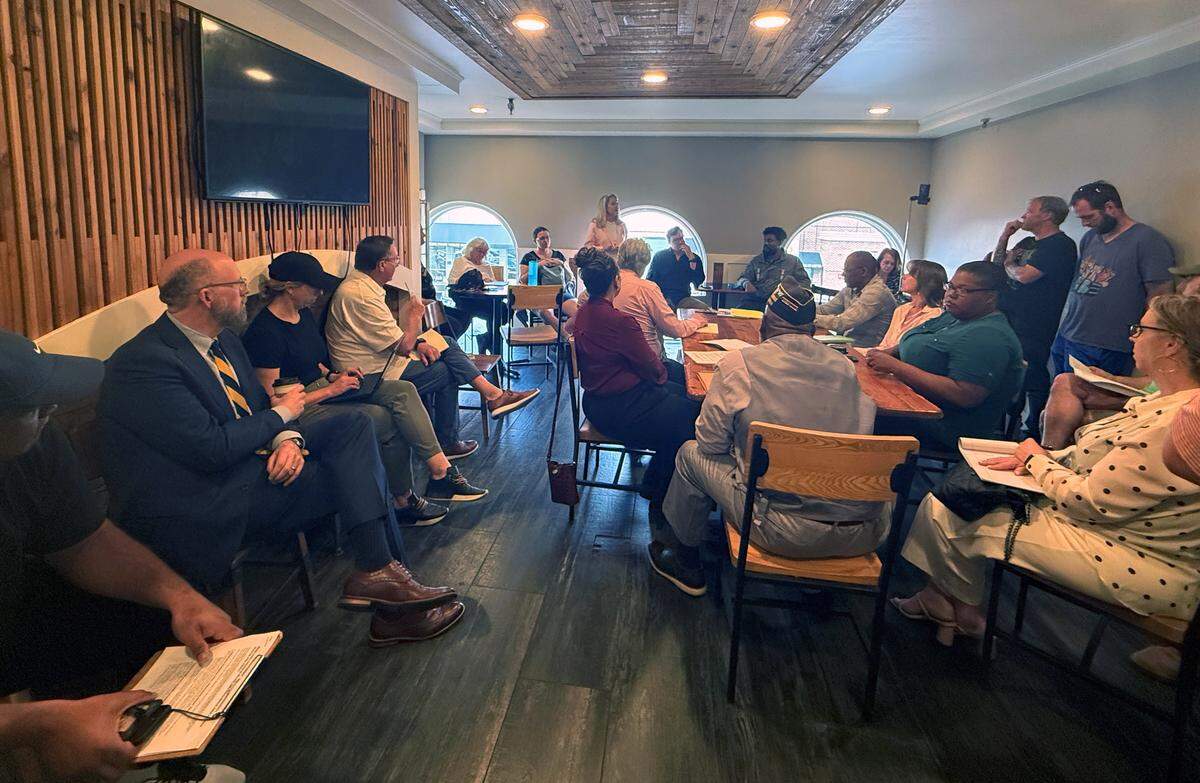
The first event was Friday in Iron Bank Coffee Company, at 6 11th St.
The meeting’s main topic was Project Ruby, a $5.18 billion data center project. Over 20 residents packed the upstairs meeting room for two hours, raising questions about water usage, electricity bills, job opportunities, noise pollution, environmental impact and much more.
Kendrick told the Ledger-Enquirer she anticipated the community pushback.
“[Residents] are scared,” Kendrick said. “The development authority, city council and other people who are involved in this have tried to look at this from the public’s perspective, to try to put in place the things that would alleviate any fears. … I don’t want anybody thinking that there’s one or two people that’s making an overnight decision on this. That is not the case.”
Columbus residents react to data center project
Columbus residents said the meeting helped answer a lot of their concerns, but some questions still remain unanswered.
Natalie Glynn-Wix was visiting her family from Germany when she heard about this public meeting being hosted. Her family has lived in the Columbus area for 35 years.
“I am here with my mother,” Glynn-Wix said. “She’s pretty involved and likes to come to town hall and council meetings. She told me about this. I didn’t realize a data center was coming to Columbus, so I wanted to hear more about it and put my two cents in while I was here.”
Glynn-Wix said she had many concerns with the data center, particularly the environmental impact with its increased water demand and the possibility of the center not delivering on revenue or job creation expectations.
But this meeting did make her feel “less negative.”
“I would not say I’m necessarily for it at this stage,” Glynn-Wix said. “I do feel like, to a certain extent, [Kendrick] is listening. There were some moments where I felt like some of the concerns were not being taken seriously, but it does sound like [officials] are thinking about some of the major issues like noise and water. I do think concerns about electricity, in particular, were not being properly addressed.”
Vikas Chilkuri, a Columbus resident living near the proposed data center site in northeast Muscogee County, told the Ledger-Enquirer that going to the public meeting helped him understand more about the project. He said he walked away from the meeting feeling like many of his concerns were addressed.
“Something that I learned today was that we’re not offering any incentives or giving [developers] free land,” Chilkuri said. “They’re buying the land. We just want to help hold them accountable, all in other areas where [data centers] have disrupted communities.”
Chilkuri also said he felt as if questions about power usage were not addressed properly.
“We’ve seen in other areas where this happened, and the cost was pushed over to the people in the city, and we don’t want that,” Chilkuri said. “They should be able to pay their own bill at the rate everybody’s paying or maybe higher.”
Robert Battle, another Columbus resident, said his initial response to the data center was, “Heck no,” but hearing Kendrick discuss a plan to address his concerns about the center’s environmental impact swayed him.
“I’ve been researching this stuff for quite a while, and one of the things that I did ask, and I pointed out a couple of times, was the future of these data centers,” Battle said. “Currently, they have harmful environmental impacts, and the commotion that you see in these communities is causing change. This is the first time I heard of a closed-loop system being even spoken about, because I know a majority of them do not use them currently. So hearing that does sway me, but for me, it’s important to know that we can enforce something like that.”
A closed-loop data center refers to a system that keeps recirculating the cooling fluid, water, or refrigerant in a sealed loop without evaporating or consuming it. Closed-loop systems can reduce water usage by up to 70%, according to a study by the Environmental and Energy Study Institute.
During the meeting, Kendrick said there has been a request to add a requirement for the data center developer to have a closed-loop cooling system to approve the rezoning request.
“I’m fine with it,” Kendrick said during the meeting.
Battle outlined other questions that he had.
“The things that I’m going to follow up on are going to be more in the vein of similar projects that made similar promises and how they delivered on those,” he said. “And, have other communities been successful in fortifying themselves against the negative impacts that these data centers can bring? We can apply those here, and we can look out for those negative aspects.”
Residents also suggested that officials address how they plan to hold data center developers accountable for the promises they make to the city in future meetings.
These Columbus residents said they are planning to continue coming to public meetings to understand more about the project as it develops. They encourage their neighbors to do the same.
“Show up. Ask the questions,” Battle said. “If you’re going to ask questions, do a little research first. Don’t come in and ask the same questions that keep being asked. We need to keep bringing new things and pressing them further, so that when it’s all said and done, the end result is the best that we could get.”
Kendrick urges residents to contact her directly with their questions about Project Ruby and other economic development projects.
“I’d love to have a room full of people at every development authority meeting,” Kendrick said. “The best thing in the world would be, if you had a question, for you to call me, no matter what it was about.”
Kendrick can be reached at 706-243-8980 or MissyKendrick@ChooseColumbusGA.com.
Residents urged their city officials to continue having open conversations with the community about this project.
“I would ask [officials] not to have a knee-jerk reaction of defending a choice they’ve clearly already made but not take into account what the person is really saying,” Glynn-Wix said.
New details about Project Ruby
Kendrick revealed more information about Project Ruby to Columbus residents.
The project site is in northeast Muscogee County, bordering parts of Harris and Talbot counties. The site is 900 acres. The developer has purchased the land but is awaiting zoning approval, Kendrick said.
Kendrick told residents that she would provide visuals of the site area at the next public meeting.
The center will be powered by Flint Energies, a not-for-profit member-owner electric cooperative based in Reynolds, Georgia.
A developer has not been announced, but Kendrick said the data center would be one of the Big 5 hyperscalers: Amazon Web Services (AWS), Microsoft Azure, Google Cloud Platform (GCP), Meta (Facebook) or Apple.
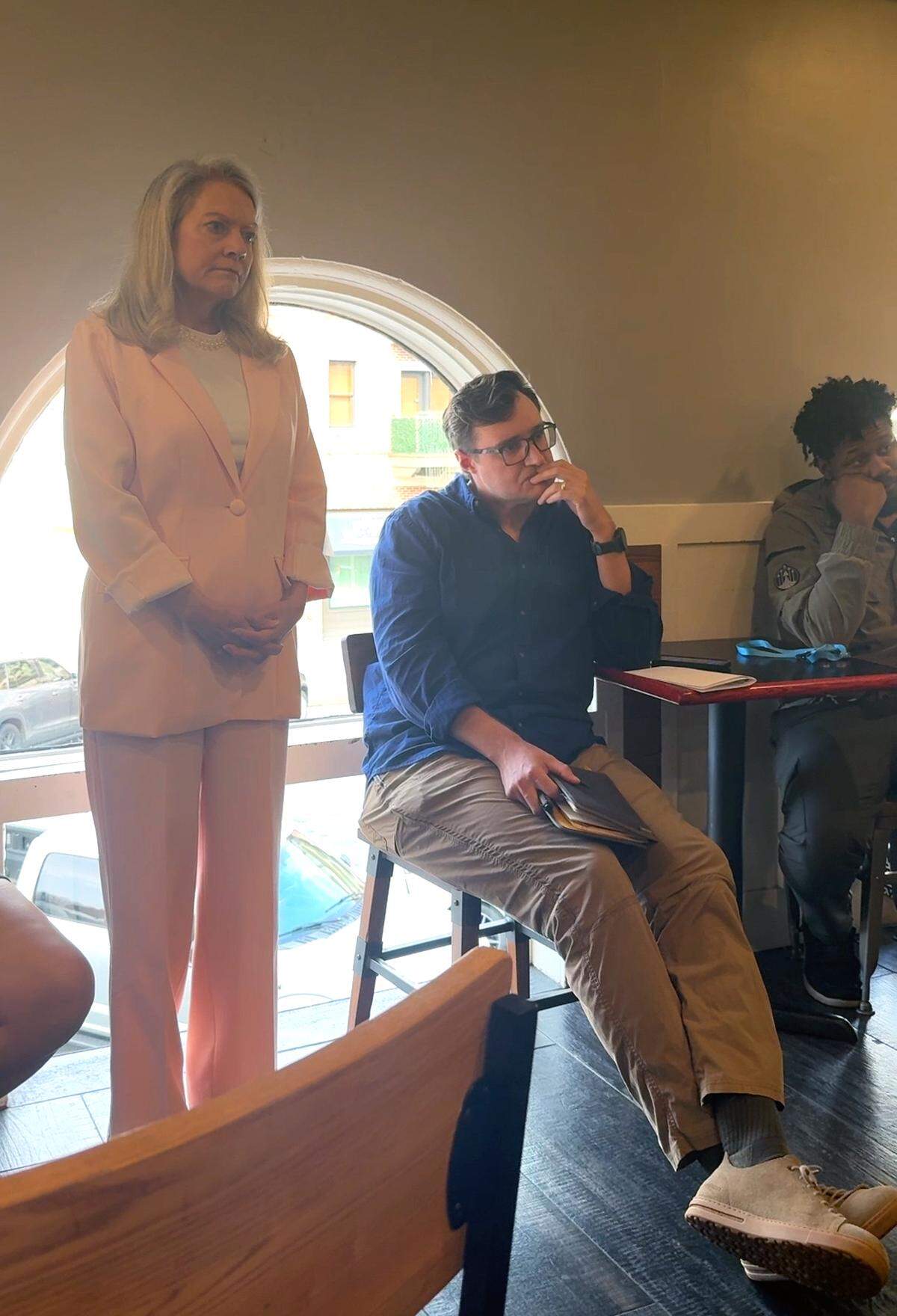
The data center might not be used for powering only artificial intelligence technology, Kendrick said. Usages depend on the developer.
“Each one of [the developers] has a different percentage of how much is AI and how much is processing,” Kendrick said during the meeting.
The Development Authority of Columbus is not offering any tax incentives to potential data center developers, Kendrick said.
The data center developer will pay $30 million upfront for the center’s water and sewage infrastructure, Kendrick said. The facility is projected to consume 330,000 gallons of water daily. Columbus currently uses 35 to 40 million gallons of water daily, she said.
The city can process up to 90 million gallons of water per day, Kendrick said.
When is the next meeting?
Choose Columbus will host more public events for residents in the coming weeks. The next event date is set for March 3 at 2 p.m., with a location change to be announced, according to Kendrick.
More information about future meetings can be found on choosecolumbusga.com and on the Choose Columbus Georgia Facebook page.
This story was originally published February 24, 2026 at 5:00 AM.