Feeding the Valley has lots of food but not enough space. A $3M grant could change that
Feeding the Valley plans to expand its headquarters in Midland to increase the food bank’s storage capacity and better meet the demands of families in the area still struggling through the coronavirus pandemic.
The food bank is applying for up to $3,142,500 through the Community Development Block Grant (CDBG-CV), which requires that the facility be used as a food bank for at least 10 years.
The grant would cover 75% of the costs associated with expanding the building and Feeding the Valley would be responsible for fundraising the rest.
If the grant is approved, the food bank would add another 24,000 square feet to its existing 31,000 square feet, creating 100% more dry storage space and 50% more cold storage space, Feeding the Valley president and CEO Frank Sheppard said.
“With that additional capacity, we can provide a lot more assistance to the community,” he said. “And we’ll be able to do so for many years to come.”
Food insecurity due to the pandemic
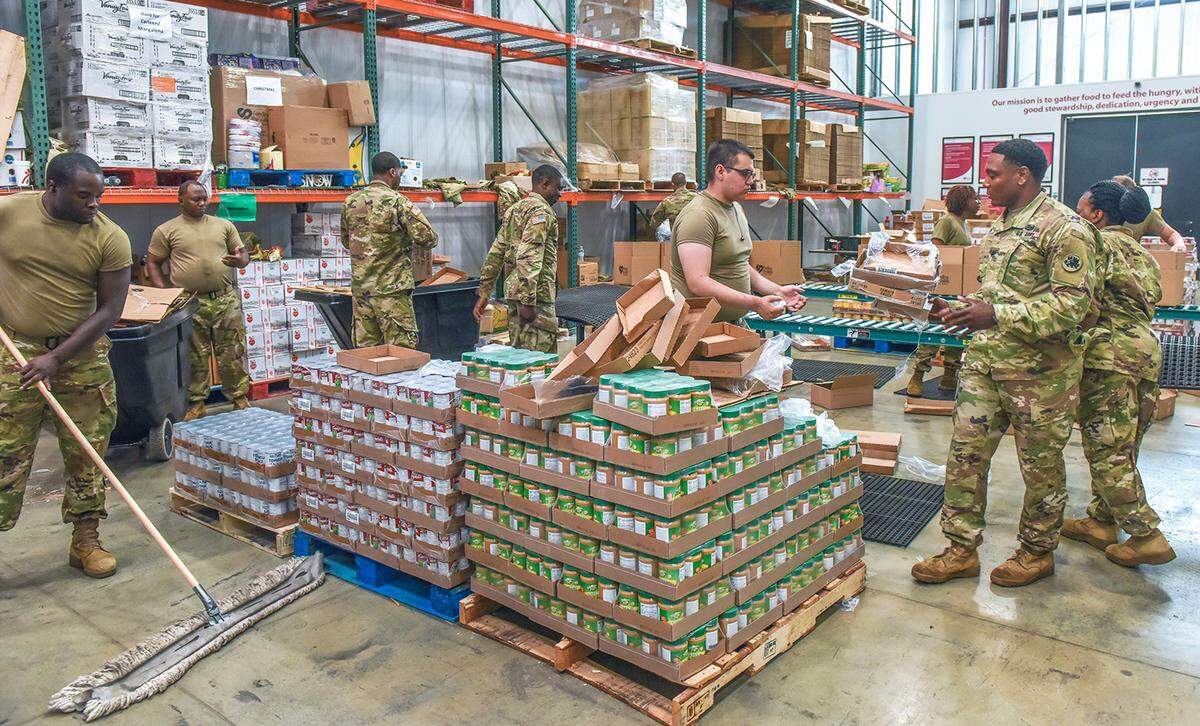
On March 21, 2020, more than 2,000 cars lined up for Feeding the Valley’s first mobile pantry food distribution, according to the food bank’s 2020 Annual Summary Report.
At the very height of the pandemic, Sheppard said, Feeding the Valley saw a 53% increase in demand for their services. The demand leveled off to a 35% increase, and Sheppard expects it to remain at that heightened level for the foreseeable future.
The food bank also is distributing 50% more food on a monthly basis than it was before the pandemic began, Sheppard said. The food bank fed about 2,000 people for Thanksgiving,up from the 1,200 meals that were delivered in 2020, according to the annual report.
“Our neighbors that are financially impacted by this pandemic are going to continue to struggle,” he said. “There are foreclosures, there are evictions, there are utility disconnections — all sorts of things that their resources are going to be needed for.”
The pandemic exposed areas in Columbus that are food insecure, Community Reinvestment Director Robert Scott said, adding that it exacerbated and possibly expanded the footprint of food deserts in the area. After Feeding the Valley used a previous grant to expand operations to help senior citizens, helping the food bank apply for a $3 million grant was a “no brainer,” he said.
“I wish I had a magic wand to make sure that there weren’t any food deserts and that everybody was able to get what they’re needing,” he said. “But since I don’t, the next closest thing is to expand the capacity of Feeding the Valley so that they can address as much as they can.”
How is the project funded?
The Community Development Block Grant comes from funding made available by the Coronavirus, Aid, Relief and Economic Security Act (CARES Act) passed by Congress in March 2020. Georgia received $82,850,707 in funding for the program, which is being distributed by the Georgia Department of Community Affairs.
The Community Reinvestment Department collaborated with Mayor Skip Henderson’s office, the city manager’s office and other commissions to apply for the grant, Scott said. Columbus Council then approved resolutions on Nov. 16 allowing Feeding the Valley to apply.
“This particular opportunity that the state of Georgia was offering was only for food banks,” Scott said. “There are quite a few across the region, but we have a particular interest in the success of Feeding the Valley. It’s in our region, it serves our citizens.”
The food bank has committed to paying $1,047,500 for the matching funds requirement. Last year, Feeding the Valley was the beneficiary of a large gift, Sheppard wrote in a letter to Henderson, and as of November 11, the food bank has already invested $275,000 in the project.
Feeding the Valley has been the recipient of generous support from the general public, philanthropic community and business community, Sheppard said. The food bank’s national parent organization, Feeding America, has helped send more food and commodities to help more people, he said.
“It’s really just been a statewide, community-wide effort with folks helping us in any way they can,” Sheppard said. “It’s great to see folks come together at such a time of need to help so many people.”