Conservation and climate lessons from Jimmy Carter and his solar power farm in Plains, GA

Former President Jimmy Carter is often remembered for his post-presidential work to serve others by building homes, but the man who died Dec. 29 after a long career of public service is also known for a legacy of conservation.
Perhaps best known for his humanitarian work after his presidency and peace deals which earned him the Nobel Peace Prize in 2002, Carter was no doubt a conservationist and environmentalist.
At age 93, he replaced his old peanut farm with solar panels on his 13-acre plot of land in Plains.
Off the main road in Plains, tucked away from the frenzied media and cameras, a field of solar arrays surrounded by pollinating plants is silently carrying on Carter’s legacy of renewable energy independence.
In 2017, the Carter family added one megawatt of solar electricity from 3,700 panels of solar power. The electricity sold to Georgia Power is enough to power roughly 300 to 500 homes per year, about the size of Plains.
Carter was intent on energy independence and conservation from the 1970s onward, enacting far more measures than just the Plains solar farm, despite controversy.
In a now-famous speech from the Oval Office during his presidency, Carter told his fellow Americans to waste less and turn down the thermostat in an effort to conserve energy in the aftermath of the two oil crises in 1973 and 1979.
“He was intent on energy independence,” Patrick Allitt, an environmental history professor at Emory, said in an email.
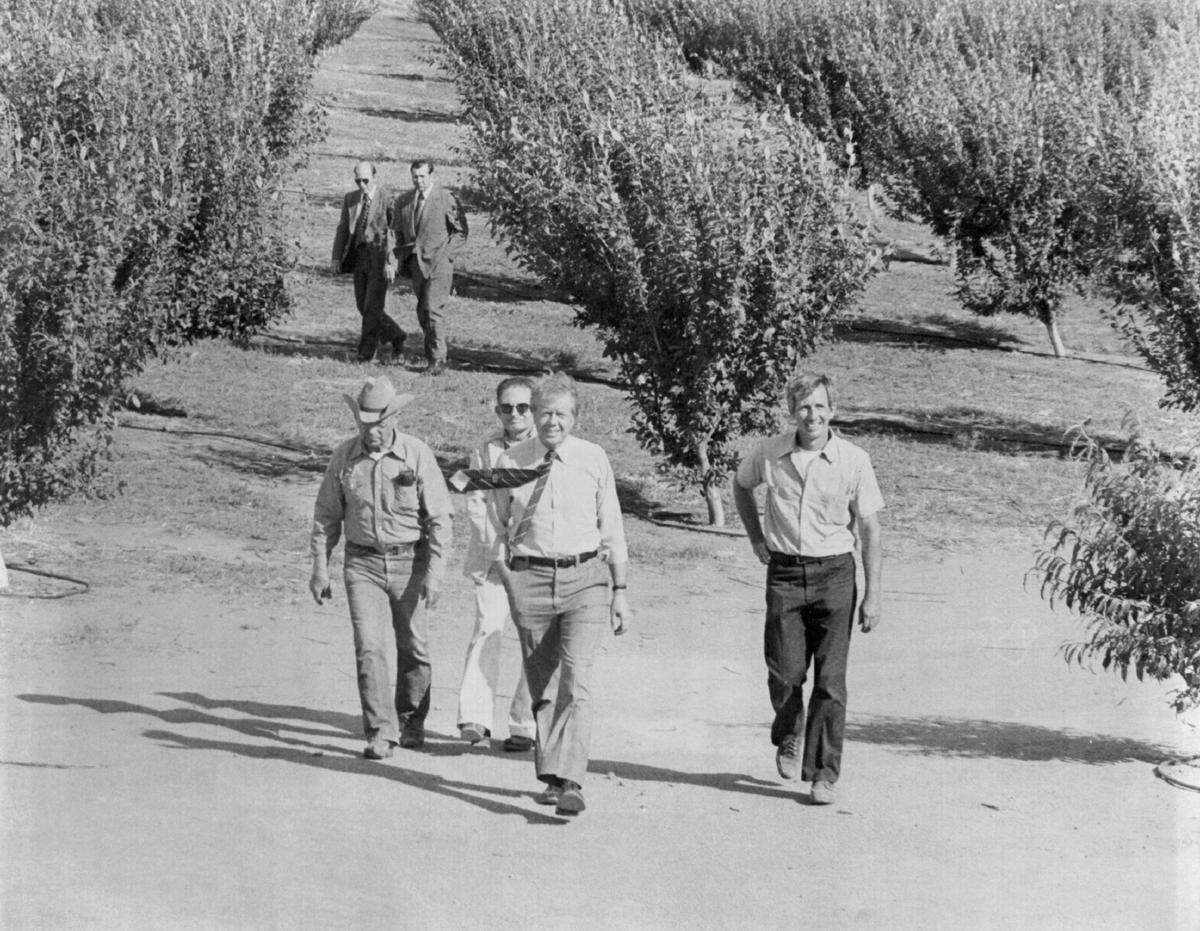
The National Energy Act in 1978 imposed penalties on gas-guzzling cars, and created tax incentives for wind and solar, which did lead to a decline in oil use, according to Kai Byrd’s article in Yale Environment.
Byrd is the author of the 2021 biography, “The Outlier: The Unfinished Presidency of Jimmy Carter.”
An unintended consequence of this act was an increase in coal and exploration of natural gas, Byrd wrote for Yale. Byrd also said the deregulation created a market for the innovative fracking technology that supplies liquified natural gas.
Despite this, Bill Mckibben remembers Carter as an “extraordinary visionary.” Mckibben is a climate policy contributor to The New Yorker and founder of Third Act and 350.org.
Carter added solar panels to the White House in 1979. They were later removed by his successor, former President Ronald Regan. Today, some of the panels live at Unity College in Central Maine, according to NPR.
“A generation from now, this solar heater can either be a curiosity, a museum piece, an example of a road not taken…,” Carter said in his 1979 speech about the solar water heating panels.
Mckibben says the U.S. would be in a much better place when it comes to reducing climate change’s impacts if Carter’s energy focuses were taken more seriously.
“His last budget tried to post America so we’d be getting 20% of our power from the sun by 2000,” McKibben told the Ledger-Enquirer via email. “Had we done that, we’d live on a much cooler planet.”
A report called the “Global 2000’s,” led by James Speth from the President’s Council of Environmental Quality, educated Carter of the dangers of carbon dioxide build up and species extinction, according to Byrd. In that report, he set a goal of producing 20% of the nation’s energy from renewable sources by 2000.
By 2000, the U.S. renewable energy mix was just 9%, according to the National Renewable Energy Laboratory. It wasn’t until 2023 that the U.S. had over 20% of its energy produced in renewable fashion, including wind, solar and hydropower. The Energy Information Agency projects renewable energy in 2024 will be a quarter of the country’s energy supply.

A new energy cabinet
Both the National Renewable Energy Laboratory and Energy Information Agency are within the Department of Energy. The Department of Energy was created in 1977 by Carter to address the energy needs of the future and promote national security.
The DOE consolidated 30 different departments, including the Energy Research and Atomic Energy Commission, into one agency. It reduced consumption and promoted conservation and renewable energy use.
“By creating a cabinet-level Department of Energy, President Carter left a powerful legacy,” Jon Elkind, a senior research scholar at Columbia University’s Center on Global Energy Policy, told the Ledger-Enquirer. “The DOE provides technology-neutral leadership for the Nation.”
Prior to the famous 1988 testimony to Congress by NASA scientist James Hansen, the terms “global warming” and “climate change” were not part of the American vernacular.
However, the DOE has been instrumental in climate action today with 17 national laboratories working daily to develop clean energy technology.
“DOE is the US science and technology powerhouse, it (demonstrates) how much it can help accelerate the deployment of new energy technologies through well-designed policy tools like the Loan Program Office and the Hydrogen Hubs,” Elkind said.
The department adds that the effects of climate change are a “top priority.”
The DOE ensures environmental cleanup of the nuclear weapons complex and aims to reduce the global threat of nuclear weapons, part of Carter’s original vision.
Protecting land was at the forefront of Carter’s mind even before reaching the Oval Office.
Conservation and Georgia land protection
During his time as a Georgia state senator from 1963 to 1967, Carter was a charter member of the Georgia Conservancy during its founding year and helped create protection of two nationally recognized wilderness areas in the state.
“Carter used his legislative insight to confidentiality and successfully engaged with state leadership to lobby federal officials to establish Cumberland Island National Seashore and designate the Okefenokee as a National Wilderness Area,” Katherine Moore, president of Georgia Conservancy, said in an email to the Ledger-Enquirer.
As governor, he established the Georgia Heritage Trust. The trust identified key areas in Georgia for conservation and protection by the state, according to the conservancy. The program helped protect Ossabaw Island as a State Heritage Preserve, adding critical acreage to the recently-dedicated Panola Mountain State Conservation Park, and setting aside more than 300 acres along the Chattahoochee River in metro Atlanta for preservation.
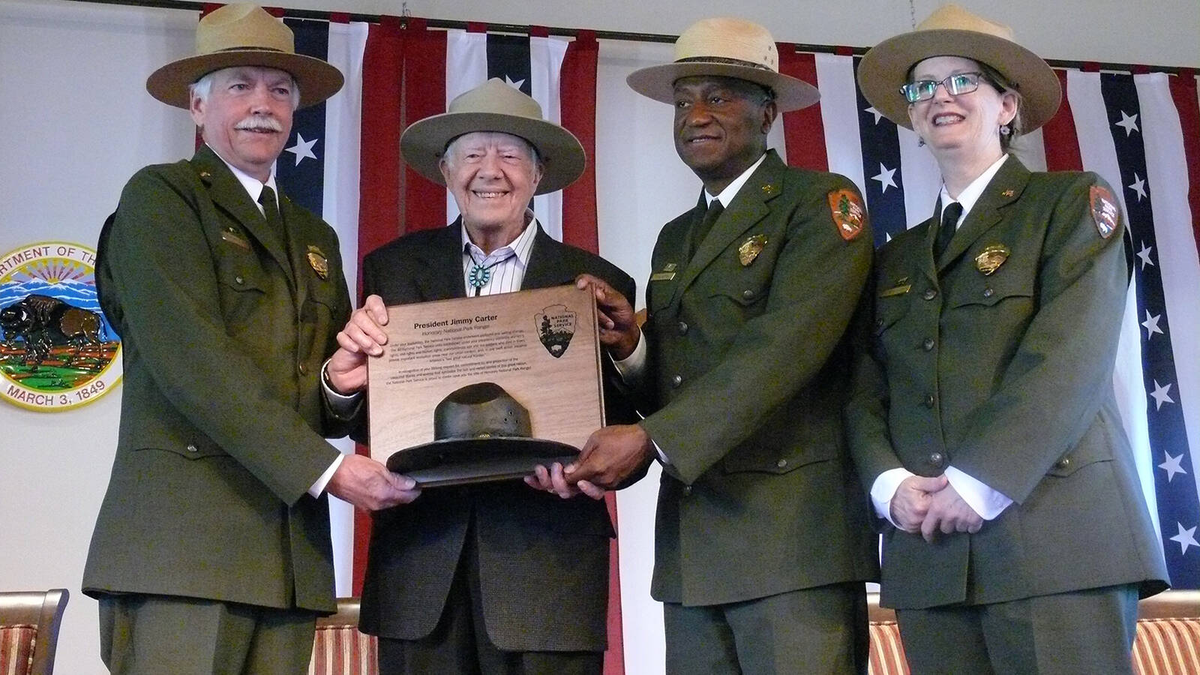
The Georgia Conservancy awarded Carter with the Distinguished Conservationist Award in 2019.
“His legacy as a charter member continues to inform our mission today,” Moore said.
As president, through an executive order, Carter designated an area the size of Minnesota, 56 million acres, within Alaska, creating 17 national monuments using the 1906 Antiquities Act.
During his final months in office in 1980, before Regan’s inauguration, Carter signed the Alaska National Interest Lands Conservation Act, tripling the size of the Wilderness Preservation System and doubling the National Park System, according to Byrd.
The National Parks Conservation Association called him a “conservation legend” and said the national parks contribute $2 billion a year to local economies.
According to Byrd, at age 98, Carter appealed to the courts and President Joe Biden to not build a gravel road through the small portion of the designated wilderness area. It succeeded and the Department of Interior canceled the plans to build it on March 14, 2023.
This story was originally published December 31, 2024 at 10:33 AM.