GOP divided on repealing clean energy tax break. What would it cost Georgia?
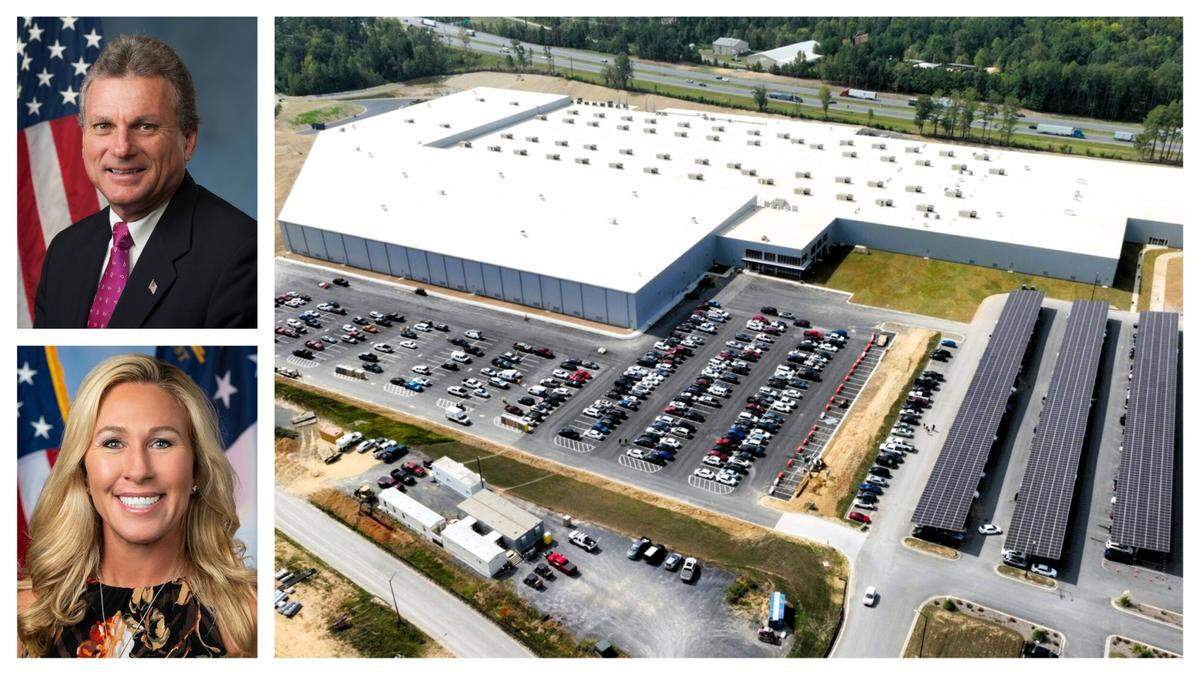
Nearly every corner of Georgia has a manufacturing factory enabling a clean energy economic transition. From Dalton to Savannah and West Point to Pendergrass, manufacturing plants are being built, with some producing an end product that Georgians can drive away in.
Assembly lines are churning out electric vehicles at Kia in West Point, and hydrogen vehicles are incorporated at Hyundai’s megaplant near Savannah. Workers at Hanwha Qcells near Dalton and in Cartersville are creating an integrated solar panel chain, the first in America. In Atlanta, Solar Cycle is gearing up to recycle old panels and SK battery in Roswell is creating batteries for electric vehicles.
These are just a handful of 48 projects in Georgia that are part of a transition away from an economy based on fossil fuels, gas and oil toward a clean energy economy. Of all 50 states, Georgia had the largest amount of announced private investment in clean energy form 2020 to 2023, according to the Department of Energy. A total of $32 billion in investment has been announced in the last few years.
Eventually, the manufacturers could receive federal tax credits for their millions and billions in investments from the Inflation Reduction Act, which created clean energy subsidies in an effort to combat climate change when it was passed into law under President Joe Biden’s administration.
But the federal investments could just as quickly go away, as the IRA is being floated by Georgia Republicans –and other Republicans throughout the U.S. – as a “Green New Scam” that should be repealed. This month, Congress has to decide what to include in its budget reconciliation to help alleviate the $4.5 trillion tax cuts President Donald Trump is calling for. The IRA could be on the chopping block in order to eliminate the offered tax cuts.
Repealing the IRA has clean energy experts and Georgia Democrats worried about what would happen to these companies, those who work at these companies and the entire Georgia economy, should they not receive the credits that they depend on.
“These companies are far more than hoping they will get these credits, they are counting on them,” Jesse Lee, an economic policy adviser in clean energy, said. “If you strip (the IRA) away in the middle of the factory production, then you know, there starts to be a pretty hard decision on whether you finish the factory. There is no question that they would have to curtail their plan; in some cases, they’ll abandon entire factories, entire expansions. I think ultimately you will be looking at significant layoffs for the companies.”
Groups who have been tracking the clean energy transition, such as Climate Power, found 41,738 jobs have been created from the massive boom of investment in Georgia. They also found that the $32 billion in investment from 2023 has shrunk to $27 billion since President Donald Trump was elected. Earlier this year, Freyer battery announced it was canceling a major project in Newnan and moved to Texas. Aspen Aerogels, another battery supply chain plant in Register, canceled its plans in March. Neither cited the potential repeal of the IRA directly as their cause for cancellation or movement to another state.
Together they would have brought 15,000 jobs and $3.27 billion in investment in Georgia.
Georgia Republicans for and against the IRA
Rep. Earl “Buddy” Carter, whose district covers most of the Southeast portion of Georgia, is an outlier among his Republican colleagues: he supports the Inflation Reduction Act. Last August, he was one of 18 Republican signatories asking House Speaker Mike Johnson to not do away with the IRA if Trump got elected.
In March, Carter and 21 other House Republicans sent a letter to Rep. Jason Smith of Missouri, chairman of the Ways and Means Committee. In that letter, they asked Smith to “keep our current path to energy dominance amid efforts to repeal or reform current energy tax credits.”
Smith did not respond to multiple requests from the Ledger-Enquirer about whether or not he will bring the IRA to vote on the house floor in the coming weeks.
Carter’s district benefits greatly from the potential federal credits. Nine projects that have created 4,532 jobs and invested $3.56 billion are all in Carter’s district, according to the clean economy economy business group, E2’s IRA tracking map.
On the other side of the Peach State, three Georgia Republicans strongly believe the IRA should be repealed.
In May, Rep. Marjorie Taylor Greene, Rep. Andrew Clyde and Rep. Rich McCormick were three of 38 lawmakers who said the IRA should be repealed because it will cost taxpayers $1 trillion over the next decade, burdening tax payers, inflating energy costs, and threatening reliability of our power grid, in a letter sent to Smith.
“We are deeply concerned that President Trump’s commitment to restoring American energy dominance and ending what he calls the ‘green new scam’ is being undermined by parochial interests and short-sighted political calculations…these subsidies props up unreliable energy sources while displacing dependable, proven energy like coal and natural gas,” the letter said.
But Greene, Clyde and McCormick all have clean energy projects in their district. The most notable one is Qcells near Dalton, in Greene’s district, which combined with a newer addition to the plant in Cartersville has invested $2.5 billion. SK Battery opened up an IT plant in Roswell in McCormick’s district, to support it’s mega battery plant in Commerce. Clyde’s district is home to the Toyota Industries Electric Systems North America plant in Pendergrass, which has invested $69 million.
“As a Georgia business owner, it’s offensive to Georgia-born and raised businesses that have never benefited from the Inflation Reduction Act (IRA),” Greene said in an email to the Ledger-Enquirer. “Many of the jobs created under the IRA are given to imported foreign labor. Many of the companies benefiting from the IRA are not even American-owned businesses. I represent a manufacturing district, and some of these companies compete directly with existing American-owned businesses and steal their workers.”
Clyde and McCormick did not respond to multiple requests for comment prior to publication.
Qcells near Dalton was announced two years before the IRA became law in 2022. It is the largest solar panel plant in the U.S. and created around 1,500 jobs. The second plant in Cartersville was the first to fully integrate solar panel modules in the U.S. and will employ up to 2,000 people, a project decided on after the IRA was passed. The two projects from the company have collectively invested $2.5 B into the Georgia economy.
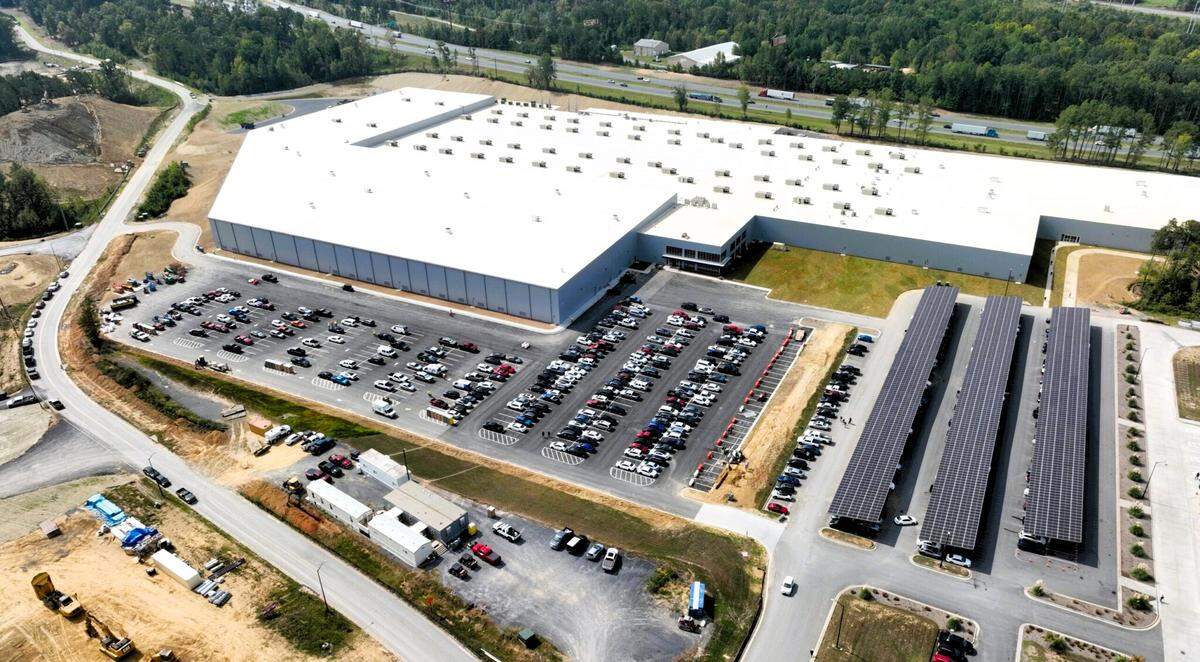
The county commissioner of Whitfield County, where Qcells is based, said the project is, “helping to diversify the economy further.” The company also received a $1.45 billion dollar loan from the Department of Energy.
Georgia Gov. Brian Kemp is enthusiastic for the work of Qcells and companies such as Solar Cycle (also in Greene’s district and expected to bring 640 jobs), which recycles old solar panels, but he believes Georgia is the number one place to do business regardless of whether the IRA provides benefits. He suggests that business was booming in the Peach State before it was passed:
“Georgia has been named the No. 1 state for business for more than a decade because we work with job creators to meet their needs, such as through workforce development programs, infrastructure investments, and the rural workforce housing initiative,” Kemp’s spokesperson, Garrison Douglas, wrote in an email.
“Thanks to these efforts, the e-mobility space was already growing in Georgia before the federal government’s intervention, and because our state believes in a market-based approach to economic development, the governor vocally opposed the Biden administration’s decision to not only pick winners and losers but impose counterproductive mandates that disadvantaged Georgia-based auto manufacturers and disincentivized organic consumer adoption of electric vehicles.”
Lee argues the IRA catalyzed economic growth.
“The point of the IRA isn’t that clean energy got invented,” he said. “The point is that it did this kind of dramatic catalyzing of this exponential growth. (Companies) now have the foothold and tax incentive to add thousands more jobs.”
Kia in West Point expanded its existing operations in 2023, investing $217 million to be able to, “give us the flexibility to produce internal combustion and electric vehicles along the same assembly line.” James Bell, head of Kia Corporate Communications said in an email.
Slim partisan margins as IRA repeal is considered
Sen. Jon Ossoff called the repeal of the manufacturing incentives “catastrophic” for Georgia’s economy during a press conference call at the end of April.
“Republican members in Congress have an obligation to put the state of Georgia above partisan politics,” he said. “They have a very clear choice: Georgia or Trump. If they want to stand up for Georgia they will oppose the manufacturing incentives.”
The Ledger-Enquirer reached out to all nine House Republicans in Georgia, including those who have voiced opposition or support, multiple times to hear their stance on the IRA, should Smith bring it to the house floor for a vote in the coming weeks. None responded except Greene.
How much control does Smith have? Zach Amittay, E2 Southeast Advocate, says Smith has a lot of control. But so do others in Congress.
“Chairman Smith has a lot of control over what’s considered by the committee,” Amittay said. “So he’s got a lot of control over negotiations and a consideration process happening within the committee on what they’ll be proposing for a committee vote.”
Amittay said it could come down to two or three house members who decide what passes the floor and what doesn’t.
“The Ways and Means Committee is essentially the House Committee on Tax Policy,” Amittay said. “Even though members of the committee have an outsized influence in this process, right now every member of the house has an opportunity to influence the outcome here because the margins are so thin between the parties.”
Lee, the clean energy economic advocate, echoed Amittay’s comments about the slim margins in the House. He said Georgia republicans need to stand up to this, and now is “prime time”.
“If every House Republican in Georgia with major investments in their district stood up and said, ‘I’m not voting for something that takes out the factories from my district,’ the repeal effort would be dead because you only need three or four Republicans,” Lee said.
The next two weeks are by far the prime time,” Lee said on May 7. “It’s the best chance to make sure the repeal never gets into the reconciliation bill. Once it gets in it’s going to be much harder to stop it and make them go back. Right now is the time they can weigh in.”
Why is the IRA at risk now?
As the U.S. budget deficit has grown by $1.3 trillion since the beginning of 2025, House Republicans are looking to make cuts in the budget. Plus, the GOP budget blueprint from February has $4.5 trillion in tax breaks.
“The Budget Reconciliation discussions are all about how the Republican caucus can find the savings to make up for the additional deficit that’s going to be driven by the extension of the tax cuts that were passed during the first Trump administration,” Amitay said. “The marching orders from folks like Chairman Smith is we need to find savings to make up for some of this additional deficit that’s going to be driven by the tax cuts.”
On Friday, Sen. Raphael Warnock took to Facebook to tell Georgians that doing away with the clean energy tax credits helps billionaires.
“I’m going to stand up for Georgia jobs,” he said. “We should not be risking Georgia jobs and investments in our state to give a billionaire a tax cut. It’s short sighted. It’s bad for Georgia.”
Lee said the IRA is just a “drop in the bucket” in savings compared to the overall bill.
“A full repeal of the IRA would pay for about one-twentieth of the bill, Smith wants $400 billion from the IRA. There is no good reason to include this except for politics.”
It’s not clear whether any of the Georgia projects have received credits from the IRA, yet.
“We wish we had this information on whether or how much has been credited, but it’s not available at this stage in the process,” Amitay said. “It’s a difficult thing to calculate the direct benefits to a company like Qcells because they are early in the development process.”
Greene said Rivian, based in Social Circle that received a $6 billion loan from the Department of Energy through the IRA, a “failure and a waste,” in her email to the Ledger-Enquirer.
“It’s a little bit early to claim that Rivian is a waste,” Amitay said in response to Greene’s statement. “The project is moving forward and this investment is a massive win for Georgia.”
In Bainbridge, battery graphite company Annovion invested over a billion dollars and is expected to bring 400 jobs to Southeast Georgia. It has stalled construction because the IRA wasn’t properly enforced, and contracts or “offtake agreements” are pending.
“Section 30D in the IRA required EVs to have American suppliers for battery and critical minerals,” Patrick Donnelly, chief commercial officer of Anovion Technologies, said. “But the Biden administration waived that from the IRA through 2027 because every year automotive lobbyists pushed to have it waived.”
The Annovion plant would apply to the 30D tax credit, but because that portion was waived, the company continued to have pending contract agreements.
“(We) would want to see (the IRA) enforced the way it was written,” Donnelly said. “Or re-written in a way to execute what the original goal was to localize critical minerals for lithium ion batteries. We plan to target construction in the near future and products ready in 2027.”
This story was originally published May 13, 2025 at 6:00 AM.