Will Big Beautiful Bill cause ‘annihilation’ of Georgia’s clean energy industry?
AI-generated summary reviewed by our newsroom.
- Federal clean energy tax credits face rollback, impacting Georgia's green economy.
- Repeal of credits threatens $24B investment, 82,000 solar jobs across the state
- Electric bills may rise with less solar deployment and increased fossil fuel reliance.
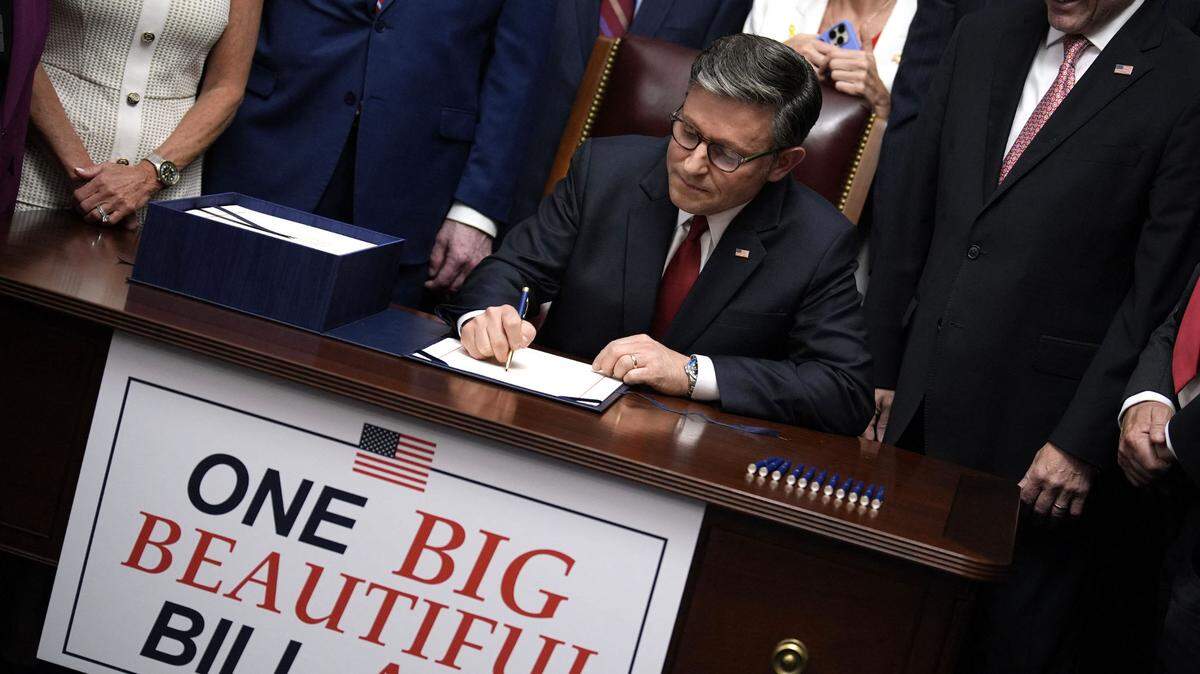
Critics have blasted the “Big, Beautiful Bill” for how it will negatively affect an emerging economy that’s centered around clean energy in Georgia.
The bill, a massive piece of legislation that largely implements President Donald Trump’s policy initiatives, was passed by Congress Thursday and is set to be signed by Trump. It is expected to cause difficulty for solar, battery and electric vehicle industries in Georgia by pulling back on tax credits that sought to fight climate change.
“This is a classic case of a self-inflicted wound,” said Zach Amittay Southeast advocate of E2, a network of business leaders who advocate for sustainable policies, said. “It’s a bad deal for American households and it’s just bad policy.”
The bill is aimed at cutting the national deficit, and cutting the green energy incentives is estimated to save about half a trillion dollars, according to the New York Times. Trump and Republicans have said they want these cuts to “to further defeat inflation” saying that the Inflation Reduction Act, which created these green energy incentives, “sets us back.”
Electric boom or bust in Georgia
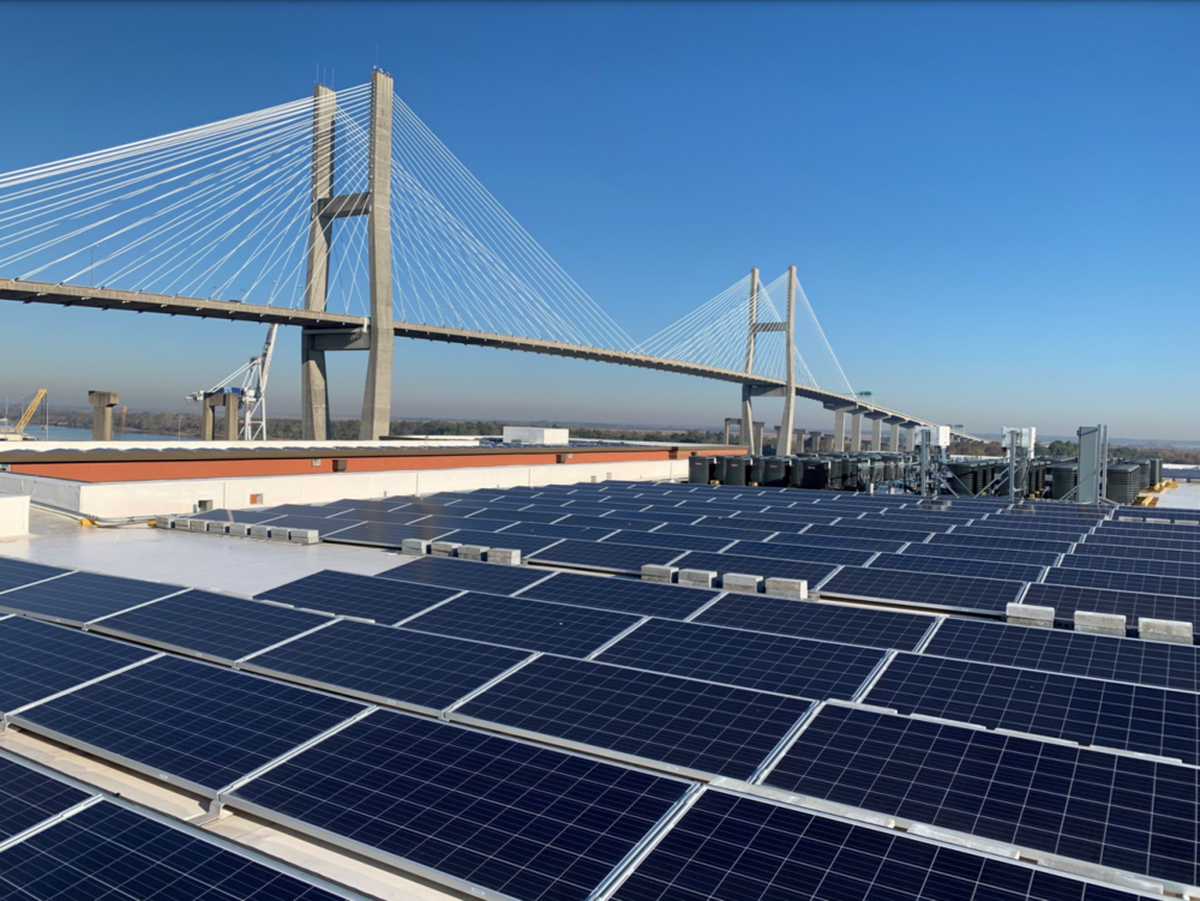
Georgia has been at the center of a clean energy transition since the tax incentives were created in 2022, attracting 45 clean energy projects across every corner of the state. This has brought $24 billion in private investment in just two years. A dozen of those projects, such as solar manufacturers and battery plants, are in rural parts of the state, marking the highest rate in the nation.
Across the country, 96% of all new energy projects were carbon-free in 2024.
“The renewable energy sector, solar manufacturing, battery production, electric vehicle manufacturing that are core to Georgia’s economic development right now are now being destroyed,” Sen. Jon Ossoff said in a press conference on Wednesday. “Georgia has made out better than just about any other state in the country. This bill is a direct attack on the industry that is driving Georgia’s economic development, job creation and wealth creation in our state right now.”
An advanced manufacturing tax credit for green energy growth in the Inflation Reduction Act aided several solar companies in Georgia: Sunviva in Norcross, QCells in Dalton and NanoPV in Andersonville. Electric vehicle battery companies such as Hyundai near Savannah, SK batteries in Commerce, or Ascend Elements in Covington are also associated with the manufacturing tax credit.
The new law shrinks the timeline for advanced manufacturing projects such as QCells – the largest solar panel manufacturing plant in North America – in Dalton. Those projects can only claim tax credits at 100% until 2031, which cuts the benefits off a year earlier than the previous law.
Despite just a one-year change, critics argue that the incentives that helped electrify the economy around the country and the state will change because other cuts in the Trump-backed bill will reduce demand for green energy initiatives. Other cuts include the $7,500 new electric vehicle tax credit, the $4,000 used EV tax credit, and the commercial EVs tax credit. Those credits expire in 90 days, on Sept. 30, rather than remaining in place for seven years as they did under prior law.
“These laws were designed as an ecosystem of support,” said Terin Mayer, deputy director of research for BlueGreen Alliance. “The production tax credit for wind and solar is going to significantly affect the economics of building a solar or battery manufacturing location. The pieces that are going to be most impactful here is demand for the products that these manufacturers are producing.”
QCells is “very important” to Dalton, said Carl Campbell, executive director of Dalton-Whitfield Joint Development Authority. The company brought 2,000 jobs to the area in 2018. Campbell sent a letter to Sen. John Thune last week before the Senate voted on the house bill asking him to do everything in his power to protect the full strengths of the tax credits that helped the company thrive.
“They are dumping $125 million a year in annual payroll in our community,” Campbell said. “We hope they will adapt and change if necessary and continue to provide good jobs and products in our community.”
Rep. Marjorie Taylor Greene, whose district includes Dalton, is less optimistic about the clean energy economy and called these incentives the “green new scam.” She previously told the Ledger-Enquirer that businesses shouldn’t have to rely on the government if they are a sustainable business. Greene voted in favor of the bill.
But Brion Fitzpatrick, president of the Georgia Solar Energy Industries Association, said any major source of industry such as nuclear, coal, gas or hydropower has been stimulated by federal incentives.
“All major businesses are reliant on government incentives,” he said. “It doesn’t matter if you’re talking about a Georgia-based airline or a car manufacturer, or a nuclear power plant. They are all reliant on government incentives.
“And, since we’ve been getting incentives, we’ve driven down the cost of the manufacturing of solar modules, the development and construction of solar projects, and the overall deployment of solar.”
Fitzpatrick worries about what will happen to QCells and the solar jobs in the state.
“On a nationwide scale and companies like QCells, and some of these other companies, they’re going to lower their capacity and lower their jobs,” he said. “So instead of growing they’re going to start redacting how many modules they’re producing.”
There were 82,000 people working in the solar industry in Georgia in 2024, according to the Georgia Chamber of Commerce.
“Solar companies in Georgia will face job cuts because there will be virtually no projects to be developed,” Fitzpatricl said. “I’m talking rooftop (solar), not just your generation and utility scale. This is an annihilation of our industry.”
Solar developer Brightnight was poised to open a 400 megawatt solar site called Pepper and Hammock in Wayne and Brantley counties in southeast Georgia. They have a battery and storage project that hasn’t yet been announced, which altogether would add 2,500 MW of electricity to the Georgia grid.
The company has not responded to requests for comment about whether they will carry on with the projects after this new law was passed Thursday.
Terin said facilities that have announced but aren’t operating yet are more likely to pull the plug due to this legislation. But if there’s a huge cut in demand for battery factories, they’ll “fold as well.”
Sen. Raphael Warnock, a Georgia Democrat, voted against the bill alongside his Democratic colleague Ossoff on Wednesday.
“We should not be sacrificing Georgia jobs for tax cuts for folks who are already well off, but we are seeing political games about to derail a generational economic transformation that is already putting people to work and creating economic opportunity,” Warnock said in an email to the Ledger-Enquirer.
Cuts to at-home clean energy credits
The “Big, Beautiful Bill” also sets an early expiration for home improvement and residential clean energy tax credits, which now will go away on Dec. 30.
These credits were aimed at lowering the cost of installing a new HVAC system or electrifying a stovetop in homes, changes which run in the thousands of dollars. Outdated versions of these products make bills more expensive and take more demand from the energy grid.
Georgians who retrofitted households by adding new HVAC, insulation or adding solar panels were given a 30% tax credit. In 2023, 82,000 Georgians made the switch and received tax credits, saving $148 million, according to the Department of the Treasury. Numbers for 2024 have not yet been released.
Contractors and installers have seen the upswell in home electrification tally to 3,000 jobs in Georgia.
Zach Pierce, head of policy at Rewiring America, a national electrification nonprofit, says this is the wrong time to be making it hard for people to make upgrades because of energy needs.
“This is a momentous time in our energy industry, our load growth (is) increasing faster than any time since World War II,” he said. “We’re seeing utilities grapple with that new load growth at the same time as they’re having to replace aging infrastructure and power plants that are retiring as our grid gets older. And all of that is happening in a moment where our infrastructure, including our energy infrastructure, is being exposed to more severe and frequent extreme weather.”
Pierce said the bill picks winners and losers.
“In this moment we should be utilizing every tool that we have in the toolbox to contain costs for customers and to build a resilient and affordable energy system that’s fit for the 21st century. But what this bill does is it picks winners and losers.”
Will Georgia electric bills go up?
“(This is) economic malpractice,” Amittay of E2 said. “We’re in a moment where there’s a surge in energy demand, the energy load is increasing year-over-year due to things like the growth of the artificial intelligence industry data centers, advanced manufacturing, population growth in places in communities across Georgia. So, we need power kind of wherever we can get it and solar is the fastest and cheapest source to deploy.”
Energy experts such as Amittay argue that phasing out incentives will cause massive implications for efforts to keep utility costs low.
“Without adding sufficient solar and wind capacity to meet growing electricity demand from data centers and other sources, there will be increased pressure on fossil fuels to increase supply and meet that demand, consequently resulting in higher electricity prices,” Akshay Thyagarajan, policy analyst for the Center for American Progress, said in an email.
The Center for American Progress and Clean Energy Buyers Association predict that Georgia will see an increase of $102 in their annual electric cost by 2026 due to the repeal of these credits.
“The tech revolution and America’s ability to lead the AI race is dependent on energy, and we’re currently at an energy deficit,” Fitzpatrick said. “So why would you take away the fastest thing to deploy and the cheapest energy to deploy in a time where we’re already at an energy deficit? It makes no sense.”
Not all clean energy credits were rescinded
The tax credit for using hydrogen energy had its window shortened to 2027. It previously was eligible for credits until 2032. Hydrogen is an emerging aspect of clean energy and tests are still ongoing to try to further develop it.
Hydrogen, while just emerging in parts of the clean energy economy, with new tests being developed in power generation just last month also had its window shortened to 2027 rather than 2032 per the 45V tax credit.
The tax credit for nuclear power has been left alone, and will remain incentivized until 2032.
Nuclear power, tax credit 45U has been left alone, 100% of the incentives remain the same until 2032.
The Sustainable Aviation Fuel tax credit was extended just by two years from 2027 to 2029.
Georgia hosts the largest and first sustainable flight fuel plant in the in Soperton, which broke ground last year. The plant, Freedom Pine Fuels, has 35 employees and has yet to receive tax credits as they are still going through commissioning and start-up process.
This story was originally published July 3, 2025 at 5:05 PM.