Fast EV chargers are coming to Georgia highways near cities, rural roads
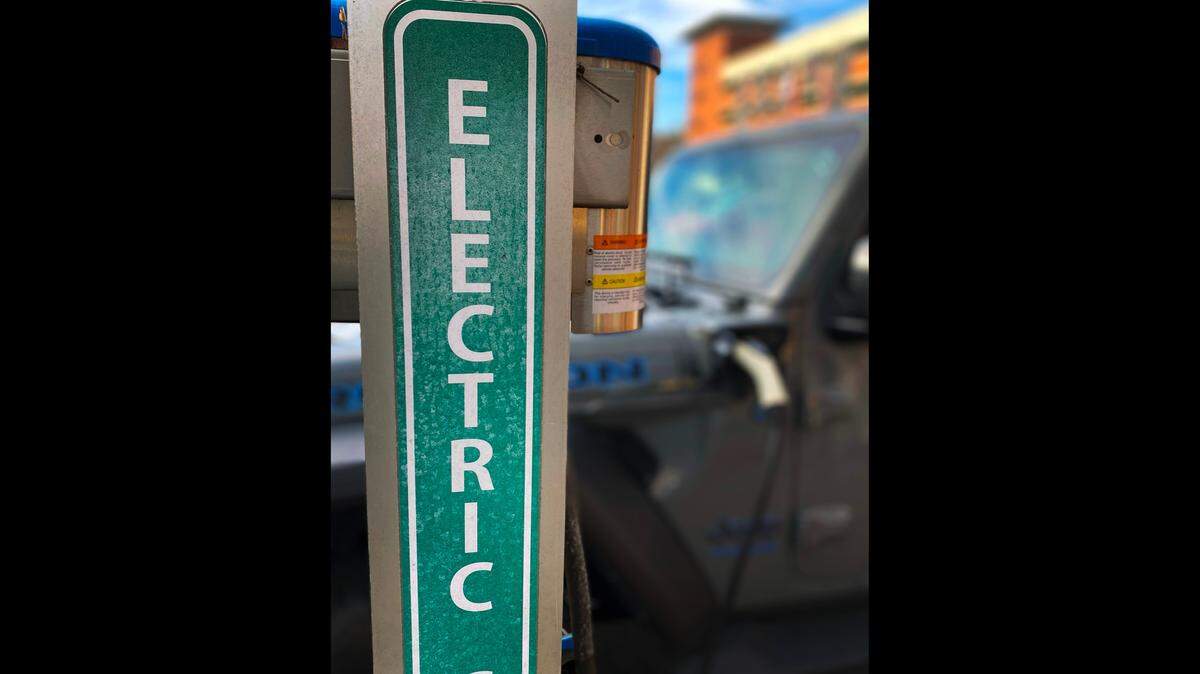
Georgia and the federal government are making it easier for electric vehicle owners to get across the Peach State without range anxiety.
The project, called the National Electric Vehicle Infrastructure program, stems from the 2021 Bipartisan Infrastructure Law that aims to create a national network of EV charging stations.
The Georgia Department of Transportation awarded five projects two years ago in round 1, and the second round was awarded last month, which will bring an additional 26 fast chargers across the state.
“Fast charging can’t come fast enough to support Georgia’s expanding EV market,” said Stan Cross, electric transportation program director of the Southern Alliance for Clean Energy. “It’s exciting to see GDOT moving forward with NEVI program implementation.”
The program requires 40% of the benefits to be in disadvantaged communities and underserved populations, no more than 50 miles apart, along with other details about how minimum kilowatt hours must be delivered per charge port.
“Each site will include four (direct current fast chargers) capable of operating simultaneously, 24 hours a day, seven days a week,” according to GDOT’s November press release. “Depending on the vehicle, drivers will be able to fully recharge in as little as 20 minutes.”
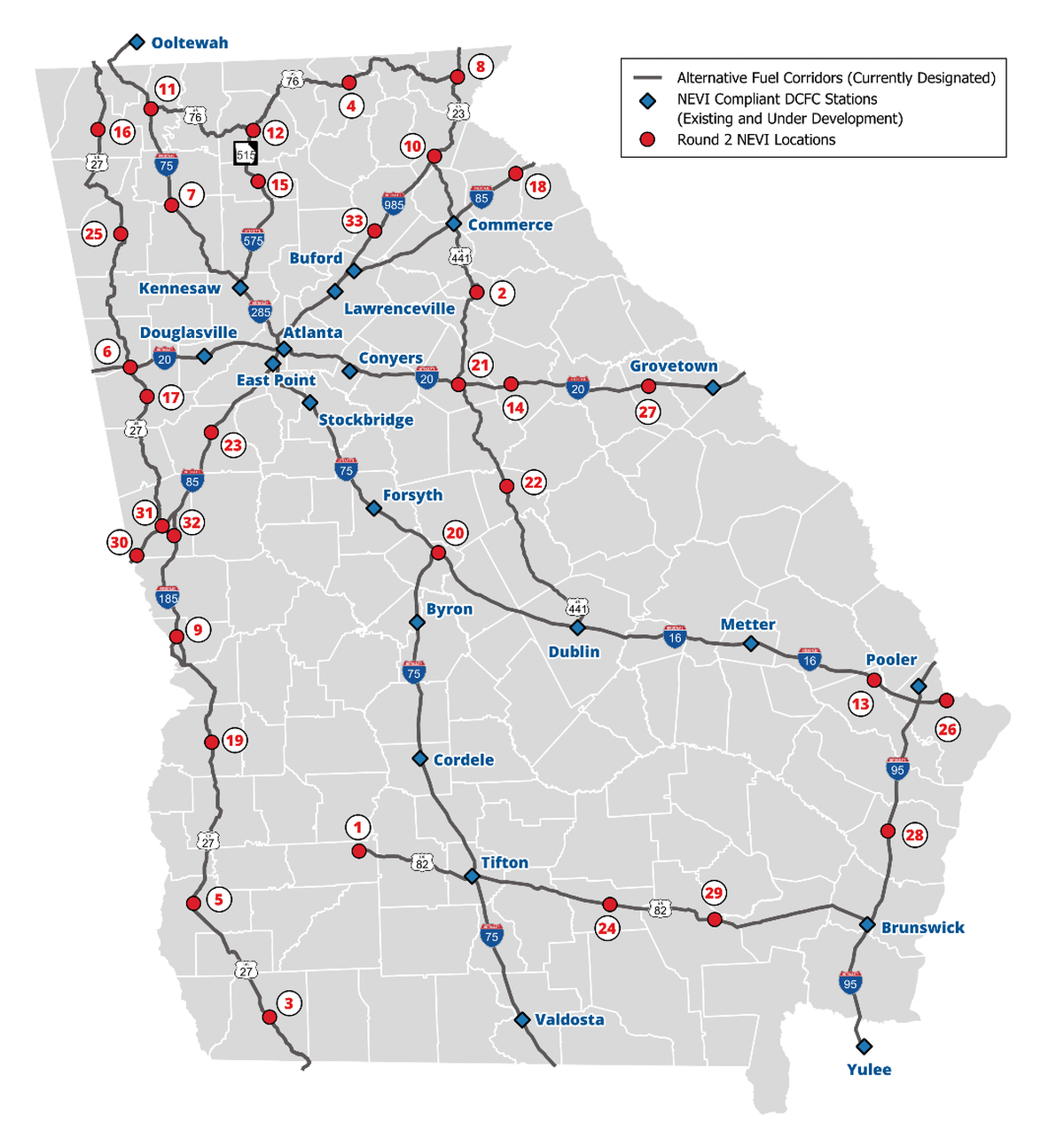
Federal NEVI funds, totaling $24.4 million, were used for this round. The private company that applied for funding with GDOT will be responsible for 20% of the project costs, according to GDOT.
Georgia among best in the South for EV charging
Many electric vehicle incentives were removed this past summer when the One Big Beautiful Bill Act was passed. But that law did not affect this project from former President Joe Biden’s administration, because these were federal funds allocated from the Bipartisan Infrastructure Law, which became the Infrastructure Jobs Act.
Gov. Brian Kemp called Georgia’s infrastructure network “robust” and “attractive to business” in the GDOT press release.
“We appreciate Georgia DOT for fulfilling the state’s commitment to a robust, reliable fast-charging network that meets federal standards and serves communities across Georgia,” Kemp said.
Cross said Georgia is second in public charging per capita for the Southeast, but lags at 20th nationally. According to the Southern Alliance for Clean Energy’s latest report, the state makes significant contributions to the EV sector.
“Given that the state is home to over $24 billion in private-sector EV, battery, and supply chain investments, expected to create 26,428 jobs, supporting a robust EV market is in Georgia’s best interest,” Cross said.
There are 145,440 registered EVs in Georgia and Muscogee County only accounts for 1,040, according to Georgia Department of Revenue records.
Transportation is an area where Georgia can increase clean energy efforts – it remains Georgia’s highest sector of emissions, producing 34.8 million metric tons of emissions annually, more than industrial commercial and agricultural emissions combined, according to a tracker from Drawdown Georgia. Adding carbon dioxide and other greenhouse gases is a known cause of climate change.
The goal of the NEVI program is to ensure interconnectedness statewide, and create accessible and convenient charging options. The round two chargers use CCS chargers, which requires owners of cars like Teslas to buy a converter.
There will be three fast chargers along Interstate 85 between West Point and Atlanta, two between LaGrange and Columbus on Interstate 185, and three along U.S. 27 headed toward Bainbridge. A GDOT online map provides more specific locations.
On I-185, the charger will be near the border of Troup and Harris County at GA-18
GDOT Deputy Chief Engineer John Hibbard expects construction to take about a year.