This Georgia mayor pushes hard for data centers in small town Grantville. Here’s why
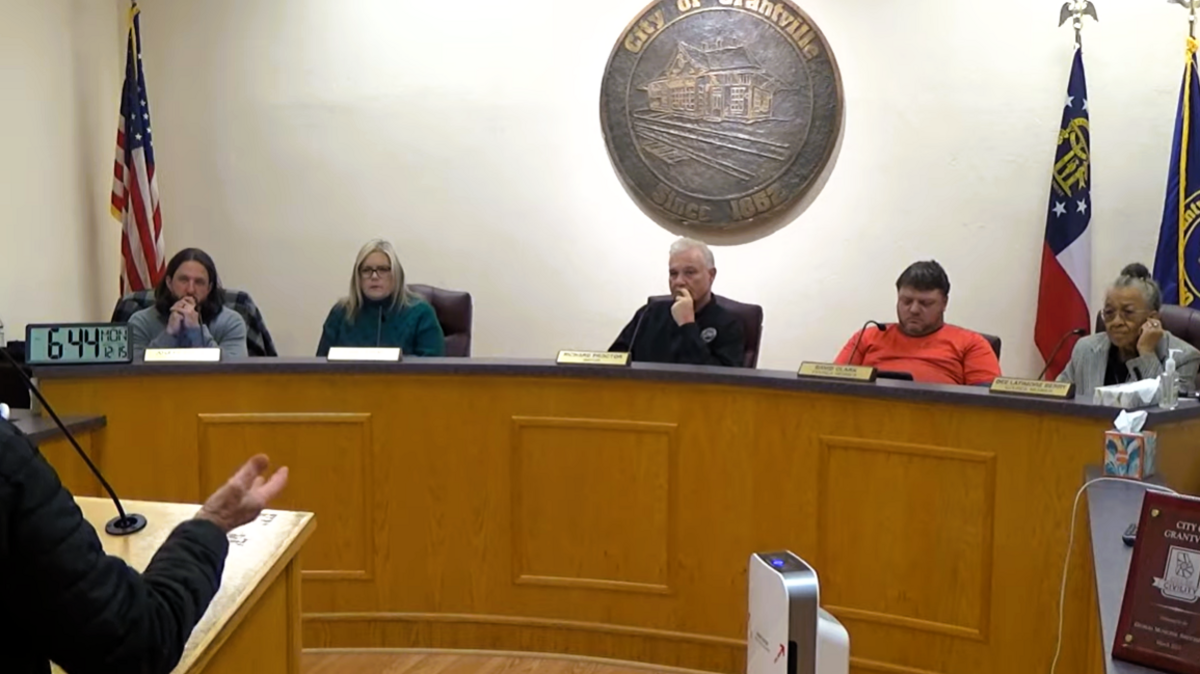
An effort to add data centers to the zoning code of a small Georgia town has prompted another community to raise major concern about whether they want to be subjected to these major facilities.
During a mid-December city council meeting, the city of Grantville proposed updating its zoning language to add “data center” within certain types of zones under a “special use permit.”
The verbiage change, which would bring forth a requirement for developers to come before council ahead of a data center project being approved, was confirmed by a 4 to 1 vote on Dec. 15.
But before it was approved, several locals spoke out against data centers setting up shop in their town of 3,000 people. They were concerned about impacts to their well water, strain on electricity, environmental pollution, electricity costs and transparency between government and its people.
The lone “no” vote came from Councilwoman Dee Berry, who was vocal in her opposition to data centers. But Mayor Richard Proctor vehemently supports the projects.
He also said there are two groups against data centers – one that wants “Grantville to die” and one that believes in the “religious myth of global warming.”
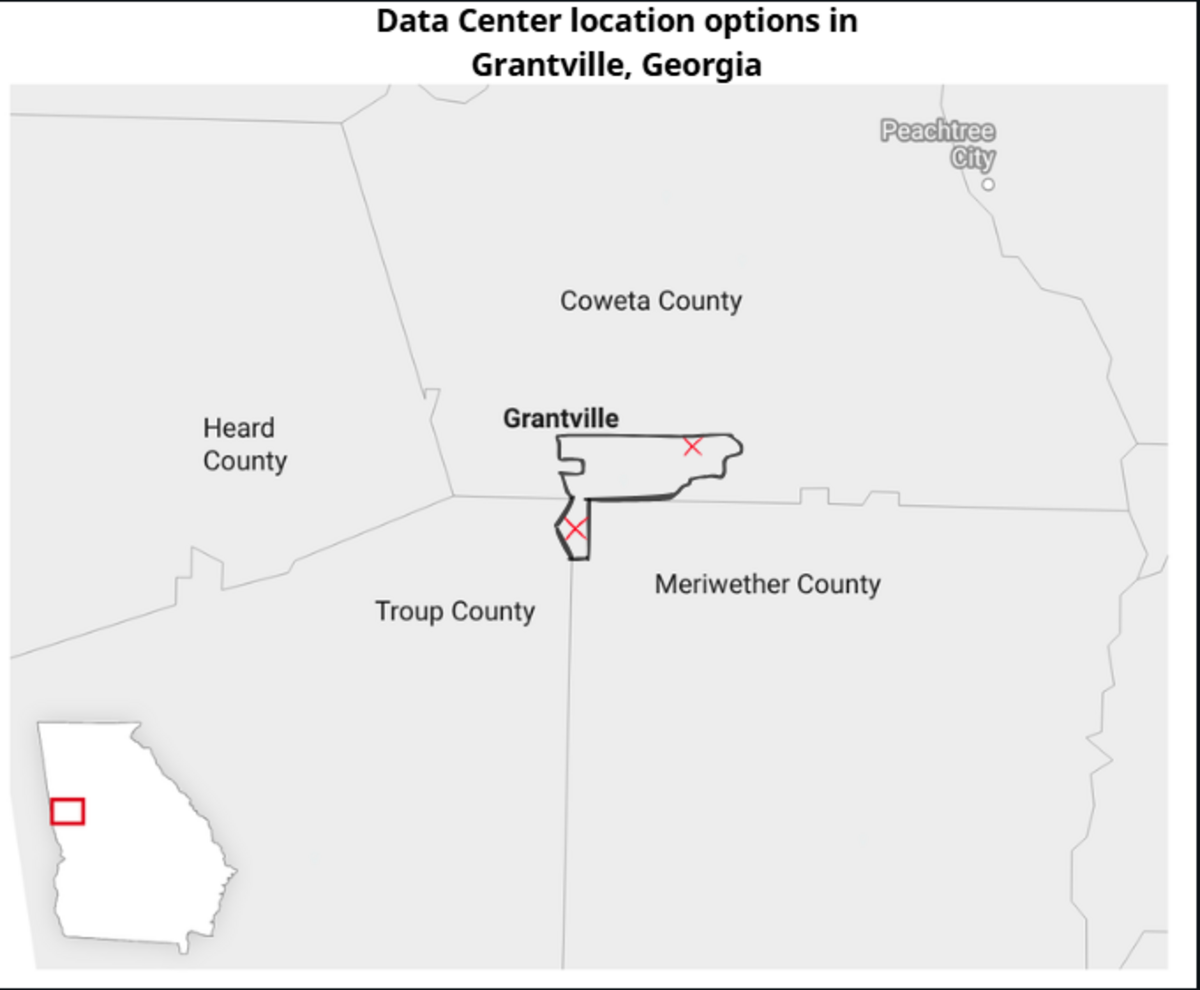
Just an hour north of Columbus off Interstate 85, the small town of Grantville is in Coweta County, and uniquely positioned on the border of Troup and Meriwether counties.
In its 174-year history, it’s gone from a population of 618 people to 3,000 around 2010, according to the U.S. Census. The city hasn’t found its economic niche yet.
“The city’s always struggled with growth,” said Teresa Nelle, a 50-year resident of Coweta County, just outside of Grantville. “They had a mill at one point and there was a grocery store in the ‘90s. It’s always been a small town with not a ton of growth.”
Proctor believes data centers are the town’s ticket to growth. He called them a “crown jewel” of development when speaking with the Ledger-Enquirer. This optimism comes despite the concerns some of the residents shared.
“This is a grand opportunity, a grand opportunity for us to get something here that will help citizens, help the city, and with such little impact,” he said at the December meeting.
He shared significant details about the size, budget and who pays for the two proposed data center projects during the meeting, while also emphasizing that the meeting on Dec. 15 was just for zoning and nothing will be approved as far as projects.
“Tonight is simply allowing considering data centers to go into these properties,” he said. ”There are two locations being considered for data centers. We do not have a buyer and we do not have a data center company ready to build yet.”
He also said he’s had discussions with MEAG, the municipal electric authority that serves Grantville, and Coweta County water, for months about how they would accommodate the energy and water needs that a data center would require.
A day after this city council meeting, Coweta County created its own data center ordinance that allows data centers with certain conditions. That ordinance does not affect what Grantville can do within city limits.
One of the two Grantville sites where a data center could go, on the northeast side of the city, is 196 acres. Proctor called it “perfect” because it is already zoned for industrial use.
“No one lives near it,” he added. The property owner paid $25,000 to conduct a MEAG study to see if transmission was feasible.
Proctor said during the council meeting that no power lines for the facilities would come through residential properties, and the cost of a substation would be paid for by a developer or end user. He said building a substation would cost $123 million, according to the MEAG study.
He doubled down on this while on the phone with the Ledger-Enquirer.
“I definitely want a data center here,” he said. “I’m not going to do something to harm us. I will negotiate a heck of a deal. I’m not going to do a bad deal.”
Proctor, raised in Newnan, moved to Grantville in 2021 after a few decades of living in Colorado, working in the tech and telecom sector.

“I know data centers backwards and forward, it’s just a building with a bunch of computers,” he said.
Proctor told the Ledger-Enquirer that MEAG would build two gas power plants in Wansley. Those would take four or five years to build and cost $1.2 billion.
Until now, MEAG has been a purchaser and supplier of transmitting energy, not a builder of power plants.
Proctor said Grantville granted a bond to MEAG when it was created, and makes a portion of MEAG’s profit as a result.
“Grantville is an original bond granters from (MEAG’s) ‘75 creation,” Proctor said. “Grantville agrees to own a percentage of the power plants in the state giving us a base consumption rate of power. We’re really just paying for the bonds and the piece we own, we own part of Wansley, Vogtle 1,2,3,4 etc.”
But it’s not enough and Proctor wants to bring in more money.
“Our annual budget was $4.6 million in Grantville this year,” he said.
Proctor gave a rough estimation that the city could make $40 million off tax benefits for a $1 billion building, plus $15 million for millage rates.
“We will make money off electricity,” he said.
But Trista Parker, who owns a small photography business and has been a resident of Grantville for 10 years, spoke against the change in the code to allow data centers, considering price.
“I ask we not put a price tag on a priceless resource,” she said, referring to energy and water usage, a statement followed by applause from other attendees.
“Drought, air and noise pollution should be a concern, and lack of transparency, we need to have a say in this,” she said.
A 77-year-old farmer who lives adjacent to the southwest site on county land said at the meeting that he has a lot of questions and concerns about his well water.
After the mayor spoke, Councilwoman Dee Berry, whom Proctor said is in the camp of people who “want Grantville to die,” gave her reasoning for being against data centers in Grantville.
“Based on the response from surrounding communities objecting to this, I don’t see why we are all wanting to approve it,” Berry said at the meeting.
Cyndie Hutchings, a resident of LaGrange who has prominently opposed data centers in multiple Georgia communities, was present to share her testament. She said the infrastructure for data centers is “destroying communities”.
Hutchings created a “Grantville against Data Centers” Facebook group days after the council meeting and it has garnered 166 members.
Berry raised concern about the noise from generators, which data centers would need if power goes out, and said they’re also concerned about what would get priority if Grantville had water supply issues due to data centers.
“We’re talking about putting something in place that won’t be operational for maybe 20 years or 10 years or down the road,” Berry said. “We should be trying to protect the generations that are coming after us and not putting something in place ‘cause it doesn’t affect us right now. We need to look ahead.”
Proctor said he supports data centers because they’re needed for major companies’ modern operations. But he also said he lived through the .com bubble in 2001, and has concerns about over-development.
After sharing concerns for environmental pollution from power plants in Wansley, Berry suggested a guarantee or a surety bond to make sure the taxes Proctor suggested actualize.
What’s next?
What happens with one of the development sites, where a private owner has already had a study conducted, is up to that property owner, Proctor said.
A data center hasn’t been planned for that space yet, despite Proctor’s desire to see data centers come to Grantville.
“The electric study has been examined by us and owner of the property,” Proctor said. “The owner of the property will work with firms that a developer would be interested. A developer or end-user ready to sit down ready to talk contracts on electricity and water.”
The city also is evaluating results from a study on the second plot of land where Proctor would like to see a data center built, he said. The study was recent, and no determinations have been made on what will happen with that land either.
This story was originally published January 5, 2026 at 6:00 AM.