Who’s running for Georgia Public Service Commission? 10 candidates break record

AI-generated summary reviewed by our newsroom.
- Nine candidates qualified for two Georgia PSC seats in 2026.
- Both parties offer technical and consumer-focused pitches in PSC campaigns.
Editor’s note: The original story published March 6 did not include one of the 10 candidates running, Tom Blooming, a Libertarian who will not be on the primary ballot in May but will be on the November ballot.
The race for two Georgia Public Service Commission seats in the 2026 election has officially begun.
Friday was the last day to qualify for District 3 and District 5 among the five commission seats. The Georgia PSC regulates energy needs throughout the state including telecom and gas services. Most notably, they regulate the energy company Georgia Power, which must ask the commission to approve what they want to charge ratepayers, how they source their energy and by when they need it.
Three Democrats, three Republicans and a Libertarian are running to replace Republican Tricia Pridemore in the District 5 seat she has filled since 2018. On Feb. 18, Pridemore declared she would not seek re-election this year “after a deep reflection”
Last November, two Democrats, Alicia Johnson and Peter Hubbard, won a PSC election for the first time in over 20 years, gaining national attention.
Hubbard, who beat incumbent Republican, Fitz Johnson for the District 3 seat, must run again because he took a seat that was five years into an unexpired six-year-term. The election in 2022 was cancelled due to a U.S. Supreme Court case, delaying it to 2025.
Fitz Johnson wants his seat back, but first he has to beat a Republican challenger, Brandon Martin a purchasing manager in the health care industry.
“He is the best candidate who can deliver results to consumers and businesses because he deals with complicated contracts all day long,” said David Crawford, communications director for Martin’s campaign. “He’s good at dealing with technical information for a multibillion-dollar industry, and he is more qualified to do a better job than Fitz Johnson every day. Johnson is running to reclaim a seat he’s never won in an election and lost 63-37 in November. We can’t have that again in the Republican Party.”
Fitz Johnson said he is running to ensure ratepayers and small businesses aren’t stuck carrying costs that don’t belong to him. He attributed Georgia’s growth to the way he has operated on the commission since 2021. .
“I’m confident most Georgians aren’t looking for a leftist partisan agenda guiding the state’s energy policy — they’re looking for safe, affordable, reliable power while putting customers first.,” he said. “Georgia’s growth has been fueled in part by strong utilities and smart planning.”
Hubbard, who beat Johnson in November 982,157 to 578,478 votes has had just nine weeks in office but already a few hearings to weigh in on.
Georgia Power’s 10 gigawatt request the commission approved in November was reconsidered Feb. 18. Hubbard and Alicia Johnson voted in favor to reconsider it, but it fell short along party lines with a three-two Republican majority.
“I made a motion to dial back the full certification and follow what staff recommended, which was just two-thirds of 10 GW to certify,” Hubbard told the Ledger-Enquirer. “It became apparent that, despite me trying to persuade the other commissioner to come on board — and being unsuccessful — we need to finish the job to gain Democratic control of the Public Service Commission if we want to hold Georgia Power and other utilities accountable.”
Hubbard called Johnson running “a gift” because he “just lost resoundingly and voted as a lame duck in December, days before leaving office rubber-stamping power companies.”
Georgia Conservation Voters executive director Brionte McCorkle told the Ledger-Enquirer via email the PSC is the group’s top priortiy and will continue to support Hubbard to fulfill his campaign promises of lowering power bill increases and expanding renewable energy for Georgians.
District 5 Georgia PSC race
Angelia Pressley, Craig Cupid and Shelia Edwards are competing in the primary to be the Democratic candidate, which will be determined on the May 19 ballot that every Georgian can vote on. With no Republican incumbent after Pridemore’s departure, three Republicans qualified to run: Bobby Mehan, Carolyn Rody and Josh Tolbert. Tom Blooming, the only Libertarian running, will not participate in the primar but will be on the November ballot.
Mehan, a business owner, did not respond for an interview in time for publication, and Roddy, an attorney qualified an hour before qualifications closed. Tolbert made several cases why he is running and best suited for this position.
Tolbert is a licensed engineer who spent his career building all types of engineering plants. He spoke at the Georgia Power 10 GW all-source request hearings as a public witness Dec. 12 and Dec. 19, saying conditional agreements were not clearly enforceable. These were the first times he spoke as a public witness at the PSC, and it inspired him to run. He touted his technical background and being a “nerd” as a reason for voting for him.
“If you don’t have technical people on the commission its very, very challenging to ask hard questions, sufficiently protect the ratepayers,” he said. “I know about technical matter. It’s very difficult for them to hold accountable if they can’t speak to technical issues.”
Tolbert ran for Georgia Senate last November in District 35 and lost but “got his feet wet” in the political world.
“I’m a guy saying, ‘Hey, I know about this stuff. I’m experienced with regulators, energy, and I bring a lot of value and protect ratepayers while not being an advocate,” he said. “A lot of my opponents running are advocates. We don’t need advocates. We don’t need clean-energy or fossil-fuel advocates. We need someone who understands tech decisions in numbers, math and economics.”
Among the three Democrats running, Craig Cupid has an engineering background that his campaign manager, Andrew Heaton, said makes him the best of the three Democratic options.
“He is a Georgia Tech grad, an electrical engineer who went on to become an intellectual property attorney,” Heaton said. “He understands when Georgia Power is coming to the PSC and making very technical presentations about power demand projects.”
Heaton added he hopes to increase transparency and is an advocate for “a healthy amount of green energy”. Cupid’s wife, Lisa, chairs the Cobb County Commission, Heaton said, so he is no stranger to the political world, despite never running for office before.
Angelia Pressley is a business communication professor at Clark Atlanta University and has run a public relations and sustainable business for 20 years.
“The hallmark of my classes are soft skills, primary research, group communication and data analytics, and I teach AI conversation and steer students in the way of renewable energy because I believe that is the future,” Pressley told the Ledger-Enquirer.
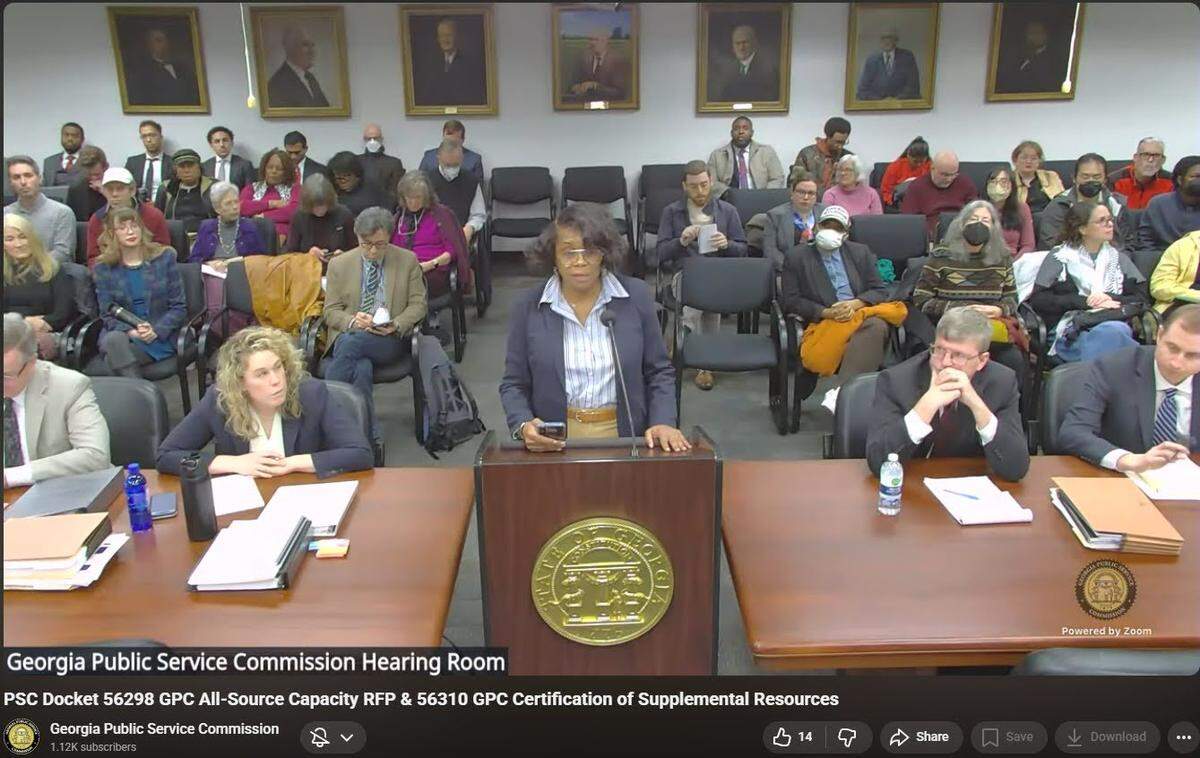
Pressley decided to run after learning more about biomass and attended the biomass hearings in 2024 at the PSC. After learning from ratepayers and listening to interveners and staff who want to do the right thing not getting support, Pressley said, she decided to run.
“I have been speaking on behalf of ratepayers, giving testimony and public comment,” she said. “I understand what the real pain points are, and I have a holistic approach. I plan to visit all five districts, not just Atlanta, and assess opportunities for renewable energy.”
Pressley also said data centers should be paused until the environmental impact of their construction and operation is better known. She sits on four boards: Wellstar Regional Hospital, Keep Cobb Beautiful, Concord Covered Bridge Historic District and Kiwanis International.
Hubbard said he likes the fact that Tolbert and Pressley have come to the commission to try to petition, and after being unsatisfied, running for the position, the way he did.
Edwards won the Democratic PSC primary in 2022, but later that year the Supreme Court ruling cancelled the general election. Edwards’ work has focused on issues affecting working families, housing affordability, consumer protection and environmental justice, according to her news release Thursday. If elected, she plans to focus on utility affordability, accountability for large energy users, such as data centers, and accelerate a transition to clean energy. Edwards, like Pressley and Tolbert, spoke at Public Service Commission hearings and has spoken in opposition to rate increases.
“For too long, the Georgia Public Service Commission has acted like a protection agency for utilities instead of a protection agency for the people of Georgia,” Edwards said in a news release. “I’m running to change that.”
Georgia Conservation Voters said they will endorse a District 5 candidate by April 22 and encourage all candidates to submit an endorsement application.
Blooming, the lone Libertarian in this year’s PSC election, told the Ledger-Enquirer he is running due to his concern about future rate increases from the influx of data centers to the state and that the PSC Republicans ignore PSC staff recommendations. He is also concerned about the use of eminent domain.
As an electrical engineer, Blooming has worked in the power industry since 1990. Living in Atlanta since 2006, he has spent most of his time building power systems for data centers for companies like Google and Meta. At present, he has been doing data center work in the United States and Ireland, which he said is “ahead of the U.S. in terms of grid being overly strained by data centers” and the country is working to combat those issues through guidelines.
This story was originally published March 6, 2026 at 4:19 PM.