Georgia Power hearings at PSC reveal data centers aren’t paying their fair share for fuel
AI-generated summary reviewed by our newsroom.
- SELC lawyers said data centers contribute zero dollars to gas pipeline costs.
- Legal teams said $152 million in excessive coal fuel costs were identified.
- Public comments gave statements during hearings in support of and against FCR-27
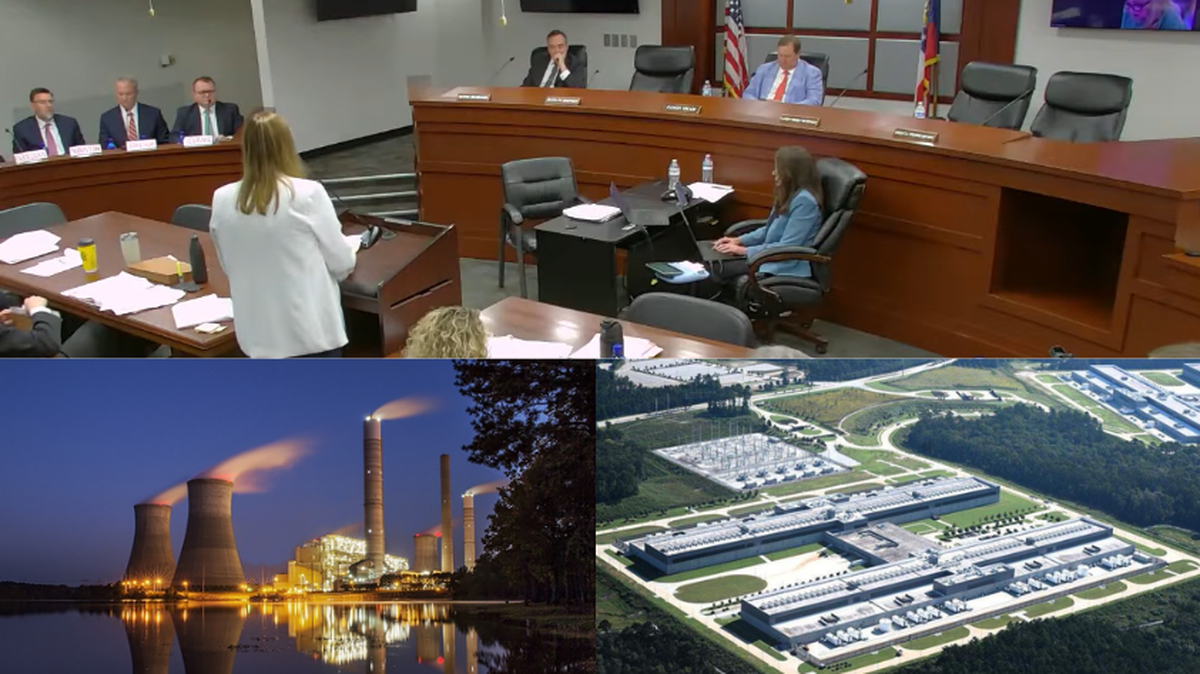
The two-day hearing for the Georgia Power Company’s 2026 Fuel Cost Recovery at the Georgia Public Service Commission this week was full of polarizing views on energy policy — and revelations about how data centers aren’t paying their fair share for fuel. While Georgia Power’s latest fuel cost recovery (FCR-27) proposal could decrease power bills by $1.32 per month (when combined with another storm recovery docket), expert lawyers from intervening environmental groups and PSC staff picked apart Georgia Power’s operations and requests for about 14 hours Tuesday and Wednesday.
Southern Environmental Law Center lawyers contend data centers aren’t paying their fair share of fuel.
“Georgia Power is required to design rates for new data centers to ensure they’re not shifting costs to everyone else, and we finally have some receipts, and it’s not pretty,” SELC lawyer Jennifer Whitfield told the Ledger-Enquirer. “Georgia Power has proposed that new data centers contribute zero dollars to very large categories of costs that are rapidly growing because of data centers. For example, data centers are contributing zero dollars to the costs of paying for gas pipeline; smaller customers have to pick up 100% of the bill.”
Whitfield gleaned this from the cross-examination between Georgia Power’s director of pricing, Lee Evans, on Wednesday, when they discussed Real-Time Pricing (RTP) and firm transportation, which are gas pipelines. Originally designed to promote business during its inception in 1994, the RTP is a rate “multiple times lower than rates paid for by everyone else”, Whitfield told the L-E.
Larger customers pay the price of energy in real time during energy spikes. which is one key difference between the fuel charges for RTP customers and everyone else. RTP customers are large-load customers, like data centers, but they include other large commercial or industrial customers. Meanwhile, small customers (residential) pay 100% for fuel costs, which is around 25% of their bill.
“What we learned on Wednesday is how little this RTP credit actually covers; it doesn’t cover it at all,” she said. “It doesn’t cover a single dollar for cost of gas pipelines, the cost of hedging (insurance on gas), and hedging will be growing because of data centers.”
In a news release Friday, National Resource Defense Council policy advocate Patrick King II said PSC staff recommends further investigation into whether residential and small-business customers are unfairly subsidizing the fuel and system costs.
Georgia Power burned fuel that was considered too expensive, and the Southern Alliance for Clean Energy and Sierra Club legal team discovered $152 million in excessive costs from past operations were burned for coal plants when other options would be cheaper.
“The power company did not provide evidence that proved their coal was economically dispatched,” Isabella Ariza, a lawyer for the Sierra Club, told the Ledger-Enquirer. “Georgia Power asked us to take their word for it.”
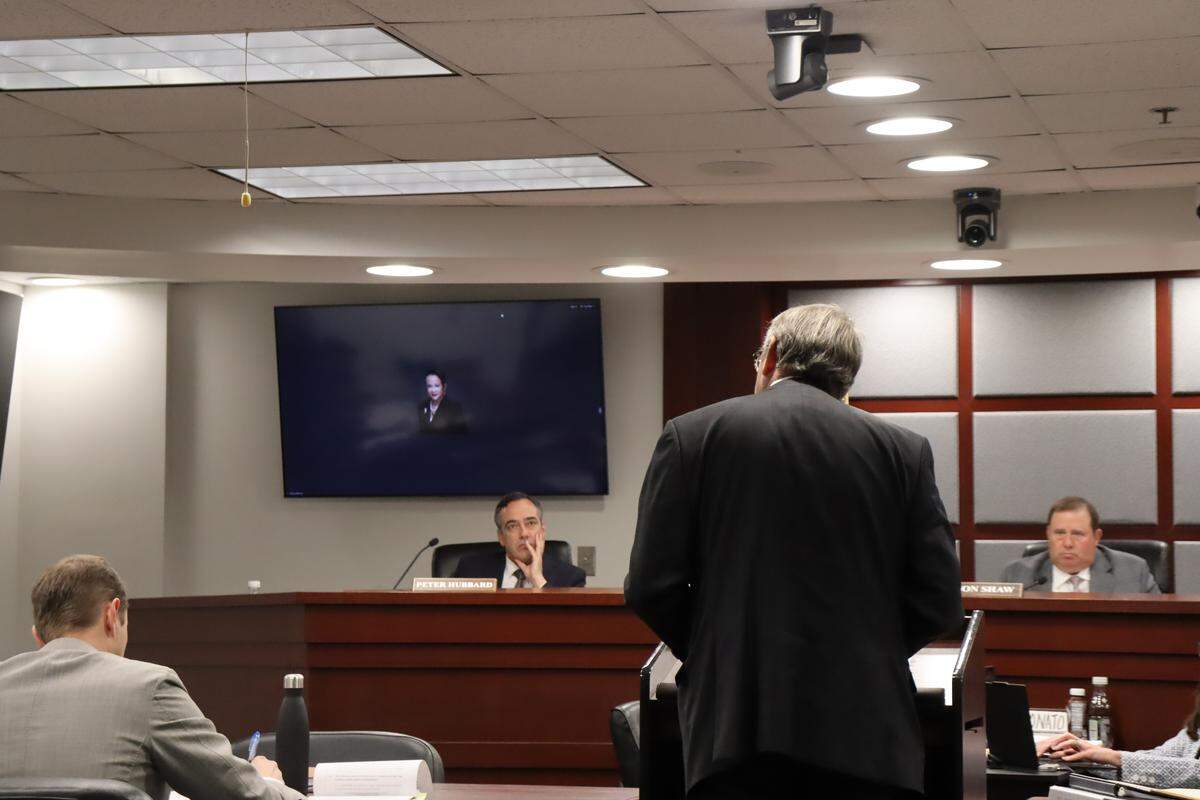
But Commissioner Peter Hubbard questioned the power company and asked why they should just take their word that it was economically dispatched. “Georgia law requires the utility to choose the cheapest fuel source possible,” he wrote in his newsletter Friday.
Polarized public comments
Ahead of the cross-examinations, public comments from angry public witnesses and a PSC District 5 candidate were against the FCR-27, while business leaders from Forest Park and Buford County gave their support. “I’m angry … Georgia Power treats residential customers as if we are blindly eager to bear the costs,” Jean Millkey, a DeKalb County resident, told the PSC Tuesday morning. “Georgia Power is seeking billions without a credible plan to reduce volatility.” A few speakers later, Rochelle Dennis, director of economic development for the City of Forest Park, expressed her support for the FCR-27.
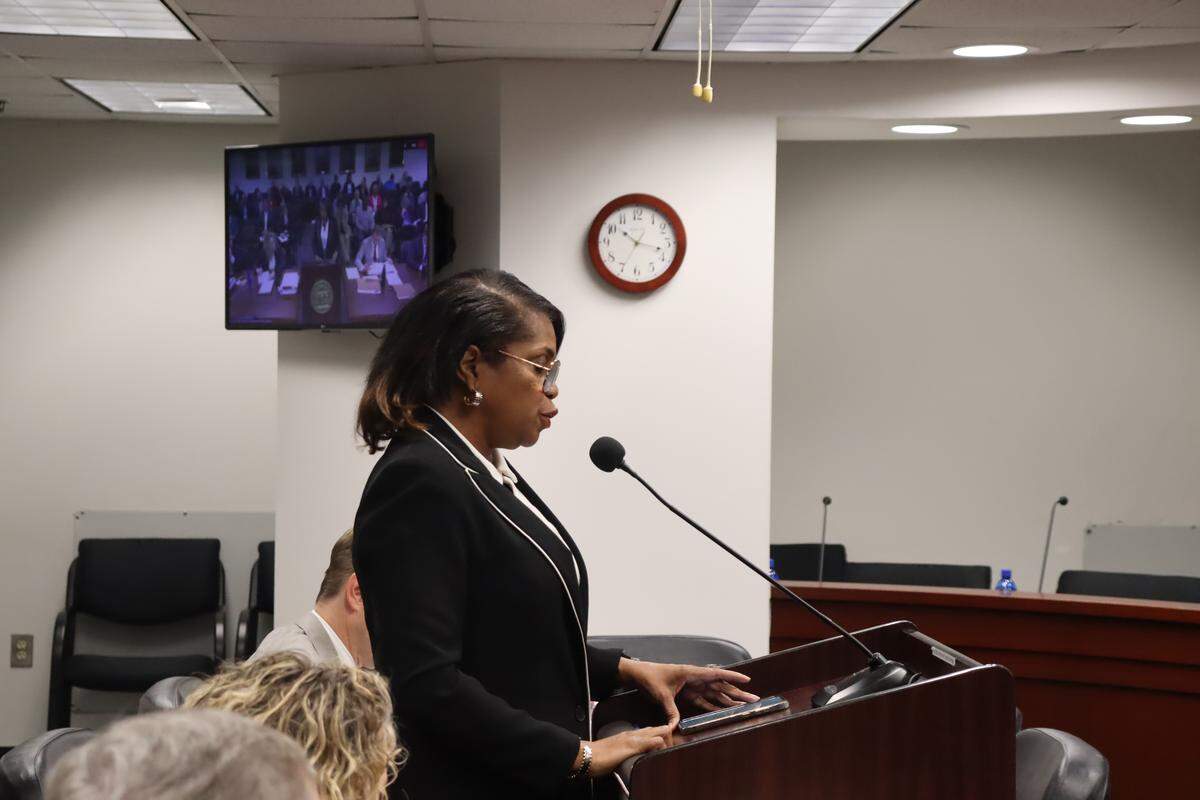
“The fuel cost recovery framework provides the responsible way to reflect those changes without permanently embedding volatility,” Dennis said. “This approach promotes transparency, fairness and stability, for reliable electric service is a foundational element of Georgia’s economy and quality of life.” Moments later, Democratic candidate for PSC District 5, Angelia Pressley, an adjunct business professor at Clark Atlanta University, said she is in “deep opposition to the confused cycle of hedges and huge cost cover request.”
“We are in a crisis forcing residents to make impossible choices from bills,” she said. “… I’m calling on this commission to go beyond the reactive rate cases and mandate a comprehensive study of ratepayer housing and the grid. We need a reactive creative plan to repair, and you invest in our community. Focus on local generation that actually lowers bills rather than shifting how they are collected is what is needed today.”
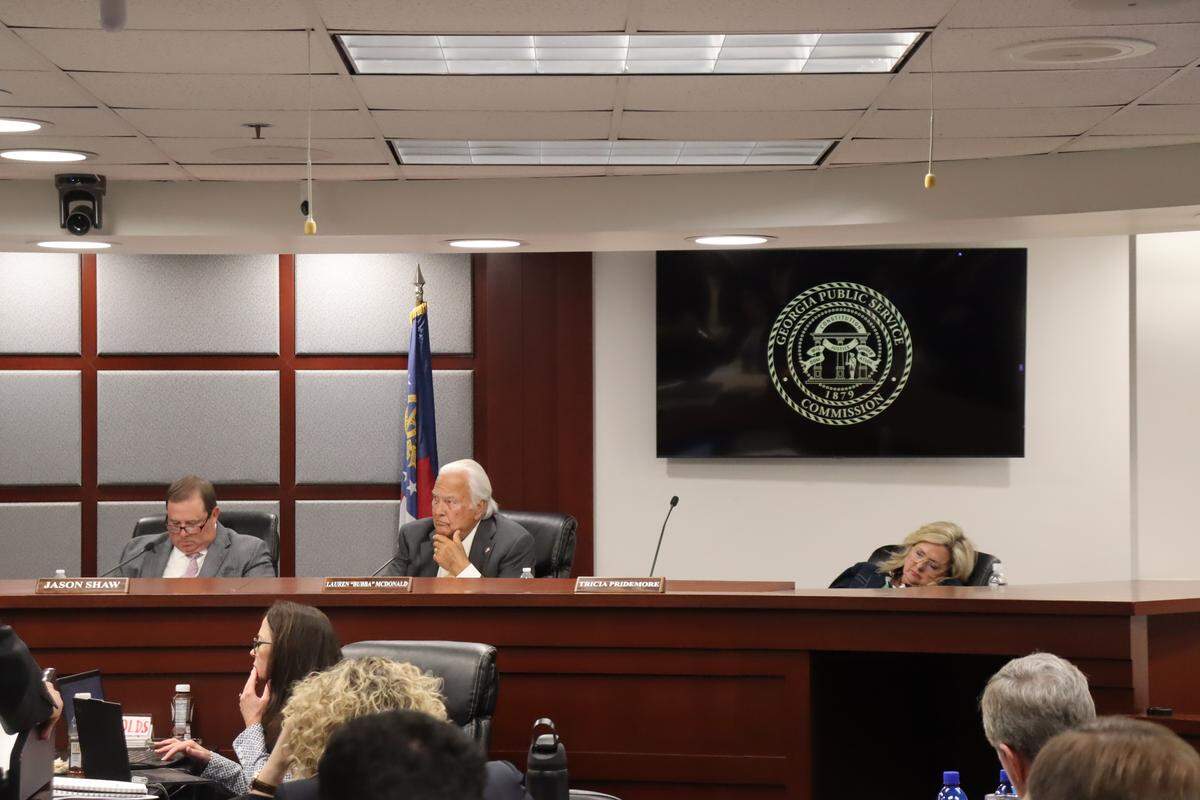
Pressley is seeking the PSC’s District 5 seat. District 5 Commissioner Tricia Pridemore is running for the U.S. House to represent Georgia District 11. She dozed off for a few minutes during the hearing Tuesday.
Hearings for the related storm cost recovery docket continue May 13 and 14. The PSC is scheduled to vote on its decision May 28.
This story was originally published May 8, 2026 at 4:53 PM.