Columbus Council meeting erupts with residents against proposed data center
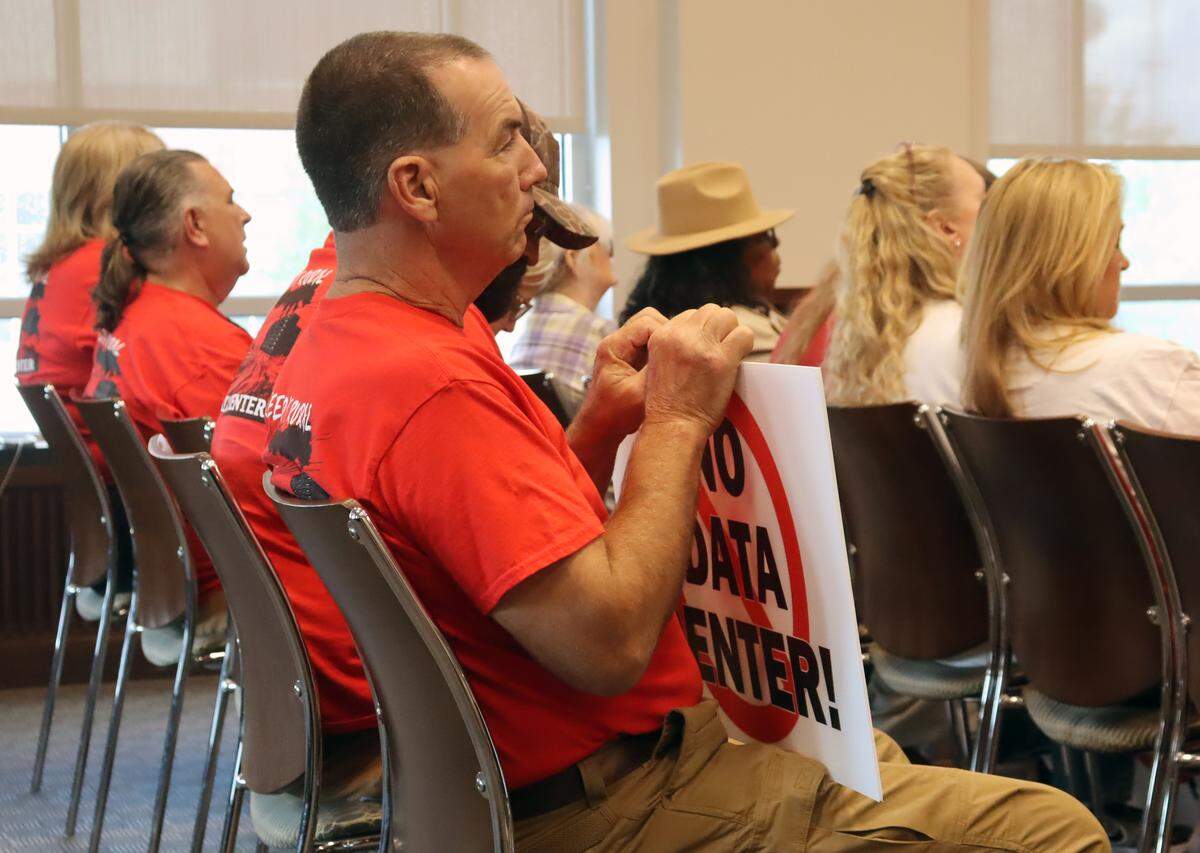
The Columbus Council chamber was a sea of bright red Tuesday night from shirts emblazoned with “No Data Center” and “Keep it Rural” in opposition to the proposed hyperscale data center called Project Ruby, targeted for 865 acres in northeast Muscogee County.
Though not prescribed for Project Ruby, the proposed technology overlay ordinance and its reading took up the majority of the six-hour meeting because of heated comments from more than 25 citizens who don’t want a data center nor this ordinance, which would outline the rules for any hyperscale data center in the city.
One resident, Greg Foster, spoke in favor of a hyperscale data center and the technology overlay ordinance saying it “brings benefits” and those “who are opposed are wrong.”
The packed room that seats 121 people and the overflow area outside the chamber were filled with impassioned residents from the Upatoi community in Columbus. They don’t want a technology overlay ordinance — period.
In contrast, the Greater Columbus Chamber of Commerce Unofficial Data Center Overlay Ordinance Review Committee created recommendations for the proposed ordinance and how to regulate any data center project.
Tense moments between citizens and Columbus Council
The meeting included several tense moments between citizens and the council.
They flared when Greater Columbus Chamber of Commerce president and CEO Jansen Tidmore spoke about land buffers or setbacks, arguing they should be smaller because “500 feet of a buffer zone would be “wasted space.”
People wearing those red shirts gasped.
Councilor Glen Davis of District 2 thanked the committee and commended them for their work.
“I just want to let everyone know we’re listening,” he said.
And laughter was heard throughout the room.
Then a woman wearing a white anti-data center shirt spoke up from the audience and was escorted out by a sheriff’s deputy. As she was escorted, she shouted, “Keep telling your lies!”
Two other people also were escorted out by a deputy during the meeting for speaking out in the crowd.
During public comment on the proposed ordinance’s first reading, Darlene Laird, who created the Stop Hyperscale Data Centers in Muscogee County Facebook group, which has 1,200 members, requested an immediate moratorium on all hyperscale data centers in the county. Applause from the crowd supported her request.
Leslie Landi, who lives down the street from proposed Project Ruby hyperscale data center, asked the council questions, demanded answers and pleaded she doesn’t have a choice in this matter.
Landi asked, “What else is the overlay is protecting? What else does it benefit?”
She continued, “When are we going to get to matter? This (overlay) tells me you can put one anywhere you want if you approve it.”
Landi wants it banned from Muscogee County.
“You (council) keep threatening this will go to another country,” she said. “I don’t care if it’s going to another county. Let it go! This is not a decision for us. We don’t have a choice!”
Ex-Columbus mayoral candidate and lawyer criticize data center committee
Criticizing the unofficial data center committee, former Columbus mayoral candidate Jaketa Bryant took issue with no one on the committee living in Upatoi. She said proper “research” was not done and didn’t include the opinion of Upatoi residents.
“Shame on you,” Bryant said. “You are missing the city from the ‘city hall’.”
Attorney Jonathan Waters, representing Keep It Rural LLC, accused the unofficial data center committee of bias for profit over people.
“It’s fascinating to me that this unofficial committee is basically overcoming objections,” Waters said at the podium. “They seem to be skirting the issue that this (overlay) isn’t about Project Ruby. They’re saying we’re setting up these things to protect the city of Columbus. But, as I stated, they’re missing the people. They’re talking about how profitable it is. They’ve already got this on the internet saying it’s going to occur between 2027 and 2030.”
Waters told the council they have the opportunity to stop this project “dead in its tracks.”
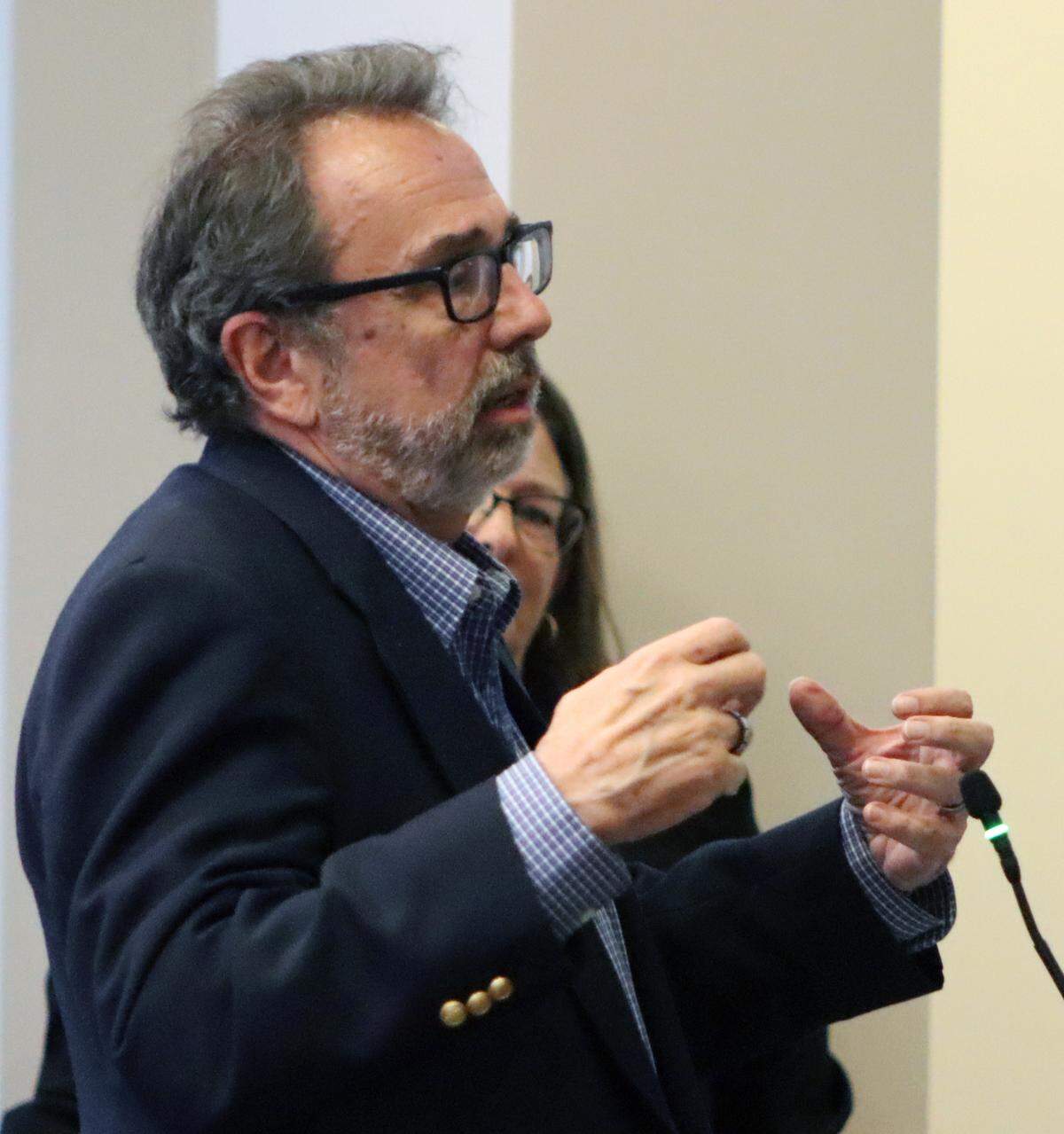
He also compared the comments committee member Steve Craft made about “forever chemicals” being something the committee looked into and said, “You’re going to replace forever homes with forever chemicals.”
The crowd applauded the lawyer’s comments.
Better environmental guardrails and fines
The Clean Energy Columbus steering committee shared a two-page list of eight recommended changes the group deems “environmentally sustainable” and wants in the technology overlay ordinance.
Mick Etchison, a Columbus State University student and CEC steering committee member, read the requested changes at the podium. The crowd applauded.
The issues addressed include noise, lighting, power consumption, water, zoning, community benefits, closure, decommissioning and fines. They are stricter than what the chamber’s unofficial committee proposed in every category.
The CEC asked for:
- 30 decibels to be the loudest amount of noise produced from a data center in Columbus. The current draft of the ordinance proposes 55 decibels as the limit.
- More specific limits on lighting
- How drought management would affect water availability.
- Power consumption that requires EPA Tier 4 diesel generators, more sustainable than current Tier 2 generators. The type of generators specified in the overlay ordinance weren’t proposed.
- The technology overlay ordinance to apply to areas zoned only industrial.
- Community benefit agreements to “ensure the outside company invests in the community.” The benefits they request include a specific number of full-time employees, appraised value of surrounding properties are maintained, and contribute $10 million per year for at least 20 years to a sustainable development fund.
- A developer surety bond and a clear closure plan for “intense potentially toxic infrastructure left behind.”
- A fine more than the proposed $1,000 for violating the ordinance.
Columbus resident Kara Sasser, works remotely for data centers, said the lack of enforceable regulation concerns her.
She asked, “How does an ordinance fine matter to a trillion-dollar company? A thousand dollars a day, even a thousand dollars a minute? If they come, an ordinance of any type can’t protect us. “

This story was originally published June 3, 2026 at 12:40 PM.