Q&A: In first week on the job, Tyson Begly talks plans for Columbus city manager role
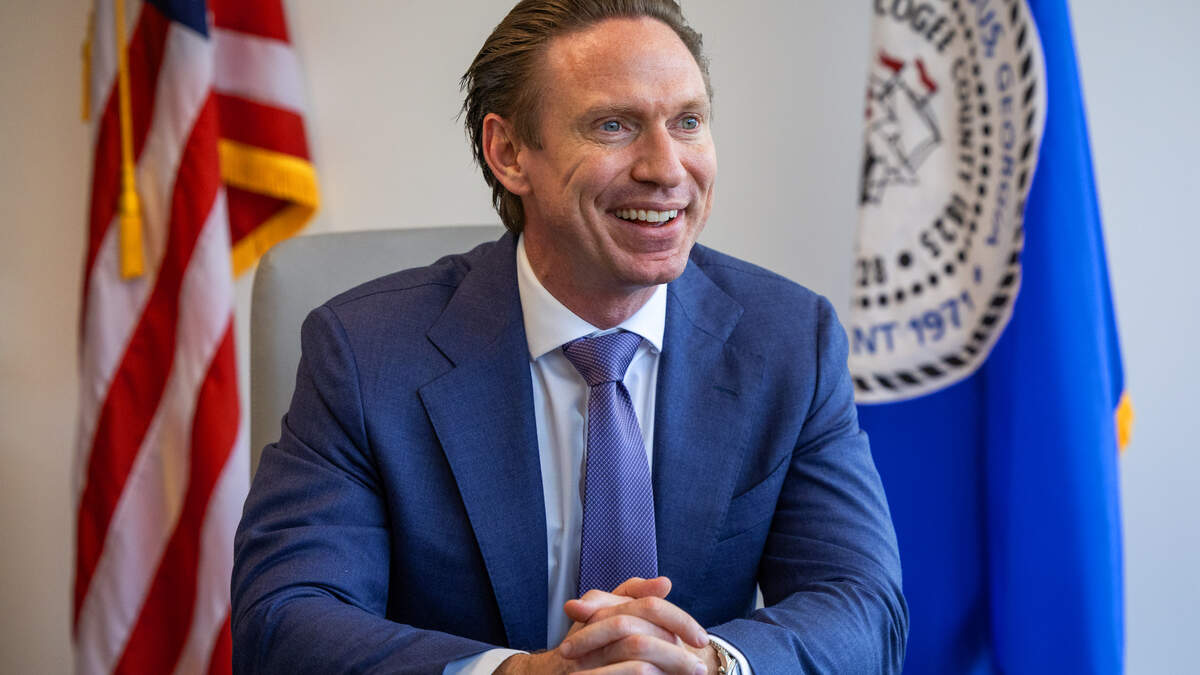
Tyson Begly began his work as city manager on Monday and attended his first council meeting in the role on Tuesday.
He replaces Mayor-elect Isaiah Hugley, the longest-serving and first Black city manager in Columbus, who was fired in May 2025 following an investigation into the city’s finance department.
Begly was the chief financial officer for Highline, a rural fiber broadband company based in West Point, before Henderson nominated him to be the next city manager.
The Columbus Council approved him in a 7-1 vote last month.
Before working for Highline, Begly served as the chief operating officer for Delta Data. Begly also served as a Columbus Councilor in the citywide District 10 seat for 14 months after the council appointed him to complete John House’s four-year term until the May 2024 election.
Begly chaired the Columbus Public Safety Commission through the merger of the marshal’s office with the sheriff’s office. He also chaired the Columbus Charter Review Commission and served on the Development Authority of Columbus.
The Ledger-Enquirer sat down with Begly on Wednesday, during his first week as city manager, to discuss his appointment, top priorities and his vision for Columbus’ future.

Q: Why did you want to be the next city manager of Columbus?
A: “I really enjoyed my time with City Council. It was very fulfilling, and I enjoyed the impact that I made.
“And so this was a unique opportunity to serve the community in a full-time role, and so I think that’s what really made me excited to apply. And then once the decision to apply was made, I was planning to accept if presented the job.
“It was just, I really enjoyed the town on city council, the impact that I made. It was very fulfilling, and so I was excited to get the opportunity again.”
Q: What are your top priorities during your first year as city manager?
A: “My approach is not to try to put this overly ambitious plan because you really don’t know what you don’t know yet.
“And so, historically, when I get into a new opportunity, I really just try to learn and then look for ways, small ways, to improve it.
“I feel like when people put together these grand plans, they don’t have all the details and set arbitrary deadlines.
“People hate arbitrary deadlines, but I think if you can get in there, listen and understand from people what the real pain points (are) that’s causing them to slow down and then focus on those pain points.”
Q: When Isaiah Hugley is sworn in as mayor in January, you will be city manager under a mayor who did that job for 20 years. What are the pros and cons of that situation?
A: “I think it’s helpful.
“I’ve been in similar situations before, where I’ve reported to someone who had my role before, and it worked out well.
“They understood the challenges of the role.
“When I did need help, I could say, ‘Hey, you know, what would you do in this situation?’
“It was nice to have someone who had been in that role before. So I think it’s going to be very helpful to have someone who understands what the role entails, and you know can provide guidance from being in that position before.”
Q: How will your time as a city councilor inform the way you do your job as city manager?
A: “I think it’s really helpful because when the city is presenting information to city council, I’ve been in their seat, so I know what questions they’re going to ask, or I know what information they want to see. I think being in that seat before and understanding their perspective, I feel like we can really focus the communications to answering their questions and addressing their concerns very proactively.
“I think that’s going to be a huge help.”
Q: How do you view your role in terms of the conversation regarding data centers and Project Ruby?
A: “That’s really a decision for City Council. I mean, they’re going to make the decision, and then I’m going to support whatever decision City Council makes.”
Q: Recruiting city staff seems to have been a challenge in recent years. Do you have a strategy to address this issue?
A: “The plan is to understand where the pain points are. Is there a shortage because we don’t have the technology we need? Okay, well maybe that’s the issue.
“Or is it really there’s just a large amount of work that needs to be addressed and we don’t have the staff?
“The plan is to really identify the root cause that’s causing a pain point, and then look at the different options. If it is additional staff, then we go to city council with a clear explanation of why that staff is needed.”
Q: You have a strong background in corporate finance but lack day-to-day public administration experience. Why do you think you are prepared to succeed as city manager?
A: “I think my background is interesting because before being a COO, I was consulting.
“I led production support teams. I led engineering teams. I’ve had HR. I’ve handled legal negotiations. I think all of that’s helpful. And, so, whenever there’s a problem, I feel like I’m pretty familiar with it.
“When you look at the functions of the city manager, I feel like I’ve executed and managed most of those.
“Being able to talk to anyone and understand what their role involves, whether it’s production support or engineering, or the technology team. Like, I understand innately what they’re doing, and so I think you can have a real conversation, and that’s helpful.”
Q: How should Columbus residents measure whether you are a successful city manager?
A: “I think for a lot of residents, they really don’t want to have to pay attention to who the city manager is. They want to have their services performed in a timely manner, and they want their taxes to be and their fees to be comparable to other cities. Right?
“I think that’s what most people would ask for.
“And so, the more that we can just have the services performed without hiccups, and have good customer service issues resolved in a timely manner — they don’t have to even know who I am or really pay attention. I think that’s success.
“If they feel like they need to reach out because their services aren’t being performed — that’s probably a bad thing.
“And so I really want to just focus, execute and really make sure our services are top-notch and perform in a consistent manner.”
Q: What else do you want the L-E’s readers to know about you and your role as city manager?
A: “If you do have issues, make sure you’re using 311. That is the best way for us to serve the citizens effectively. If there are issues with it, then we should know about it. But when I’ve used 311 in the past, my issues got resolved in a timely manner, so I would say use that.
“That also helps us, right? So, if we can’t resolve your issue, at least we can go back to that 311 ticket and see what was done already. We can move faster.
“That is the most efficient way to get your concerns addressed.”