‘Really difficult choice.’ Columbus pantry cancels distribution due to food shortage
St. Anne Outreach of Columbus, the largest pantry partnered with Feeding the Valley, canceled a scheduled food distribution last week, citing a shortage of food at the food bank that has left the pantry struggling to fill shelves.
There has been a significant food shortage over the past year, Kelly Tolman, director of St. Anne Outreach, told the Ledger-Enquirer.
“We serve about 600 families a month,” she said. “So, when we have a distribution, a lot of families come. They rely on us. They’re spending their gas. They’re spending their time. They’re coming to get food. We didn’t have any food to give them, so we had to make the really difficult choice to cancel a distribution.”
St. Anne Outreach shared photos of its empty shelves on Facebook along with the March 10 announcement that the March 12 distribution would be canceled.
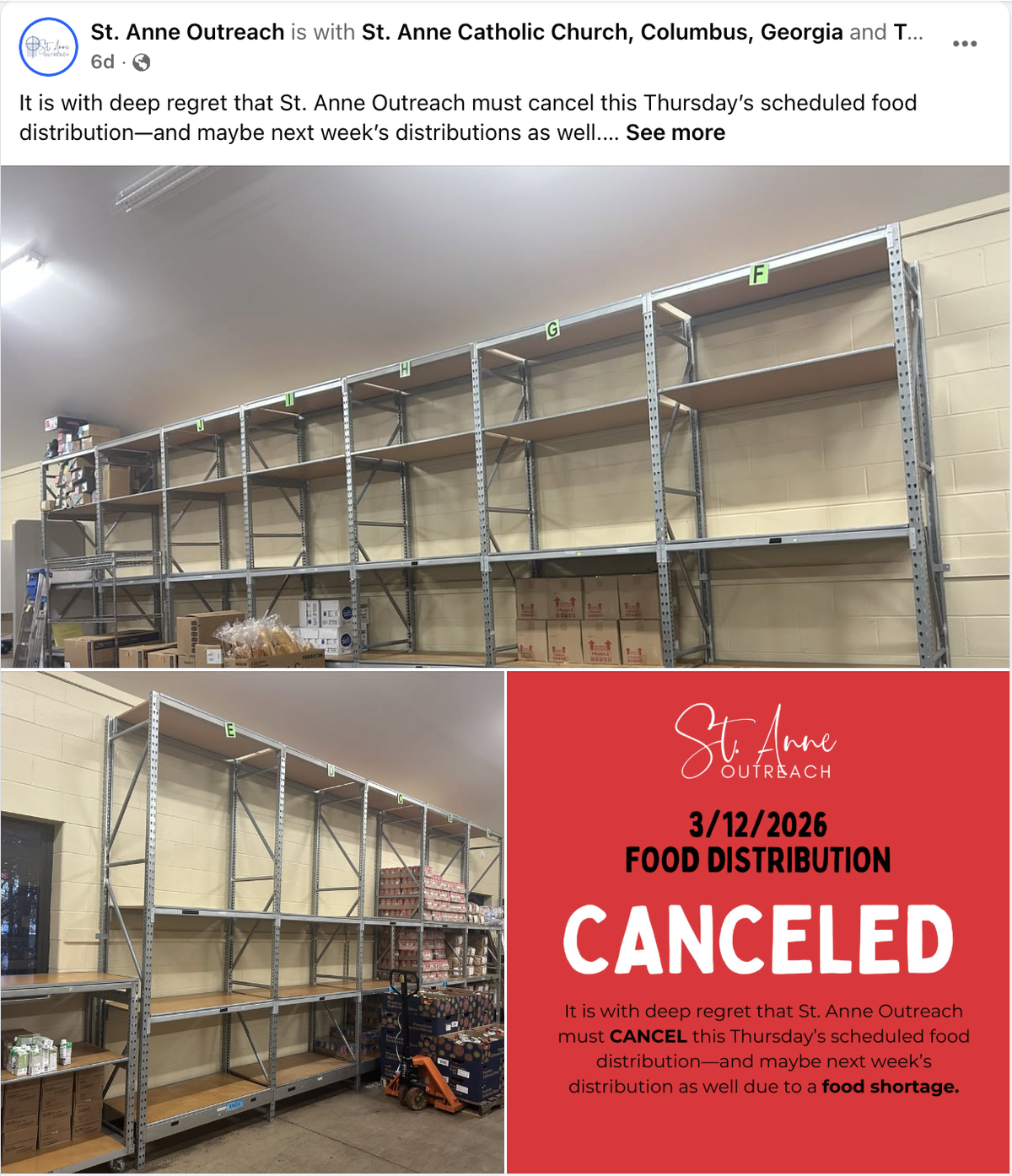
“We wanted to be radically honest,” Tolman said. “It was a hard decision to take a picture of our really empty shelves, but we chose to do it out of respect for the people that we serve and the people that allow us to do what we do, the donors.”
Feeding the Valley’s shortage has been an ongoing issue. The food bank had less than a month’s supply of food in October as the nation braced for Supplemental Nutrition Assistance Program (SNAP) benefits to be cut because of the government shutdown.
The Ledger-Enquirer didn’t reach Feeding the Valley president and CEO Frank Sheppard to comment about Tolman’s concern, but he told the L-E in October that the shortage began after the COVID-19 pandemic.
Much of the food Feeding the Valley provides is supplied by the U.S. Department of Agriculture. These food products are what St. Anne Outreach doesn’t have access to, Tolman told the Ledger-Enquirer, particularly meat.
“We are able to get reclaimed meat,” she said. “That is the meat that is pulled from the ‘sell by’ date from the shelves of the various supermarkets.”

St. Anne Outreach was also able to get some produce, Tolman said. But this is not a solution because their clients are often unable to cook some of these items, she said.
“The clients who are living in hotels, living in their cars, living in tents, our friends down at The Ralston — they’re just not set up to be able to cook that food,” she said.
The lack of access to dry goods means the pantry isn’t able to provide groceries that people can use, she said.
“A huge demographic of ours are either elderly or they are single parents or grandparents,” Tolman said. “They’re coming home after a long day of work, and they’re relying on that can of soup or that can of beans that they can throw together for their kiddos to be able to eat.”
The pantry could use additional items, such as rice or pasta, she said, noting they haven’t had access to them in over a year.
Vital for those living paycheck to paycheck
Food pantries are vital for families living paycheck to paycheck, Tolman said. When they can’t obtain food from a pantry, they have to spend money at a grocery store.
St. Anne is helping a single dad who is struggling with congestive heart failure, Tolman said.
“He has children at home,” she said. “He’s unable to work, and every single penny counts. If I can’t help people with groceries, that puts a greater burden on all of our programs.”
St. Anne also provides services for utility assistance and eviction prevention.
“We have been sustaining from our own donors and pockets,” Tolman said. “And at this point, we have run out of the ability to do that.”
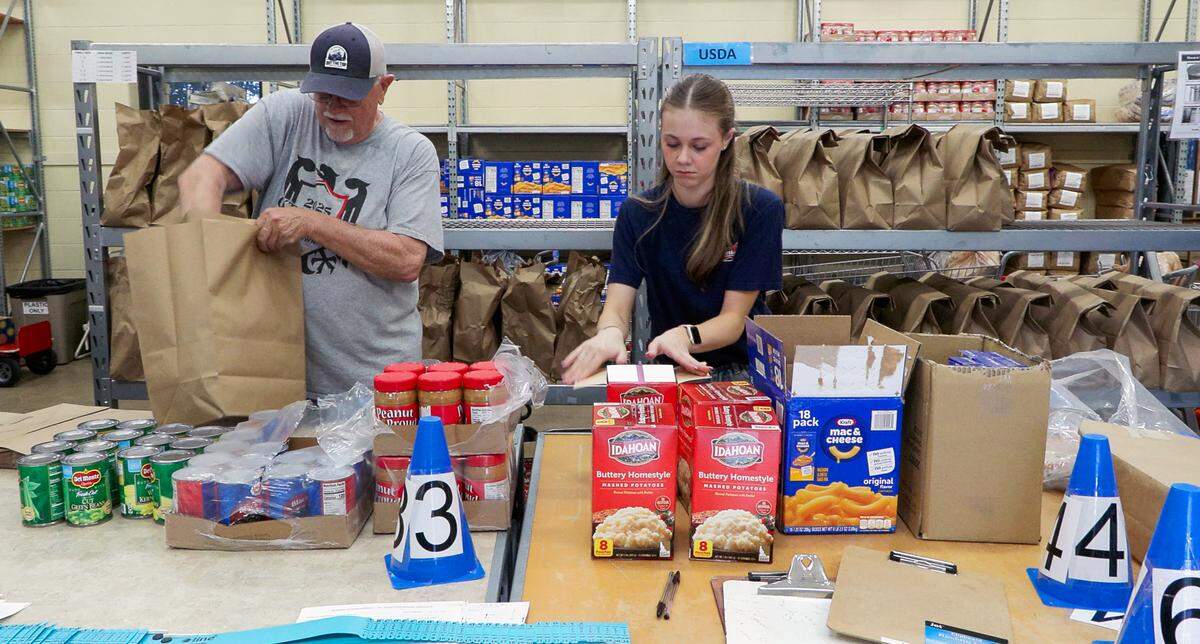
St. Anne Outreach used to be able to spend about $1,200 a month to buy food at $0.19 per pound from Feeding the Valley, she said. This would fill up their shelves to allow them to distribute food to people in their communities.
Now, Feeding the Valley doesn’t have the food to sell them. Instead, the pantry has had to buy food at the full retail price to try and provide what they can.
“That’s not something we have in the budget to do or are able to sustain for multiple distributions,” Tolman said.
Solutions at federal, local levels
U.S. Secretary of Agriculture Brooke Rollins announced Feb. 19 that the USDA intended to purchase $263 million in dairy and agricultural products from American farmers and producers to distribute to food banks and nutrition assistance programs nationwide.
“As a pantry at the very end of the food supply chain, we pray that Feeding the Valley will be able to secure a portion of these resources and make them available to its ministry partners,” St. Anne Outreach wrote in a March 12 open letter.
U.S. Sen. Jon Ossoff (D-GA) is also working to combat food insecurity in Georgia after the Trump administration canceled programming that appropriated funds for the delivery of food from Georgia farms to Georgia schools, he told the Ledger-Enquirer after the Women’s Empowerment Luncheon in Columbus last week.
“I think that was a mistake,” Ossoff said, “and I’m working to restore it.”
About one in five children in the Chattahoochee Valley are food insecure, Tolman said, and about 19% of families are living below the federal poverty line.
The need in Columbus is significant, she said, and it’s rising. When Tolman began at St. Anne Outreach a few years ago, they were serving between 380 to 420 families.
“Now we’re serving over 600,” she said. “As the need goes up, the inventory goes down. All of us are feeling depressed, so the problem is only getting worse.”
When people conduct food drives, Tolman said, they should encourage donors to bring items that make a meal rather than random items.
“Maybe you can donate a pasta and a tomato sauce,” she said. “If you want to do extra, put some seasoning in there too, because often our food-insecure families don’t have those extras. Put in some Parmesan cheese, maybe some extra noodles and extra rice.”
The solution to this problem should not rest solely on the shoulders of Feeding the Valley, Tolman said.
“That’s unfair to say or expect,” she said. “But, certainly, the conversation needs to happen about what to expect with food inventory in the future.”