Columbus food bank faces shortage as November SNAP benefits may not pay out
Feeding the Valley Food Bank has less than a month’s supply of food on hand, as the U.S. Department of Agriculture warns states that it does not have sufficient funding to cover Supplemental Nutrition Assistance Program benefits in November because of the government shutdown.
The federal government shut down Oct. 1, with Democrats refusing to vote for a funding bill that does not extend tax credits under the Affordable Care Act.
States were notified by the USDA that it did not have sufficient funding to cover SNAP benefits, Ellen Brown, Georgia Department of Human Services communications director, told the Ledger-Enquirer in an email.
The program is 100% federally funded and disbursed by the Georgia DHS, she said. As of September, Georgia has 687,664 SNAP households in the state, Brown said. She didn’t answer how many are in Columbus.
“We understand how important SNAP benefits are to Georgia families and are closely monitoring the situation,” Brown said.
It has not been determined how quickly households will receive benefits again after the shutdown ends, she said.
“We have asked our payment vendor for a project plan on how quickly they can issue benefits once the shutdown has ceased,” Brown said.
It will require $8 billion to fund the SNAP program next month, U.S. Rep. Sanford Bishop (D-Ga.) said during an Oct. 23 news conference in Columbus. He called on the Secretary of Agriculture to utilize reserve funding in the department to fund the program.
“Nutrition is medicine,” Bishop said. “Nutrition is essential to life, and so we will do everything in our power to see that the SNAP benefits are not discontinued or cut off because of the shutdown.”
Increase in demand, shortage in supply
As the government shutdown has dragged into its fourth week, local nonprofits are feeling the effects.
Feeding the Valley did not see an immediate increase in demand, president and CEO Frank Sheppard told the Ledger-Enquirer, because the military was paid at the first of the month.
“But as time has gone on, then, certainly, more people are affected,” Sheppard said. “We’re seeing about a 15% to 20% increase in demand right now, since the shutdown started.”
The organization’s website says Feeding the Valley works with over 350 partner organizations and directly distributes to more than 12,000 food-insecure families a month.
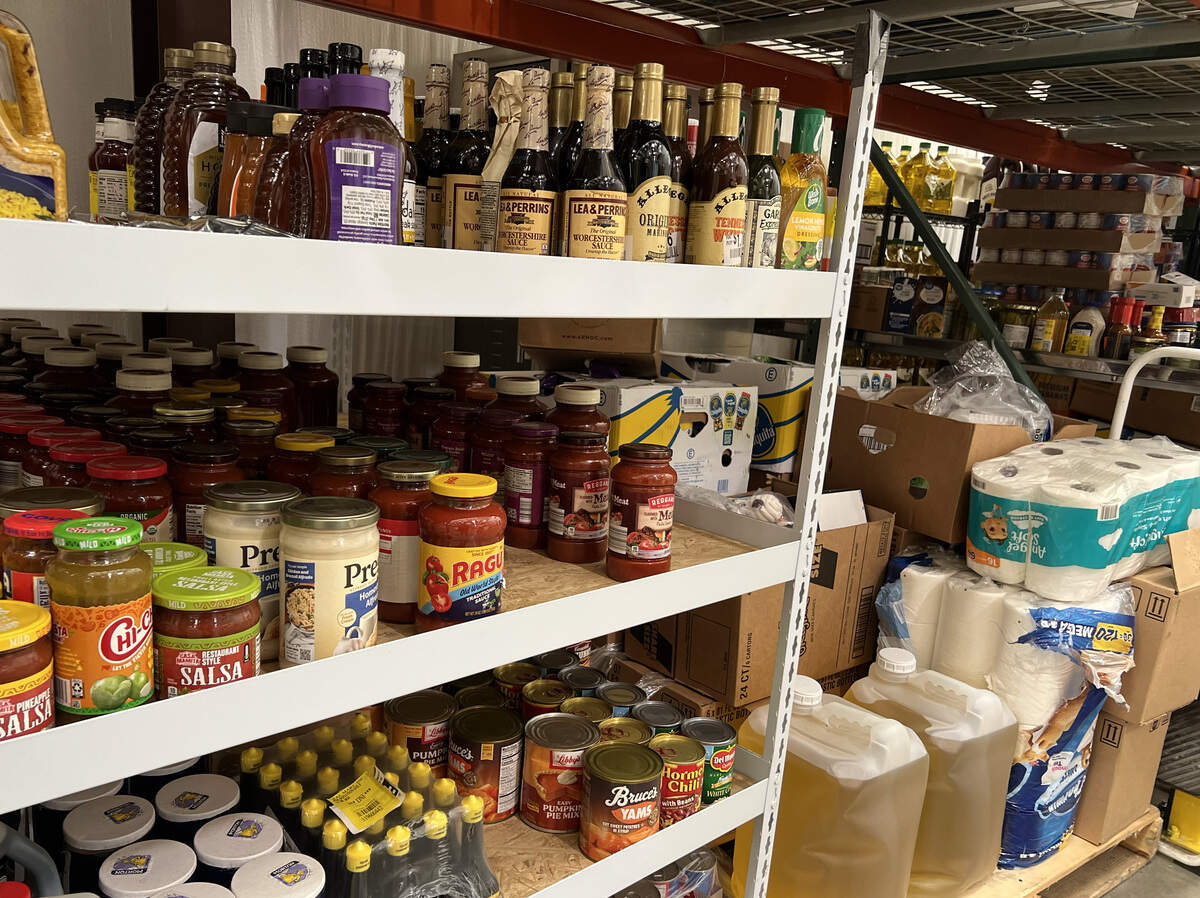
The SNAP program provides close to 10 times the amount of food that the nation’s food bank network does on a regular basis, Sheppard said, so it concerns him to hear SNAP benefits may not pay out.
“When you all of a sudden have that many people who are no longer receiving SNAP benefits and able to purchase food, then they’re going to look for help elsewhere,” he said. “And where are they going to go but the food bank? And we’re in the midst of a food shortage.”
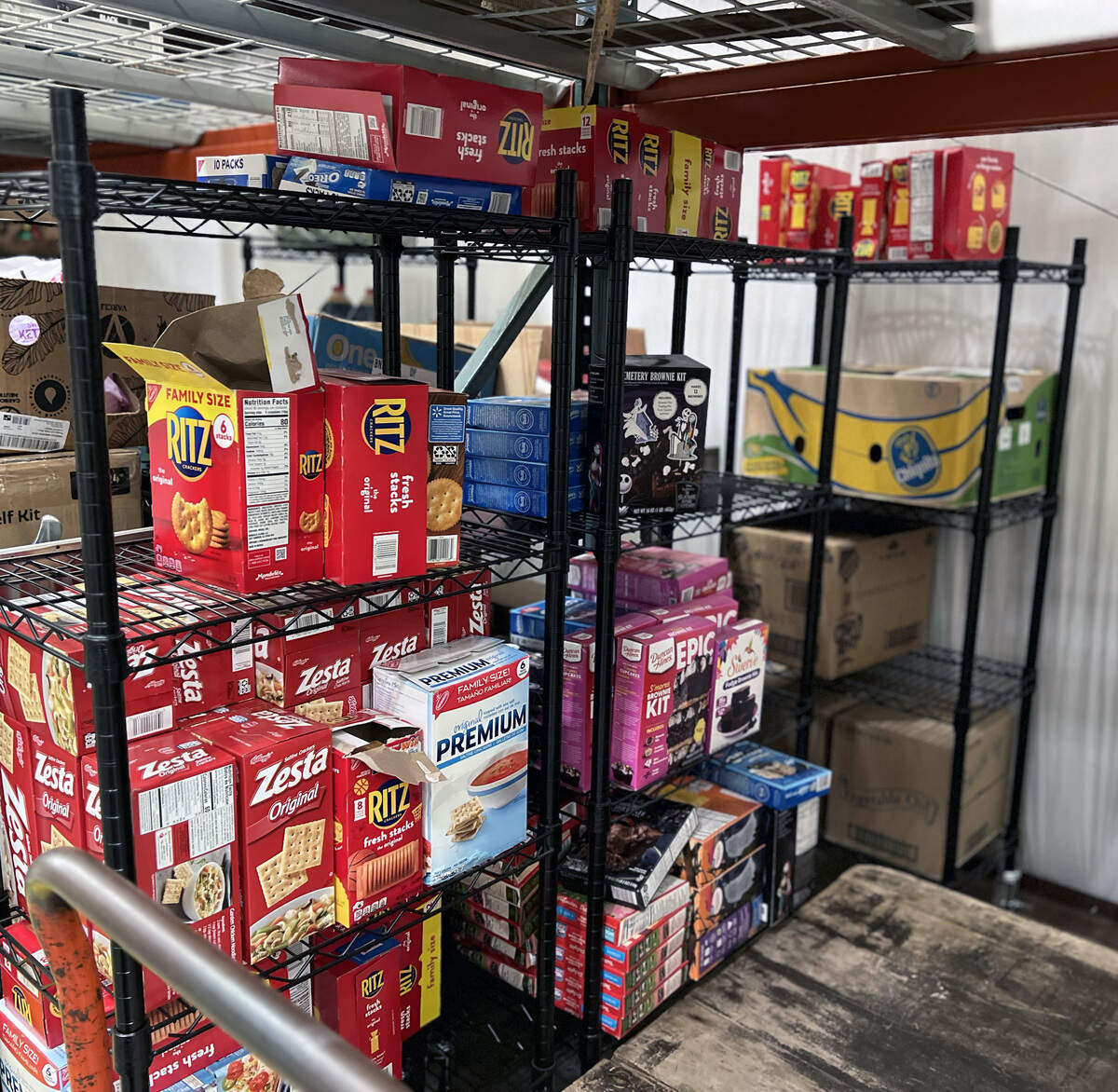
Feeding the Valley’s shortage began after the COVID-19 pandemic, Sheppard said. The food bank has less than a month’s supply of food on hand in all of its warehouses, he said.
“That’s really concerning because I should have at least three, up to six months of supply, at any given time,” Sheppard said. “In a situation like this, I’d like to be leasing additional warehouses because I don’t have enough room to store the food.”
During the pandemic, the federal government sent food banks additional food, he said. That is normal in a crisis situation, Sheppard said.
“This is the opposite,” he said. “They’re not at work. They’re not sending food, but what is being sent to us is more people who need help, who are hungry and are having trouble feeding their families.”
Other nonprofit organizations in Columbus affected
Other nonprofit organizations also are being negatively affected by the shutdown as demand for services increases.
The 211 Health and Human Services line, which is operated by the United Way of the Chattahoochee Valley, monitors the volume of calls and web hits it receives in real time, president and CEO Ben Moser told the Ledger-Enquirer.
“We have seen an uptick over the past seven to 10 days in the amount of food requests,” Moser said. “They had been relatively stable for months before, but we’re starting to see that tick up.”
United Way’s biggest challenge is that grant reimbursements used to fund various items are halted, he said.
“The work continues,” Moser said. “But the expedience of being paid back for the work that we’re doing from grants that we’ve gotten either from the federal government through the state government or directly from the federal government is on hold currently.”
United Way already was on high alert, he said, because of proposed budgetary cuts that Health and Human Services agencies could face under the Trump Administration’s new budget.
The organization analyzed the data to determine what the local impact would be for nonprofit groups if the earlier “skinny budget” had passed Congress, Moser said, and determined Columbus area nonprofits could face over $40 million in budget cuts.
His organization is closely monitoring the funding bill as the impact on Columbus could be in the tens of millions of dollars, Moser said.
People who are struggling most with this shutdown are living paycheck to paycheck, he said, and about 56% of the Chattahoochee Valley population falls into this category.
“I’m not sure exactly the percentage of that population that will be affected by this (shutdown),” Moser said. “But it’s very substantial.”
How to help
The best way to help Feeding the Valley with their food shortage is to donate to the Community Hunger Relief Fund, Sheppard said.
“We can go out and buy food at a very high volume at a very low cost,” he said.
While he appreciates organizations and churches hosting food drives, Sheppard said, donating money can help more.
Moser also encourages residents to donate to Feeding the Valley because of their urgent need, he said. Providing support for housing services is important as well, Moser said, as about 50% of the calls 211 receives are people looking for affordable housing.
“More people are going to become homeless through this because, if their paycheck shuts off, they’re not going to be able to pay their rent,” Moser said. “They’ll be in danger of getting evicted.”
He encourages people to support United Way’s Home for Good program, which needs is planning for a rise in homelessness if the shutdown continues.
“A gift to United Way actually gives money across the ecosystem and can be highly impactful to try and triage these issues across the spectrum with funds to Feeding the Valley and funds to the Boys & Girls Clubs,” he said.
Some of United Way’s partners also assist with domestic violence, Moser said, which can see an increase in times of economic stress.
“Anytime you have an abusive household, whenever resources are lacking, sometimes people will panic,” Muscogee County Sheriff Greg Countryman told the Ledger-Enquirer.
This “panic’ will cause some individuals who may have acute mental health issues to drink or use drugs, he said, which leads to arguments that can become physical.
In challenging economic times, Countryman urges individuals to reach out to organizations like United Way for help.
How to find help
Feeding the Valley already has arranged additional mobile pantry food distribution at the National Infantry Museum, the first Saturday of each month, for military families only, Sheppard said.
Individuals who visit these events must show a military ID, he said.
More distributions may be added for the general public, Sheppard said. People can find information about those days and times on the front of the Feeding the Valley website by clicking on the button that says, “Find Food.”
“You click on that button, it will show you a list of pantries in your area,” he said. “You put in your zip code, and it will show you where you can go to get food.”
Calling 211 is a good way for people in the community to find out in real time which local programs are able to assist individuals’ various needs, Moser said.
He also encourages people to call their elected officials because they also have case management within their offices.
“We have U.S. Sen. Jon Ossoff, U.S. Sen. Raphael Warnock and Rep. Bishop,” Moser said. “Those offices are a great resource.”
Bishop visited Feeding the Valley on Oct. 22, Sheppard said.
“Having been a member of the House Agriculture Committee for so long, he is very in tune to the issues around food insecurity and what the government shutdown does to make that situation dramatically worse,” he said. “So he’s well aware that, when he’s sitting across the aisle in chambers in Washington, that he has a story to tell, and that is that he has a district down here that has got very high food insecurity rates.”
Sheppard told Bishop that the food bank is in a “real, dire situation,” with a combination of increased demand and lower supply, he said.
“Nothing could be worse,” Sheppard said. “Our inventory level last quarter was the lowest in the 11 years I’ve been doing this. I have three warehouses and 110,000 square feet to store food in. I don’t have enough food to put in them.”