
‘I killed all of them.’ Case file reveals horrific details in Columbus quadruple stabbing
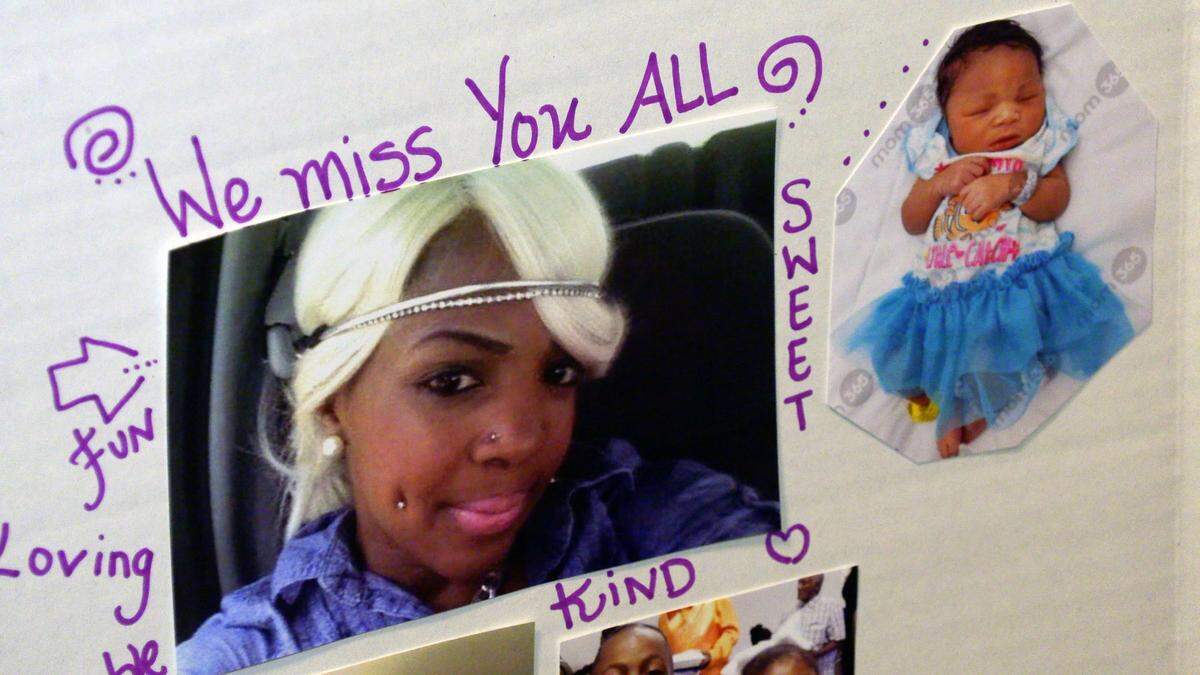
Brandon Jackson’s three children saw him stab their mother to death before he turned the knife on them, saying “I love you” and killing them one by one as the mother lay dying on the floor, watching.
He next stabbed their 2-year-old son King, in the neck and chest, and then their infant daughter, Khristian, only a month old.
The last to die was his 1-year-old daughter Kensley, his favorite.
Such details are in police case files the Ledger-Enquirer obtained under Georgia’s Open Records Act. They include written synopses of police body camera videos, body camera footage, and interviews with witnesses.
The horror of what happened that Wednesday, July 17, 2019, still weighs upon all affected.
Besides the distraught families who converged at Jackson’s Elizabeth Canty Homes apartment, the first responders were shaken by what they saw, when they ventured into the southwest bedroom.
“Oh my f—k,” said the first officer to enter.
That was at 8:57 p.m., hours after the rampage likely occurred shortly after 2 p.m., gauging by family phone contacts and the police investigation that tracked Jackson’s movements.
The reports on that probe became public record when police closed the case following Jackson’s suicide Dec. 30, when he hanged himself in his Muscogee County Jail cell.
The dynamics leading to the homicides offer insight into family violence, which remains a prevalent and pressing problem: Eleven of Columbus’ 41 homicides in 2019 were related to it.
The investigation reveals why Jackson decided to kill his children after their mother, and cites the factors that led to Columbus’ most deadly family violence of 2019.
The police interview
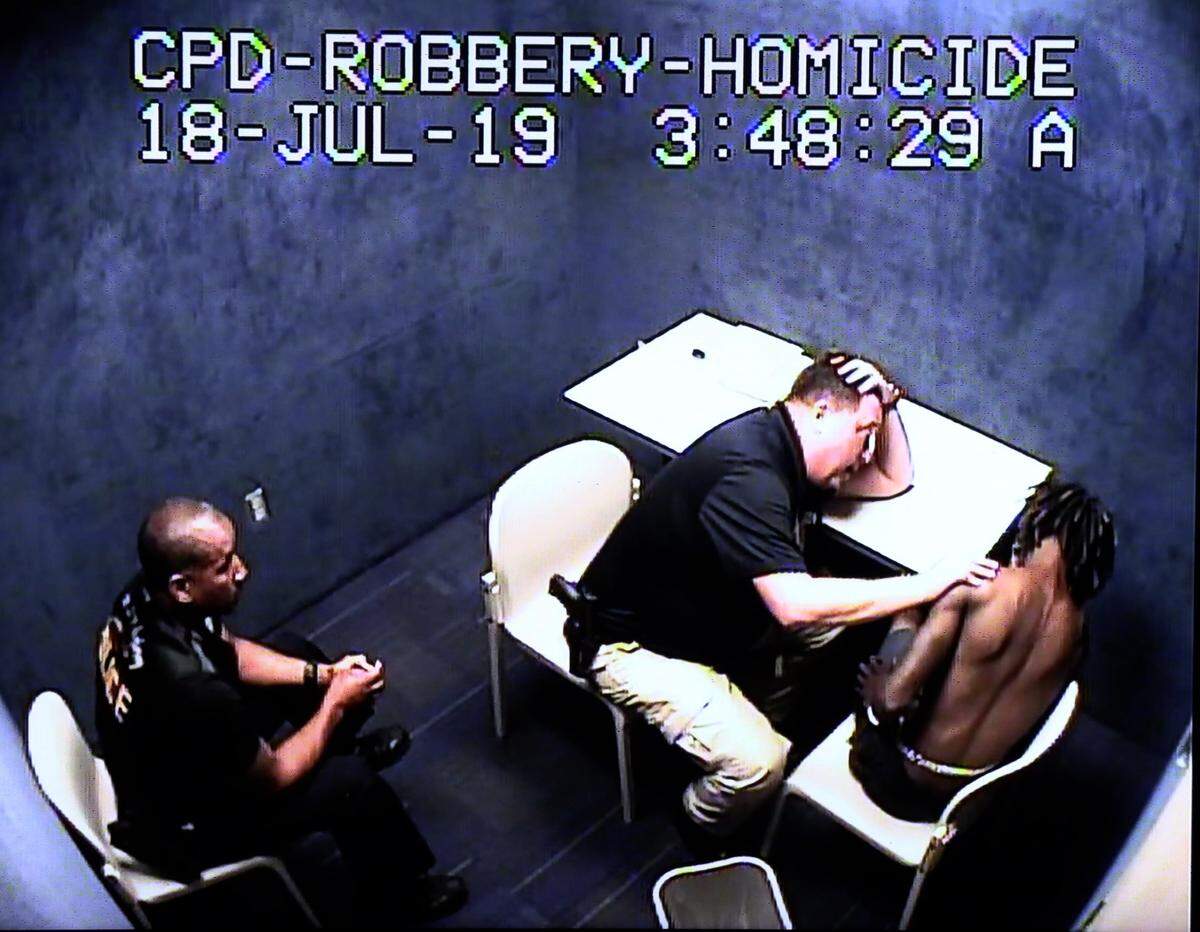
“I did it, OK? I killed all of them,” a shackled, shirtless Jackson confessed the next morning to Detective Stuart Carter in a room at police headquarters.
“I did it. I did it. I killed them all,” he repeated, softly. “I wasn’t thinking clearly.”
It was 3:48 a.m., about seven hours after Jackson was arrested, and 14 hours after the homicides likely occurred.
Police could not question him earlier because he was incoherent, having downed whole bottles of over-the-counter painkillers such as ibuprofen and Advil PM, trying to kill himself.
The first police recordings at 11:22 p.m. show him alone in the interview room, wearing only blue shorts, with shackles on his wrists and ankles. Wild-eyed and staring, he strains against his restraints, sniffling and shaking his head to clear it.
Before he killed Jerrica and their children, he may have ingested heroin, for which he used the street name “fatboy,” according to a cousin who gave him a ride that day.
When investigators started questioning him about 3 a.m., Jackson gave vague answers, claiming Jerrica left that day with a friend, and he didn’t know where she went with the kids.
Asked about cuts and scrapes on his neck and chest, he claimed they came from mosquito bites he had scratched, before telling detectives he had been “playing rough with my baby’s mama.”
He continued to dodge questions from Detectives Matt Sitler and Dexter Wysinger, until Carter came in and told him four dead bodies were in his apartment, and asked what led to that.
“Arguments,” Jackson said.
What did she say that made him angry?
“Just be talking about me,” he said. “She tell me she got her a new dude…. She started arguing with me in the kids’ room.”
Only when Carter kept asking where he got the knife did Jackson finally admit he came home from work after 2 p.m., and got into a fight with Jerrica. Each of them grabbed knives before he took hers away and started stabbing her, he said.
“She was fighting back,” he said. “I just kept doing it until she stopped fighting back…. After I stabbed her the first time, I just kept going.”
BEHIND THE STORY
MOREHow we reported this story
Ledger-Enquirer reporters have followed this story for the past eight months, documenting the latest court updates and finding out more from family and friends about Travane Brandon Jackson and Jerrica Spellman’s history. Below are some questions readers may have related to the story and our explanations.
How did you get these records?
Police files are considered public documents under Georgia’s Open Records Act. The status of an investigation affects what documents can be released and when. Once reporter Tim Chitwood learned the case was closed, he filed an open records request with the Columbus Police Department for the entire case file and received hundreds of pages of police reports and notes, and video footage from police interviews.
Why did you report this story?
This crime had a widespread impact, emotionally and otherwise, on the people of Columbus and some outside our community. As reporters, we try to get every piece of information we can and share it with our readers in a responsible and ethical manner. As James Freeman, Jerrica’s brother, says: “I didn’t want to go throughout my life making things up in my own head, because I feel like the truth is always better, no matter how bad it hurts.”
Considering the rumors and misinformation that still floats around this case today, we pursued the case file to offer readers a detailed look at what factors led to the crime and how law enforcement investigated it. Part of our job is about holding those in power accountable. Without a look at the entire case file, we wouldn’t know what happened between Jackson’s arrest and eventual death.
The dynamics that led to the homicides offer insight into the issue of family violence, which remains a prevalent and pressing problem: Eleven of Columbus’ 41 homicides in 2019 were related to family violence, about a quarter of the total. According to statistics from the National Coalition Against Domestic Violence, one in four women and one in seven men experiences serious intimate partner violence, which accounts for 15% of all crime.
How long did you work on this?
Tim Chitwood has been the lead reporter on this case since the initial stabbing in July 19. He reported multiple stories about Jackson’s arrest, his criminal history, Jerrica’s past and her family’s battle with grief. He attended all of Jackson’s court hearings as well and formed relationships with Jerrica’s family. Chitwood spent about one week researching the case file and worked multiple days writing the story. Lauren Gorla was the lead editor and Mike Haskey led the visual planning and producing.
Why did Brandon Jackson kill his kids?
Soon Carter asked the question the homicides left many wondering:
Why did he kill the children?
“I didn’t want nobody to have my kids,” Jackson said. Once he killed their mother, he knew neither parent would be there for them: “I knew she couldn’t do it because she’s already dead. I knew I couldn’t do it because I was fixing to go to jail.”
He gave more details in an interview two days later.
“I looked at my kids and told them I loved them and I killed them,” he said.
Was Jerrica still alive?
“She was still talking…. She said she loved us and she was sorry for everything. And that was it.”
Asked again about killing the kids, he repeated, “Like I said, I don’t want nobody raising my kids. I don’t like it if someone else disciplines my kids.”
Victim’s brother speaks out
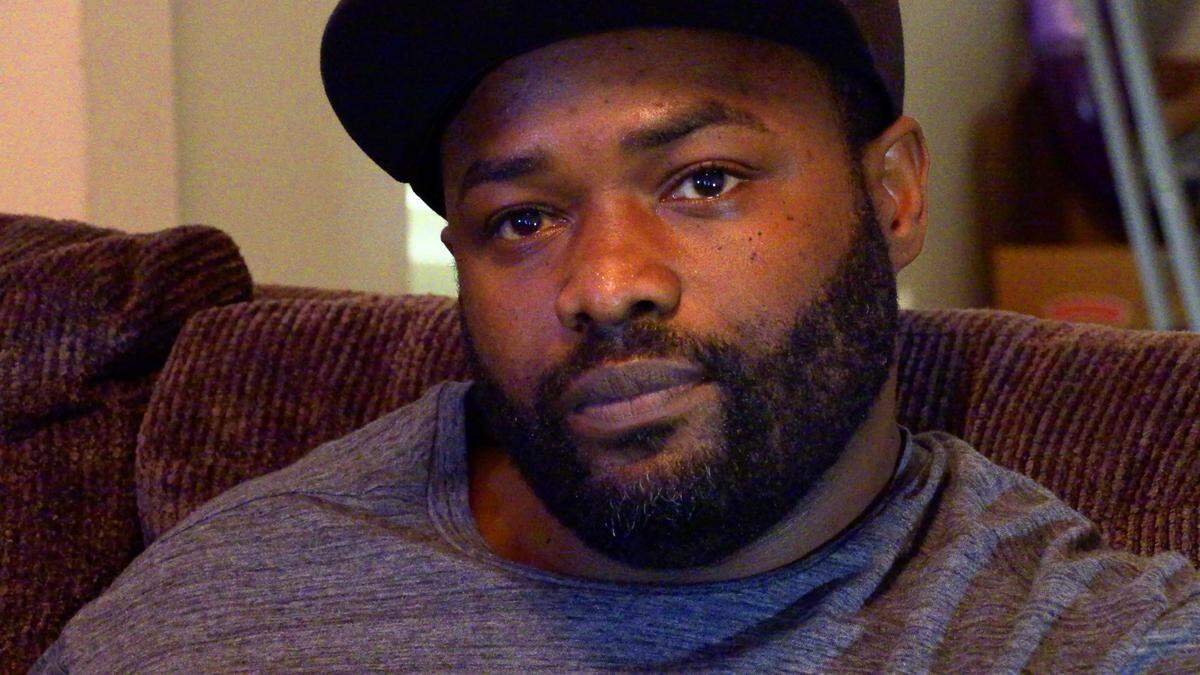
Watching a DVD of Jackson’s interview in his Hampton Place apartment, Jerrica’s older brother expressed some doubts about what Jackson said.
James Freeman didn’t believe his sister apologized as she lay dying, and doubted she attacked Jackson first, as Jackson claimed.
But he knew his sister would have fought back, as she and Jackson stood on an air mattress in the room where the kids watched TV.
“She did have a knife in the room, too,” Freeman said. “She was trying to defend herself, so they was actually having a knife fight with the knives, and he just got the best of her.”
Police found three knives in the room, two with red handles and one with a black handle. “We believe that they were some knives from the Dollar Tree,” Freeman said. “One of them was bent from the stabbings.”
Jackson said Jerrica had the red-handled knives, and he had the one with the black handle. He took hers away and stabbed her in the neck, face and chest until she stopped struggling.
Like Freeman, detectives wanted to know what so provoked Jackson.
He and Jerrica had violent confrontations before — at least two were reported to police.
This time was different.
One factor was that Jerrica was leaving, and taking their two daughters with her. She had custody of the girls; Jackson had custody of King.
That morning she had packed up their things, and called her mother to come pick them up. First she and the girls would move in with her mother on Sweetwater Drive, and later her family would move back to Jessup, Georgia, where they were from.
Freeman also planned to move back. Jackson and King would be left behind.
Visiting his daughters would be difficult, and Jerrica didn’t want Jackson’s family caring for King, Jackson told Carter.
Asked what ignited the violence, he said: “Probably when I said I’d have my family take care of King. She don’t like my family.”
The tension built to a peak, after Jerrica called Jackson at work, around 2 p.m., and told him to come home.
‘I love y’all,’ killer texts
Jackson worked at Blue Fire Detail, a car wash at 5096 Forrest Road. Jerrica was a dancer at the Gold Lounge, 3613 Victory Drive.
According to police files, she got off work around 3 a.m. and got a ride home around 5.
Around 10:30 a.m., Jackson caught a ride to work from his aunt’s fiancé. Jerrica that morning called her mother to come get her and the girls.
Her mother, Marilyn Spellman, had custody of an older daughter of Jerrica’s, from an earlier relationship. She decided to get Jerrica when she picked the granddaughter up from daycare that afternoon.
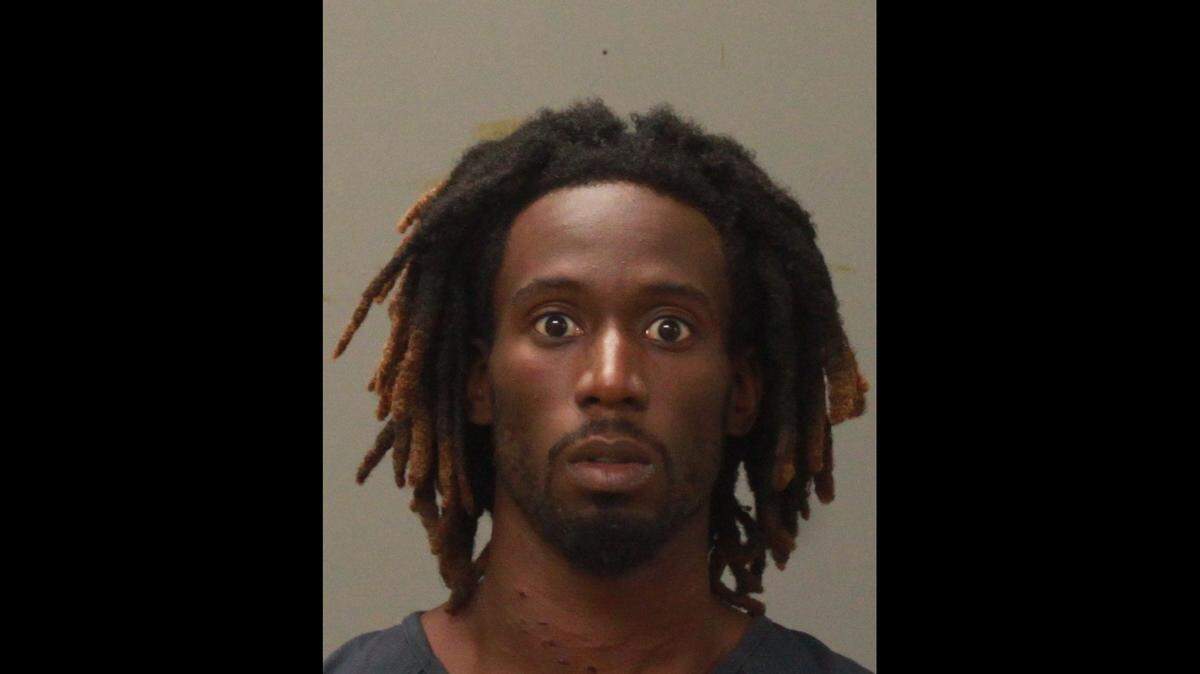
Jackson worked until Jerrica called him to come home. At 2:04 p.m., he texted some of his family: “I love y’all.” That was odd, some thought. One called to make sure he was OK.
He sent another text to older relatives, thanking them for all they’d done for him.
Jackson, 27, had been adopted as an infant by his mother’s sister, Brenda Bukler. She and her daughter Sabrina Cooper had raised him.
Freeman believes Jackson’s reportedly using heroin before sending those texts shows the killings weren’t a sudden urge.
Police don’t know whether Jackson used heroin that day, but they know he sent the texts before the homicides: “That was before all this happened,” he told them.
In the room where the bodies lay, he tried to kill himself with a pistol, but the Hi Point 9-millimeter semi-automatic had no clip, and would not fire the chambered bullet without it.
So he washed down handfuls of pills with a two liter bottle of Sunkist, filled the bathtub and lay in it.
Around 3 p.m., Jerrica’s mother came by to get her and the girls. She beeped her horn, and Brandon told her Jerrica had left with a neighbor.
The mother checked, and learned that wasn’t true. When she confronted Brandon, he said Jerrica must be with another friend.
The mother began calling around, asking if anyone had seen or heard from Jerrica. No one had.
Around 4 p.m., Jackson texted the owner of Blue Fire Detail, to catch a ride back to work. The owner, Carnell Earvin, noticed Jackson seemed out of it, slurring his words. When Earvin took Jackson home about 6 p.m., stopping by a Dollar Tree on the way, he noticed Jackson could hardly speak or walk.
Back at Canty, Earvin had to get out of the car, turn, point and push Jackson toward his apartment. As Earvin left, Jackson’s cousin, Royal Westbrook, happened to drive by.
“Hey cuz,” Westbrook said. Jackson got into the car and told Westbrook to take him to the car wash, then told him to “keep driving” when they got there.
Noticing Jackson’s blank stare, Westbrook asked what was wrong.
“I done did something,” Jackson said.
“What the f—k are you on?” Westbook asked.
“Fatboy,” Jackson said.
Noticing Jackson’s scratches, blood on his shirt and foam at his mouth, Westbrook texted his cousin Sabrina Cooper, who told him to bring Jackson to her home off Joy Road. Thinking he’d been beaten and drugged, she put him in a bathtub and gave him some milk.
The discovery of victims
At 7:34 p.m., Sabrina Cooper called her brother Derrick Cooper, who with his nephew Andrew Lloyd got Jackson’s keys and drove to the apartment, where Lloyd went in, and came back shocked and silent.
They were on their way back to Joy Road when Lloyd said, “Unc’ there are four bodies in the house. King is dead.”
Cooper tried to call 911, but didn’t get through, so he called his sister. “Sabrina, all of them are dead,” he said.
At 8:44 p.m., Sabrina Cooper called 911, requesting an officer to be sent to her home. The dispatcher asked why.
“Ma’am, just please send a police officer here,” she said. “My nephew showed up at my house. He’s scratched up and beat all up. And my son just went to his house, and he says everybody in the house is dead. The house is over there in E. Canty. I don’t know the address.”
Two more 911 calls followed, at 8:51 and 8:54 p.m., when Cooper gave police the correct address.
At 8:53 p.m., patrol officers were sent to Apt. 608-B, next door. Its back door was open, and they went in and found it empty. Noticing the back door to 608-A was open, they checked it, too, and discovered the bodies.
As police swarmed to Elizabeth Canty, other officers went to Joy Road, to arrest Jackson, secure the home as a second crime scene, and collect evidence. Jackson, who had an outstanding warrant for violating probation — the result of a 2018 domestic dispute with Jerrica — was arrested there at 9:08 p.m.
He was sent to Piedmont Columbus Regional, but refused treatment. Vomiting, he said he had a stomach virus.
Then he went to the Public Safety Center, to await questioning as he sat and stared bug-eyed at the walls.
The truth about Brandon Jackson
Having reviewed the police files, Jerrica’s brother James Freeman felt he had a better understanding of what happened.
Reports that Jackson used drugs before the homicides made sense to him: “I don’t believe that, without the substance abuse, he would have been able to do that.”
His sister’s telling Jackson she’d found another man would caused more tension, in addition to her leaving with two of his children.
As Freeman had suspected, Jerrica fought for her life, hanging on until Jackson killed their children.
“She didn’t roll over and die until after they was dead,” he said. “She saw all that.”
Now he feels he can move on, with his own crusade against family violence, to honor his sister and her children.
“I feel like I didn’t get the answers that I really wanted,” he said. “But I feel like, now I am on a path to learning a new normal. And for me, that’s what it’s about.”
Now he doesn’t have to imagine his own scenario of how they died.
“To me, it was more for closure, because I didn’t want to go throughout my life making things up in my own head, because I feel like the truth is always better, no matter how bad it hurts.”
NEED HELP?
Anyone in immediate need of assistance because of domestic or family violence may call the Columbus shelter Hope Harbour’s crisis line at 706-324-3850, or the statewide hotline at 800-334-2836.
This story was originally published April 2, 2020 at 8:00 AM.