
Does a police review board need legal power? Columbus leaders weigh proposal implications
Columbus city leaders once more are diving into a divisive debate over whether to boost the power of an advisory board created decades ago to study public safety issues.
After hours of discussion at its July 28 meeting, Columbus Council will hold a second public hearing Tuesday on three proposals regarding police use of force, one of them an ordinance that would give the city’s Public Safety Advisory Committee the authority to subpoena witnesses to investigate complaints against police officers.
The meeting is set for 9 a.m. at the Columbus Civic Center.
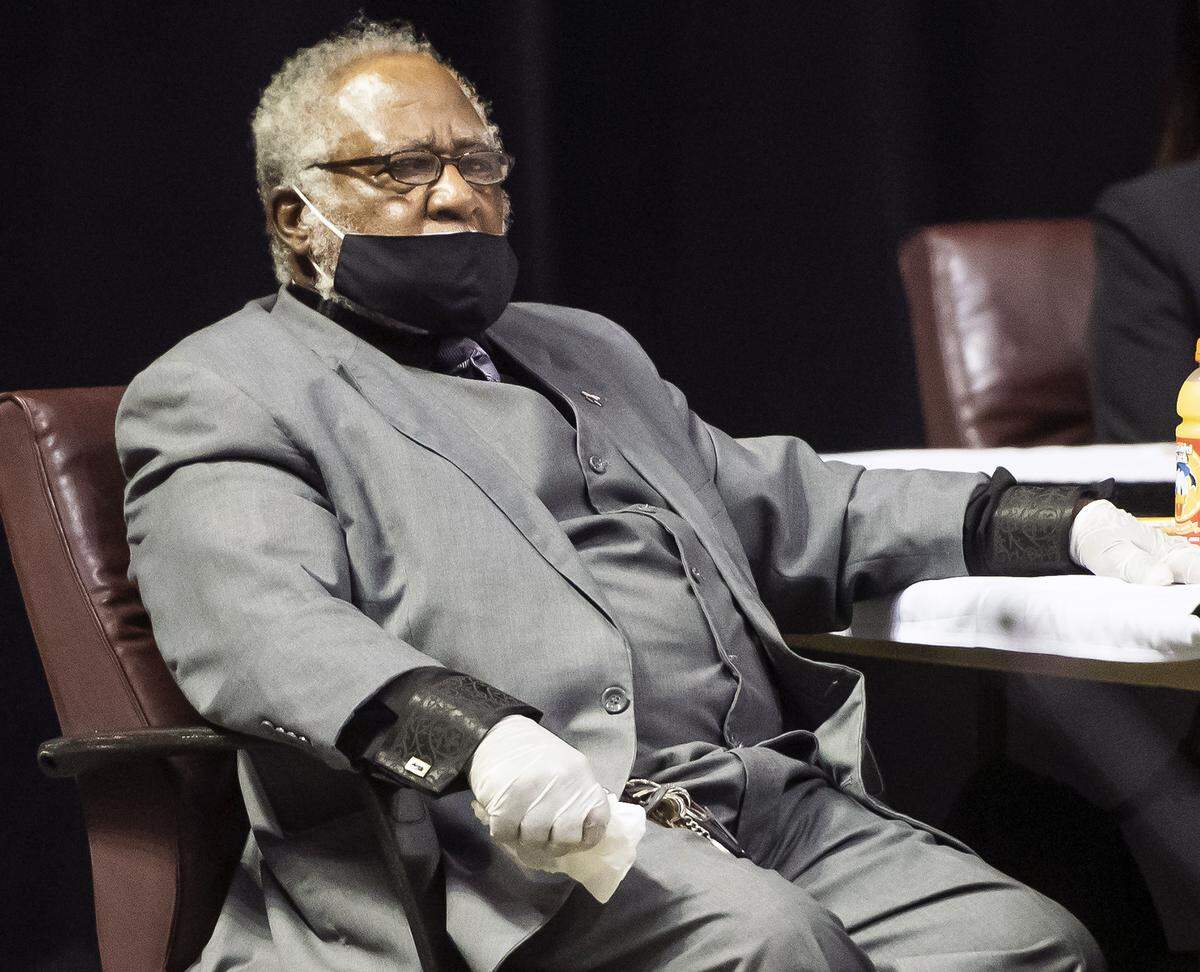
The ordinance is sponsored by District 1 Councilor Jerry “Pops” Barnes, who also has proposed a council resolution mandating use of force training and guidelines for law enforcement officers. It’s driven partly by a national campaign to increase police oversight in the wake of civil unrest over incidents of police killing Black suspects in other cities.
Barnes said he’s pushing his proposals also because of a video posted to Facebook that shows a Columbus police officer gut-punching a handcuffed suspect from behind in October 2019. Barnes said he first saw the video weeks after Mayor Skip Henderson had told him the officer’s actions were “a little aggressive,” and he felt he was misled.
The officer was white. The suspect was Black.
“No citizen — Black, white, purple, orange or green — should have been treated that way,” Barnes told the Ledger-Enquirer. “It completely shattered my faith in the system.”
The Georgia Bureau of Investigation now is probing the incident.
The campaign
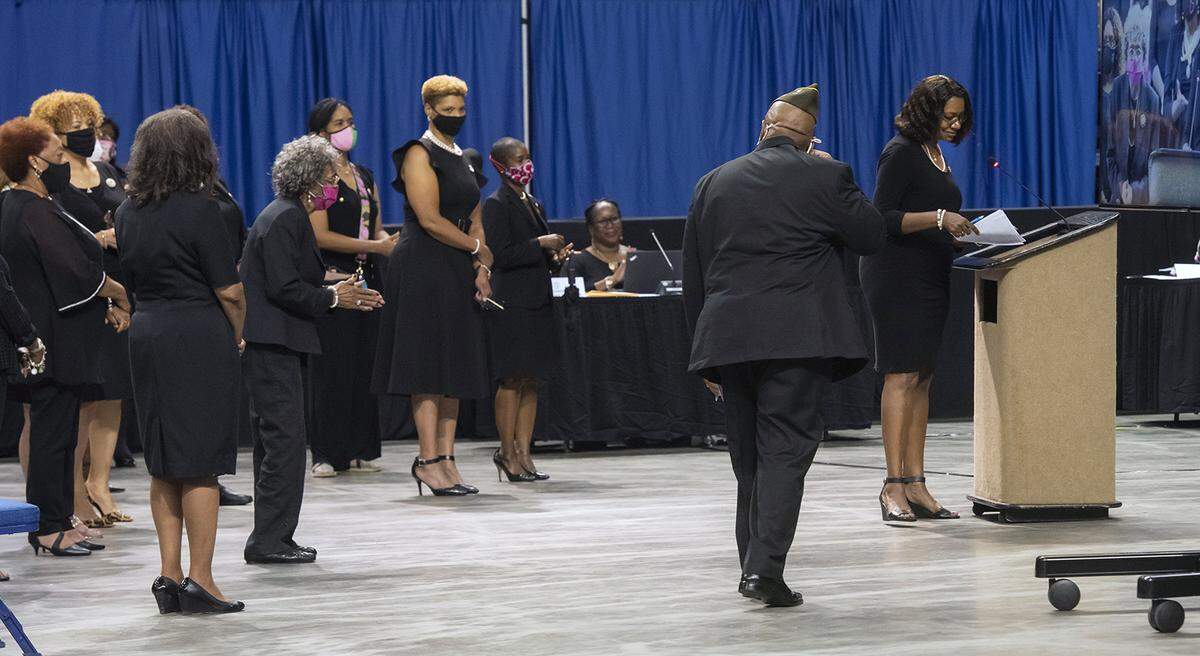
During council’s last public hearing, dozens of people spoke in support of Barnes’ proposals, including a coalition of Black sororities and similar women’s organizations, some representing the national campaign to increase law enforcement accountability.
Among those speaking in favor of Barnes’ ordinance was local state Rep. Carolyn Hugley.
“We are in a very difficult and different climate than we were in at this time last year,” she said Thursday of the widespread unrest that’s driving the movement for more police oversight.
The intent is not to punish responsible officers, she said: “We want them all to go home to their families at the end of their shift.” The effort’s intended to improve public confidence and transparency in police matters, she said.
Police have said they have policies and training in limiting their use of force, but policies can be violated, she said: “What do we do when these policies are not followed? … Every law is for the outlier, the people who aren’t going to follow the rules.”
Giving the advisory committee the power to investigate complaints and question witnesses would ensure officers are held accountable for any misconduct, she said.
But police adamantly are opposed to this, and critics contend the proposals would cause more problems than they resolve.
Subpoena power
The Public Safety Advisory Commission was formed in 2008, its creation spawned partly by the death of Kenneth Walker, a Black man shot by a sheriff’s deputy during a drug investigation in December 2003.
The commission of 11 members appointed by the mayor and 10 councilors currently is not allowed to investigate police officers and has no subpoena power.
Giving it that authority has come up twice before, first considered when the commission was established. In 2016, community activists again asked that the panel have subpoena power.
Then-Mayor Teresa Tomlinson, an attorney, said Columbus Council’s delegating its subpoena power to an appointed board was illegal. She cited a 1987 Georgia Supreme Court case, Atlanta Journal v. Hill, in which an Atlanta newspaper sued to get records from an Atlanta advisory board, arguing the board’s broad powers made it subject to the state open meetings act.
The court ruled the board was not covered under the act, because the subpoena power it had been given was unconstitutional.
City Attorney Clifton Fay said that since has changed: Atlanta has reconstituted its police oversight board with powers granted by law. “Now they are a government-constituted body,” he said.
Similarly, Columbus Council now legally can delegate subpoena power to a board it has appointed, Fay said.
Council gets its subpoena power from the city charter: “The council shall have the right to administer oaths, subpoena witnesses, documents, records or other evidence, take testimony, and require the production of evidence,” it says.
That authority is akin to the subpoena power used in criminal courts: When prosecutors have an uncooperative witness, they get a judge to issue a subpoena compelling that person to come to court. Anyone who refuses can be jailed.
The procedure outlined in the city charter allows council to issue subpoenas through the clerk of council, who forwards them to the Muscogee County Sheriff. Deputies then serve the orders for witnesses to appear and testify.
Those who refuse can be held in contempt and brought to Recorder’s Court. If found to have violated the law, they can be fined $100 or jailed for 10 days, the charter says.
Under Barnes’ ordinance, the advisory commission theoretically would operate in the same manner, though Fay said some specific protocols would need to be established.
Though council long has had subpoena power, no longtime city leader the Ledger-Enquirer questioned could recall it ever being used.
“They’ve never gone that far, that I know of,” Fay said.
Mayor Henderson said that’s because council relies on law enforcement agencies to conduct investigations. It calls in Columbus police, or requests a GBI probe, because councilors have no training or expertise in that, he said.
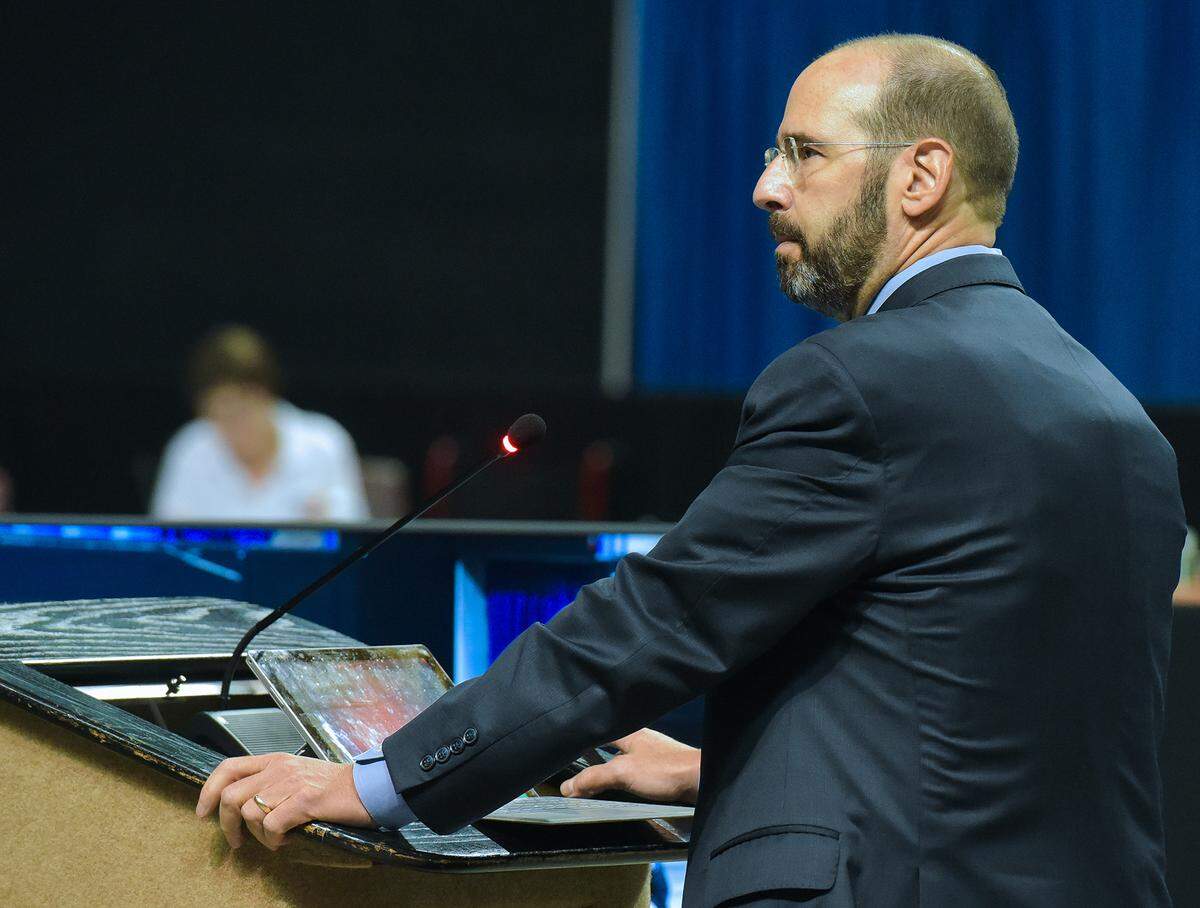
Though police officers could be compelled to appear before the commission, they could not be forced to testify, said Lance LoRusso, a Georgia attorney who regularly represents law enforcement officers.
Like any citizen, officers have a Fifth Amendment right to refuse to answer questions that may lead them to incriminate themselves, LoRusso said. So, if brought before the commission, they are likely to bring legal counsel, and refuse to testify, he said.
That would tend to erode public trust, rather than nurture it, he said: It would prompt critics to say, “See, they’re hiding something.”
It also would drive officers to seek employment elsewhere, he said: “Certified officers can go anywhere.”
The Columbus Police Department currently is 87 officers short of a full staff of 487, said Assistant Chief Gil Slouchick.
Besides giving the commission subpoena power, Barnes’ ordinance specifically would give it the authority to investigate complaints against police: “The commission shall have authority to receive, review, and investigate complaints of alleged misconduct made against the officers or employees of the Columbus Police Department,” it reads in part.
The current law prohibits that: “The commission shall have no power or authority to investigate, review, or otherwise participate in matters involving specific public safety personnel or specific public safety-related incidents,” it says.

The commission
Tyson Begly, who chairs the advisory commission, believes it already can review police complaints as part of its overall mission to study and report on any public safety issue.
Begly is the commission’s council District 10 representative. Others on the board are Byron Hickey (District 1), Dothel Edwards (District 2), Noel Danielewicz (District 3), Geraldine Buckner (District 4), Donald Watkins (District 5), Bill Ward (District 6), Lisa Branchcomb (District 7), Julio Portillo (District 8), Scott Taft (District 9) and Pete Temesgen, the mayor’s appointee.
The board’s mission is “to recommend resources, public safety practices and policies, and citizens’ responsibilities to achieve a safe community.” Its recommendations go to the mayor, council or local law enforcement agencies.
It meets monthly, lately meeting online because of the coronavirus outbreak, and discusses issues related to public safety, to gather research and make recommendations, Begly said.
One of its latest achievements was studying whether to consolidate the county marshal and sheriff’s offices, he said. The board recommended they be combined, and council asked for state legislation that was approved this year. The offices will be joined in January 2021.
The advisory commission also is the subject of a second ordinance, proposed by Mayor Pro-Tem Gary Allen, who’s acting on the mayor’s behalf. It would require that all police use of force reports be forwarded from the police department to the commission for review and analysis, but not grant the panel subpoena power.
Under police department guidelines, use of force ranges from an officer’s pushing a suspect to the ground to make an arrest to firing a gun.
Henderson, who as mayor also is the city’s public safety director, said Columbus police had 108 use of force reports in 2019, out of around 11,000 arrests and 267,000 calls on which police were dispatched.
The resolution
Besides the two proposed ordinances that remain up for debate, council is considering a resolution Barnes sponsored, which outlines specific police training requirements, also part of a national campaign aimed at eliminating the excessive use of force.
Columbus police say they already have such training. Barnes says that if so, then his resolution reinforces that.
The proposed guidelines include banning the use of choke holds and requiring all officers to wear body cameras.
Police Chief Ricky Boren said police already practice each of the seven items in Barnes’ resolution, with the exception of a ban on choke holds. By policy, police do not train in the use of a neck restraint or choke hold, Boren said, but it’s allowed in certain circumstances.
“Choke holds are prohibited except to protect the officer or another person from serious bodily injury or death,” the chief said. “Do we train it? No. Do we authorize it? No. But we’re not going to lay there and die if that’s the only thing we can do to protect ourselves. We would never agree to a blanket policy of no choke holds.”