
Columbus ‘house party’ murder trial ends with jury deadlocked. Here’s next steps
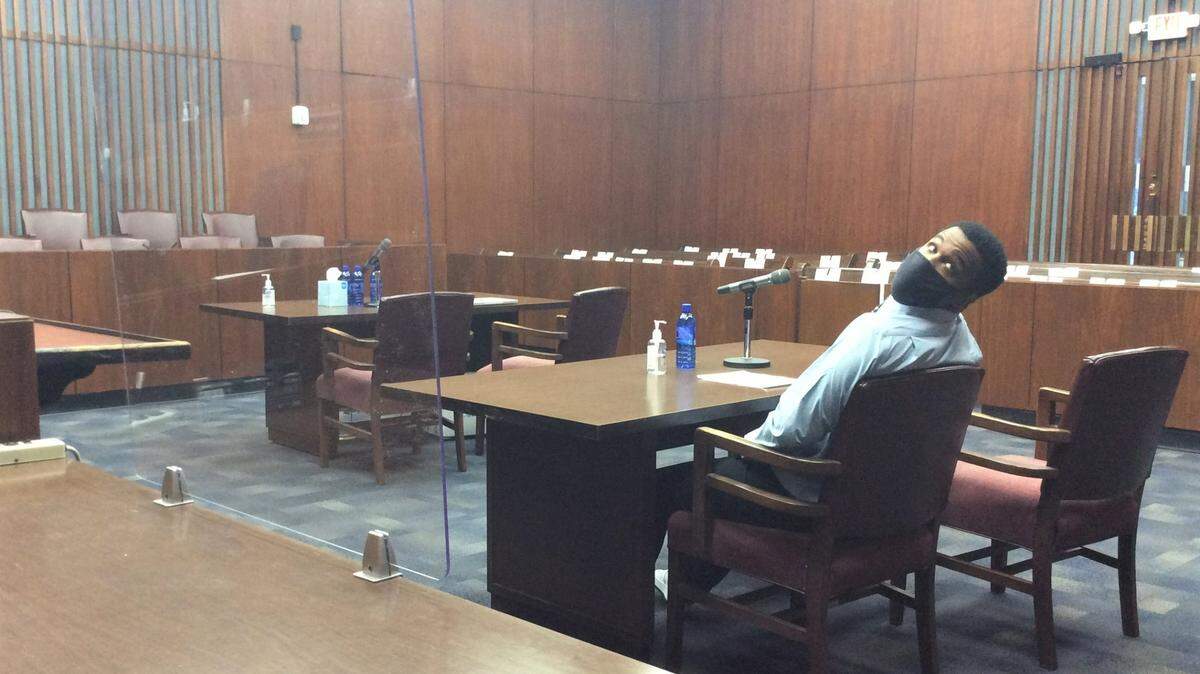
After days of deliberation, a Columbus jury deadlocked in the murder trial of an ex-convict accused of killing the host of a 2016 house party on Hodges Drive, resulting in a mistrial.
With no final decision on his guilt or innocence, Drevon Quantez Johnson now can be tried again in the fatal shooting of Richard Collier on May 14, 2016.
Jurors began weighing murder and other charges against Johnson after closing arguments in the trial ended shortly after noon Friday. They deliberated about 23 hours before the jury foreman told Judge Ron Mullins they were hopelessly deadlocked, prompting Mullins to declare the mistrial around 5 p.m. Wednesday.
Johnson remains jailed on the charges, however, and still is serving time from an earlier case, his attorney said.
“We’re definitely retrying it,” District Attorney Mark Jones said in a phone interview Wednesday, of the mistrial adding, “At the end of the day, it’s not a ‘not guilty.’”
Drevon Johnson should not be allowed to go free, he said: “He’s a known shooter in our community.”
Defense attorney Anthony Johnson said the jury foreman told him jurors had voted 8 to 4 to acquit his client.
“They had four holdouts,” he said. “It had been that way since Monday, the foreman told me.”
The attorney, who is not related to Drevon Johnson, said he will file a motion to get his client’s bonds reduced, so he can be released from jail as he awaits a second trial.
Facebook controversy
The defense attorney said he also will file a motion asking Mullins to issue a gag order in the case, to prohibit the attorneys’ commenting on it publicly.
He said he will do that because during the jury deliberations, Jones posted a comment on Facebook page belonging to the victim’s sister, of Drevon Johnson writing, “Wish I could tell the jury about his prior convictions for possession of a firearm by a convicted felon.”
Mullins scolded Jones for that, because jurors in most circumstances are not supposed to hear about a defendant’s prior criminal history, lest it cause them to think he likely is guilty because he committed other crimes. They are instructed to consider only the evidence in the case presented in court.
Had they found Drevon Johnson guilty on other charges, they then would have heard evidence of his prior convictions, to decide whether to convict him also of being a convicted felon with a firearm.
Anthony Johnson said he had filed a motion earlier to ensure no one brought up his client’s criminal record during the trial. “It’s improper character evidence,” he said.
Jones said the sister tagged him in her post, and he has a right to confer with her under Georgia’s Crime Victims Bill of Rights.
“I’m going to be there for her and interact with her,” he said. “We weren’t trying to do anything improper.”
He wrote the comment after the victim posted a news story related to the case, he said: “If a victim tags me on a post, I’m not just going to ignore it,” he said, of his critics adding, “If they don’t like what I’m saying, maybe they shouldn’t read my posts.”
He thought Mullins treated Drevon Johnson too leniently, and said that when he takes the case back to trial, “I just hope we have a strong judge who ... doesn’t baby the defendant.”
The testimony
Drevon Johnson was accused of shooting Collier after a fight broke out during the party at the victim’s 5908 Hodges Drive home, where up to 30 people had gathered.
Witnesses said Collier, 23, was shot as he came to his girlfriend’s aid when she collapsed after one of Drevon Johnson’s friends hit her during the brawl, knocking her unconscious.
Investigators said they found Collier on the back porch of his home, where he was pronounced dead around 3 a.m. A medical examiner said a bullet went through his torso from left to right, at a downward angle.
Johnson ran away after the shooting, and the friends who had accompanied him to the party had to call to figure out where he was. He told them to pick him up at a nearby car wash, where he emerged from the wood line to meet them.
In closing arguments Friday, Anthony Johnson said jurors had ample reason to doubt his client’s guilt, as another guest at the party afterward sent text messages to eight friends, saying he made a mistake, he was sorry, and he “might get life” for what he did.
“That’s what we call a confession,” the attorney told jurors.
That witness surrendered his cell phone to police, but now cannot be found, so he did not testify during the trial.
Jones, prosecuting his first murder case since he took office in January, said he tried to locate the witness: “I couldn’t get him, despite my best efforts,” he said.
He said the weight of the evidence still pointed to Johnson as the one who shot Collier. “You’ve got to look at all the evidence together,” he told jurors.
That evidence included Drevon Johnson’s leaving the city afterward, so police could not locate him, Jones said. Collier’s family later offered a reward for tips on his whereabouts.
U.S. Marshals arrested Johnson on July 8, 2016, at Mead Court in Jonesboro, Georgia.
Besides murder and being a felon with a firearm, Johnson, who was was 23 in 2016 and is now 28, was charged with aggravated assault and using a gun to commit a crime.
He was released from prison on Feb. 21, 2016, after the state Board of Pardons and Paroles commuted his sentence. His convictions included being a felon with a firearm, theft by receiving stolen property, obstructing law enforcement, fleeing police, and auto theft, according to the Georgia Department of Corrections.
This story was originally published April 29, 2021 at 12:10 PM.