
‘It could be me.’ Why a Columbus attorney tackles some of the most heinous murder cases
The client who lost her government job on the false report she had threatened her accountant. The woman detained as authorities searched her home, because her meth-dealing sister used her name, and investigators got a warrant for the wrong person.
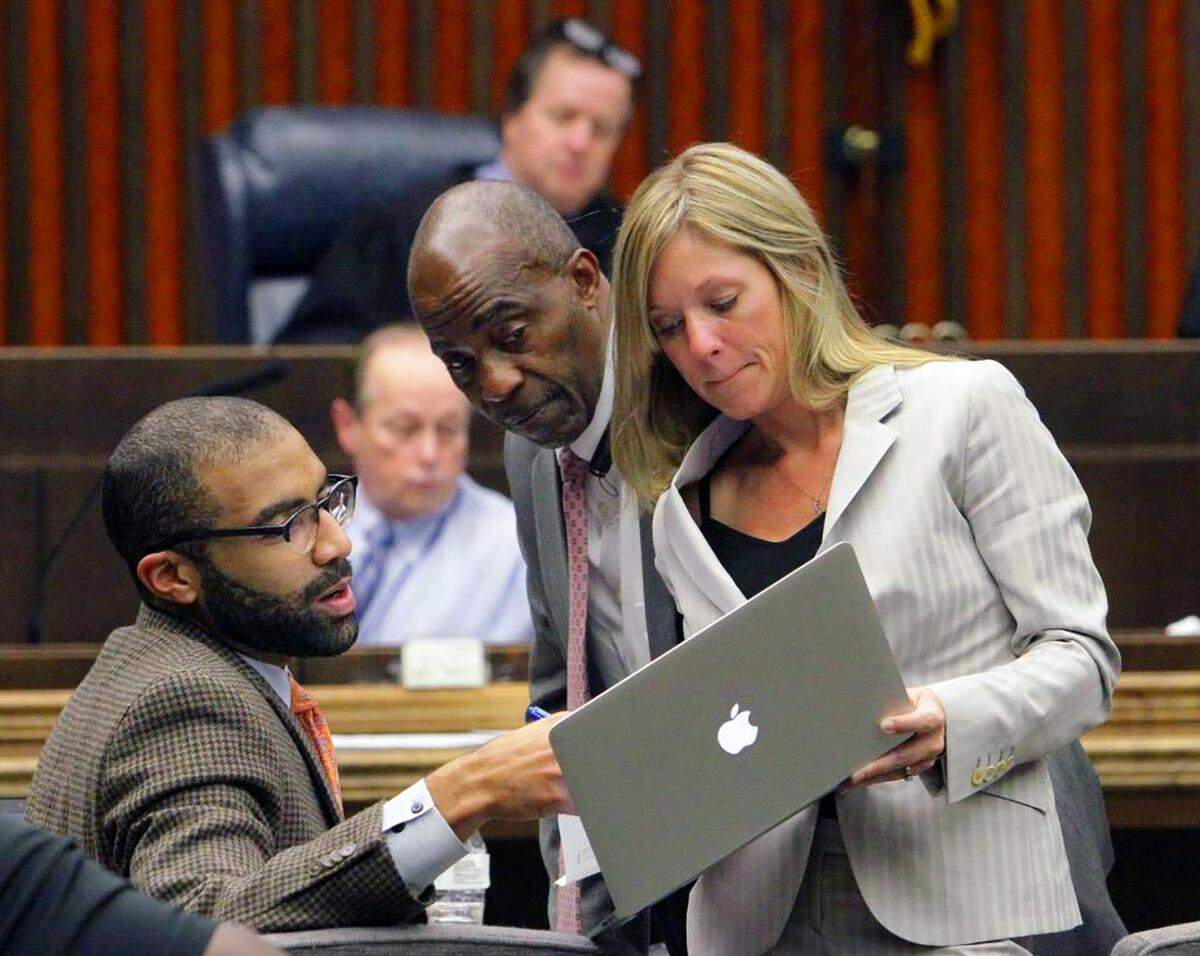
A Columbus native who didn’t plan on becoming a lawyer, Jennifer Curry is not known today for such obscure cases. She’s known for her spirited defense of suspects in some of the city’s most violent crimes.
But those lesser known clients were the ones that taught her, “This could be me.”
Take, for example, the one who was deployed to Hawaii in the armed services while her sister, under her name, was dealing meth in Paulding County. A warrant was issued for the one overseas.
When Curry’s client came home, she was pulled over and held for six hours while her home was searched.
“All of this is happening over a warrant that she knows nothing about, because it’s her sister giving a false name,” Curry said.
It took a year to get the warrant dismissed.
Such accusations can ruin the lives of people who’ve committed no crime, she said.
“Once an arrest is made ... people put it on Facebook, and now everyone thinks this woman is some meth dealer. I look at cases like that and think, ‘OK, this could be me.’ It really could, and what can I do to make it right?,” she said.
Notoriety
Those clients don’t make the news, usually. But these do:
- Rufus Burks, who at 15 was among three youths charged in a brutal 2016 triple-homicide in the Upatoi area, where a 54-year-old woman, her 17-year-old son and 10-year-old granddaughter were bound and bludgeoned or stabbed to death. Burks was the only suspect to go to trial, as the others pleaded guilty.
- William Leonard “Bill” Talley III, a fired police sergeant who pleaded to the 2019 killing of paramedic with whom he was having an affair.
- Tyquez Darnell Davis, found guilty of felony murder in the fatal 2016 shooting of Deonn Carter, an autistic man beloved by local police and firefighters he befriended through his job at a local grocery store.
- Jacquawn Clark, acquitted of murder in the gang-related killing of an alleged Blood who had $40,000 on him in June 2016 at Columbus Double Churches Park. Clark was convicted of robbery.
Curry represented them all, but Rufus Burks stands out.
Burks was the youngest suspect charged with murder for his role in a robbery scheme that on Jan. 4, 2016, left three people dead at a bloody, chaotic crime scene in east Columbus. Trial testimony revealed the teens traveled 20 miles by bicycle and moped to reach the home, and all they gained were some Nike sneakers, clothing, coins and video games.
The public was outraged. Curry got death threats for representing Burks at his 2018 trial.
“They just assumed that Rufus Burks is this horrid monster that bashed in the heads of three innocent people, so it motivated me to get the story out there that he didn’t, and the evidence showed that he didn’t,” she recalled during an interview.
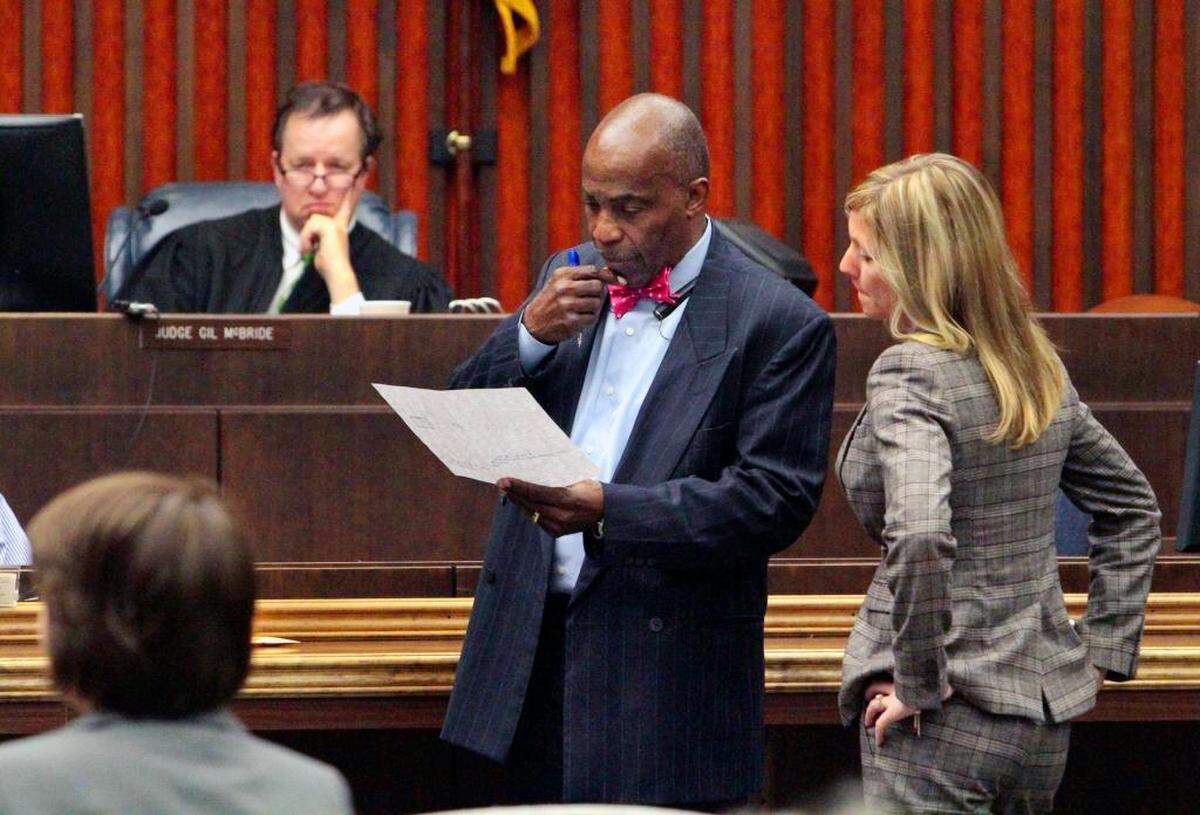
Curry in her closing argument stressed that Burks had no blood on him, and no blood was in the car he drove from the crime scene. That stuck with some of the jurors, whom she spoke with afterward.
“They said they just didn’t believe that he could have killed anyone or, especially as brutal as those murders were, there was blood everywhere, he would have been covered in blood,” she said.
After days of deliberation, the jury convicted Burks on only one of his murder counts, felony murder for an associated offense. He’s serving life in prison.
One juror in that case saw Curry later in a grocery store, around Christmas, told her she was going to burn in hell, and walked off. “I just smiled and said ‘Merry Christmas! Have a good day!” Curry said.
Growing up
The youngest of four siblings, Curry grew up off Double Churches Road in the suburbs of north Columbus. Back then it was the edge of town, where she and the other kids rode bikes, climbed trees, and walked to the American Little League fields to play softball.
Her mother sold real estate and Avon products, and her father managed auto centers for JC Penney department stores, where he later became a merchandizing manager.
She graduated in 2000 from Jordan Vocational High School, which she credits with broadening her horizons: “It was very diverse. We had every socio-economic range you could think of.... I was exposed to a lot of different groups.”
Over the years, she worked at a tanning bed business, as a nanny, and as a clerk in medical coding at the Hughston Clinic. Eventually she got a job at a law firm, as a paralegal.
She was content with that, until she was told at age 28 that her pay had capped out. She looked around and thought, “I can’t be doing this for the rest of my life.”

The attorneys suggested she go to law school.
She had met a guy who lived in Kennett Square, Pennsylvania, and they hit it off, so in 2003 she went to college there for an undergraduate degree in legal studies. Five years later, she moved to Lansing, Michigan, to go to the Western Michigan School of Law, and graduated cum laude in 2011.
She came home, moved in with a friend, and “got by on credit cards” as she studied for the Georgia and Alabama bar exams she passed in 2012.
She began her practice working out of her Mazda 3, keeping her files in bins in the back seat. “I would meet the clients at Starbucks or Country’s Barbecue,” she said. She now has an office in a Historic District house on Broadway.
She didn’t foresee handling criminal cases, when she got her license. She thought she’d be doing civil law, trademarks, financial matters, divorces.
“I was taking some of what were supposed to be uncontested divorces. There’s no such thing, apparently,” she said. The last involved a fight over custody of a couple’s dogs: “It was awful.”
‘This could be me’
Taking a few criminal cases spurred an interest in clients’ Fourth Amendment rights: “I saw search warrants that I didn’t feel had strong probable cause,” she said. “Little things like that started getting my attention.”
That’s when she realized, “This could be me,” she said: “The police could come into my house, and then we’d have to question the warrant later.... They can take cash, take TVs, computers. We have a lot of civil forfeitures where law enforcement takes everything.”
It carries a stigma that reverberates.
“The neighbors want them out, once they see law enforcement kick in the front door,” she said. “They lose their job just based on an arrest. If they are already divorced, they immediately lose custody of their children. If they do lose their job, then of course they have the issue of paying for their home, paying for their car, child support, all these things.”
Some clients get fired without being charged, she said: “I’ve seen that happen in the counties around here a lot, where my client is fired the next day, because the boss catches wind of an investigation, without an arrest.”
One client chewed out her accountant for not filing her taxes. The accountant accused her of terroristic threats. No charge was filed, yet she lost her state government job the next day, and had to “jump through hoops” to get it back, Curry said.
Some are jailed before police investigate a crime, not after, she said. Without a grand jury indictment, the defendant can’t even admit the crime, to proceed to sentencing.
That’s more like a presumption of guilt than of innocence, she said, and she wishes the public understood the costs:
“The public needs to know that their tax dollars are supporting that jail, and so when individuals are sitting there, for five, six, seven years, and can’t even enter a guilty plea, it’s not their fault. But it’s the taxpayers that are feeding them, clothing them, and keeping the power and water on.”
‘She’ll fight’
Curry’s devotion to the job has impressed colleagues.
Robin King was a prosecutor in the William Talley case: “She reviews every bit of discovery that she receives,” said King, who’s now with the public defenders office. “She spends a lot of time with her clients and their families.”
And she doesn’t back down, King added. “She’s not afraid to go to trial.... She’ll fight. She’ll scrap.”
Columbus attorney Mark Shelnutt represented one of Rufus Burks’ codefendants.
“She doesn’t seem intimidated by the courtroom,” he said. “She’s got poise and determination and a knowledge of the law, and everything anyone could ask for.”
Representing Burks earned Curry no enmity from Shameika Averett, who lost her daughter Gianna, mother Gloria Short, and brother Caleb Short in the triple homicide.
“We knew she had a job to do,” Averett said.
Curry is 39 now. Though she would like to live by the beach, she’ll likely stay here, where she grew up, and where she chose to return, after law school.
“I think my practice is going to keep me right here,” she said. “Columbus has been good to me.”
This story was originally published August 25, 2021 at 6:00 AM.