
Live updates: ‘You have to play by the rules.’ Mark Jones spars with judge on day 1 of trial
This is the first day of testimony in suspended Columbus district attorney Mark Jones’ trial on charges of misconduct during his first few months in office.
Attorneys on Monday picked a jury of nine women and five men, with two serving as alternates, who will decide whether Jones is guilty or innocent on nine felony charges alleging he tried to influence witnesses, to persuade a detective to commit perjury, and to bribe staff prosecutors. Gov. Brian Kemp suspended him from office on Oct. 4.
Katonga Wright of The Wright Legal Group entered the case on Jones’ behalf Monday morning, replacing his previous counsel, Christopher Breault. Wright asked that the trial be postponed so she can prepare, but visiting Judge Katherine Lumsden rejected the request.
Wright and the prosecutor, Deputy Attorney General John Fowler, started questioning jurors around 10 a.m. Monday, and had their jury decided shortly after 6:30 p.m. The two alternates will be available to replace any of the 12 trial jurors who can’t finish the case.
Live updates
5 p.m.: Judge Lumsden recesses court for the day. The trial will resume Wednesday morning.
4:37 p.m.: As Chris Bailey hangs up after his recorded phone conversation with Mark Jones, he can be heard cursing, saying, “Unf--king believable.” Fowler asked him why he cursed. Of Mark Jones, Bailey said, “His comments and everything he said felt like a disingenuous lie.” Bailey afterward dropped his court motion complaining about Jones’ staff. He told Fowler he feared Jones would sabotage his uncle’s case if he pressed the issue.
Under Wright’s cross examination, Bailey admitted that Jones did not tell him directly to drop his motion.
4:04 p.m.: Fowler is playing the recording of Chris Bailey’s telephone conversation with Jones, regarding Bailey’s filing a motion complaining that Jones’ office violated the state victims rights act. Jones on the call says he believes the primary suspect in the death of Bailey’s uncle Danny Jones can be indicted for murder, though he already had been indicted for involuntary manslaughter and released from jail. “I’m comfortable re-indicting it,” Jones says, but he doesn’t “want any conflict” with the victim’s family.
Jones tells Bailey a special prosecutor can take the case if Bailey is displeased with how Jones’ staff has handled it, but suggests he should keep the case. “I’m the best friend you’ve got, man,” Jones says.
Bailey says he doesn’t want another prosecutor; he just wants the family treated fairly under the victims rights law. “We just feel like we got kicked in the teeth,” he says.
“You’ve got to think about optics on this,” Jones later tells Bailey, saying Bailey’s motion makes it looks like the prosecutors and the victim’s family are in conflict. Jones suggests re-indicting the case, getting a warrant charging the suspect with murder, and holding him without bond.
“I feel like if you give us a chance, man, we won’t let you down,” Jones says, asking Bailey to come speak to a grand jury about the case, though Bailey did not witness the fight that led to his uncle’s death.
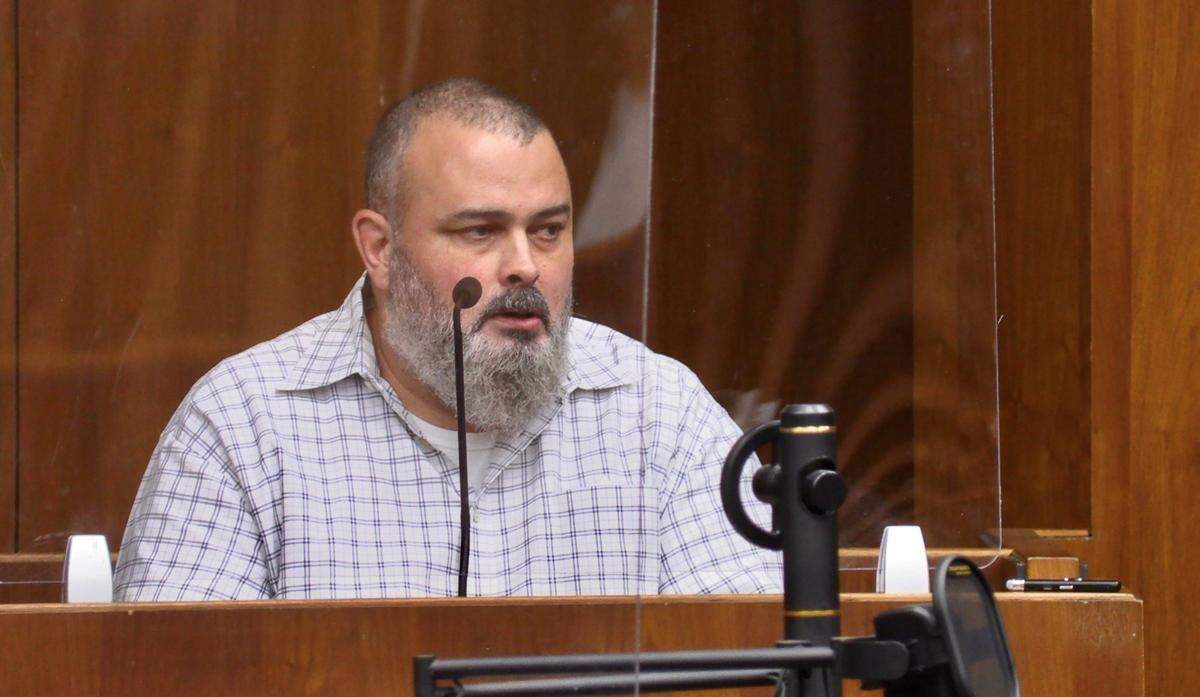
3:30 p.m.: As court resumed after a break, Fowler called to the stand Chris Bailey, the nephew of a Columbus man fatally injured during a fight over children playing basketball in the street in a north Columbus neighborhood. Bailey’s uncle was Danny Jones, who died in the hospital. Bailey later filed a court motion complaining that his family was not notified when a suspect’s bond was reduced and the suspect subsequently was released from jail. Jones allegedly threatened Bailey to make him withdraw that motion.
Bailey’s motion alleged that Jones’ office violated the Georgia Crime Victims Bill of Rights by not notifying the family of the suspect’s bond reduction nor giving relatives a chance to address the court about it. When Jones called him about the motion, Bailey recorded the phone call, which lasted about 30 minutes.
Fowler said he intends to play the recording for the jury “at the appropriate time.”
3:15 p.m.: As Schwartz’s testimony concludes, the judge orders a brief recess so jurors can stretch and use the restroom. Court is to resume at 3:30 p.m. with Fowler’s next witness. The prosecutor has declined to say whom he will call next.
2:33 p.m.: Schwartz said Jones assigned her to Judge Maureen Gottfried’s court in March, asking her to get cases ready for trial in a week. She found some cases that could be ready, but none was a homicide, which Jones had prioritized. As she was leaving his office after a meeting, Jones said he really wished she had a murder case ready, and added, “I’ll pay you $1,000 if you try a murder case next week, $1,000 out of my own pocket,” she testified.
In a separate incident in June, Schwartz was meeting with a victim’s family on a murder case when Jones joined the gathering, she said, and as he was leaving, he told her, “I’ll pay you $1,000 if you get a conviction in this case.” Schwartz was shocked: “I was mortified,” she said, adding she explained to the family that she is not paid extra for convictions.
Under Wright’s cross examination, Schwartz acknowledged that Jones never paid her any of the extra money he allegedly offered for murder convictions.
2:15 p.m.: “Our job is to represent the public’s interest,” Schwartz said of prosecutors, whose duty is to seek the truth. They take an oath vowing to accept no compensation other than their salaries, she said: “You can’t take bribes, obviously. You can’t take gratuities.” Offering a bonus for convictions gives prosecutors a personal interest in cases beyond their duty to seek justice, she said: “I can’t have a financial interest in the case.”
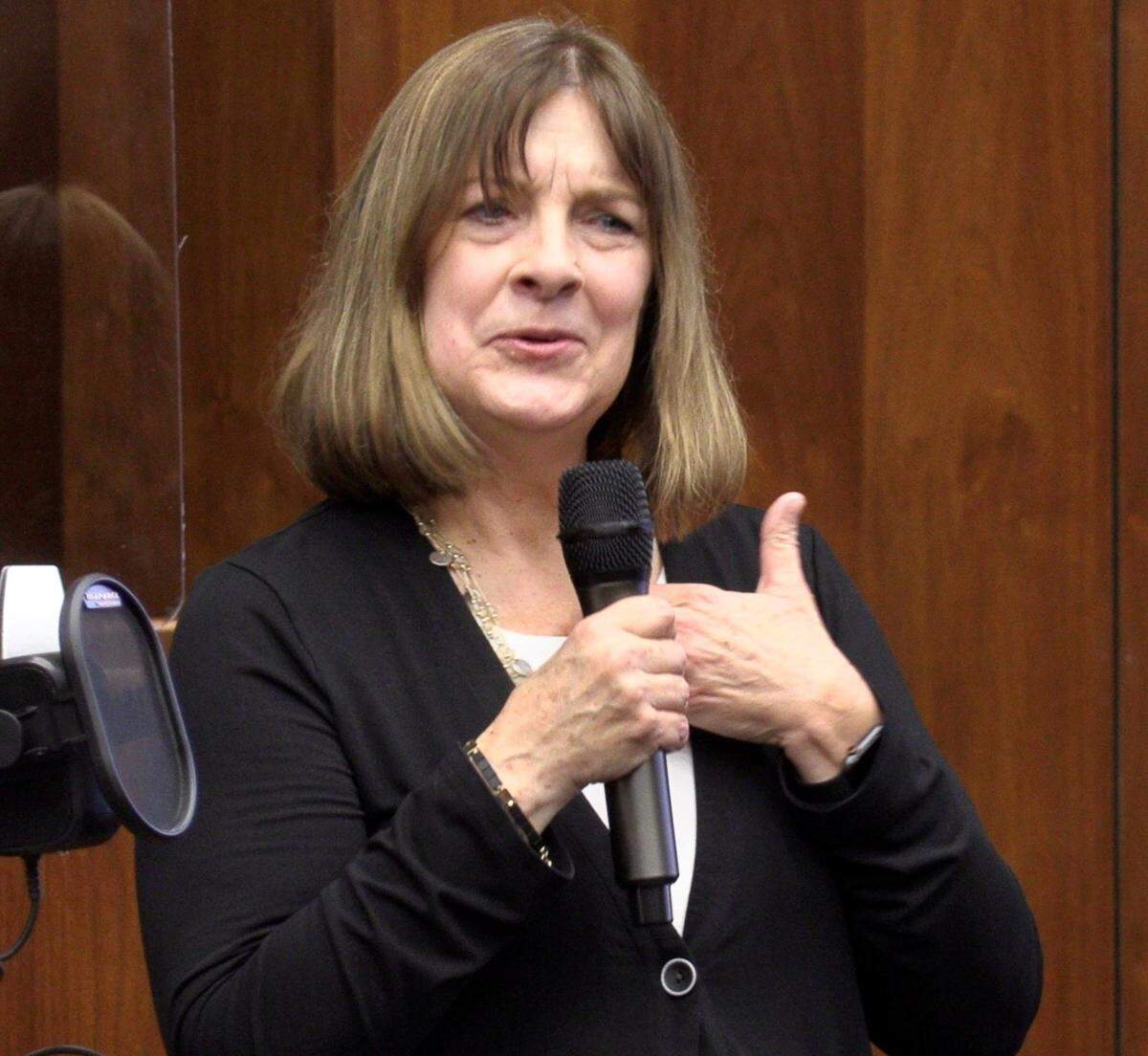
1:47 p.m. Assistant District Attorney Kimberly Schwartz has taken the witness stand, testifying to how prosecutors do their jobs, and what they are not allowed to do. Jones is accused of bribing her by offering her $1,000 to win convictions in murder cases.
11:54 a.m. The court has recessed for lunch. Lumsden asked jurors to return by 1:15 p.m. for the trial to resume.
So far only two GBI agents have testified. When the agency was asked to investigate Jones, they said, the Columbus office had a conflict since it’s involved in cases the DA prosecutes here. The matter was referred to the GBI’s Perry office.
11:35 a.m.: “I’m going to ask you to hold someone with great power responsible for what he did,” Fowler told jurors as he concluded his opening statement. Jones’ lawyer Katonga Wright told the jury to hear all the evidence before passing judgment, saying Jones has angered critics with his comments and actions, but has committed no crime. “If the facts don’t fit, you must acquit Mr. Jones,” she said.
11:10 a.m. “With great power comes great responsibility,” prosecutor John Fowler repeated to jurors in his opening statement, telling them district attorneys have a duty to seek justice and the truth, no matter how bad crime gets. He summarized Jones’ allegations, delving into Jones’ conversation with a homicide detective Jones told to charge a defendant with murder, after the suspect was accused of involuntary manslaughter.
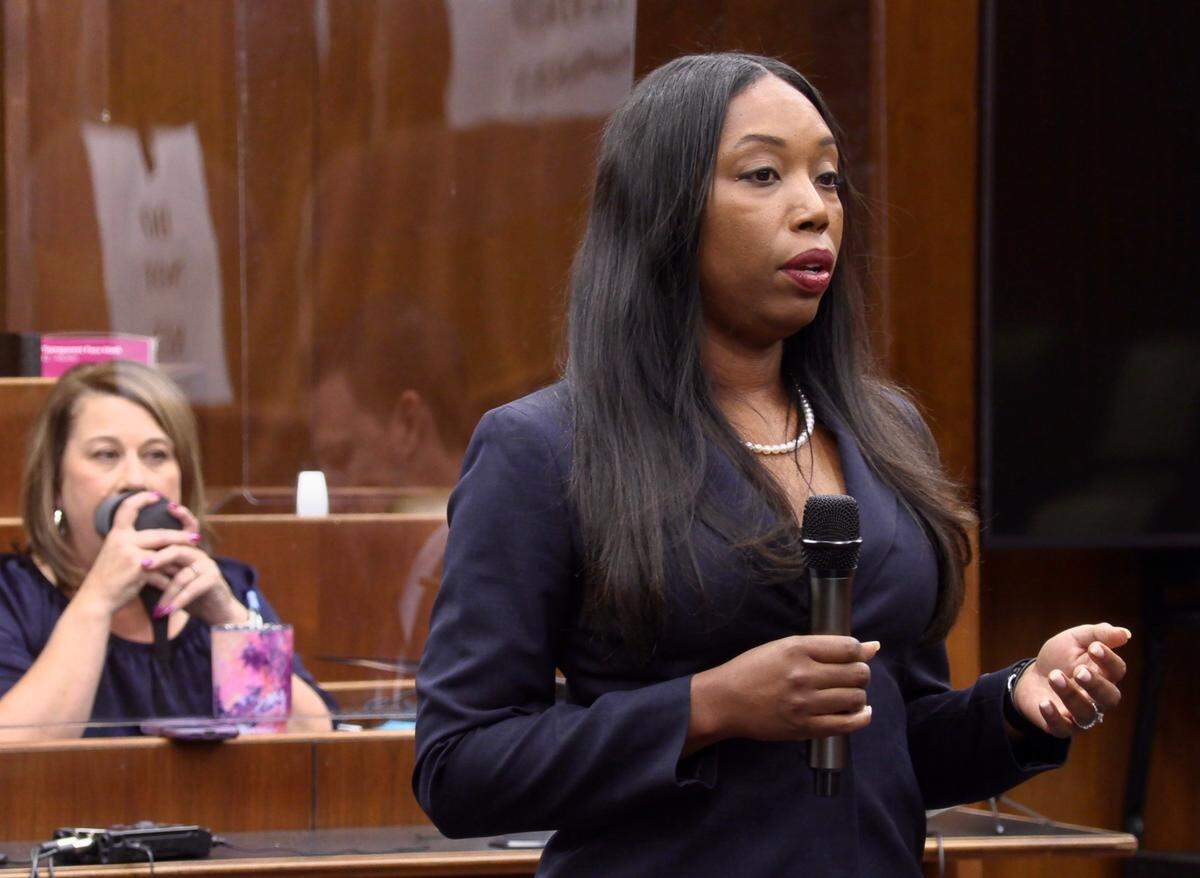
10:48 a.m. The jury finally was ushered into the courtroom, where Lumsden outlined the basics of the law. “This defendant is presumed innocent until he is proven guilty,” she said, adding that proving guilt “beyond a reasonable doubt” does not mean beyond all doubt.
10:30 a.m.: Lumsden quashed the defense subpoena for Pam Hodge. She said Forrest Toelle may bring Jones’ city laptop to the courtroom, as the defense requested, so she can determine whether Jones’ work emails are relevant. She also said police may bring the investigative file on the Elijah Farral case to court, so she can examine that. She rejected a renewed defense motion to postpone the trial, and said she was ready to bring the jury in for initial instructions.
10:15 a.m.: The judge gives Jones’ attorney until 6 p.m. to pare down the defense witness list to those whose testimony may be relevant to exculpatory evidence, or those named in Fowler’s evidence lists. “Unless you know more than what’s on this list, we’re not going to find them anyway,” she said.
It would be unfair to the prosecution to admit all the witness testimony without giving Fowler time to prepare, she said, but she will make some accommodations for the defense. She told Jones’ attorney, “I’m trying to balance your client’s rights, a little bit, in spite of himself.”
9:54 a.m.: “I’m not going to allow any of this,” Lumsden said of Jones’ last-minute subpoenas, after she took a brief recess.
She outlined the timeline she had set for sharing evidence between the defense and the prosecution, including a scheduling order issued Oct. 8, and additional instructions for providing evidence during an Oct. 21 motions hearing. Fowler earlier told the court that he got a list of witnesses from the defense five days ago and another list Sunday night, the combined total coming to around 200 names, some of them only nicknames with no further identification.
Lumsden said Jones’ case must be tried during this court term, which concludes at the year’s end, or Jones returns to office for lack of prosecution.
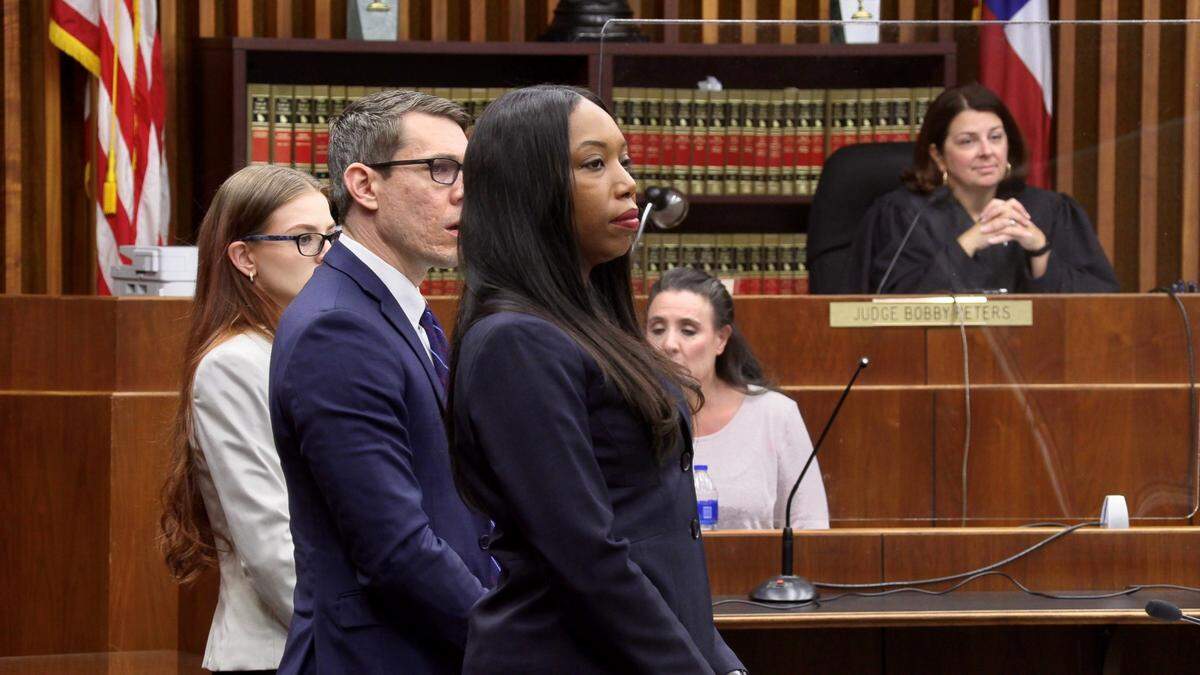
9:30 a.m.: Attorney Jim Clark, who represents the city government on contract, told Lumsden that Jones also has subpoenaed Columbus Police Chief Freddie Blackmon, Deputy City Manager Pam Hodge, and Forrest Toelle, the city’s head of computer services. He has asked for the entire investigative file in the involuntary manslaughter case against Elijah Farral. Jones is accused of influencing witnesses for telling a police detective that Farral should have been charged with murder. Lumsden again noted that this is the first day of trial, and such subpoenas should have been sent weeks ago.
9:20 a.m.: The judge told Mark Jones to stop interrupting her, because he now has an attorney to speak for him and no longer represents himself. “You have got to sit down and let Ms. Wright represent you,” she said. When Jones spoke again, she said, “You’re still talking.”
9:05 a.m.: Fowler informs the court that Jones’ defense sent out a flurry of last-minute subpoenas for records from the DA’s office and a list of witnesses, well after the deadlines Lumsden set in her trial schedule.
In regard to a witness involved in an old homicide case summoned from outside the county, Jones argued he has a constitutional right to call a witness in his defense.
He should have done that two weeks ago, Lumsden said. “Mr. Jones, you’re a professional. You’re a lawyer. This is your business.... You have to play by the rules.”
Fowler noted that Jones also sought financial records from Assistant District Attorney Kimberly Schwartz, whom he’s accused of bribing. Jones said her finances are relevant because of that charge, and he has a right to delve into her background.
“No, that’s not how it works, Mr. Jones, unless you’re in third grade,” Lumsden replied. Schwartz is not the defendant on trial, Jones is, she added. She quashed the subpoena.
This story was originally published November 9, 2021 at 9:13 AM.