
Private analysis of Columbus police says micromanagement hurts morale, officer retention
The Columbus Police Department suffers from low morale and staffing shortages, including micromanagement, poor information sharing and other deficiencies, according to a privately funded report obtained by The Ledger-Enquirer.
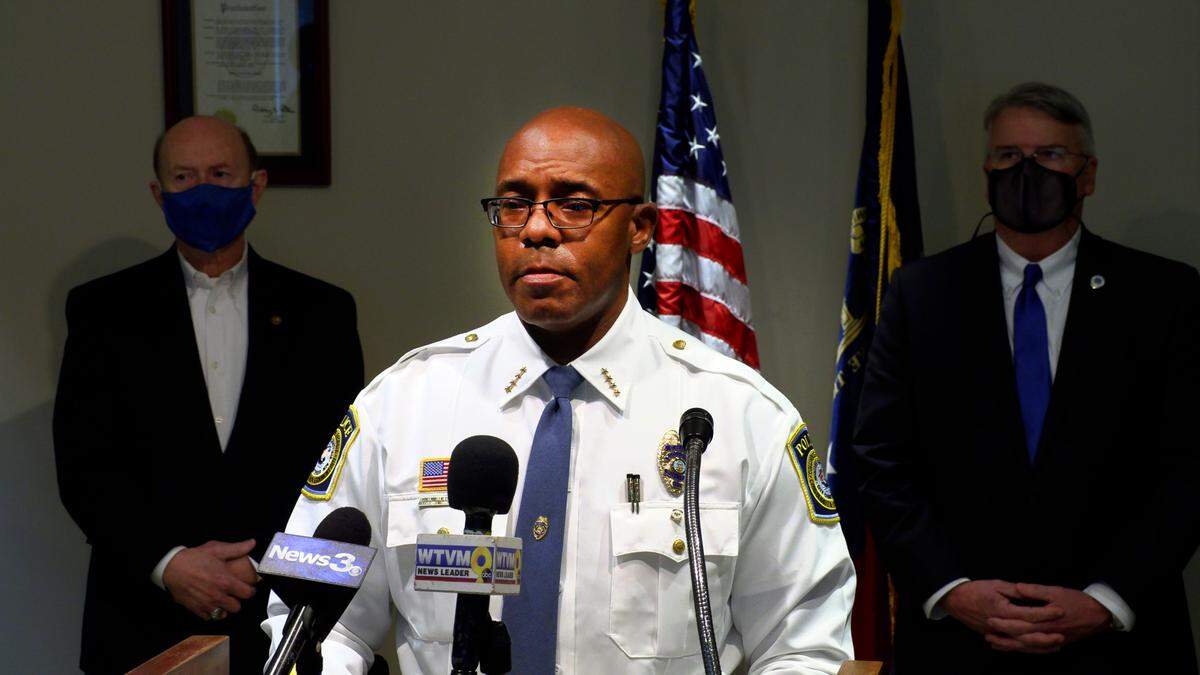
The 132-page draft report compiled by the consulting firm Jensen Hughes has been sent to city leaders. Police Chief Freddie Blackmon has responded to some of its findings in a letter to Mayor Skip Henderson.
Henderson told the Ledger-Enquirer the analysis will be made public when it is completed. But the draft dated Nov. 11 already is being circulated privately, and portions have been posted to social media. The Ledger-Enquirer secured a copy from a confidential source.
The issues cited echo some of the criticisms of Blackmon the local Fraternal Order of Police raised to Columbus Council in February 2022.
“There are a few areas of this assessment that present some concerns,” Blackmon wrote the mayor on Nov. 23. “For example, the report relies heavily upon an external survey from the Fraternal Order of Police. This survey has not been verified in its processes or documentation, and its neutrality is certainly in question.”
The report said the FOP last year surveyed 232 officers, and 84% said they had no confidence in Blackmon’s ability to treat officers fairly, ensure their safety and reduce crime. The FOP at the time said its survey covered at least 70% of the force.
A repeated criticism in the report alleges Blackmon micromanages the department, does not give his supervisors sufficient autonomy to make decisions themselves, and communicates poorly with his command staff and the police force as a whole.
“We were frequently told the chief has created an environment of micromanagement, and while the department has some talented commanders, they are not being effectively utilized,” the report stated.
The report also noted “a general feeling of distrust among the department’s rank-and-file,” and added, “The lack of communication with the chief was voiced frequently in interviews.”
Titled “Operational Assessment of the Columbus, GA Police Department,” the report was funded by “a group of leading Columbus businesses” concerned about “a perception of a rising crime rate in Columbus, a perceived increase in gang activity and issues related to the Columbus Police Department that have arisen over the past several years.”
Henderson declined to identify the business interests involved. The people who privately fund such efforts in Columbus typically do not want credit, he said. The city appreciates their contribution, he said, calling the report a “road map” for future action.
Blackmon in his letter to the mayor thanked those funding the study: “The businesses of Columbus who made this investment have provided a benefit not only for our police department, but also our community at large.... It is my plan to use this as a toolkit and review all opportunities to serve our citizens in a more efficient and strategic manner.”
Baltimore-based Jensen Hughes is an international consulting and engineering firm that has worked with other police departments facing crisis situations.
According to a May 2022 Ledger-Enquirer report on the firm’s presentation to Columbus Council, regarding the proposed study here, the firm conducted an assessment of the Louisville, Kentucky, police department after officers fatally shot Breonna Taylor in her apartment in March 2020. Jensen Hughes also offered the Minneapolis Police Department suggestions on how the agency could better handle crowd control after assessing police response in the days after officers killed George Floyd.
The officer shortage
As with other law enforcement agencies, retaining officers here has long been a problem. The department has hired 300 officers since 2016, but 400 left over that same span, the report said. The department is allocated 444 sworn officers, and as of Oct. 10 had 307, it said.
When the chief formed a committee to study attrition, it got little input because lower-ranking officers did not think it would make any difference, the report said.
“Given the opportunity to provide input, we were told many declined, stating it would not matter, nothing would come of it, and they felt their concerns would not get addressed.”
The retention committee finished its work in March 2022 and found that though police pay was a persistent issue, “it was secondary to poor morale -- the perceived result of micromanagement in leadership.” Some officers left for lower-paid jobs elsewhere “due to sentiments about the way the department is being led,” the report said.
While questioning officers, the analysts found that “most of those interviewed stressed poor leadership impacted employee morale and was the primary reason for departures,” and felt “all significant operational and personnel decisions in the department were made by the chief, or one or two confidants, resulting in indecision or untimely delayed responses that create uncertainty and impede the ordinary course of operations.”
These conclusions comport with a 2021 Columbus State University analysis of the department, which found that aside from pay, “the lack of respect/fear of retaliation, lack of leadership and micromanagement were expressed as top weaknesses of the department,” the report said
Blackmon did not immediately return a call seeking comment.
Other findings
Among other deficiencies cited in the draft report were a lack of experienced investigators and shortages in units devoted to targeting some criminal activity, particularly street gangs.
Here are some of those findings:
Is crime up or down?
The report also reviewed crime statistics over three years, finding murders and assaults increased, robberies dropped and auto thefts surged:
- Murders: 38 in 2019; 42 in 2020; 63 in 2021.
- Robberies: 399 in 2019; 300 in 2020; 260 in 2021.
- Aggravated assaults: 404 in 2019; 460 in 2020; 691 in 2021.
- Auto thefts: 852 in 2019; 613 in 2020; 1,064 in 2021.
Said the Jensen Hughes report: “The increase in motor vehicle theft was a central point of discussion throughout our assessment; we heard from one prominent business leader who had their vehicle stolen from a parking garage in mid-afternoon.”
Besides the felony offenses that agencies define as Part One crimes, the report had data for lesser offenses designated Part Two crimes, many of which also decreased:
- Stolen property: 217 in 2019; 178 in 2020; 151 in 2021.
- Sex offenses: 85 in 2019; 61 in 2020; 50 in 2021.
- Disorderly conduct: 756 in 2019; 483 in 2020; 382 in 2021.
- Fraud: 749 in 2019; 745 in 2020; 645 in 2021.
- Drug offenses: 418 in 2019; 92 in 2020; 32 in 2021.
“Overall, the Part Two crimes have been going down, but that is mostly due to the decrease in drug offenses,” the report said, noting that “drug offense numbers are often the result of proactive policing efforts.... As such, the number of drug offenses has decreased potentially due to reduced proactivity in identifying such crime.”
Similarly, the report said aggravated assault data may be skewed by how it’s recorded: Shooting an occupied dwelling could be counted as one assault victim or several, depending on who’s inside, and in 2021 patrol officers counted shooting unoccupied homes as assaults, until directed to call that criminal damage to property.
Police define murders as cases involving murder charges, excluding homicides ruled self-defense or manslaughter. The count of all homicides over the past few years, as tracked by the Ledger-Enquirer, showed a peak of 70 in 2021, and investigators have cited a gang war as a significant factor.
Columbus’ overall homicide counts are 46 in 2020, 41 in 2019; 34 in 2018; and 44 in 2017.
What’s next?
Mayor Henderson said he knows the draft report is in wide circulation. “I’m not at all concerned about that,” he said, because he intended to make the final report public anyway.
The city’s 10 councilors have seen it, and it’s already provoking some discussion of how to address the findings, he said.
Among the next steps will be a formal presentation from Jensen Hughes to council, likely in February, Henderson said, when the firm can explain its methodology and elaborate on its conclusions.
This story was originally published January 27, 2023 at 12:16 PM.