
‘There will be a reckoning.’ Three-week Columbus ‘Insane Crips’ murder trial nears end
A Columbus jury now will weigh the fate of three alleged gang members accused of killing one of their own during a 2021 gathering of “Insane Crips” at Wilson Homes apartments.
Prosecutors in closing arguments Thursday tried to persuade jurors the trio is guilty of murder in the death of Marcel Samedi, while acknowledging that no one on trial intended to shoot the 21-year-old South Carolina man, who authorities said was also in the gang.
The suspects are accused of causing Samedi’s death while committing felony assault and gang violations at the apartment complex, where they allegedly were on a “mission” for a senior gangster in a dispute with another.
When a 9-millimeter hollow-point bullet hit Samedi in the left temple, during a barrage of gunfire that left a dozen shell casings outside Building 108, his cohorts left him for dead, and did not report the shooting.
Samedi’s body remained unidentified for a week.
“He was discarded on June 5, 2021,” Assistant Attorney General Thomas Kegley told jurors, adding that a senior gangster’s ordering retaliation for disrespect triggered the shooting, illustrating “what happens when disrespect leads to the death of one of your own.”
The men on trial are Corey Troupe Jr., 26; Davion C. Dupas, 22; and Jahiem Rashard Davis, 21..
Witnesses said they were acting under the direction of senior or “original gangster” Michael Douglas “Pop” Brown Sr., 48, a leader of the Insane Crips in the Dimonwood neighborhood.
Brown, who’s accused of gang violations in the case but has not been captured, had been taunted by Makenzie “Mac 10” Pearce, 31, an OG with the Insane Crips based at Wilson Homes, witnesses said.
Elysia “Big E” Cooley, 19, a codefendant who testified for the prosecution, said she and the suspects were dispatched twice that night in Wilson Homes, and Samedi did not return from the second outing.
Cooley said Samedi was among gang members who came here from Rock Hill, S.C., for a “C-call” or “Crips call,” a summons for the gang to gather. The event at Wilson was for Douglas and Pearce to settle their dispute, but Pearce did not show up, she said.
Because the suspects were on a gang mission when Samedi died, they all are parties to the crimes committed, and share responsibility for his death, Kegley argued. “It’s as if each had a hand on the trigger and pulled when Marcel was shot,” he said.
Their indictment had more than 50 counts, though jurors are to decide only on charges against the men on trial, and not those filed against Cooley and Brown. Visiting Judge Richard Winegarden had 18 pages of instructions to read to jurors to guide their deliberations, which could be lengthy.
The trial took three weeks, including three days of jury selection, with 28 witnesses and multiple exhibits of evidence.
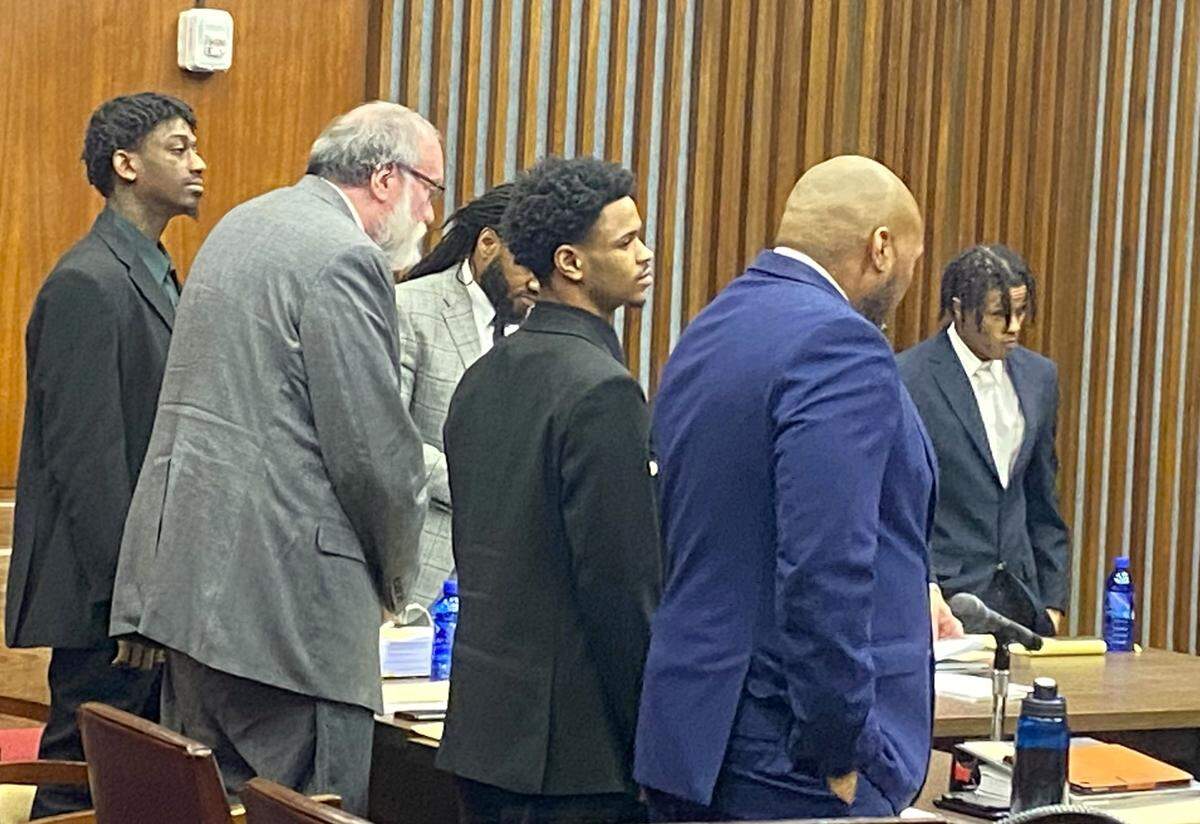
Who shot Samedi?
Among the first defense attorneys to address jurors Thursday was Shawn Hoover, representing Davis.
He said the attorney general’s gang prosecution unit had deluged jurors with a mass of information on gang culture and history, but scarcely addressed Samedi’s shooting.
“They turned a murder trial into a gang case,” Hoover said. “This case isn’t about all of the gangs in Georgia.”
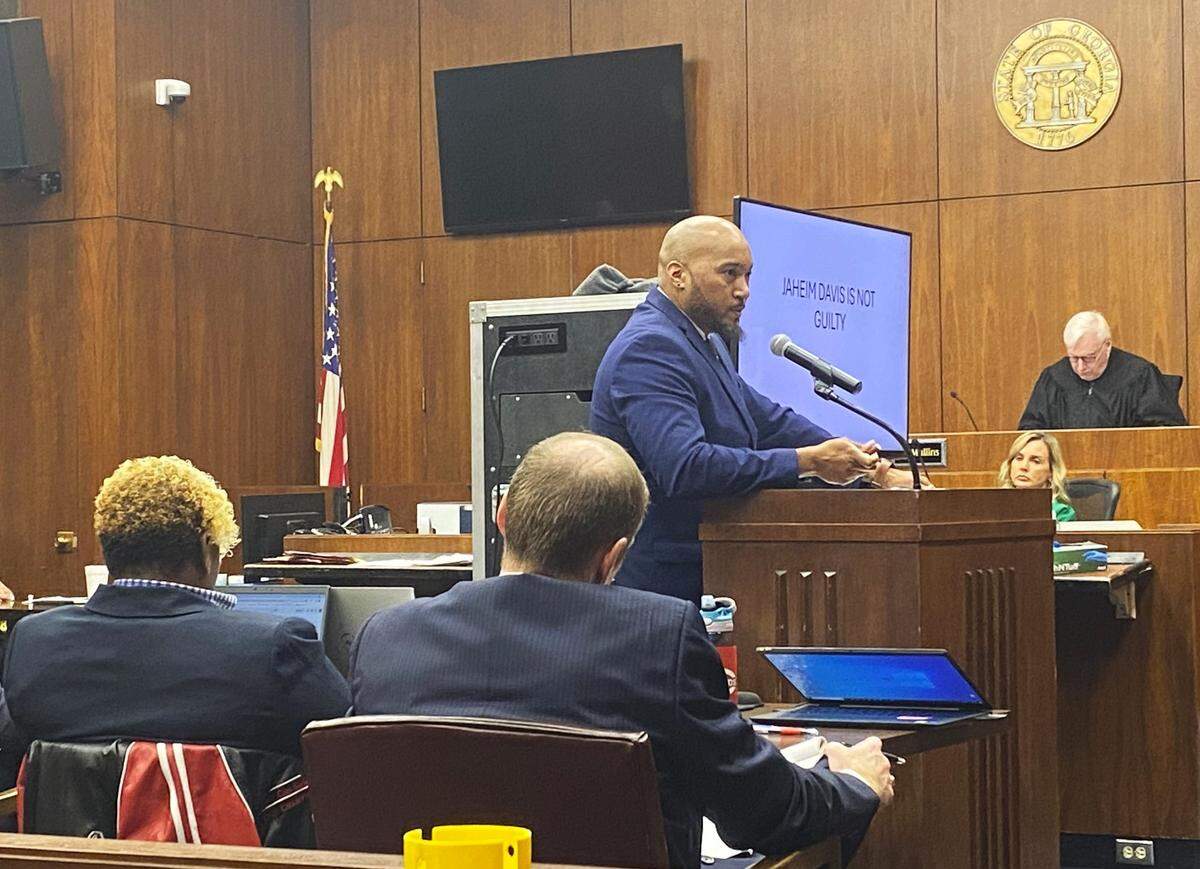
No witness testified that Davis was seen with a gun the night Samedi was shot, or that Davis played any significant role in the errand that led to Samedi’s death, he said.
Instead witness Michael Scott “Ike-Ike” Barker testified that Davis had walked away when the gunfire began, Hoover said. He argued that Barker, who admitted firing a 9-millimeter in the direction he heard the first shots coming from, was likely the gunman whose bullet hit Samedi.
Troupe’s attorney, William Kendrick, used the same theory, saying Barker, who was not charged in the case, was in a position to fire from Samedi’s left, which is where the fatal shot came from.
Kendrick told jurors all the charges against his client required the prosecution to prove Troupe caused Samedi’s death by firing a gun that night, and no proof was presented.
“They’ve got to have it,” he said. “That’s an essential element. It has to be proved beyond a reasonable doubt.”
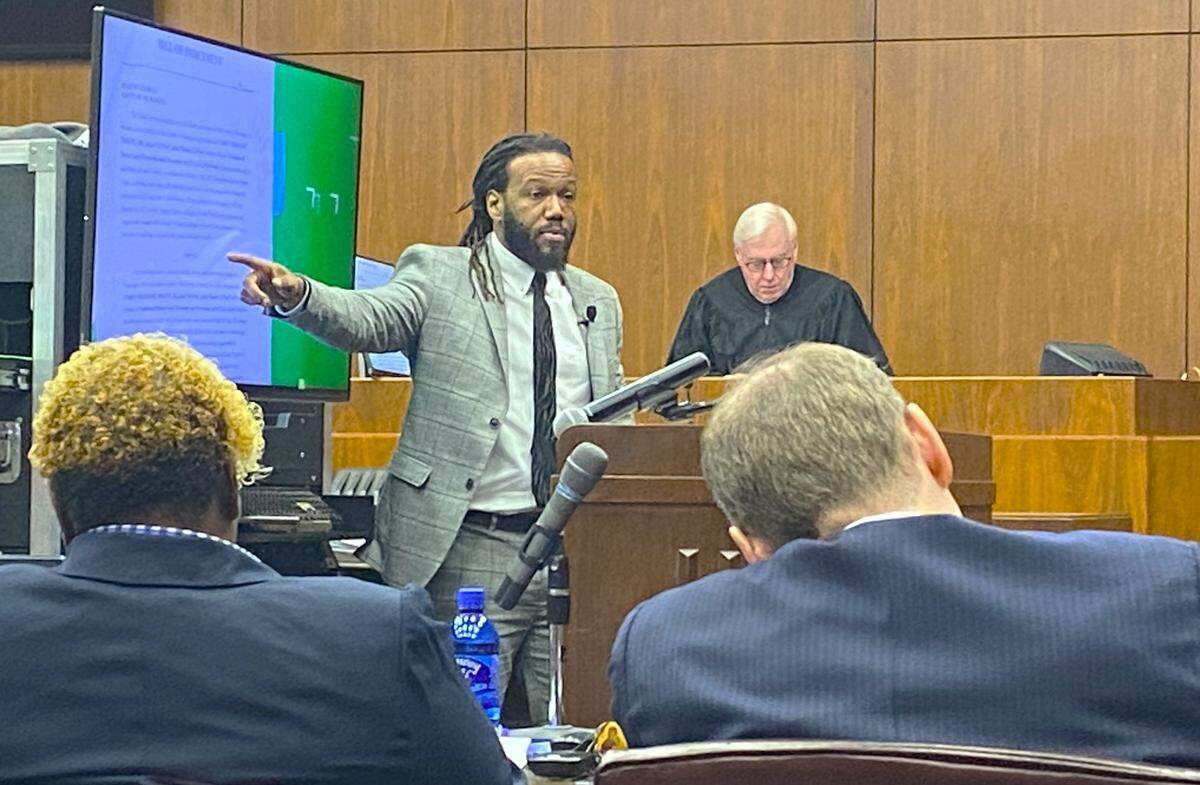
Dupas was represented by attorney Adam Deaver, who like Hoover and Kendrick told jurors Barker likely fired the shot that killed Samedi. That should invalidate all the charges, because prosecutors never alleged Barker was involved in the gang operation the charges are based on, Deaver said.
Though Cooley testified for the prosecution, she still faces multiple felonies in Samedi’s shooting, and has yet to resolve those. Kegley said others who were involved may face arrest later.
“We’ll deal with that another day,” he said. “There will be a reckoning.”
Cooley was indicted on the same charges as Troupe and Dupas.
Troupe, also known as “Lil Pop,” and Dupas, known as “Yungdemon Dee,” were tried on six counts of violating the state Street Gang Terrorism and Prevention Act, two counts of felony murder and one count each of aggravated assault, using a firearm to commit a felony, and first-degree criminal damage to property.
Jahiem Davis, also known as “Zhg Jah,” faced eight counts of violating the Street Gang Terrorism and Prevention Act, three counts of felony murder and one count each of aggravated assault, using a firearm to commit a felony, first-degree criminal damage to property, and being a convicted felon with a firearm.
Each defendant faces life in prison if convicted.
This story was originally published February 22, 2024 at 12:30 PM.