Columbus teacher gives firsthand lesson from her NASA flights on ‘really cool aircraft’
Before students arrived for her astronomy class, Columbus High School science teacher Laura Solomons shared what she hoped they would learn from the unusual lesson she was about to present.
“They might not want to do science,” she told the Ledger-Enquirer, “but I can encourage them to do something with science.”
Solomons also wants her students to appreciate the value space science has for the world.
“We need to advance our knowledge,” she said. “Learning about space helps us learn more about Earth.”
By the end of the class, she seems to have succeeded.
What is SOFIA?
“We’re going to talk about a really cool aircraft,” Solomons told the 26 students as they settled into their seats.
In a combination of show-and-tell and summer vacation report, Solomons gave her students a real-life lesson about space science from her June flight on SOFIA (Stratospheric Observatory for Infrared Astronomy) and her 2010 flight on the KC-135 aircraft nicknamed the Vomit Comet.
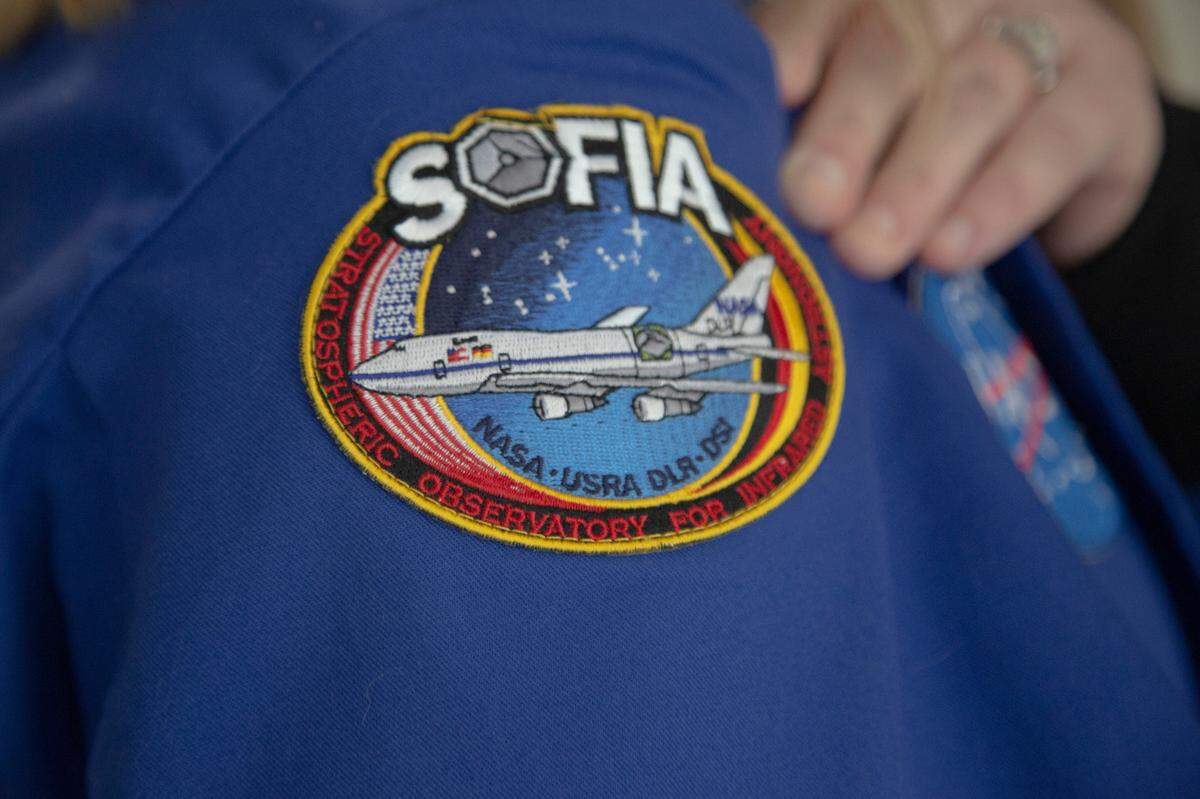
SOFIA is a modified Boeing 747SP airplane carrying a reflecting telescope with an effective diameter of 100 inches (8.3 feet). It reaches 38,000-45,000 feet in altitude amid the stratosphere — above the clouds for a clear view of stars and planets. Cruising altitude for commercial passenger jets typically ranges 31,000-38,000 feet. Space is considered to begin at 62 miles altitude (327,360 feet).
“You could see the sun setting into the clouds,” Solomons said. “… We saw planes underneath us going to Hawaii.”
SOFIA’s altitude also puts it above 99% of Earth’s water vapor. This allows SOFIA to observe the infrared waves emitted by many objects in space that often are invisible.
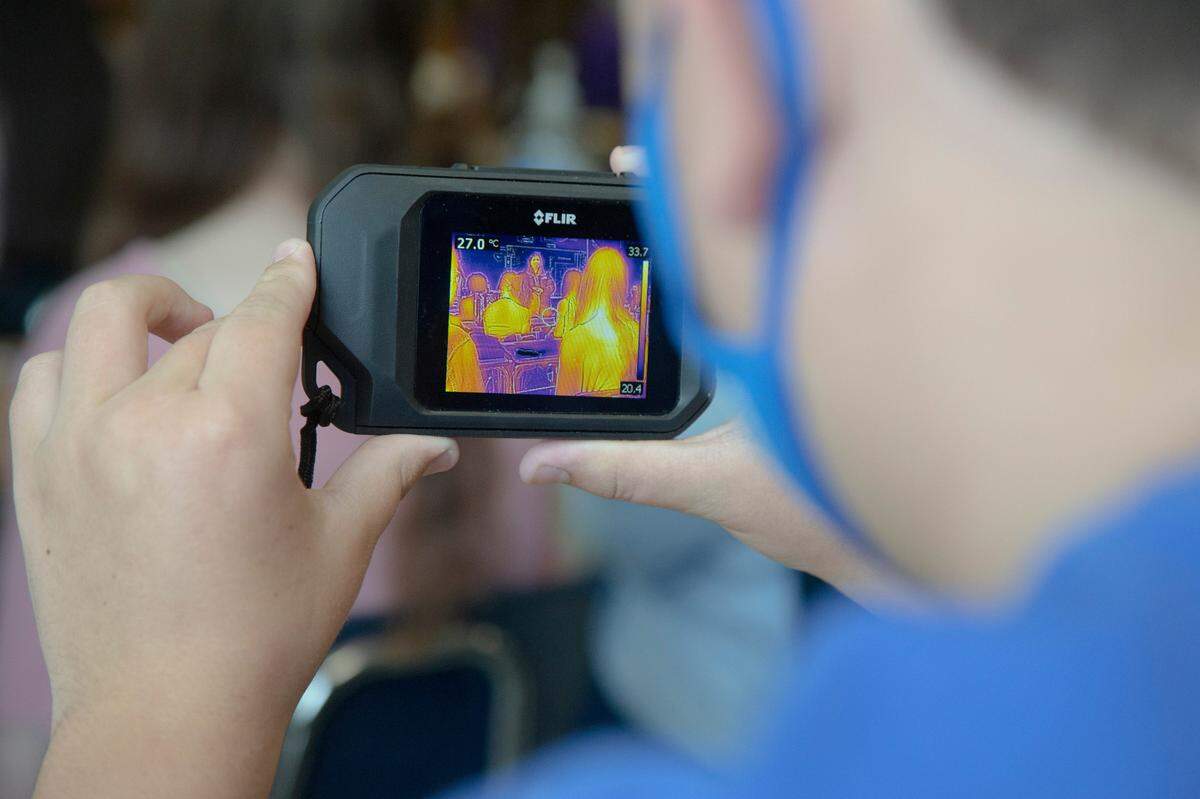
To demonstrate, Solomons passed around to her students the infrared camera NASA gave her. The camera measures the temperature and infrared energy of objects in low-light environments and converts the data into an electronic image.
During the 10-hour overnight flights from Palmdale, California, scientists on SOFIA can collect data to study planets, comets, black holes, magnetic fields and more.
SOFIA’s greatest claim to fame is being the aircraft that enabled NASA to confirm in October 2020 the existence of liquid water on the Moon.
As a passenger on her flight, Solomons couldn’t see any celestial bodies through the telescope, and the data was kept confidential at the time, but she could see images of stars on the computer stations in the aircraft.
Most importantly, Solomons’ experience made her instruction more compelling for her students.
“I think it’s really cool to interact with people that have done stuff like that,” said CHS senior Trae Tolbert.
“It makes our experience better to learn from someone who’s actually been there,” said CHS senior Nicolette Villacorta.
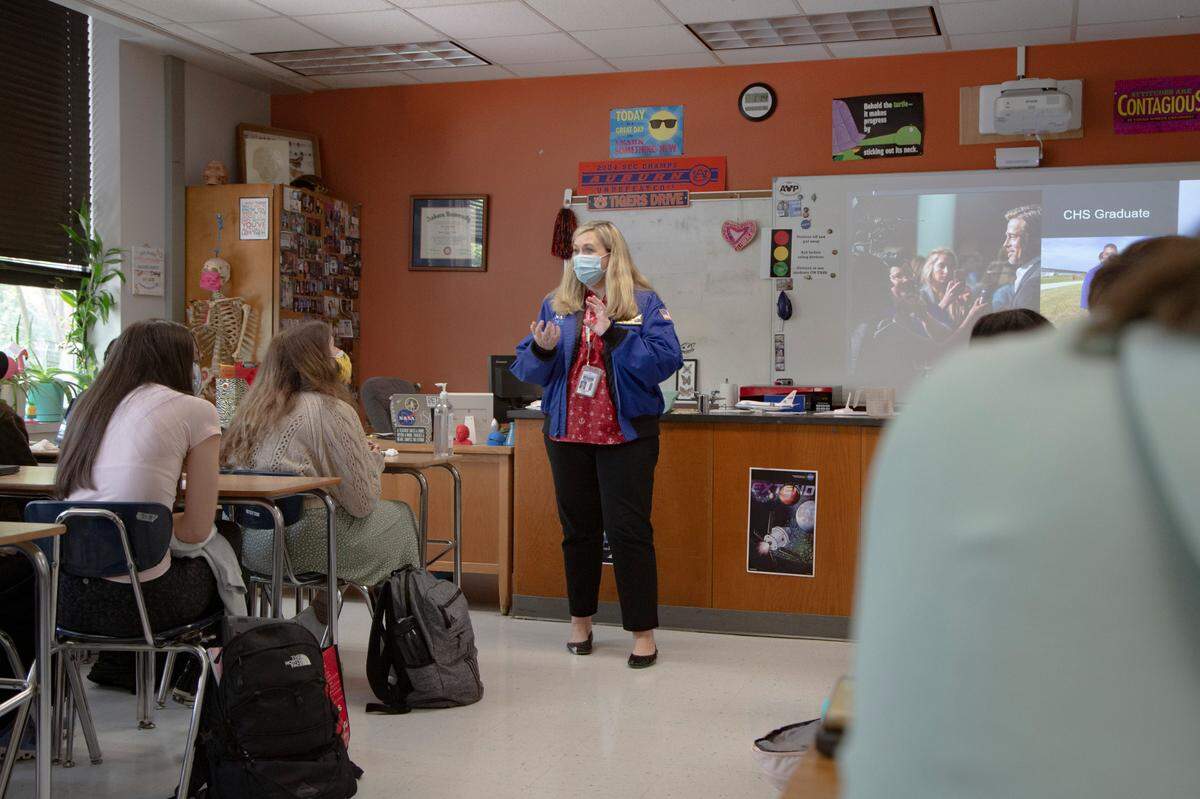
Solomons explained why NASA provides teachers this all-expenses-paid experience.
“They want us to come back and talk to you about it and learn about it,” she told the class. “… They treated us like rock stars.”
Solomons learned about the SOFIA flight opportunity from a NASA representative at a 2018 science teachers conference. She was among 28 teachers selected. Three were on her flight, along with one from Kentucky and another from Texas.
What is the Vomit Comet?
Solomons also told the students about her 2010 flight on NASA’s KC-135 aircraft nicknamed the Vomit Comet, which simulates microgravity. She was on this flight to accompany an experiment CHS students in the Columbus Space Program had sent onboard.
The 4½-hour flight from Houston includes 45 parabolic trajectories that create periods of microgravity, starting at 20,000 feet altitude. The parabolas produce complete weightlessness for about 25 seconds and simulated lunar gravity for about 40 seconds.
Feeling her body levitate, Solomons said, was “kind of like balloons were all over me. … It was amazing.”
Microgravity suddenly ends when the aircraft comes out of the parabola, so passengers must quickly return to a safe position, or they could fall and hurt themselves, Solomons said.
“You’re trying to grab stuff and pull yourself down so you can be seated and don’t smack down,” she said.
NASA jobs
Solomons emphasized to her students that they don’t have to be a rocket scientist to work for NASA. Just like any organization, space science and other high-tech fields benefit from a staff with diverse talents and skills.
“NASA needs computer programmers,” she said. “They need artists. They need public relations officers. … NASA needs every type of career.”
For example, Solomons said, Columbus High graduate Tahira Allen is a communications strategist for NASA in Washington, D.C.
CHS senior Jacob Tran was grateful to hear that from his teacher.
“It’s exciting how there are a multitude of careers that are possible at NASA,” he said. “… It’s really eye-opening.”
This story was originally published September 2, 2021 at 11:15 AM.