
Physically being where creative greats were formed has special power to help students
There is power in place. Here in Columbus, plots of land have been called home by men and women who would change the world – men like Eugene Bullard and Dr. Pemberton, women like Ma Rainey and Carson McCullers to name a few. While each of them has departed this life, bits of their legacies are left behind in old shotgun homes or historical markers. The imprint of history can be felt in a very present way as we engage physically with our surroundings.
I am teaching a new class this fall. It is an English major writing course that I’ve centered around texts that were inspired by the city of Columbus. We began by reading the poem “Ma Rainey” by Sterling Brown, a moving tribute to the late, great mother of the blues and her massive fan base. Now we are reading “The Heart is a Lonely Hunter” by Carson McCullers. Eventually, we will read my play “Ace: The Eugene Bullard Story” and other texts.
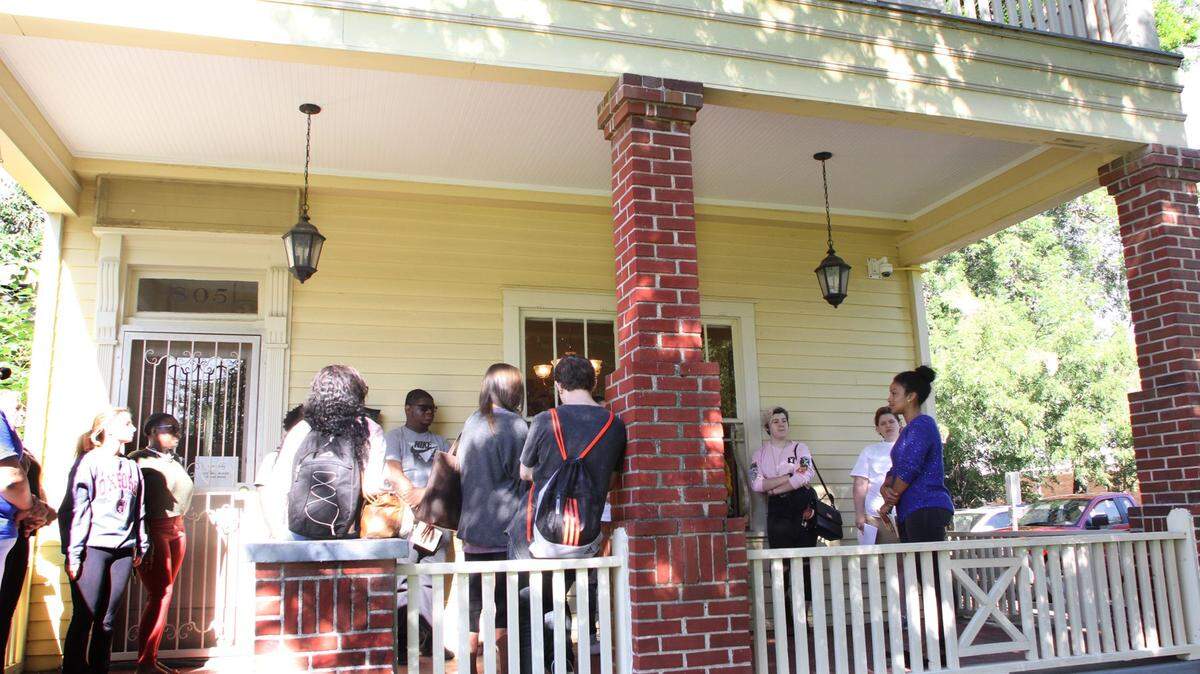
What makes this new class particularly exciting to me is that for each new text we read, we take a field trip to a location in town that is tied to that text. A few weeks ago, we visited the Ma Rainey House and Blues Museum, where museum Director Deb Wise told us fascinating stories of the life of Gertrude Pridgett, later known as Ma Rainey. We walked through her shotgun house on 5th Avenue that she shared with her mother, her husband and eventually her children. We touched the tiger oak custom bed frame and dresser and peered at the old costume jewelry that Ma died wearing in that very house. We saw her old piano, ivory keys yellowed with age and use, and were transported to a time we never knew.
This past week, we visited the Carson McCullers Center for Writers and Musicians on Stark Avenue. Director Nick Norwood took us through the home where Carson lived as a child. We learned about her family, some of the friends she had, and spent time reading her book out in the backyard where we could picture young Carson humming classical music to herself and dreaming up stories. As we study the book, we are able to situate ourselves quite comfortably in the world that Carson traversed through 90 years ago.
The students’ first writing assignment was to write about a place that held a special meaning to them in the past. I asked them to consider how it has changed over the years. Students wrote about their childhood homes, the woods out behind grandma’s house, their parents’ old pickup truck or the classroom where they first learned to read. They identified that as the years passed, the pickup truck broke down. The woods behind grandma’s lost their magical quality and turned into a bunch of old trees. But they found that when they returned, even in their mind’s eye, to these special places – the power of those memories was still strong.
As you walk around downtown today, or spend time in the garden out back, take a moment to acknowledge those that have called that place their own before you. There are so many and while they may be long gone, an imprint still remains.
Natalia Naman Temesgen is a playwright and professor of creative writing at Columbus State University in Columbus, Georgia.