
Is it silly to care what a groundhog does? No, it’s an important tie to our pasts
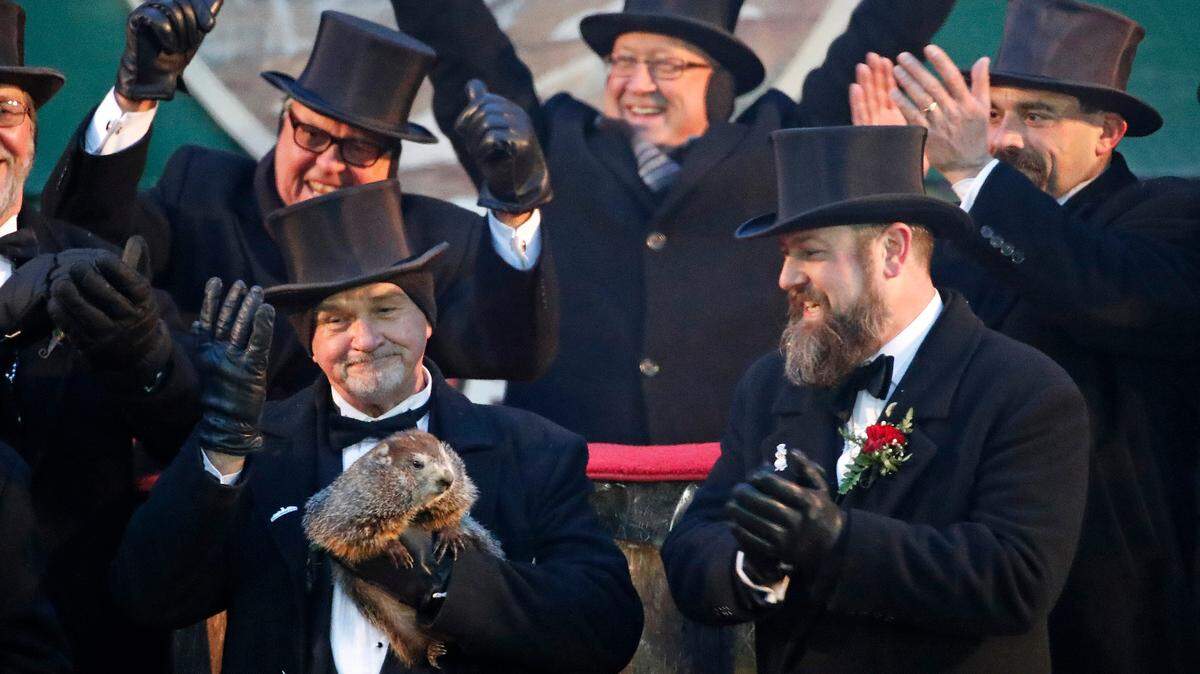
It’s Groundhog Day. I’m going to venture a guess that regardless of what Punxsutawney Phil sees this morning, we are not in for six more weeks of winter in Columbus. The forecast for the month is pretty mild. (Trust me, I’m not upset about it.)
But Phil’s prediction still means a lot to North Americans, if only for tradition’s sake. Groundhog Day derives from a Pennsylvanian Dutch superstition and has been covered in the media since at least 1886. Canada and the United States participate in the tradition annually. We watch a large, somewhat adorable rodent in the winter morning air, and determine whether its shadow is present or not. The outcome is a very long-term weather forecast. Even meteorologists with excellent technology are only 50 percent correct with forecasts 10-days out or longer.
No matter how silly or strange Groundhog Day may seem, we have been participating in the tradition for over 130 years. It raises the question: What is the purpose of tradition when its practical application is no longer relevant? Our modern culture is obsessed with progress and innovation. Tradition is, for some, becoming a negative term, synonymous with an antiquated perspective. But many traditions, relevant or not, are worth preserving. Here are some benefits:
1.) You become more aware of your (or others’) heritage and history.
Perhaps many readers do not come from West German lineage. The Dutch Pennsylvanian superstition may not belong to your family heritage, but it does belong to our national heritage as Americans. The long-standing history of America is that through a multitude of distinct cultural backgrounds and perspectives, a unified and diverse collective emerges stronger. In examining the roots of Groundhog Day (and other traditions), we learn more about American history, its immigrant population, and the cultural foundations of our country. Sometimes we look at traditions in this way and find a malignant history. This is still worth our attention: In observing shortcomings of the past, we are more likely to avoid them in the future.
2.) You are more open-minded.
This sounds a bit backward, doesn’t it? How does participating in some old tradition make a person more open-minded? Well, experience tells me that when a person idolizes the idea of change and rejects of the ways of the past, they become less likely to connect with those that have different ideas. Similarly, when someone is obsessed with preserving the ways of the past, they are unable to consider any alternatives.
If we see traditions with a loving, yet objective lens and put them in their proper historical context with respect and care, we are able to both remember and reflect on the lives and experiences of those that came before without sacrificing a sense of what our future may hold. We become less judgmental of others, because we have a broader understanding of what humans consider valuable.
Natalia Naman Temesgen is a playwright and professor of creative writing at Columbus State University in Columbus.