
Georgia has new voting laws. How will elections change for Columbus voters?
The fallout from Georgia’s presidential contest and twin U.S. Senate elections continue to ripple through state politics. On the heels of those Republican losses, Gov. Brian Kemp signed a sweeping 98-page bill into law that touches nearly every aspect of voting and elections administration.
In Columbus, the county’s top election official told the Ledger-Enquirer that the new law will result in fewer absentee ballot drop boxes and a likely decrease in the number of early voting sites.
Democratic political organizers say the new law will only motivate voters to learn the new rules and return to the polls determined to win once again. The law, they said, amounts to voter suppression and represents “Jim Crow 2.0” — a knee-jerk reaction by Republicans upset at losing key races.
Top state and local GOP leaders, including Georgia’s top election official, argue that criticism is baseless as the law expands voter access and enacts improved security measures.
What’s in the law?
The Election Integrity Act of 2021 was passed by the Georgia General Assembly along party lines and signed into law by Kemp last week.
Some of the biggest changes center around early in-person and absentee voting. Residents requesting and submitting absentee ballots will have to provide their driver’s license or state ID number to prove their identity. This moves Georgia away from signature matching — something Georgia Secretary of State Brad Raffensperger has pushed for.
“I think another big win for Georgians is that we’re moving away from signature match,” he told the Ledger-Enquirer. “When I ran in 2018, I said that is a very subjective measure. We need to have objective measures, and one of the best objective measures is to use your driver’s license number.”

Deadlines for absentee ballot applications are earlier. Under the new law, applications are due two Fridays (11 days) before Election Day instead of just one. Voters also have to wait longer to request ballots. The earliest voters can request a mail-in ballot will be 11 weeks (77 days) before an election instead of 180 days.
Counties will begin mailing out ballots four weeks before the election — three weeks later than before. Georgia’s runoffs will now be four weeks long instead of nine.
The law expands early voting access to 17 days by adding an additional Saturday and giving officials the option to open polls on Sunday. Weekday early voting hours could increase as counties can have polls open as long as 7 a.m. to 7 p.m., or 9 a.m. to 5 p.m. at a minimum.
Absentee ballot drop boxes — which were not used in the state before 2020 — are now part of state law. Each county must have at least one box, capping the number at one per 100,000 active voters or one for every early voting site (whichever is smaller).
The boxes will no longer be accessible 24/7. Instead, they’ll be moved indoors at early voting sites for use during early voting hours and guarded by election personnel. Raffensperger acknowledged the established drop box limit was not popular with election officials.
“Many election officials would have preferred the bill to have one absentee drop box at every early voting location,” Raffensperger told the Ledger-Enquirer. “I don’t agree with every measure that was passed. But I do agree with many of the other measures that were passed.”
How will changes affect Columbus voting?
In Muscogee County, fewer absentee ballot drop boxes and a likely drop in the number of early voting sites will be among the most notable changes, said county elections director Nancy Boren.
Under the new law, Columbus will be allowed only one ballot drop box compared to the five that were used during the last elections. The solitary box will be located at the City Services Center on Macon Road.
“Voters here had become accustomed to driving up and putting their ballots in,” she said. “That’s a big change.”
Another provision in the bill that bans counties from directly receiving grant funds from private organizations will likely limit the number of early voting sites in Columbus, Boren said.

The county received more than $935,000 from nonpartisan groups The Center for Tech and Civic Life and the University of Southern California’s Schwarzenegger Institute. Election officials used the funds to open four additional early-voting sites in November and five before the January runoffs.
But grant funding may not be completely outlawed. Georgia Public Broadcasting reports the State Election Board is slated to propose a method to receive donations and distribute them equitably to counties by October 2021.
“As it is now, I’m not sure we’ll ever be able to do that again. Hopefully, we’ll have one in the north, one in Midtown and one in the south,” she said. “That’s expensive for voters to fund. We’ll (be) competing for resources.”
Some things won’t change. For example, Boren said, the county was already maxing out its early voting hours.
Most of the law will be in effect for the Muscogee County School Board June special election. Many of the changes for absentee ballots, including new deadlines and ID requirements, will not be enacted. Provisions for new ballot formatting will also not be in effect.
What do election officials, local party leaders and organizers think of the bill?
For folks like organizer Tacara Hemingway and Tonza Thomas, chair of the Muscogee County Democratic Committee, the bill represents “Jim Crow 2.0.”
“These are Jim Crow legacy bills,” Thomas said of the law. “Jim Crow might be gone. But his grandkids are around.”
Hemingway, a Columbus resident, said she wasn’t politically involved before the 2020 elections. She founded My Black Has a Purpose in May 2020 as nationwide protests picked up after George Floyd died under the knee of a Minnesota police officer. The group organized marches in the months that followed, speaking out about racial inequality and police brutality.
Throughout the latter part of 2020, Hemingway partnered with several local and state groups like Black Voters Matter and the Urban League to help register and educate Columbus residents on voting.
When Joe Biden and Kamala Harris carried Georgia and won the White House, Hemingway donned her Biden shirt, laced up her Chuck Taylor sneakers and put on her pearls to take selfies on her white leather couch.
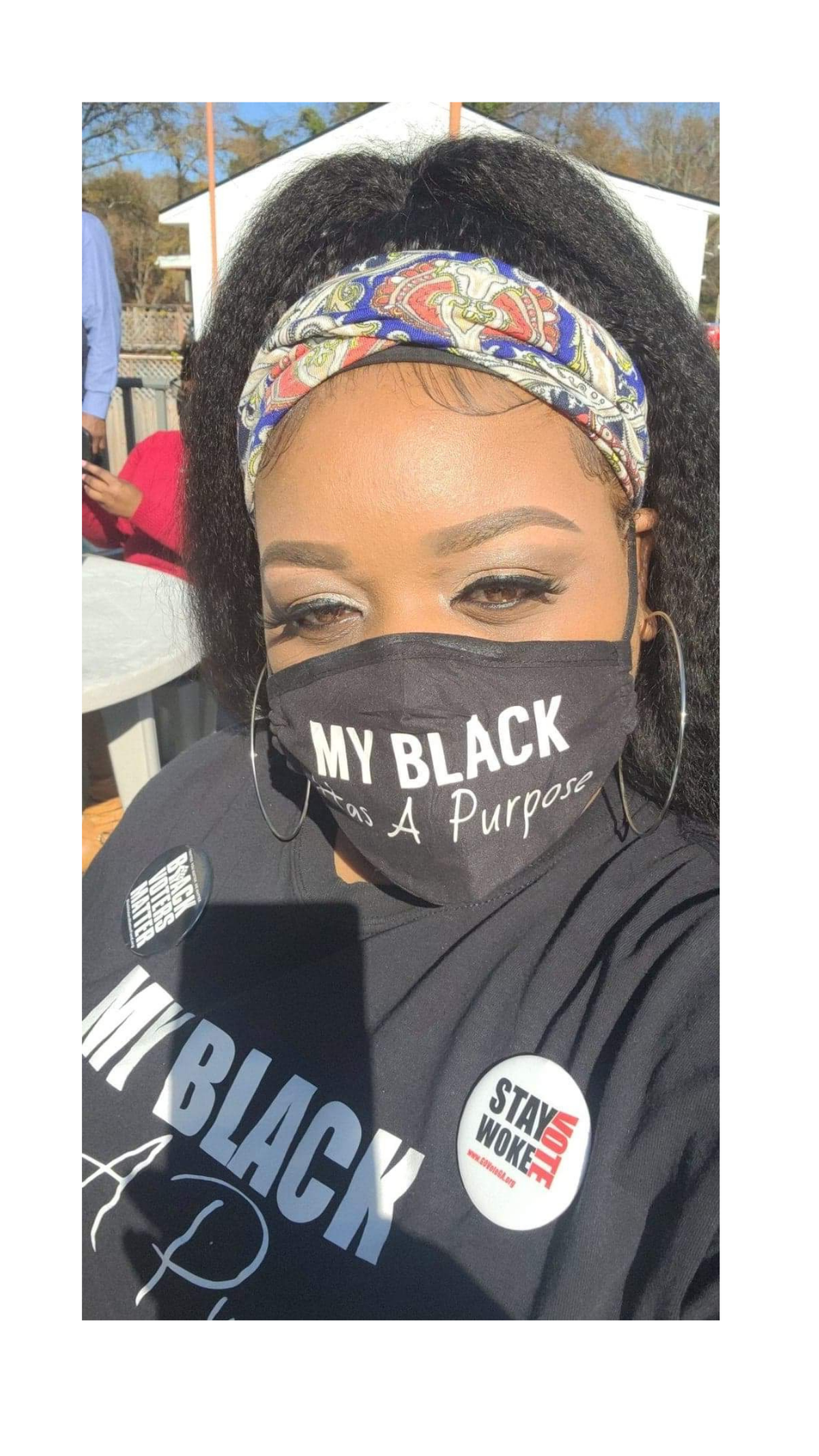
She wasn’t celebrating when Kemp signed the state’s new election law.
“Why are we trying to fix something that isn’t broken,” she said. “After all of the accusations and all of the lies. And the assumptions that there was fraud and finding there was none — why is there still an issue?”
Both Thomas and Hemingway took issue with a section that prohibits anyone except poll workers from handing out water to voters in line.
Under the new law, passing out food and water to voters within 150 feet of a building that serves as a poll, inside a polling place or within 25 feet of any voter standing in line is outlawed. Republican politicians claimed groups used food and water to skirt past limits on political activities near polling places. But some voters waited for hours in long voting lines.
Muscogee County was one of several counties that had issues at polling locations during the June 2020 primary. Technical issues forced all of the county’s polls to remain open until 9 p.m. Voters at Canaan Baptist Church faced long lines throughout the day, and some voters waited three hours to cast ballots.
“If they were to fix and purchase voting machines for these populated cities, we won’t be in line for three or four hours,” Thomas said. “It didn’t take them no time to spring up mass vaccination locations with the ease of moving through. Why can’t we do the same for voting?”
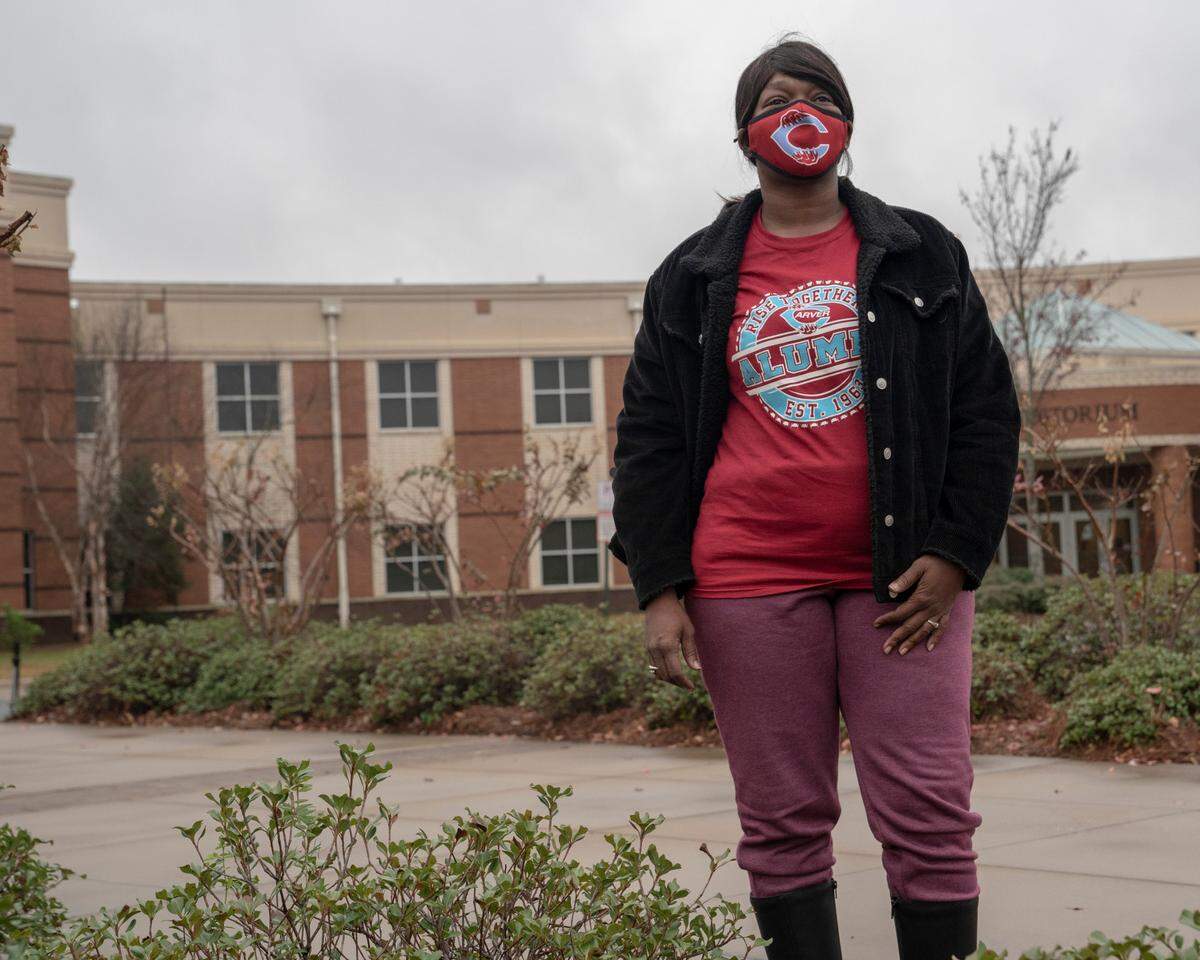
While state law expands early, in-person voting, Hemingway said it wasn’t enough.
“I feel like that was just a way for (Republicans) to say ‘Look, we’re not trying to cause voter suppression,” she said. “But you’re putting drop boxes inside, and you’re only making them accessible during work hours.”
Alton Russell, chair of the Muscogee County Republican Party, said any claims of voter suppression under the new law are false. Russell said the law was “good legislation,” but he added that he wished the law had been more restrictive.
“There’s no voter suppression. None. I don’t see it, but I guess you could make a mountain out of a molehill,” Russell said.
Russell said he supports an end to no-excuse absentee voting. Top-ranking Republicans in the Georgia General Assembly have said they do not support this restriction.
“If you’re disabled or in the military or over a certain age, an absentee ballot should be there,” Russell said. “But because you’re lazy and you want to vote absentee, that’s not a good reason. I don’t want to do that.”
The fight to overturn the law
The election law faces hurdles and challenges that could reverse some provisions and curtail future changes.
Three separate federal voting rights lawsuits have been filed less than a week after Kemp signed the new bill.
The New Georgia Project, Black Voters Matter Fund, the Southern Poverty Law Center, Latino Community Fund of Georgia, Georgia Muslim Voter Project and The Georgia NAACP are among the parties suing Kemp, Raffensperger and other state election officials over the law, arguing its unconstitutionally aimed at suppressing Black voters and other voters of color.
Raffensperger told the Ledger-Enquirer he’s confident his office will prevail in the lawsuit.
Both of Georgia’s newly elected Democratic senators, Jon Ossoff and Raphael Warnock, campaigned on expanding voting rights and ballot access. Ossoff, who visited Columbus earlier this week, stressed the importance of passing federal acts during a tour of the Civic Center’s mass COVID-19 vaccination site.
“This voter suppression law is politicians trying to rewrite the rules of our elections to win instead of what they should do, which is offer better ideas and solutions,” he said. “This voter suppression law targets Black voters. ...It’s why Congress must (restore) the Voting Rights Act to secure the sacred franchise that so many gave so much in pursuit of through the Civil Rights Movement and today.”
Even if the courts don’t overturn the new law and Congress doesn’t pass expanded voting rights legislation , Thomas said Democratic organizers are now more motivated than ever.
“Sometimes, people do things, and they think they are hurting their political adversary,” she said. “It’s a blessing. They just gave us their blueprint. You gave us a lot of opportunity to sit here and plan and coordinate — which we are doing right now in our communities.”
This story was originally published April 2, 2021 at 6:00 AM.