Columbus Councilors and city attorney clash over paying employee’s legal fees
In a heated discussion during Tuesday’s meeting, Columbus Councilors disgreed with City Attorney Clifton Fay over the city’s payment of an employee’s legal fees after an investigation into the Columbus Consolidated Government’s finance department.
Councilor Glenn Davis of District 2 asked whether the city had paid the $37,705 to the Robbins Law Firm of Atlanta and the reimbursement of $5,000 to CCG human resources director Reather Hollowell, for payments she made to the firm. The council voted 6-4 last month to pay the fee and the reimbursement.
There are often a lot of lawsuits against the city, Davis said, and most of the time, there’s a process for paying those costs. This situation did not go through a process before the city received a bill for about $45,000, he said.
“I think it sets a very dangerous precedent,” he said. “I know there are some that question that. It does set a precedent because, if you open that door, there’s no stopping it.”
Davis said he understands the Georgia Court of Appeals decided the fees must be paid and he isn’t questioning that, but he does question whether the amount is excessive.
Councilor Glenn Davis makes the motion
Davis made a motion, after learning that the check was issued on June 21, that the council file a grievance with the State Bar of Georgia over the fees. He argued that they are excessive and that this could set a precedent for others to take advantage of the rule that required the city to pay the fees.
When an official acting in their official capacity is required to hire outside counsel because the city attorney is unable to represent them, Fay said, then the local government must pay a local attorney’s fees if the official is successful in asserting his or her position.
This is the case for Hollowell, Fay told the council during the June 17 meeting and again during Tuesday’s meeting.
The Georgia Court of Appeals repeatedly has ruled this way, he said, and the Georgia Supreme Court upheld this law in 2001.
“We are not bringing you fees and a resolution to pay that are unreasonable,” Fay said. “The fees were looked at by our office. They were reasonable with the market. The court has not said that a local government body can question the fees.”
The fees are paid as an expense of government operation, Fay said.
To go back on this would mean filing another action in court and expending more legal fees, he said, but he doesn’t recommend it.
“You’re probably going to get more of this type of fee request, depending on how the investigation ends up,” Fay told Davis.
Davis agreed with the sentiment that more of this type of request is likely, but he argued Fay is wrong in his assessment that the city couldn’t file a grievance.
Fay argued that a government body can not file a grievance. As the two began going back-and-forth, Davis stated his information comes from the State Bar of Georgia.
“If you want to file an action in the state bar against the attorney, that’s an individual matter,” Fay said. “That’s not a governmental entity decision.”
Filing a grievance would prevent other attorneys from charging excessive fees, Davis argued, saying that “not a lot of attorneys like to have grievances filed against them.”
When Davis made his motion to file a grievance with the state bar, Fay said he does not recommend the council make any resolution claiming the fees are excessive.
“It’s going to cost you a lawyer fee and a lot of expense to file something that’s going to be contested,” Fay said. “I can tell you that right now.”
Davis argued he doesn’t understand the danger in pursuing this, while Fay said doing so would use more taxpayer dollars.
“What does your office do?,” Davis asked Fay. “If we ask you to file a grievance, why can’t you file a grievance?”
Mayor Skip Henderson intercedes
Mayor Skip Henderson interceded. He explained that the city attorney’s office responds to requests for information about whether there is “prudent legal activity” from the mayor and the council.
Davis may file the grievance as an individual, Henderson said, backing Fay’s argument. This path would not use taxpayer money, he said.
“When our city attorney tells us that their recommendation is not to proceed down that road, I think that’s the dangerous precedent — to ignore our attorney,” Henderson said.
Davis disagreed with the mayor. He said that would be a “cowardly” approach. He argued an individual filing would not hold the weight of the council.
“You are free to go get a second opinion, Councilor,” Fay told Davis. “But this office, and this city attorney, is not going to file a grievance against another lawyer whose fees have been authorized by appellate court decisions.”
“Do you want to say that again?” Davis asked.
Fay repeated himself, saying he refused to file a grievance against a lawyer about fees that are authorized by case law. He later clarified that he also has a conflict of interest in the matter, so if the council decides to go this route, then they would have to hire an outside attorney.
Councilor Byron Hickey seconds the motion
Councilor Byron Hickey of District 1 then seconded Davis’ motion to make a resolution to file a grievance. Councilor John Anker of citywide District 9 also indicated he would support Davis’ approach.
Councilor Joanne Cogle of District 7 said, if the city attorney refuses to proceed with this action, then they should find out how much it would cost to find another attorney.
Hickey agreed.
“I don’t think anybody on this council body even saw the invoice,” Hickey said. “I know I didn’t see it.”
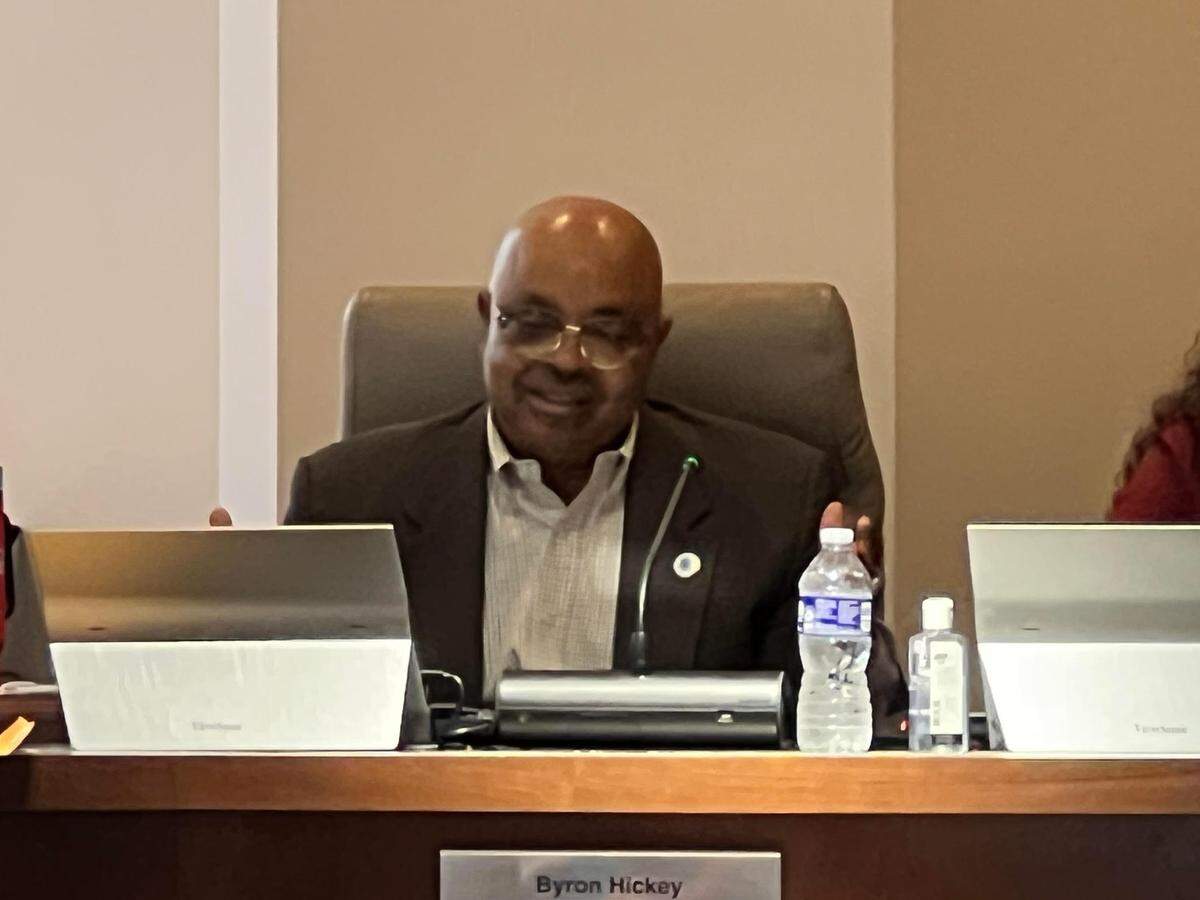
Asking questions about this issue and determining whether an attorney may be willing to file a grievance pro bono would make them “good stewards of taxpayer money,” Hickey said.
Voting on Davis’ motion before finding out how much it costs to file a grievance would not make the council “good stewards,” Councilor Charmaine Crabb of District 5 said.
If the outside attorney is based in Atlanta, Fay said, the estimated costs could range from $500 to $800 per hour. Locally, the range is about $300 to $600 per hour, he said.
Hickey withdrew his second to the motion until they could determinewhether they could find a lawyer locally. Hickey also requested a copy of the invoice for Hollowell’s legal fees.
Davis asked Fay whether he could contact the Robbins Law Firm to ask whether the fees could be cut. Fay agreed but warned he “had a feeling” he knows what the answer would be.
“You may know what the answer is,” Davis said, “but we’re going to research what our options are.”
This story was originally published July 8, 2025 at 1:31 PM.