‘Untouchables’ & pressure to mislead are in Columbus finance investigation report
AI-generated summary reviewed by our newsroom.
- Extended tax deadlines, staffing shortages caused business license backlog in Columbus
- Whistleblower reports about issues led to internal, external audits of Columbus finances.
- Audits estimate city revenue losses range anywhere from $20.1M to $45.1M since 2016.
Editor’s note: This story is the first in a series recollecting how the Columbus Consolidated Government wound up in the midst of a comprehensive investigation into city finances, with several city officials investigated and some charged with criminal offenses.
This year, former Columbus city manager Isaiah Hugley was fired. There have been two arrests related to criminal charges from an investigation into the city’s finance department, and outside attorneys have been hired as the threat of a racial discrimination lawsuit looms.
A 118-page administrative report from the Muscogee County Sheriff’s Office, filled with transcripts of interviews with city officials, local activists and whistleblowers details allegations of toxic work environments, potential cover-ups and pressure to present misleading results to the Columbus Council.
Columbus got to this point through a years-long ordeal involving business tax issues.
Several years of strain within the finance department allow the saga to be traced back to July 25, 2023.
On that date, discussions about a backlog in processing business licenses began during a Columbus Council meeting.
The late citywide Councilor Judy Thomas brought the topic up at the end of the city manager’s portion of the agenda.
“I have had numerous contacts with businesses in Columbus, in Muscogee County, that have not received their 2023 business licenses yet,” Thomas said. “We’re almost to the eighth month, and they haven’t gotten their business licenses.”
She asked Hugley to look into the issue and have a report prepared for the council.
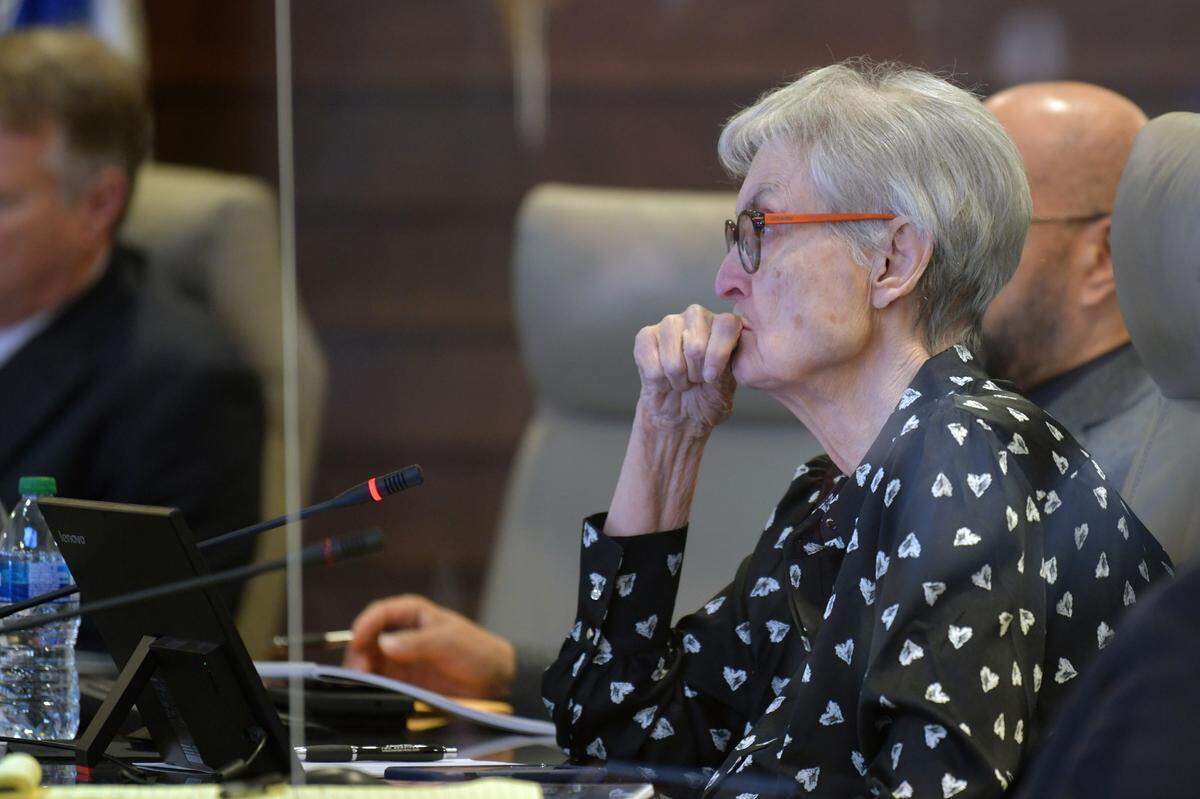
The brief inquiry put in motion a series of events that resulted in Columbus Consolidated Government internal auditor Donna McGinnis standing before the council five months later and reporting that the backlog in revenue collections amounted to $45.1 million.
How the problem began
After a public health emergency was declared in March 2020 during the COVID-19 pandemic, Columbus Mayor Skip Henderson and the council extended the business license tax deadline four times: in 2020, 2021, 2022 and 2023.
This was done because businesses faced economic hardships during the pandemic, according to the city ordinances.
These extensions contributed to the delays in renewal processing, CCG finance director Angelica Alexander told the council in an Oct. 31, 2023, presentation. It typically takes about four to five months to complete renewal processing after the deadline, according to the presentation, and businesses often wait until the deadline to renew.
Extended deadlines created a shorter window for staff to finish their current renewals before the next renewal cycle began. And staffing shortages in the CCG finance department made it worse.
Former CCG revenue auditor Fernando Verdree told investigators that conditions in the revenue department began declining because of staffing issues.
“He stated that as Columbus’ businesses grew, staffing should have grown also, but more and more people were resigning,” investigators wrote in an administrative report from the sheriff’s office, which was obtained by the Ledger-Enquirer through Georgia open records law and detailed the findings of the finance department investigation.
Employees were leaving because of the heavy workload and long hours they weren’t getting paid for, Verdee told investigators.
Along with the extended deadlines and staffing shortages, Alexander said problems with new software and courtesy delinquent notifications not being mailed during the pandemic contributed to the compounding problems in the revenue division.
By the spring and summer of 2023, Columbus councilors and other city officials began hearing complaints about businesses not having their licenses renewed, which is typically done by April 1 each year.
During the same July 25, 2023, council meeting where Thomas requested a report about business licenses, McGinnis discussed with the council the benefits of auditing city departments. Councilors voted unanimously, (except Councilor Bruce Huff of District 3, who was absent) for audits to be conducted, beginning with the city manager’s office, the finance department and the human resources department.
McGinnis indicated during the meeting that her top priority was to audit the finance department.
Whistleblowers and ‘untouchables’
Whistleblowers played a critical role in McGinnis’ audit of the finance department. They began coming forward before the council approved the audit.
McGinnis wrote a letter providing a summary update of the internal audit to Henderson on Aug. 17, 2023, which was included in the sheriff’s administrative report.
In the letter, she described receiving information regarding “conditions within the occupational tax area” from the first whistleblower on April 19, 2023. In June, McGinnis also heard complaints about the department while attending a farewell reception before discussing the need for an audit with the mayor on June 29, 2023.
“The Tax Division had never previously seen an internal auditor, shy of a brief visit from former employee Elizabeth Barfield, prior to her abrupt resignation in February of 2023,” McGinnis wrote in the letter to Henderson.
Less than 24 hours after the council approved the audit on July 25, 2023, a second whistleblower approached McGinnis. She then met with a third whistleblower by July 28 and a fourth whistleblower Aug. 9. Collectively, the whistleblowers have 76 years of service to CCG, McGinnis wrote in the letter.
McGinnis wrote that she received emails from deputy city manager Pam Hodge and finance director Angelica Alexander with concerns that there hadn’t been a formal “kick-off meeting” before the internal auditor made a site visit to confirm and validate information they received from whistleblowers.
“I got the message loud and clear that I was challenging the untouchables,” McGinnis wrote in the letter to Henderson.
In her interview with investigators, detailed in the administrative report, McGinnis said she felt as though employees in the finance and revenue departments faced threats of “being fired and physically assaulted as part of their daily operations and throughout the audit.”
During the audit, whistleblowers told her documents were being shredded, destroyed and taken out of the finance department to cover up bad practices and to report false information to auditors and investigators, McGinnis told investigators.
“On several occasions, (former revenue manager) Yvonne Ivey was observed taking large boxes and large quantities of paperwork out of the Revenue Department,” the administrative report says.
McGinnis began working with Charlie Peeler, from the Atlanta-based law firm Troutman Pepper, that fall after the Columbus Council voted to hire them to conduct an external audit of the finance department.
Throughout the fall, pressure from the council grew on the finance department and the city manager over complaints about the business license renewal backlog.
The council demanded Hugley provide a report about the business license renewals on Oct. 24, and Alexander presented an update Oct. 31.
Audit findings publicly released
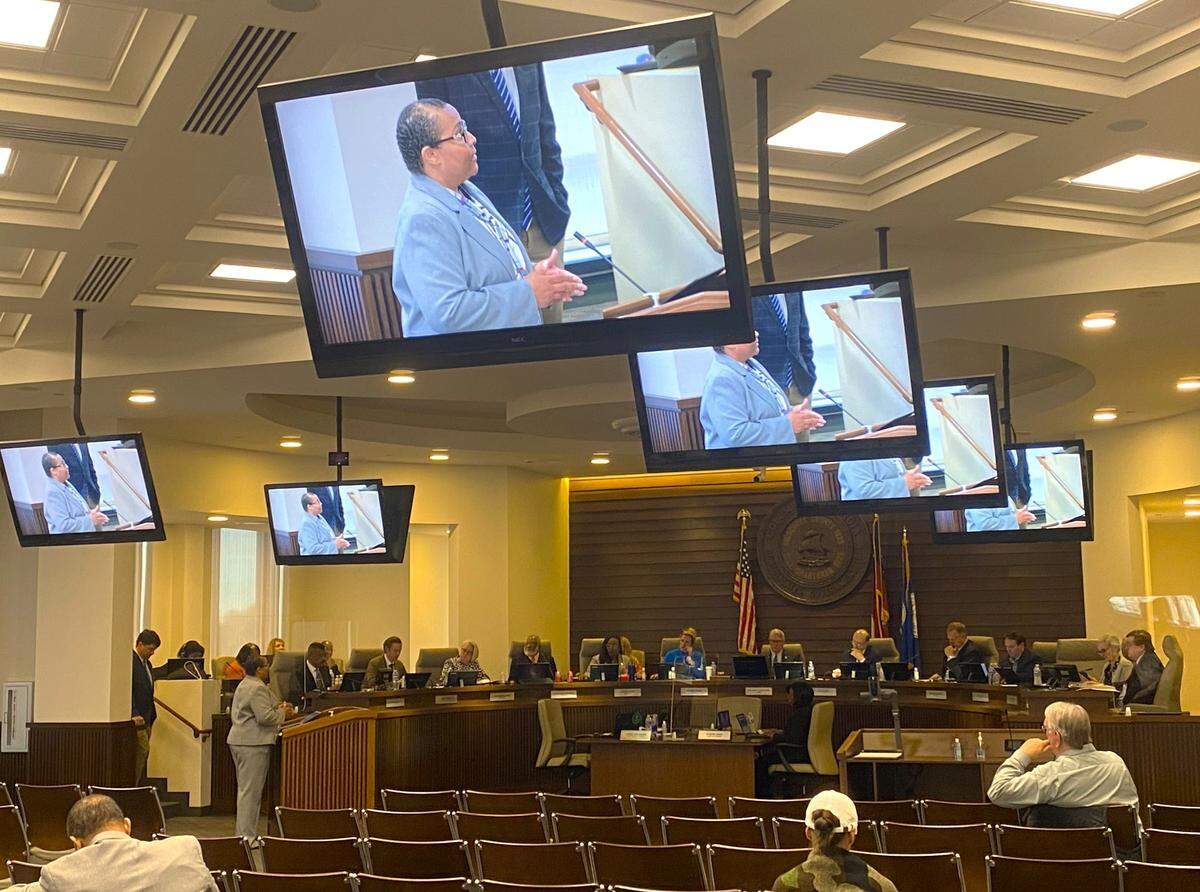
McGinnis presented the findings of her internal audit to the council during its Dec. 5, 2023, meeting.
In her presentation, she reported that the backlog in revenue collections since 2019 amounted to $45.1 million.
The audit revealed businesses submitted payments that had not been deposited as checks, and credit card authorizations were sometimes set aside to be handled later, she reported.
Some payments did get deposited, but the licenses weren’t issued, and some businesses that had paid were sent delinquent notices.
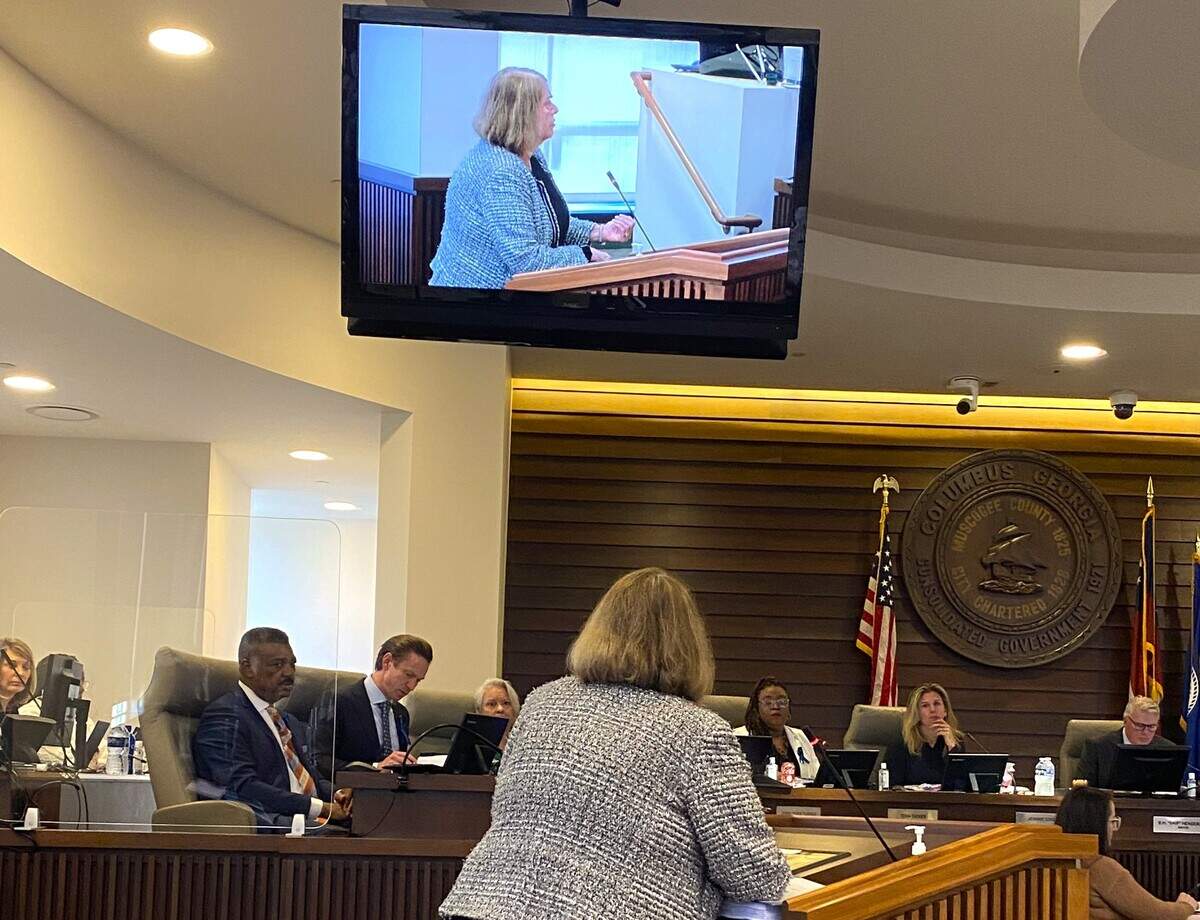
Alexander used her opportunity to respond during this meeting to dispute the $45.1 million figure.
“There is no missing money in the revenue division to the tune of $45 million,” she told councilors.
The $45 million included money the city already had collected and shouldn’t be counted in the backlog, Alexander argued. The confusion came from not understanding how the finance department tracked that money, she said.
Alexander said, as of Nov. 28, 2023, about 500 accounts were pending to be processed, totaling about $2.5 million.
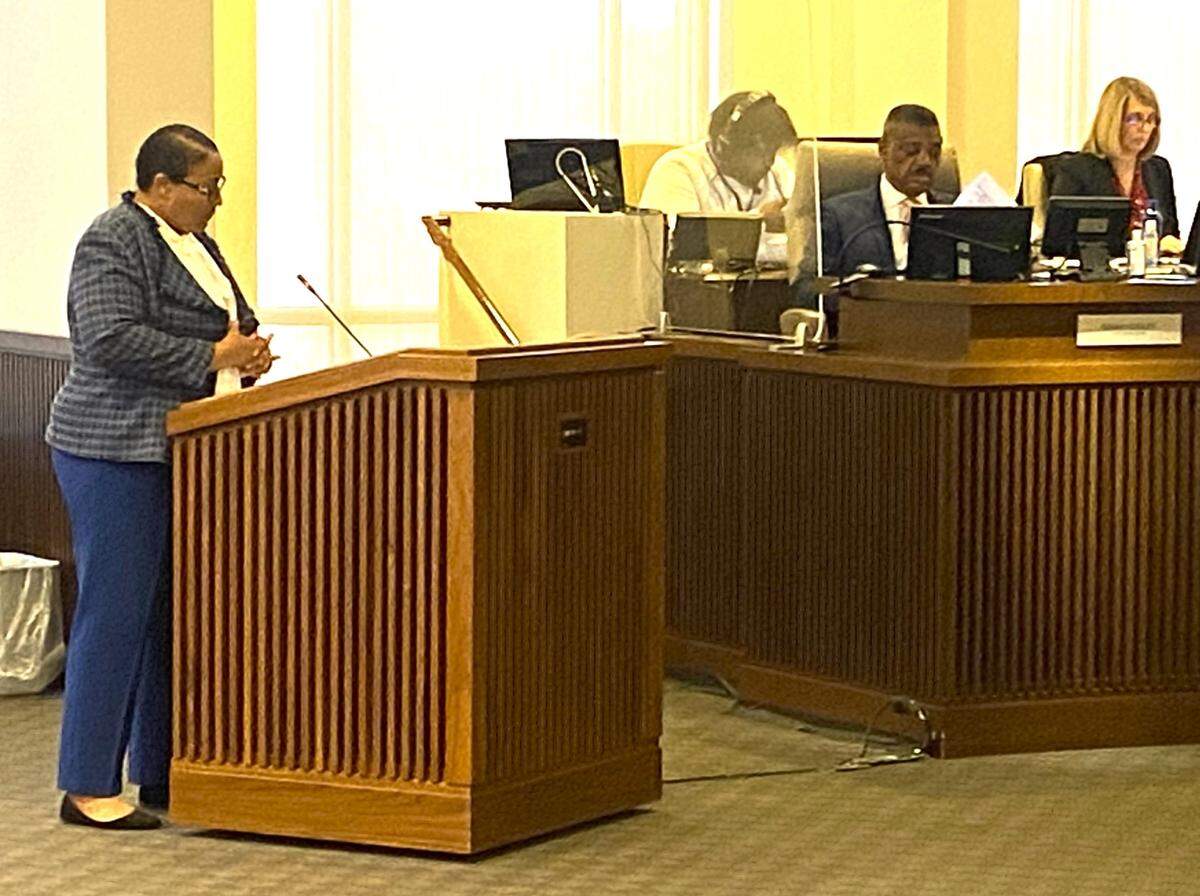
The day after this council meeting, McGinnis attended a meeting with officials, including Henderson, Hugley, Hodge, Alexander and Columbus councilors Toyia Tucker of District 4 and Glenn Davis of District 2, according to the sheriff’s administrative report.
“The purpose of the meeting was to try to get the facts,” Henderson told the Ledger-Enquirer on July 3. “I mean, if we find out that there’s $45 million missing, we’ve got to tell the public and let them know. But if we find out that that money is not missing or not collected, then we do need to let the public know so that they understand there’s not been any taxpayer dollars that have been misplaced.”
A transcript of a recording of the meeting provided to investigators was included in the administrative report.
In the transcript, Henderson “calmly asked” McGinnis what she needed to “correct the mistake” publicly. The mayor wanted her to be “comfortable” in making this statement, according to the report.
McGinnis informed them that she felt she didn’t have access to the needed materials to perform her audit properly, according to the transcript.
The mayor previously told McGinnis that if anyone “stiff-arms” her during the process of the audit, then she should call him, Henderson said.
“I’m not sure why she didn’t do that,” he said. “But she said she did not have access to some of the information.”
Henderson said the intention of the meeting was not to make McGinnis feel pressured to change her statements, but rather to determine if she “came up with an erroneous report because she couldn’t access certain information.”
“We need to fix that,” Henderson said. “We need to get her the information.”
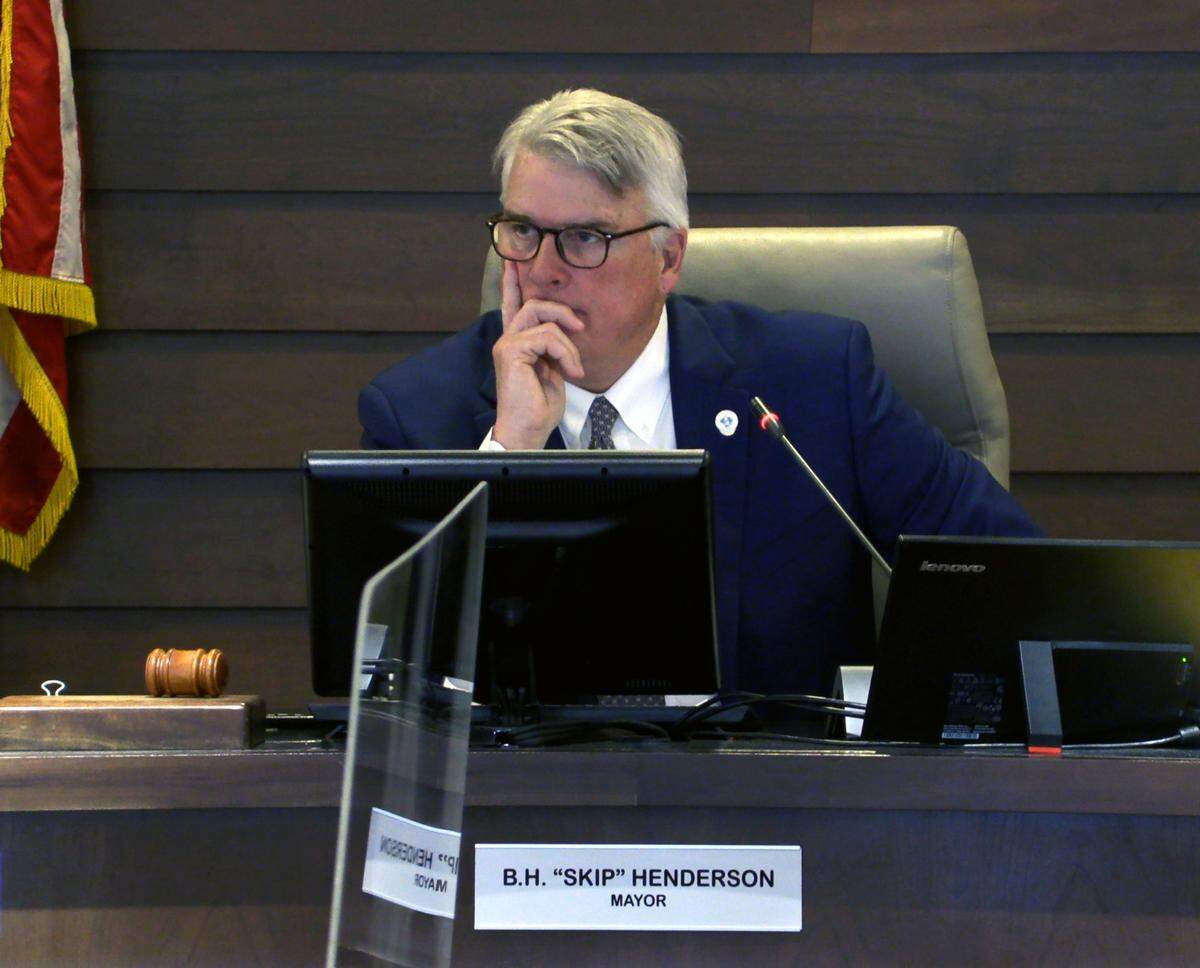
Hodge argued during the Dec. 6 meeting that McGinnis didn’t do her due diligence in following the money all the way to the bank, saying that there was a deposit and a check for every transaction. By the close of the meeting, McGinnis indicated that she would not retract her statements until she had access to the bank statements verifying that the money was in the bank.
Five days after this meeting, on Dec. 11, 2023, Hodge emailed Alexander and Ivey, asking how many transactions were on spreadsheets that still needed to be processed, according to the sheriff’s administrative report.
“I want to be able to say tomorrow that the lockbox spreadsheet represents 10,000 transactions and only 500 have not been processed due to incomplete submittals or still in queue to be processed,” Hodge’s email read.
Ivey responded to her, explaining that she found a total of 960 transactions that needed to be processed.
This exchange “raised concerns of a cover-up and obstructing the audit,” investigators later noted in the administrative report. This was because Hodge said she wanted to present a certain number of transactions that the lockbox should represent, according to the report.
“Currently, there are approximately 500 returns that are still pending to be processed,” Hodge told the council during its Dec. 12, 2023, meeting.
These figures align with what Alexander reported in her response to the internal audit.
Hodge didn’t respond before publication to the Ledger-Enquirer’s request to comment on this issue.
In December, as city officials debated the results of the internal audit, local political activist Nathan Smith received a text message from an unidentified individual with a spreadsheet containing Hugley’s business tax information, according to the sheriff’s office administrative report.
This spreadsheet was later shared on social media, prompting Hugley to ask for an inquiry into whether the leak violated state law because of the public distribution of his information.
Weeks after the leak, Troutman Pepper reported the findings from their external audit on Jan. 23, 2024, estimating the revenue loss to be between $20.1 million and $26.9 million between Jan. 1, 2016, and Sept. 2023. These figures disputed the figures from McGinnis and Alexander.
Troutman Pepper worked with the forensic accounting and litigation consulting firm Acuitas to determine that there wasn’t $45.1 million missing, Henderson said. Charlie Peeler, with Troutman Pepper, told the council when he presented the firm’s findings that there was “no evidence” of $45.1 million missing.
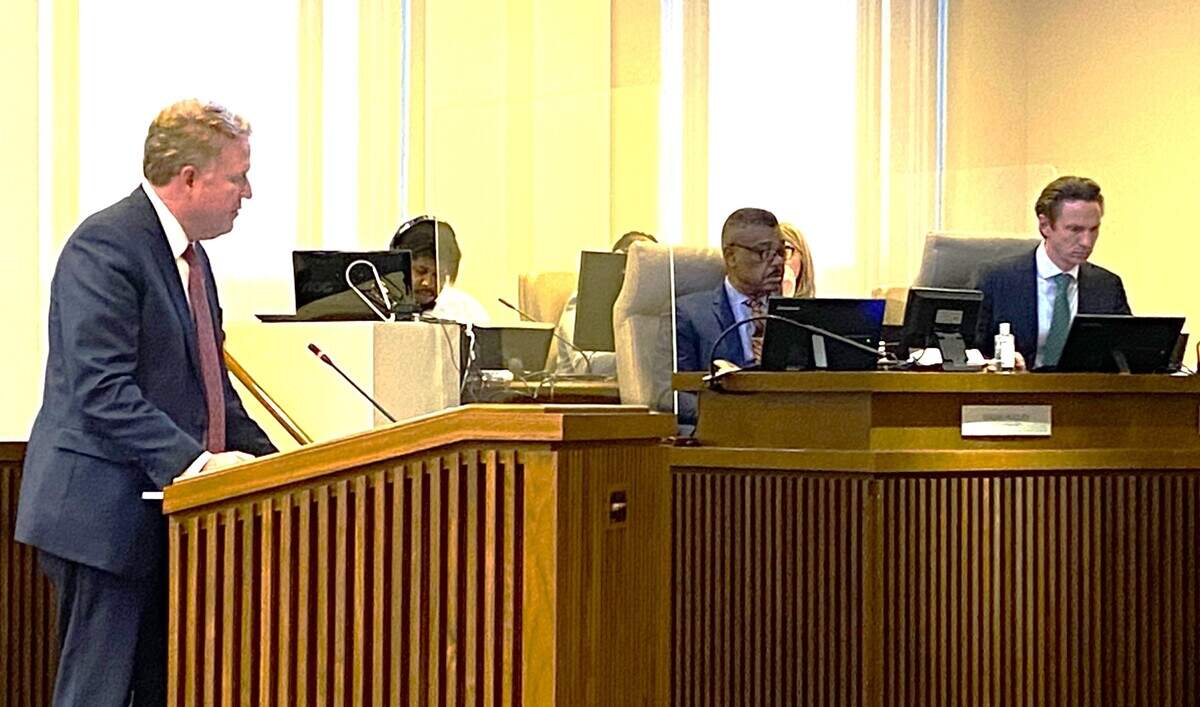
The next day, Henderson asked the Muscogee County Sheriff’s Office to launch a second investigation into the leaked document with Hugley’s tax information.
The first inquiry found no state law had been violated, but this new request for an administrative investigation was to determine whether CCG policy was violated. At the start of the investigation, the sheriff’s office warned Henderson and other city officials, if any criminal activity was noticed during the investigation, those crimes also would be investigated.
City officials acknowledged they understood this warning, according to the administrative report.
During this probe, investigators were advised to speak with McGinnis, the report says, because of whistleblower information and other details revealed during the internal audit.
This story was originally published July 7, 2025 at 5:00 AM.