Columbus tries to address criticisms, public safety with homeless camp ordinance
A proposed Columbus ordinance outlawing camping on city property has drawn criticism, but Columbus Council, Columbus police and others spoke on July 29 about the struggles they’ve had with managing homeless encampments.
Residents spoke out last week against an ordinance outlawing camping on city property during the first reading, expressing concerns that it could lead to more squatting and would criminalize unhoused people. They also argued the city had not done enough to provide more affordable housing and resources before considering this anti-camping law.
A 2025 point-in-time count of Columbus’ homeless population found 303 unhoused people, said Pat Frey of Home for Good. This count reflects only the number of unhoused people for the day or time period that the survey took place, so it’s not always precise.
The ordinance proposed at council to criminalize camping on public property became possible after the U.S. Supreme Court upheld an Oregon city’s ordinance prohibiting people who are unhoused from using blankets, pillows or cardboard boxes for protection while sleeping within city limits last year.
Councilor Charmaine Crabb, District 5, committed to revisiting the ordinance and working to address the community’s concerns during a July 22 council meeting. However, she emphasized what she feels the importance of this ordinance is in a text message to the Ledger-Enquirer.
“At the same time, we are hearing from residents and property owners who are deeply frustrated with the impacts of encampments throughout the city, including garbage, safety concerns, and damage to public and private property,” she said. “These citizens pay taxes and deserve to see their parks, sidewalks, and neighborhoods clean, safe, and accessible to all. Their rights and concerns are also valid and must be addressed.”
How Columbus cleans up encampments
Columbus Public Works director Drale Short began the conversation on these encampments, describing the process of relocating people and the required resources to clean them up.
Public Works cleared 29 camps in 2023 and 18 camps in 2024. The department has cleaned 15 camps to date in 2025.
The size of the camps determines how many resources it takes for clean-up, Short said.
For a medium to large homeless camp, the needed resources are:
- A supervisor
- A correctional officer
- Eight inmates from the Muscogee County Prison
- Front Loader
- Grab-all Flatbed Truck (from Community Service, Urban Forestry or Waste Collection) and/or a dump truck (from Community Service, Urban Forestry or Paving & Repairs)
Small homeless camps need a supervisor, a crew leader, community service probationers, a flatbed truck and, if necessary, a front loader.
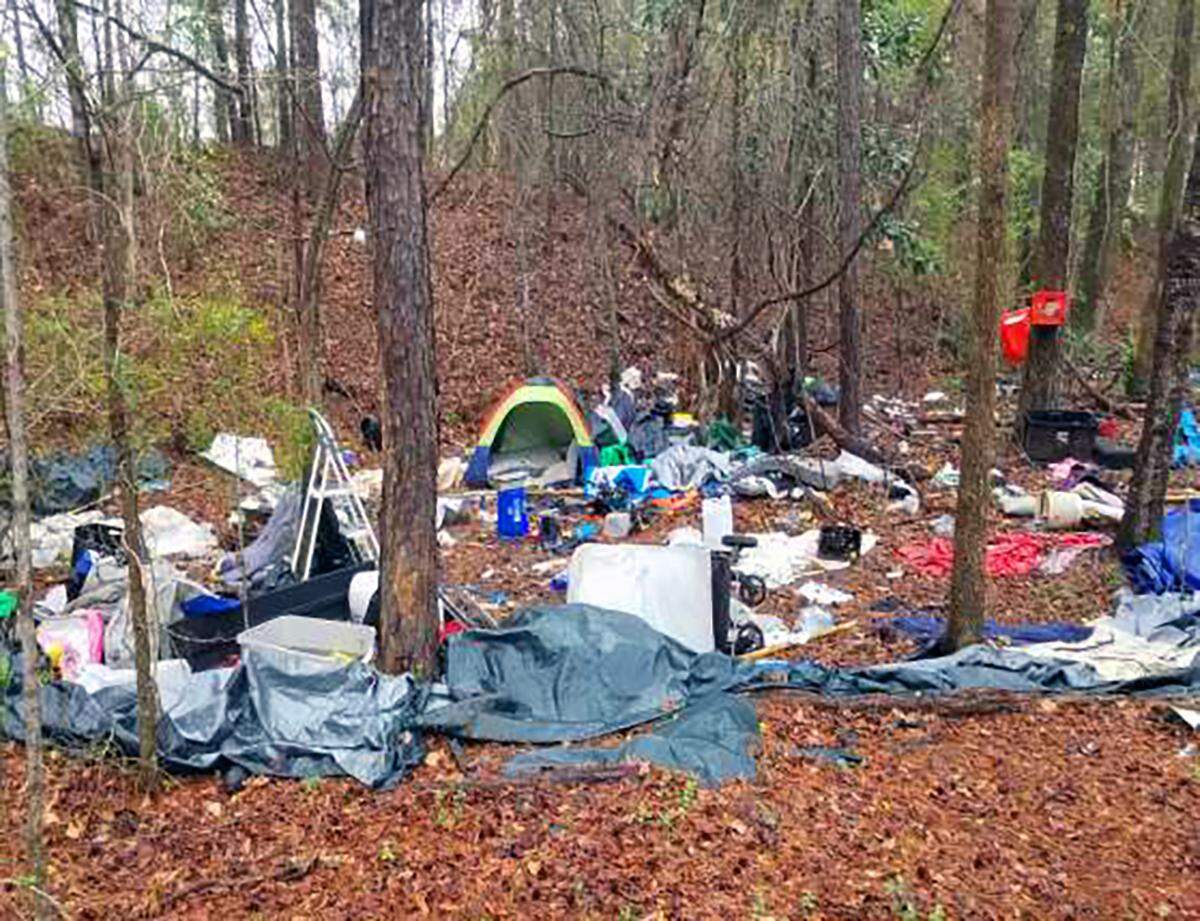
“It’s a lot, it takes a lot of resources, takes a lot of manpower and it takes us some time to get it taken care of,” Short said.
Public Works isn’t picking up a few bags at these sites, Short said. Unhoused people build areas where they can survive, she said, including doing laundry, starting small fires, setting up kitchens and sometimes having reclining chairs.
“They’re going around town, picking up stuff, bringing it back to the site and building homes,” she said.
One garbage truck can collect over 800 houses, or 12 compacted tons of waste, she said. In 2025, Public Works has collected over 29 tons, or two and a half garbage truckloads, of waste from encampments.
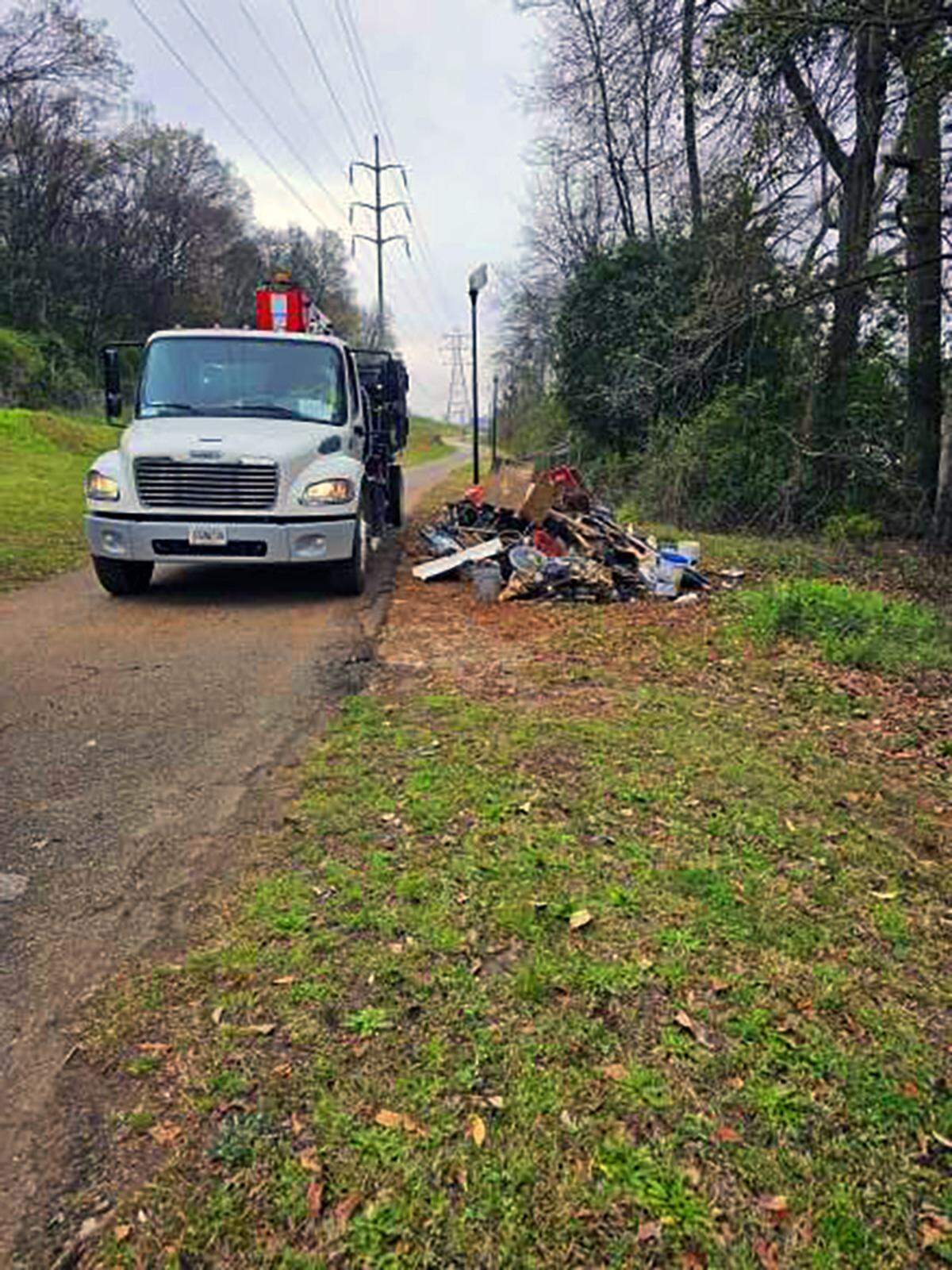
In the current process, when Public Works is notified of a site, they determine if it is on private, city or state property. They also confirm whether the property is occupied.
If it’s on private property, then the case is turned over to special enforcement. The timeline for clearing sites on state property can be up to a month from notification to clean-up, she said, but Public Works is working to come to an agreement with the state to speed this process up.
If people are occupying the site, then Public Works notifies Home for Good and the Columbus Police Department. Home for Good visits the site and establishes a vacancy date with the people living there, Short said.
Home for Good offers services to the people living there, Short said, and Public Works has to ensure the site is vacant before they go in.
“We have been accosted by individuals living in these sites,” she said. “We can’t do what we do without CPD accompanying us to make sure that the site is still vacant.”
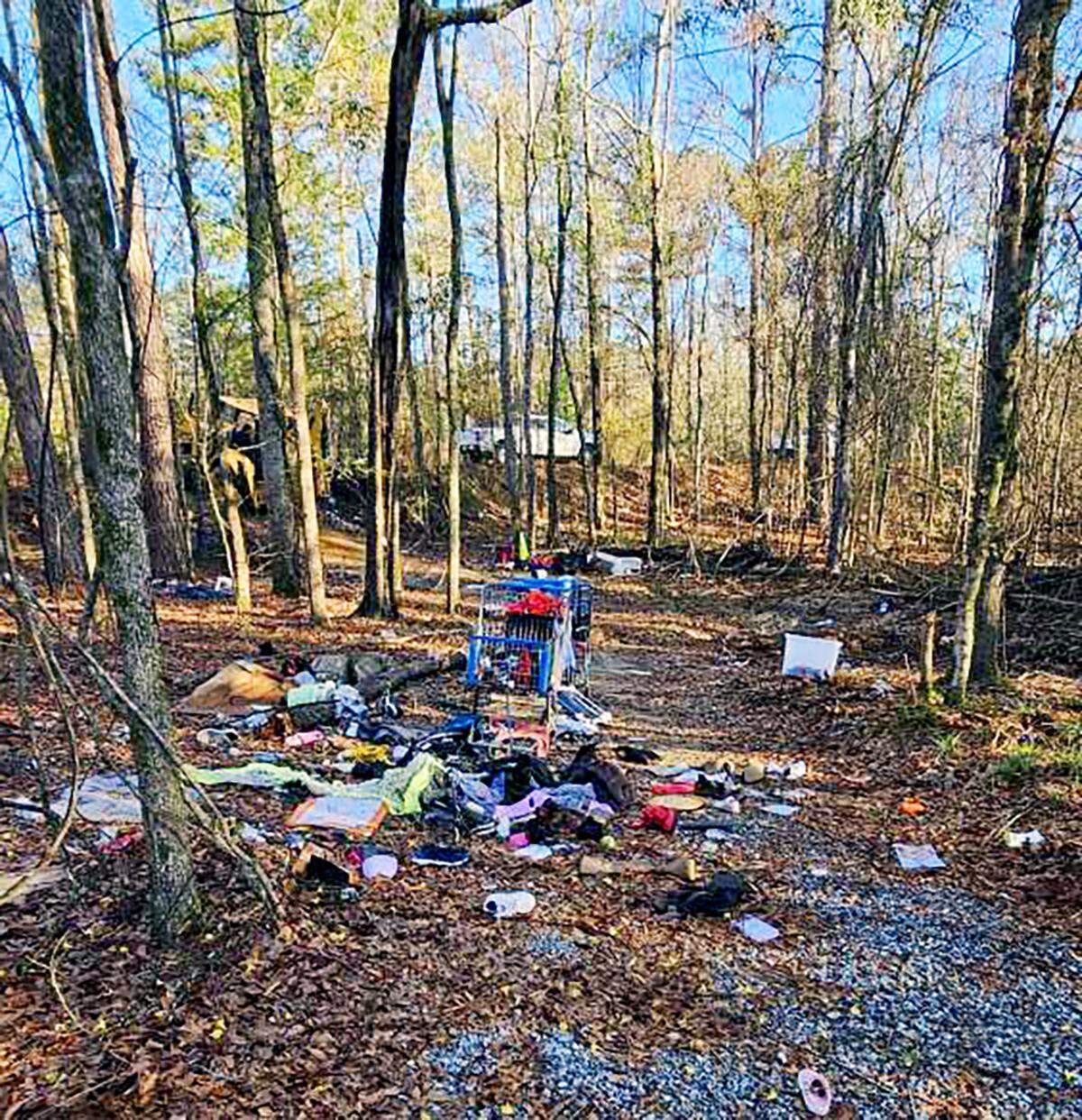
The day after the vacancy date, Public Works will enter to clear out the debris.
“When we get rid of one, two or three more will pop up somewhere else in town,” Short said.
Offering resources and challenges in helping
Terrika Barnes, director of Community Case Management with Home for Good of United Way, explained how her team works to help clear out encampments.
Once an occupied site is verified, Barnes’ team will enter to offer services. There’s no guarantee the clients will accept the services, she said, but her team returns each day until the seven-day time frame for vacancy is up.
Barnes’ team advises people living at the site that they have seven days to vacate and posts signs. On the last day, CPD will come to the site to ensure people leave.
“They will migrate,” Barnes said. “We will see them again. The first time, they may not want services. The second, third or fourth time, they may not want services, but we will still try to continue to stay in contact with them.”
Some of the services Barnes’ team offers include:
- Emergency shelter through SafeHouse Ministries or Valley Rescue Mission
- Permanent housing through their rapid rehousing program
- Mental health services
- Other housing services
- Wraparound services including medical, food and clothing
Councilor Travis Chambers of citywide District 10 expressed concern about what happens to people in the camps who have nowhere to go if Home for Good doesn’t have any partners with available space or resources to provide emergency shelter.
“If there isn’t any availability — that’s a great question — then it’s up in the air,” Barnes said. “We will do our best to try and get in contact with other partners that have housing through churches or we’ll see if we can get in contact with someone who could pay for a hotel room for that night.”
If this is unsuccessful, then they work to find out where the person came from.
“We do have an influx of individuals who were being bussed here from out of state,” she said. “And, sometimes, some other cities or departments will bring them here. We try to see if they have any family ties to Columbus or if we can get in contact with any family to see if they’re able to stay with them or see if we can secure transportation.”
Her team tries to ensure people are not left with nowhere to go, she said, but there is a limit in resources.
Community policing and declined services
Sgt. Katina Williams of CPD became emotional as she began to speak about how the C.O.P.S. Unit works to assist unhoused residents.
CPD not only gets referrals about encampments from 311 or Home for Good, Williams explained. Her team also finds them and makes first contact on their own.
Their role goes beyond ensuring Home for Good and city workers’ safety when they get to the scene, she said.
“We get out there, we speak to the homeless community,” Williams said. “We respect them. We buy food for them. We find places for them to stay.”
If Williams is unable to contact Frey or Barnes, she has sources of her own that she calls to help put people in hotels, if possible.
On July 25, Williams met with a woman and her three children. The woman had an adult son who was disabled, and she refused to go to a homeless shelter because of his age.
“He’s with her full-time,” Williams said. “She’s his caretaker. He gets disability. They were turned down at a local shelter.”
Within 15 minutes, her team found someone who could house the family in a hotel for two weeks, Williams told the council through tears. She called other members of her team to stand with her before the council to thank them for their work.
“These guys, they were there,” Williams said. “We witness this every day.”
When it comes to the proposed ordinance, Williams argued that people should receive more than an hour to vacate the premises.
“Every situation is different,” Williams said. “If you’ve got a bike and a backpack, you can leave in an hour. But if you’ve got everything that you own in a tent or a tarp, you can’t leave in an hour.”
Councilor Charmaine Crabb, who sponsored the ordinance in council, clarified that the intent was not to fine or arrest anyone after an hour.
“We need to clarify that language because the intent is that we’re giving you a minimum of one hour,” Crabb said. “You can’t remove them, or do anything to them, until after that hour has passed.”
The ordinance is open-ended on this point, she said, explaining that there’s no end time frame. After people are given an oral or written warning and an hour has passed, it is at the discretion of the officers to determine when further action will be taken.
Fears of creating ‘hysteria’ in homeless community
Columbus is not in a bad place when helping people who are unhoused, Neil Richardson, executive director of SafeHouse Ministries, told the Ledger-Enquirer.
“Per capita, Columbus is probably one of the successful communities in America dealing with homelessness,” Richardson said. “We do not have tents all the way up and down sidewalks, and whole communities taken over by homeless people.”
The city has done a good job getting people into shelter and permanent housing, he said. Despite their best efforts, he said, there are still homeless people.
“There are two kinds of homeless folks,” Richardson said. “There are people who do not want to stay homeless and people who are not ready to change.”
Over the past 18 months, SafeHouse housed 296 people who went from being homeless to having permanent housing. But others who are unhoused are suffering from addiction or other mental health problems that can make it difficult for them to seek or accept available services.
Richardson is against this ordinance, he said, because the city already has a system in place that is working. Along with concerns about how outlawing camping might “create a hysteria” in the homeless community, he is also worried about what happens after people are arrested for a misdemeanor and taken to the jail.
“They get their picture taken and get turned loose,” Richardson said. “So, now they’re downtown instead of wherever their camp was.”
These individuals are also unlikely to answer a court summons, he said.
“And if they can’t go back to the same place, they’re gonna shift,” Richardson said. “We are not helping. All we’re doing is — it’s like Whac-A-Mole.”
Crabb characterized the problem as an octopus with many tentacles.
“This (ordinance) is step number one to help with all the tentacles that are going out,” Crabb said.
This story was originally published August 4, 2025 at 6:00 AM.