Columbus Council creates wish list for Georgia General Assembly to pass in 2026
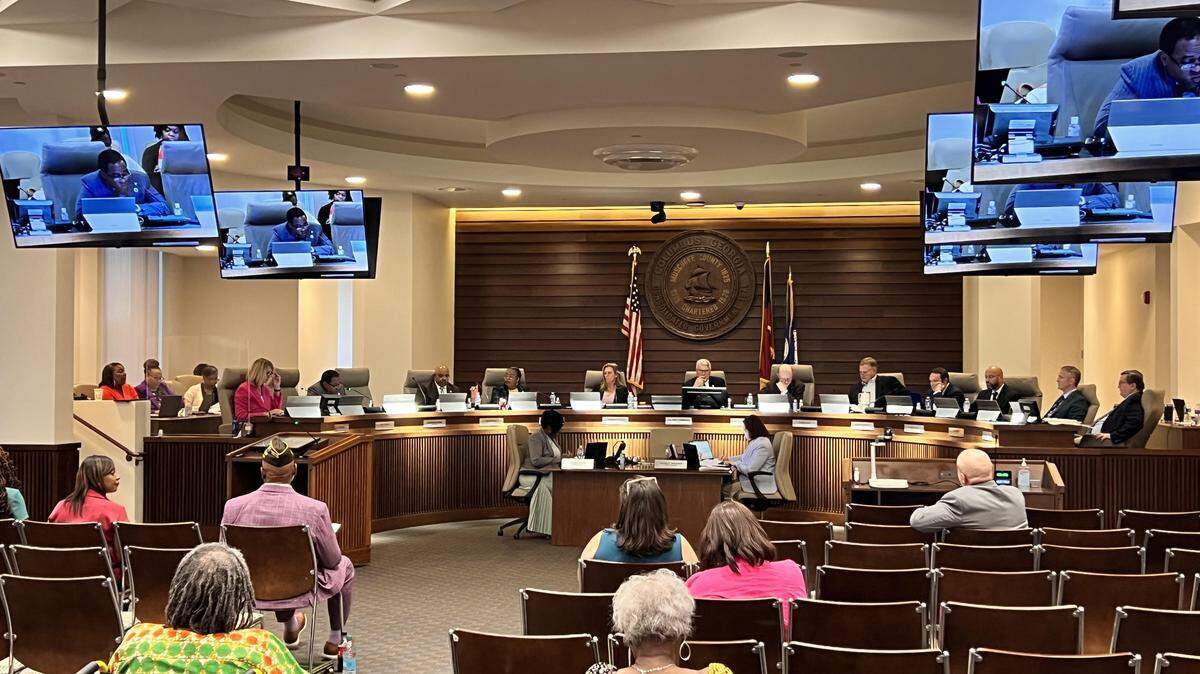
Columbus Councilors debated topics including gun control and public safety as they worked this week to determine which issues they want the local delegates to push for in the 2026 legislative session of the Georgia General Assembly.
Local elected and appointed officials meet annually in the Hometown Connection and Legislative Agenda meeting, which will be Oct. 15, to present legislation they feel is important to Columbus residents.
While this is a good opportunity for councilors to request legislation in the General Assembly, it’s not the only time it can be done, Councilor Glenn Davis of District 2 explained during Tuesday’s council meeting.
“Any councilor at any time, all the way into the legislative session, can put something on the legislative agenda,” he said. “We can vote on it and send it up there. It still counts.”
This agenda that will be presented next month is “like a draft” that gives elected officials preparation time and things to consider, Davis said.
Still, the legislative agenda helps local officials push for action on issues they feel are important, Councilor Toyia Tucker of District 4 told the Ledger-Enquirer.
“It’s almost like a lobbying arm from the county,” she said. “They lobby for legislation for us.”
If the local delegation gets legislation passed in the General Assembly, then, depending on the type of legislation, it would be approved by the governor or added to the ballot for Muscogee County residents to vote on next year.
Here are the legislative agenda items councilors discussed and voted on during Tuesday’s meeting.
Council appointment 30 days after vacancy
This item was sponsored by Councilor Travis Chambers of citywide District 10 and would have requested that the local delegation introduce an amendment to the Columbus Charter to ensure a council seat remains empty for at least 30 days after a vacancy before someone is appointed to fill the seat.
In March, the council filled former Councilor Judy Thomas’ citywide District 9 seat by appointing John Anker with a 6-3 vote during the same meeting in which she resigned, despite Mayor Skip Henderson advising against the quick appointment. This action led to backlash from some citizens and organizations.
Chambers pulled the resolution during Tuesday’s meeting before the council could deliberate on the issue. He didn’t explain why he reversed course but said his goal was to give the council’s constituents a say in the process of appointing councilors.
“I believe that we need to establish a process that reflects the principles of fairness, transparency and due process,” he said, “including a reasonable waiting period, such as 30 days, before any appointment is made.”
Senior homestead exemption on property taxes
Sponsored by Tucker, this legislation would increase the homestead exemption on property taxes for qualified residents age 65 and older from $21,500 to $30,000, beginning in January 2027.
An income restriction ensures that this exemption is not for people who can afford to pay the taxes, Tucker said.
“It’s really helping individuals, especially some of our most vulnerable senior citizens,” she said.
During the meeting, Councilor Gary Allen of District 6 raised concerns about how this move would affect the city financially. Allen also had concerns about how this would affect the school district.
City attorney Clifton Fay said the proposed resolution was sent to the school board’s lawyer.
People are living longer lives, Tucker said during the meeting, and other municipalities in Georgia have passed resolutions making it so people 85 and older would pay no property taxes.
Allen asked the city manager’s office for a report on the fiscal impact of the proposed legislation.
During the discussion, Allen said when he was a young father, he would ask about the burden of taxes on the older generations.
“The answer that I got was that each generation paid their portion of taxes to help the younger generation raise their children,” Allen said. “So, each generation is helping the younger ones as they come along.”
The resolution initially passed in a verbal vote with no councilors opposing it. However, later during the meeting, Allen asked to change his vote to a “no” on the record.
If this referendum is approved by the General Assembly, it likely will be on the November 2026 ballot for Muscogee County voters.
Proposed public safety director
Tucker also sponsored this resolution to remove the mayor’s assigned duties to direct, supervise and coordinate the administration and activities of the Columbus Department of Public Safety and create a new position to be called public safety director.
Allen asked questions about who the director would report to, how high their salary would be and the added costs of providing the director with staff.
“I’m assuming we’re looking at a minimum, roughly, of half a million dollar increase to the budget,” Allen said. “So, I would like to see some numbers there on that.”
This would create another layer of bureaucracy over public safety chiefs, he said, which encompasses fire and emergency services and police.
“I think all three of those entities are pretty self-sufficient,” Allen said. “We have excellent leadership in each one of those areas.”
Tucker called on Lance Deaton, assistant chief of the Columbus Police Department, to speak about the proposal. He noted sometimes mayors, who are elected officials, don’t have a background in public safety.
“That’s not to say that the mayors we’ve had that haven’t had public safety backgrounds have caused any issues or have been a problem,” Deaton said. “But it certainly is helpful for our public safety agencies that you’re reporting to someone who has a background in that particular area.”
Tucker also argued that, while this proposal isn’t a condemnation of any mayor, it is important to have a director with expertise in public safety.
Allen wanted more information about the proposal before voting on it, he said, and he wanted to hear from other public safety officials.
Councilor Walker Garrett of District 8 also raised concerns about the costs of creating a position for a public safety director. He said it would be a recurring cost of at least $500,000 each year.
“We have necessities,” he said.
Anker and Councilor Joanne Cogle of District 7 saw the value in making the change to ensure the official overseeing public safety has experience in the field, but they said the concerns that were introduced are valid.
Davis suggested more time to look at the impact this could have and return to it at a later date, rather than voting on it during Tuesday’s meeting. The delegation and the state legislature like for these types of resolutions to have “unanimous support,” he said, otherwise they might become “dead on arrival.”
“It deserves more conversation,” Davis said. “It deserves more time as opposed to not getting on the list or not having the votes to make it across the finish line.”
Tucker agreed to pull the resolution from Tuesday’s vote to gather more information. The plan is to bring it back Oct. 14, one day before the Hometown Connection event.
Gun control and other agenda items
Tucker also sponsored a resolution asking for the Georgia Code to be amended to prohibit weapons inside city-owned recreation centers. This comes in the wake of the Aug. 29 fatal shooting at Shirley B. Winston Recreation Center.
“Right now, you can’t charge somebody with having a weapon,” Tucker told the Ledger-Enquirer. “You can charge them if it’s a weapon that’s been altered or modified. But you can have a .22., .48 or 9mm gun, and it’s legal. (This is) just putting safety measures in place to help our employees and our patrons.”
The council unanimously approved the resolution with an amendment clarifying that the weapons ban would apply to only the buildings and not the surrounding grounds and parks.
The final two items proposed for the legislative agenda are carryovers from previous years.
One requested that the local legislative delegation introduce or support legislation revising and clarifying the conflict-of-interest provision in the Georgia Redevelopment Powers Law, which addresses the participation of elected and appointed officials in local government in the creation and administration of Tax Allocation Districts.
The law broadly prohibits these officials from voluntarily acquiring any direct or indirect interest in any property, contract, transaction or proposed contract or transaction in connection with the redevelopment of the area.
Their proposed revision would require officials with direct ownership interest in a property to disclose this information and refrain from participating in any votes or influencing others’ votes.
This resolution passed unanimously.
The council also unanimously passed a resolution requesting the delegation support efforts to exempt military retiree pay from state income tax.
This story was originally published September 26, 2025 at 5:00 AM.