Columbus residents don’t get answers from developers of proposed data center
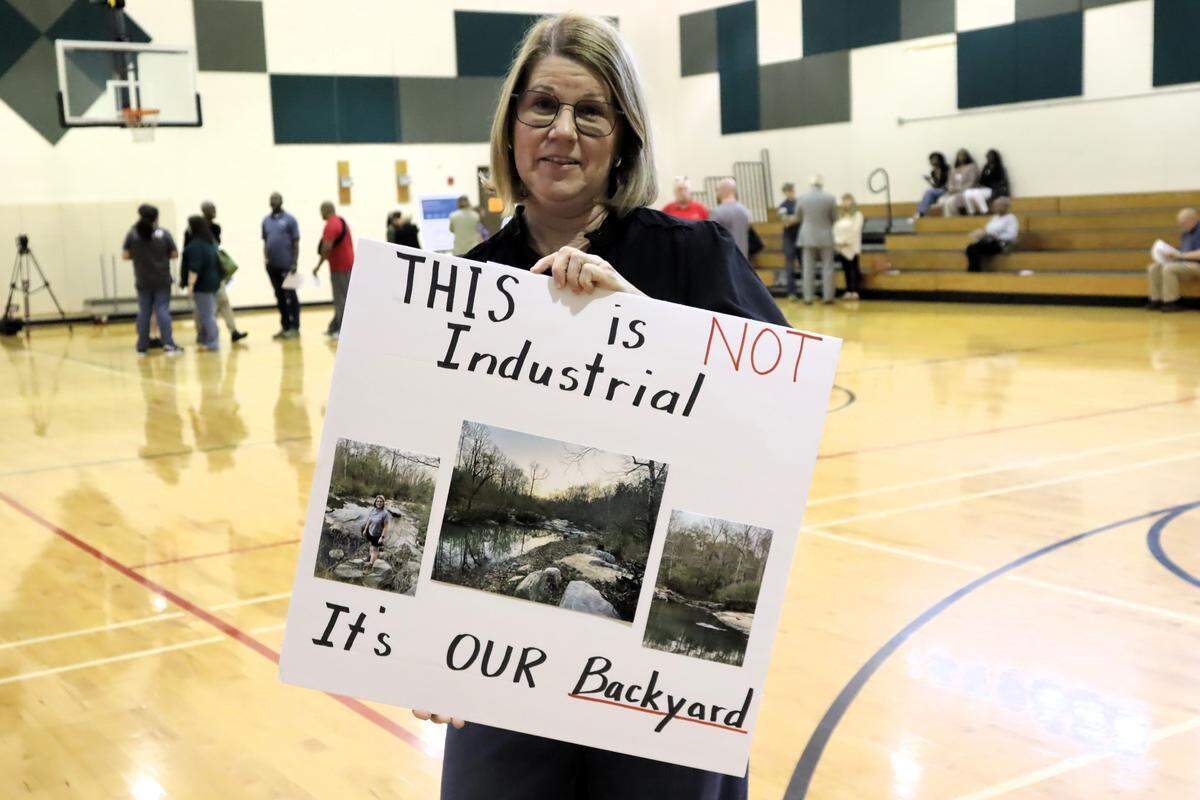
Six weeks after a proposed hyperscale data center in northeast Muscogee County was announced by Choose Columbus, the Columbus Consolidated Government hosted an information session in the Psalmond Road Recreation Center to highlight “the benefits”, but many residents didn’t get answers they sought.
The college-fair-like event featured officials from Choose Columbus, Atlas Development, Habitat Real Estate Partners, Flint Energy and Columbus Water Works at tables in the four corners of the rec center’s gym with representatives from each group answering questions.
“They (Habitat Real Estate Partners) sent me to the Mayor, then the Mayor sent me to you,” Tim Gibbons said to a group of men representing Atlas Development.
Gibbons, who lives on Layfield Road, which abuts the 900 acres where the Project Ruby data center would be built, wanted answers about how the proposed sewage line would hook up to his property in Upatoi if Layfield is on a private road, not a city road. His neighbors, Leslie and Robert Landi shared similar concerns a few weeks ago.
After speaking with Atlas, Gibbons said he still isn’t sure what they are going to do about the sewage line on privately owned land.
The Atlas representatives would not answer any questions from the Ledger-Enquirer. They simply repeated the line, “We are here to talk about the ordinance.”
When Andrea Atkins, who lives in Columbus, asked for names of towns in Texas where Atlas has developed data center projects, Atlas spokesperson Kline Petty said he “would find that out”. A few minutes later, he came back to her and said, “We are not allowed to disclose other properties. We can only speak to the (Columbus) ordinance.”
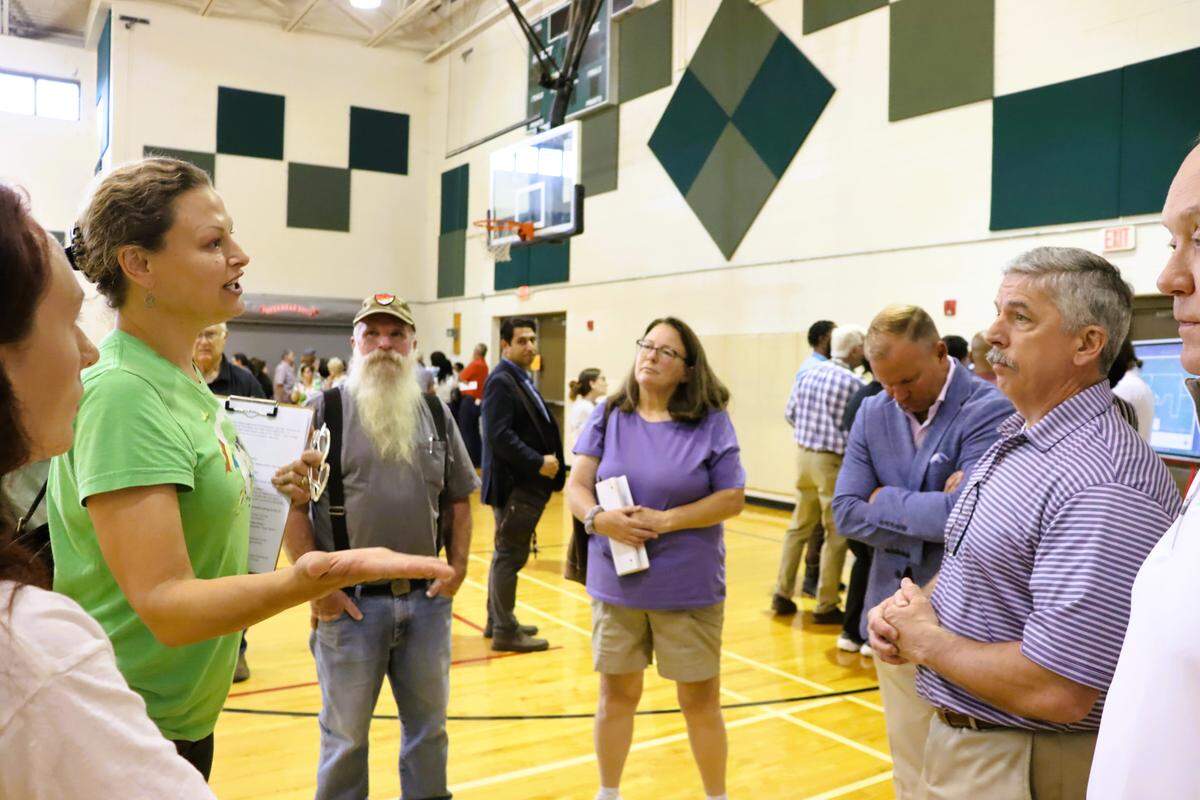
Atkins pressed further, but Petty would not answer her question. “That’s ridiculous,” she said to Petty.
“(This event) is all siloed, purposefully,” she said, after Gibbons lamented about trying to get an answer to his sewage question.
“(CCG and the developers) say they are doing this for transparency, but it’s the same things over and over, they are here to talk about the ordinance and they can’t talk about anything else,” she told the Ledger-Enquirer.
She approached Mayor Skip Henderson to get information and ended up enlightening the mayor on the difference between a data center and a hyperscaler.
“I don’t know what constitutes a hyperscaler,” Henderson said to Atkins. She responded saying they are 10 times as big as traditional data centers.
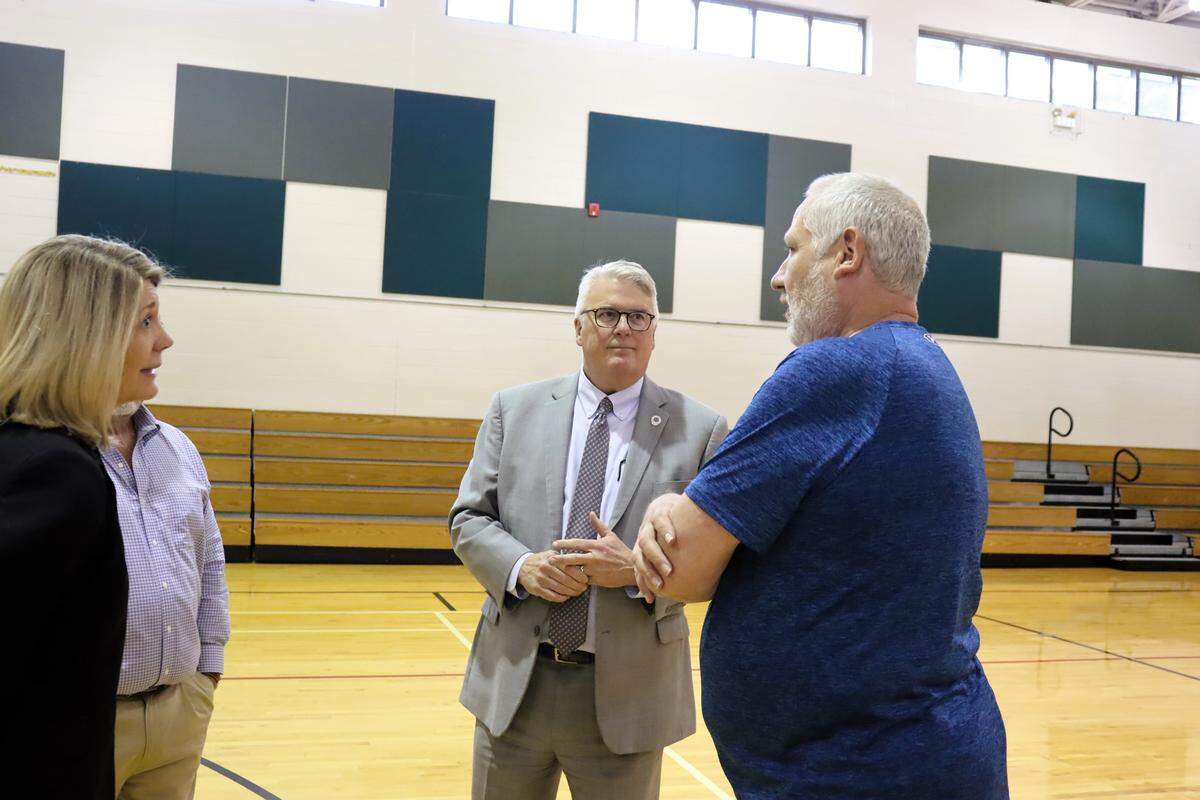
Henderson told the Ledger-Enquirer he hoped this event would create a “safe environment to ask subject matter experts questions” and get more information.
He did not say whether he is for or against Project Ruby, only that he is “still collecting information.”
“As mayor, I’m trying to make sure we understand what the process is, what data centers do,” Henderson said. “I don’t think I realized we had data centers in Columbus the last 50 years.”
He admitted those are different scales than the hyperscale campus Project Ruby would be.
Henderson said if Project Ruby generated $70 million per year in property taxes, then perhaps citizens could “get a break” on property taxes. He said the city currently collects $23 million per year.
New information on transmission and stream restoration goals
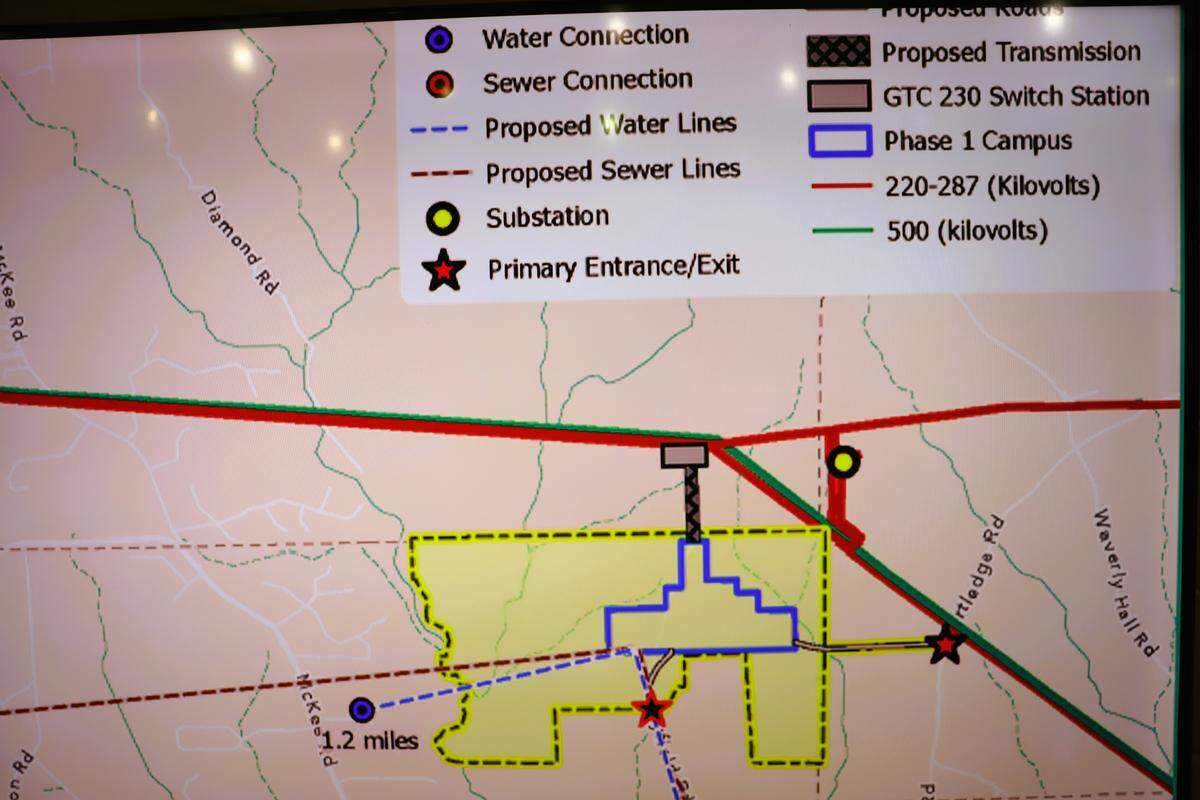
Flint Energy would provide some 600 megawatts of energy for Project Ruby, enough to power all of Columbus and more. Their representative, Jay Flesher, the community & economic development leader for Flint Energy, answered several residents’ questions in his corner of the gymnasium, and he outlined why he thinks this is the location Atlas Development chose.
“In my 14 years, of all the project sites I’ve seen in the state of Georgia, I’ve never seen a site that is this close to the transmission lines,” he told the Ledger-Enquirer. “We currently have two 230 KV and a 500 KV line. The new transmission line (which is just a few acres long) would need to come onto a substation on their property.”
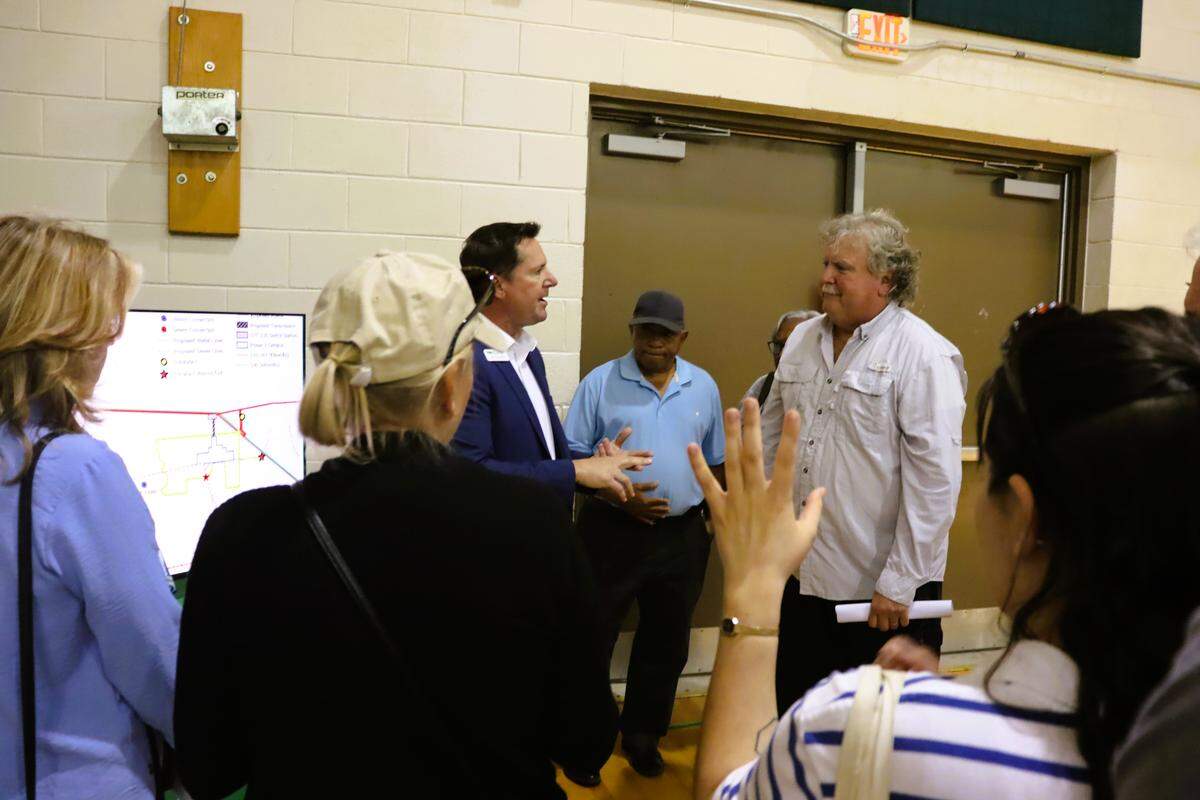
Flesher confirmed the rumored 500 KV transmission line called Dresden-Talbot is not part of this project.
“The new 500 KV from Dresden-Talbot has nothing to do with this project,” he said.
Flesher also said the soonest the developers could get power is 2027.
In the other corner of the room, Habitat Real Estate Partners had two representatives, Tim Johnson who was more familiar with the real estate transaction portion of the project, and Nick Anderson, who is the senior ecologist.
Anderson wants to get funding from the end user to improve Mud Creek and Kendall Creek because he believes they are in bad shape.
“I would like to improve the land that is not developed (which he said is around 800 acres) and plant more trees, bring creeks out of in-sized states, plant riparian buffers to improve the site and make sure it’s the end user who funds it,” he told the Ledger-Enquirer. “We are not developers. We get land, and we improve land. My end goal is we are getting money and putting it back to the environment.”
Habitat Real Estate Partners’ role is hands-off right now. They can’t do anything until they see the language of the pending technology overlay district ordinance. And, because the overlay isn’t specific to Project Ruby, their ideas are not actionable.
“Currently, there is no concession of what this project will look like because this zoning doesn’t exist.,” Anderson said. “You need the overlay language. It’s by no means permanent. It can’t be until there is an overlay.”
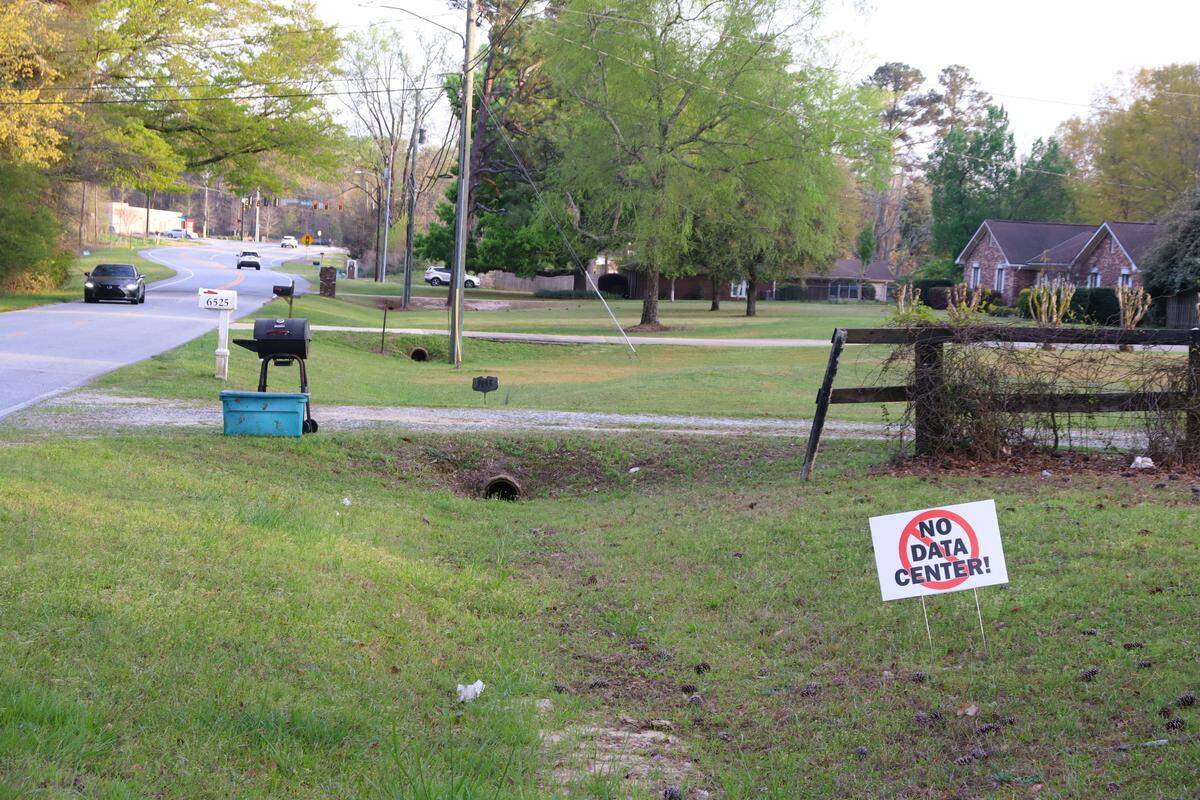
But residents met Anderson with resistance, saying they don’t want the data center at all. Anderson said to speak to city government representative; they are here to listen. One woman responded, “No, they aren’t.”
When asked whether people are getting answers at the event, Henderson said, “I hope so, that’s what this is set up for. We want to make sure we protect environment and public without compromising the opportunity.”
As of 5:00 pm on March 24, the online petition against hyperscale data centers in Muscogee County has reached 3,857 signatures.
This story was originally published March 24, 2026 at 5:15 PM.